North Gorge Walk: Point Lookout's Dramatic Coastal Trail
The North Gorge Walk at Point Lookout on Minjerribah (North Stradbroke Island) packs extraordinary coastal scenery into just 1.2 kilometres. Expect sheer rocky headlands, crashing surf, and a genuine chance of spotting turtles, dolphins, and migrating humpback whales from the cliff-edge platforms.
Quick Facts
- Location
- Point Lookout, Minjerribah (North Stradbroke Island), QLD 4183. Access from Mooloomba Road, opposite Fishes Cafe and Oceanic Gelati Shop.
- Getting There
- Train or drive to Cleveland, then take a ferry to Dunwich. From Dunwich, catch the island bus to Point Lookout.
- Time Needed
- 45 minutes to 1.5 hours for the walk itself; allow a full day for the island trip from Brisbane.
- Cost
- The walk is free. Ferry fares apply — verify current prices with SeaLink before travel.
- Best for
- Wildlife spotters, photographers, coastal walkers, and anyone wanting a proper half-day escape from Brisbane.
What the North Gorge Walk Actually Is
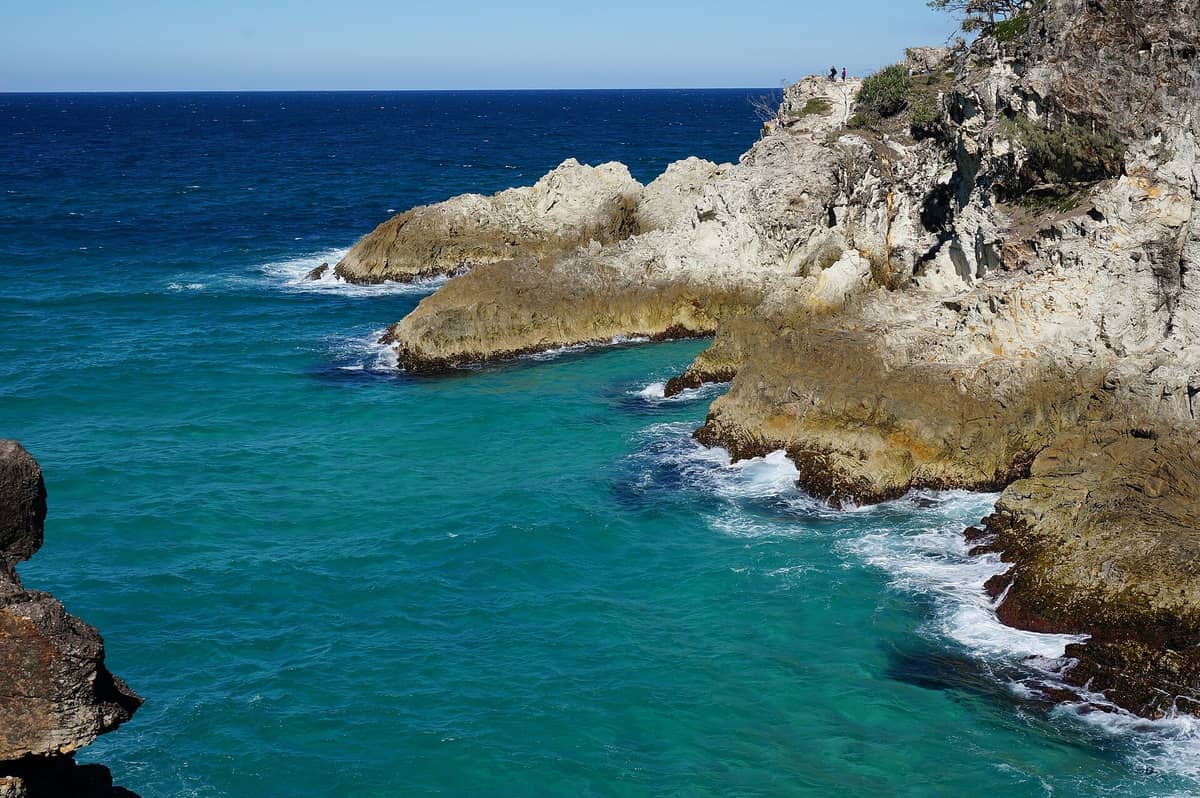
The North Gorge Walk is a 1.2 km out-and-back coastal trail that follows the rocky northern headland of Point Lookout on Minjerribah, the island also widely known as North Stradbroke Island. Short it may be, but this is not a token stroll: the path winds along cliff edges above crashing ocean swells, past sandstone outcrops sculpted by the Tasman Sea, and over timber boardwalk sections that put you directly above surging water below.
The trailhead sits on Mooloomba Road, directly opposite Fishes Cafe and Oceanic Gelati Shop in Point Lookout village, so it is genuinely easy to find. There are no gates, no ticket booths, and no set opening hours listed by official sources. You simply walk in, and the gorge begins almost immediately.
ℹ️ Good to know
The walk is free to complete. The main cost is the return ferry from Cleveland to Dunwich, operated by SeaLink. Verify current timetables and fares directly with SeaLink before you travel, as schedules and prices change.
The Walk Itself: What You Will See and Feel
From the first few steps, the environment shifts. The salt smell is immediate and sharp, stronger than anything you get from a beach. The path narrows quickly and the vegetation on either side is low-growing coastal scrub, the kind that grips thin soil above salt-sprayed rock. Underfoot, the surface alternates between packed earth, exposed sandstone slabs, and timber boardwalk sections where the cliff drops away below.
The gorge itself is the centrepiece: a narrow channel between the headland and an offshore rock shelf where ocean swells compress, accelerate, and crash upward with a physical force you feel through the soles of your feet on the platforms above. When swell is running, the sound is constant and loud. On calmer days the water in the gorge turns translucent green, and you can look directly down to the seabed. Both conditions are worth seeing, and both are very different experiences.
Several elevated platforms extend from the main trail over the water. These are the prime spots for wildlife watching. Loggerhead and green sea turtles are frequently seen feeding in the kelp beds in the gorge below. Bottlenose dolphins patrol the outer channel regularly. Between June and November, the platforms offer some of the best land-based humpback whale watching in southeast Queensland, as the migration route passes close to the headland.
💡 Local tip
For whale watching, arrive at the platforms by 8 am before tour groups build up. Scan the water beyond the immediate gorge, not just directly below. Whales surface well offshore and move south to north during the migration window.
Tickets & tours
Live prices and dates from our booking partner. If you book, we may earn a commission at no extra cost to you.
North Stradbroke Island small groups day tour
From 79 €Instant confirmationFree cancellationNorth Stradbroke Island sunset small groups tour
From 79 €Instant confirmationFree cancellationLuggage Storage in Brisbane
From 5 €Instant confirmationFree cancellationBrisbane's dark stories true crime tour
From 21 €Instant confirmationFree cancellation
How the Walk Changes Through the Day
Early morning, particularly the first hour after sunrise, is the most photogenic and the least crowded time on the track. The light hits the gorge at a low angle from the northeast, illuminating the water in the channel and picking out the colour contrasts between the dark rock, white foam, and deep blue ocean beyond the headland. There is almost always a sea breeze by this point, cool enough to make the walking comfortable.
By late morning, especially on weekends and during school holidays, the narrow path sections can feel genuinely congested. There are stretches where two people pass each other with care. Tour groups from Brisbane day trips tend to arrive mid-morning after the ferry crossing from Dunwich. If you are on the island for only one day, getting to the trailhead by 7:30 am gives you the walk largely to yourself.
Afternoon visits have their own reward: the sea is often calmer by mid-afternoon than in the morning, and the light, though less dramatic for photography, is still warm and clear. The platforms can catch a breeze that makes the afternoon heat tolerable even in summer. That said, summer afternoons on Minjerribah can bring rapid storm buildups, so watch the sky to the west if you are planning an afternoon visit between December and March.
⚠️ What to skip
The path includes uneven terrain, exposed rock sections, and stairs. It is not wheelchair accessible and is not suitable for prams or mobility aids. Wear closed shoes with grip — sandals are a poor choice on wet rock sections near the platforms.
Cultural and Ecological Context
Minjerribah is the traditional home of the Quandamooka people, who have maintained a connection to this island for tens of thousands of years. The headland at Point Lookout, with its commanding views of the ocean approaches, would have held both practical and cultural significance. In 2011, native title over Minjerribah and Peel Island was determined in favour of the Quandamooka people, one of the first successful determinations in Queensland. Visitors walking the gorge track are on Country with an unbroken human history stretching back far beyond European settlement.
The coastal vegetation along the track is typical of the exposed headland communities found on the Moreton Bay islands: low wind-pruned she-oaks, coastal wattle, and saltspray-tolerant groundcovers that hold the thin soils above the rock. The gorge channel itself acts as a feeding ground because the surge action stirs up nutrients, attracting fish, and in turn the turtles and dolphins that feed on them. This is not a passive landscape: the entire headland ecosystem runs on the energy of the ocean breaking against it.
If you want to understand the broader ecological and natural history context of the Moreton Bay region, the Brisbane wildlife guide covers the range of native species you are likely to encounter across the region, from koalas to marine life.
Getting to the North Gorge Walk from Brisbane
The logistics of getting here are the main barrier for most visitors, and it is worth being honest about them. From central Brisbane, plan on roughly two hours each way door-to-door. The most reliable route is a train or drive to Cleveland station, followed by a SeaLink ferry crossing to Dunwich on Minjerribah, then the island bus service (route 880) to Point Lookout village. Check the ferry and bus timetables before you travel rather than assuming connections are frequent.
If you are travelling as a group or with luggage, taking a car on the ferry is possible but significantly more expensive. For a day trip focused on the gorge walk, the foot passenger option with the bus connection is the most cost-effective and practical approach. Point Lookout village has cafes and a general store, so you do not need to carry a full day's supplies.
For a full picture of what to do once you are on the island, including beaches and other walks, the North Stradbroke Island guide covers the island in detail, including how to structure a single day versus a longer stay.
If you are deciding between North Stradbroke Island and other island options from Brisbane, the day trips from Brisbane guide compares the main options, including Moreton Island.
Photography on the Walk
The gorge offers one of the more technically interesting coastal photography subjects in southeast Queensland. The compression of waves into the channel creates surge events that are unpredictable in timing and dramatic when they happen. A moderate telephoto focal length (85mm to 135mm equivalent) works well for compressing the gorge and isolating the wave action without requiring you to get dangerously close to the edge. A wide-angle lens works at the platforms when capturing the full sweep of ocean and headland in the same frame.
For wildlife, a longer telephoto is strongly recommended. Turtles in the gorge are often close enough to see clearly with the naked eye, but you will want reach for anything in the outer channel or for whale spouts on the horizon. A polarising filter cuts the glare on the water surface and reveals the turquoise-to-deep-blue colour gradient in the gorge that photographs struggle to capture without one.
Honest Assessment: Is It Worth the Trip?
The logistics of getting to Minjerribah mean the North Gorge Walk is not a casual detour. You are looking at a half-day minimum commitment from Brisbane, and a full day if you want any time on the island beyond the walk itself. For some visitors, the journey-to-payoff ratio will feel unbalanced compared with shorter day trips.
That said, for anyone who is even modestly interested in coastal landscapes, wildlife, or simply getting somewhere that feels genuinely removed from the city, the walk consistently delivers. There is no equivalent cliff-and-gorge experience accessible from Brisbane on the mainland, and the wildlife sightings here are not incidental: turtles in the gorge are a regular occurrence, not a lucky bonus. If you are visiting between June and November and have a clear day, combining the walk with whale watching from the platforms is one of the better wildlife experiences you will find anywhere in Queensland.
If you are structuring a broader Brisbane itinerary and trying to decide when to slot in this day trip, the best time to visit Brisbane guide covers the seasonal patterns that affect both city visits and island day trips.
Who might skip it: travellers with very limited mobility should know that the path is not accessible and involves stairs and uneven surfaces. Visitors on a one or two night Brisbane trip who want to pack in multiple city-centre attractions may find the full-day commitment hard to justify. And anyone who visited during a flat, windless day in summer may find the gorge less dramatic than its reputation suggests — the walk is at its best when the ocean is doing something.
Insider Tips
- Check the swell forecast before you go. The gorge is most dramatic when a south to southeast swell is running at 1.5 metres or more. On flat days, the scenery is still good but the signature surge effect is muted.
- The first lookout platform on the walk is the most sheltered and the easiest to reach — most casual visitors stop here and turn back. Continue past it to reach the less-visited platforms further along the headland, which have better whale-watching angles and fewer people.
- The cafe directly opposite the trailhead (Fishes Cafe) is a sensible place to eat after the walk rather than before. Carrying a full stomach on narrow cliff-edge paths in the heat is avoidable.
- There is no shade for extended sections of the walk. In summer, a hat and sunscreen are genuinely necessary rather than precautionary. The timber boardwalk sections can also get hot underfoot when the sun is direct.
- If you are travelling with children, the walk is manageable for school-age kids who are confident on uneven ground, but the cliff-edge platforms require close supervision. The drop to the water is real and the railings do not exist everywhere.
Who Is North Gorge Walk For?
- Wildlife enthusiasts targeting sea turtles, dolphins, or humpback whale migration (June to November)
- Photographers looking for dramatic coastal subjects beyond standard beach shots
- Walkers who want genuine coastal scenery without committing to a multi-hour hike
- Day-trippers from Brisbane willing to make the ferry crossing for somewhere that feels genuinely different
- Travellers combining the walk with a broader North Stradbroke Island itinerary including Cylinder Beach
Nearby Attractions
Other things to see while in North Stradbroke Island:
- Brown Lake (Bummiera)
Brown Lake, known by its Quandamooka name Bummiera, is a serene freshwater lake on North Stradbroke Island whose distinctive amber water is stained by surrounding tea trees. Free to visit and a short drive from Dunwich, it offers calm swimming, birdwatching, and a rare moment of stillness on an island better known for its ocean beaches.
- Cylinder Beach
Cylinder Beach is a 500-metre north-facing bay on North Stradbroke Island (Minjerribah), roughly 30 kilometres from Brisbane. Protected from the predominant southerly swell, it offers calmer water than the island's ocean-facing beaches, reliable lifeguard patrols in season, and a strong track record of dolphin and turtle sightings just beyond the break.
Planning a trip? Discover personalized activities with the Nomado app.