Getting Around Brisbane: The Complete Transport Guide
Brisbane has one of Australia's most practical urban transport networks, covering trains, buses, ferries, and the CityCat river service. This guide breaks down fares, payment methods, routes, and practical advice on when to ditch public transit and grab a rideshare instead.
Tickets & tours
Live prices and dates from our booking partner. If you book, we may earn a commission at no extra cost to you.
TL;DR
- Translink's flat 50-cent fare covers buses, trains, ferries, and trams — but not Airtrain (airport rail), which costs around A$23.30 from the airport to the city.
- Pay with a go card or tap on/off with a contactless Visa or Mastercard — always use the same card for both taps to avoid being charged incorrectly.
- The CityCat river ferry runs daily between UQ St Lucia and Northshore Hamilton — it's one of the best ways to see the city and is included in the standard 50-cent fare.
- For most visitors staying in the inner city, public transport covers everything: South Bank, Fortitude Valley, and the CBD are all well-connected.
- Taxis and rideshares fill the gaps for late-night travel and outer suburbs not well served by Translink.
The Translink Network: What It Covers
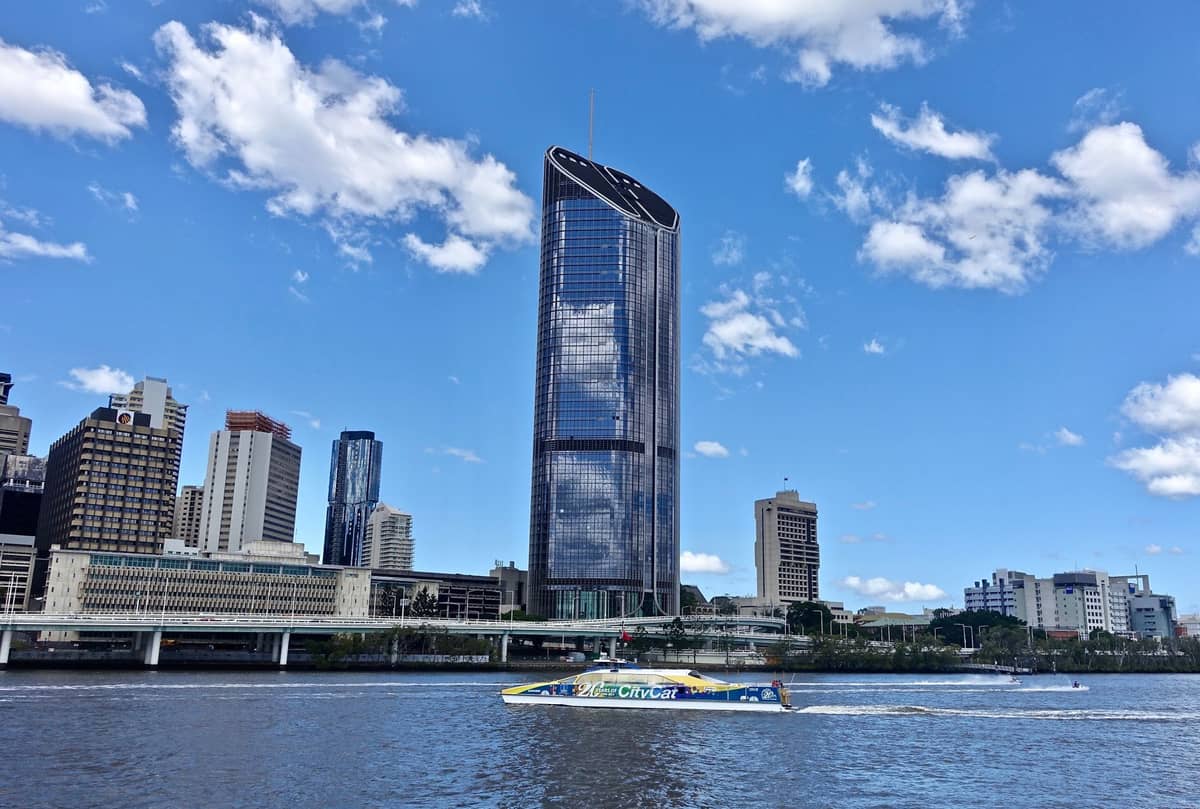
Brisbane's public transport is run by Translink, a Queensland Government-coordinated network that integrates trains, buses, ferries, the CityCat, and on-demand services under a single ticketing system. For visitors, the practical headline is this: one fare of 50 cents gets you on almost any Translink service within the network. That's not a promotional rate — it's the standard fare, and it applies across buses, suburban trains, ferries, and on-demand services.
⚠️ What to skip
The 50-cent flat fare does NOT apply to Airtrain (the airport rail service) or to any private transport. Airtrain operates under a separate fare structure — check its official fare page for the current adult one-way fare to Brisbane City stations. Always verify fares on the official Airtrain or Brisbane Airport website before you travel.
The network covers a broad area of South East Queensland, extending well beyond Brisbane's inner suburbs to the Gold Coast and Sunshine Coast rail corridors. For most inner-city itineraries — the CBD, South Bank, New Farm, Fortitude Valley, West End, and Kangaroo Point — the bus and train network is genuinely sufficient. Gaps start to appear in outer residential suburbs and during late-night hours after services wind down.
Fares and Payment: How to Tap On Correctly
The go card is Translink's reloadable smart card and remains the most reliable payment method, especially for frequent travel or families. You tap on when boarding and tap off when alighting — skipping the tap-off triggers a maximum-fare penalty charge. Alternatively, you can use a contactless Visa or Mastercard (physical card or mobile device), which works the same way. The critical rule: always use the same card or device for both the tap-on and tap-off. Switching between your phone and physical card within a single journey breaks the system and causes pricing errors.
- go card Reloadable smart card. Available at train station vending machines, most 7-Eleven stores, and online. Best for extended stays.
- Contactless bank card Tap-on/tap-off with a Visa or Mastercard. No top-up required. Use the same card for every tap within a journey.
- Mobile device Apple Pay, Google Pay, and similar work on most readers. Again — consistency matters. Don't mix your phone with a physical card.
ℹ️ Good to know
Airtrain is excluded from the standard Translink 50-cent fare. Check Airtrain and Translink fare rules when planning a connection, as the Airtrain fare is separate from the Translink fare.
The CityCat and River Ferries
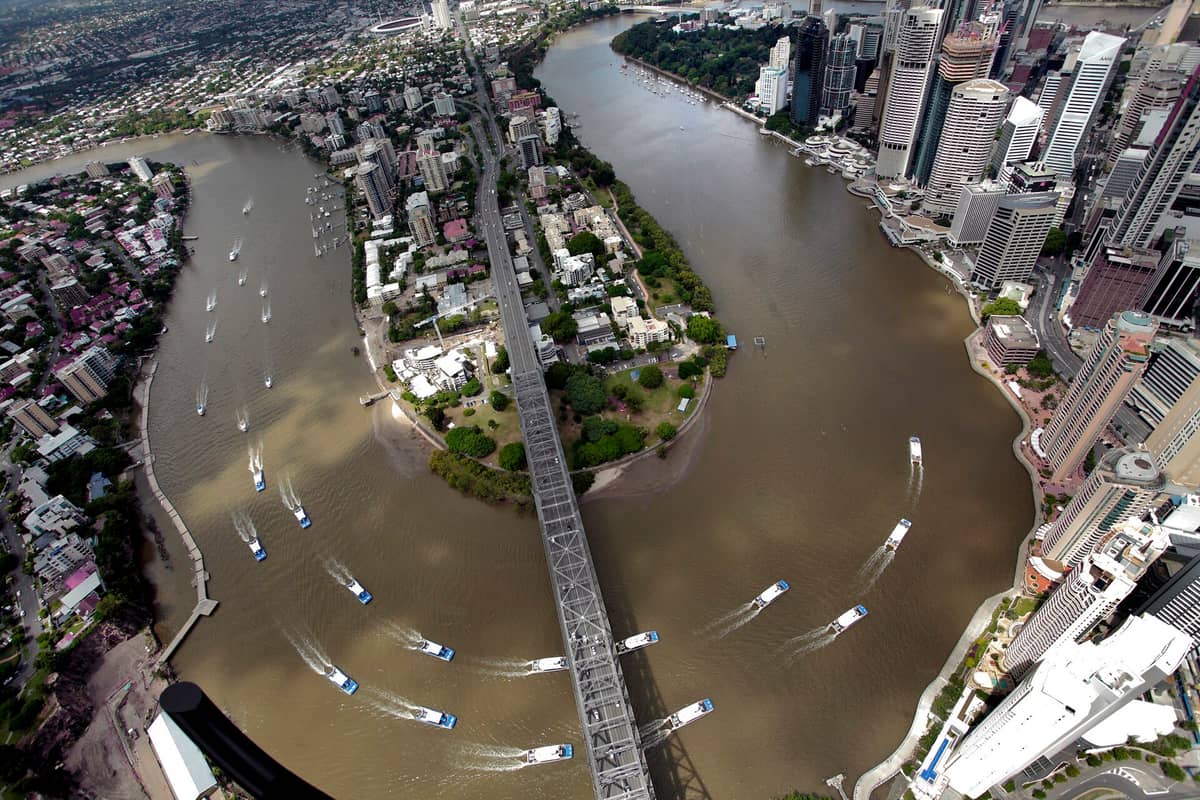
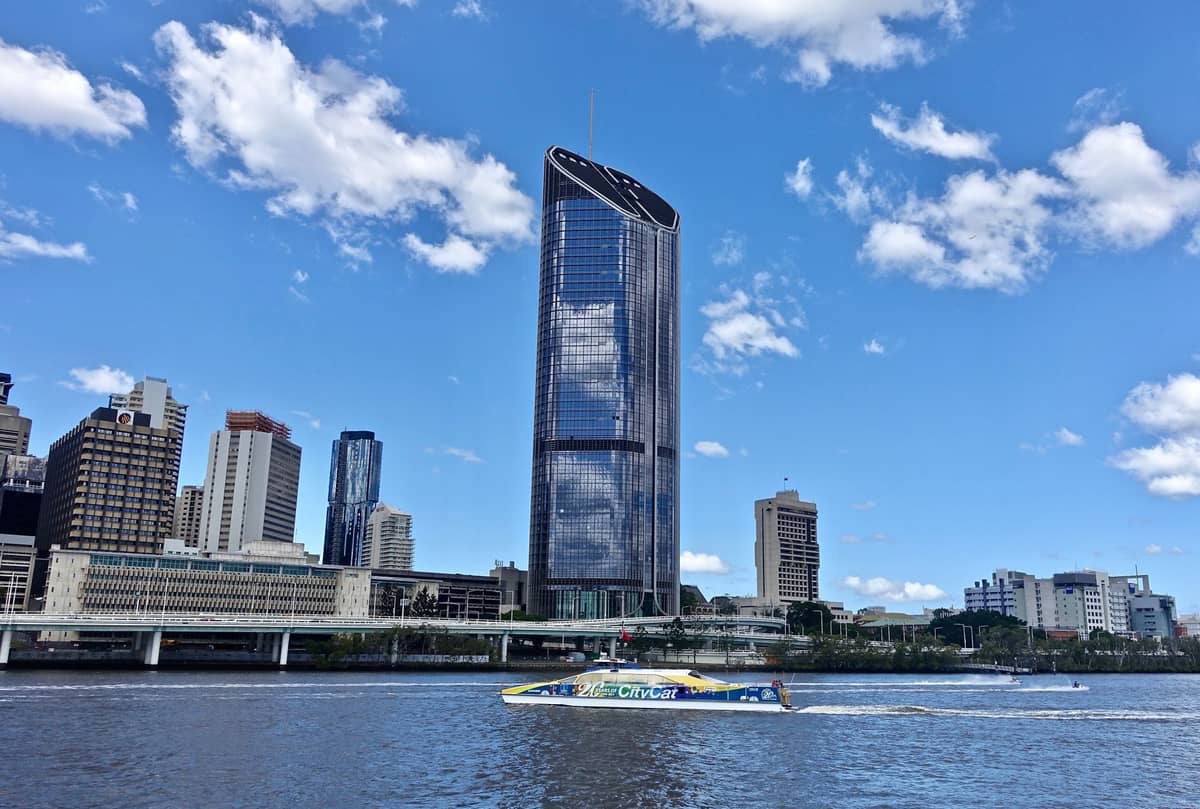
The CityCat is Brisbane's river catamaran service and one of the genuinely enjoyable ways to move around the city. The all-stops service runs daily between UQ St Lucia in the southwest and Northshore Hamilton in the northeast, passing through the CBD, South Bank, New Farm, and Newstead and Teneriffe. It's slower than the train for point-to-point travel, but the river views of the Story Bridge and city skyline make it worth taking at least once.
In addition to the CityCat, cross-river ferry routes provide shorter hop connections between specific wharves. Current routes connect Bulimba to Teneriffe, Dockside to Sydney Street, Holman Street to Riverside, and Maritime Museum to QUT Gardens Point. These are particularly useful if you're crossing the river between neighbourhoods that aren't on the same train line. Both CityCats and cross-river ferries are paid Translink services — they're not free — but they're covered by the standard 50-cent flat fare. Check the Translink website for current timetables before planning around ferry times, as services don't run as frequently as buses.
💡 Local tip
For the best river experience, take the CityCat westbound from Northshore Hamilton or New Farm Ferry Terminal in the late afternoon. You'll get the city skyline with the sun behind you and avoid the morning commuter crowd. Check the current timetable for the full route and journey time — it's not practical as a transport option, but memorable as a slow city tour. — not practical as a transport option, but memorable as a slow city tour.
Getting to and from the Airport
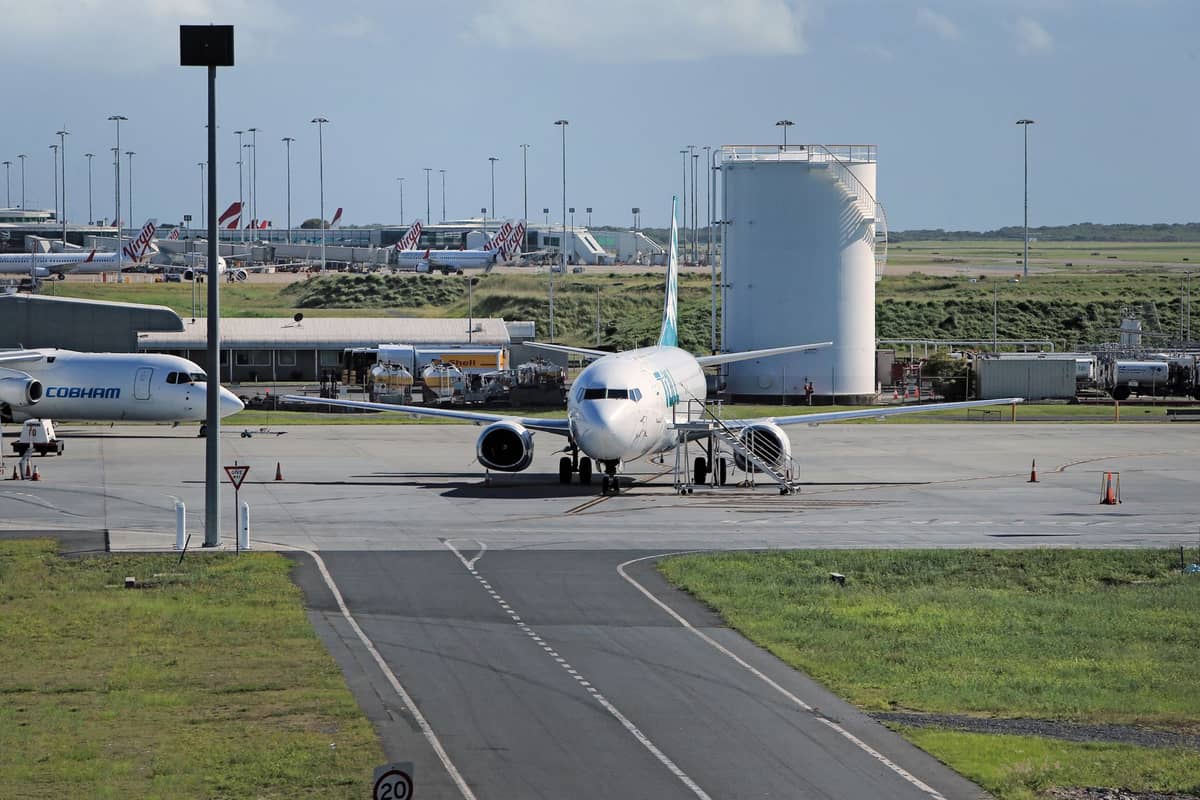
Brisbane Airport (BNE) sits about 15 km northeast of the CBD. Your three realistic options are Airtrain, taxi, or rideshare. Each has a different trade-off between cost, convenience, and time. For detailed logistics including terminal layouts and pick-up zones, the Brisbane Airport guide covers the full picture.
- Airtrain Fastest and most predictable option. Around 20 minutes to Central or Roma Street stations. Services run every 15 minutes during peak hours, every 30 minutes off-peak. Adult fare is approximately A$23.30 one-way to city stations — verify on the Airtrain website before travel. No luggage limits.
- Taxi Metered service from the designated taxi rank. Brisbane Airport estimates A$67-A$82 one-way to the CBD, but airport surcharges, tolls, and traffic can push this higher. Reliable but expensive for solo travellers.
- Uber / Rideshare Available from dedicated pickup zones at both terminals. Pricing fluctuates with demand — expect surge pricing during morning peaks, after major events, and late at night. Generally cheaper than a taxi for one or two people.
- Standard Translink bus Technically exists but involves multiple connections and is not practical for most travellers with luggage. Avoid for airport transfers.
The Airtrain makes sense for solo travellers or couples who are comfortable with public transport and not carrying oversized luggage. Groups of three or four people, or anyone with a lot of gear, will usually find a taxi or rideshare more economical once you split the cost. One thing worth noting: Airtrain frequency drops significantly in the early morning and late evening, so if your flight lands after 10pm, check the timetable carefully before assuming you can catch a train.
Buses, Trains, and the Brisbane Metro
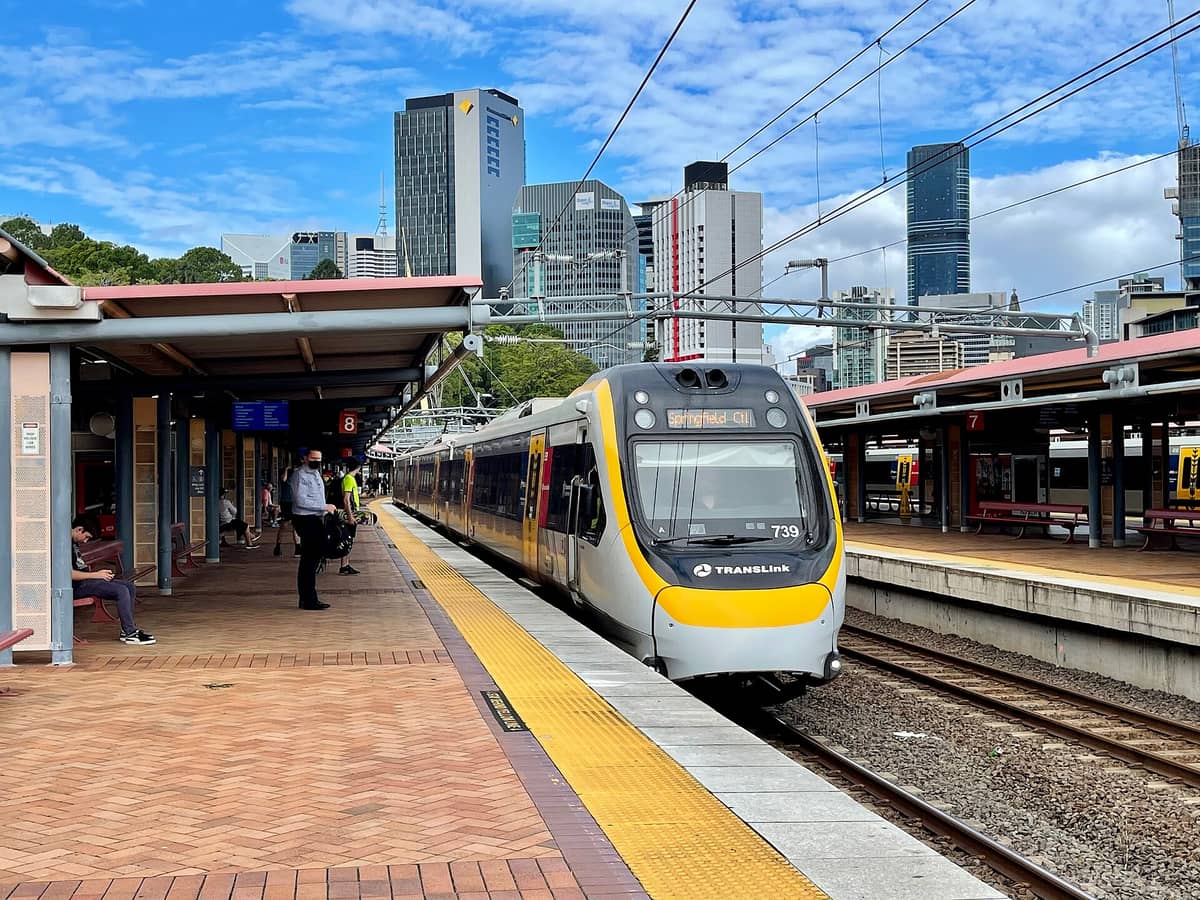
Brisbane's suburban train network is the backbone of the wider Translink system, with lines radiating out from Central and Roma Street stations to suburbs across the metro area. For visitors, the most useful lines connect the CBD with Fortitude Valley, Bowen Hills (for the RNA Showgrounds), and further out to Ipswich, Beenleigh, and the Gold Coast. The Beenleigh and Cleveland lines also serve South Brisbane and South Bank stations, which are a short walk from the South Bank Parklands and the Queensland cultural precinct.
The Brisbane Metro is a high-capacity bus rapid transit (BRT) service, not an underground rail system. It's easy to misread the name. It uses purpose-built vehicles and stations on key inner-city corridors. For most tourists, the distinction matters less than the practical reality: buses are frequent, cover most of the inner city well, and with the 50-cent fare, there's little reason not to use them liberally. Key destinations like the Queen Street Mall, GOMA, and Howard Smith Wharves are all accessible by bus without transfers.
Taxis, Rideshare, and When to Skip Public Transport
Uber operates widely across Brisbane and is generally the default rideshare choice. Other operators exist but have lower coverage. For most inner-city trips during the day, public transport beats a rideshare on both cost and speed — the 50-cent fare is hard to argue with. But there are clear situations where taxis or rideshares make more sense.
- Late nights: Translink services reduce significantly after midnight, particularly on weekdays. Rideshare is the practical option after last trains and buses.
- Outer suburbs and lifestyle precincts: Areas like Lone Pine Koala Sanctuary (Fig Tree Pocket) and some parts of the Redlands are poorly served by public transport. Driving or rideshare is faster.
- Groups with luggage or mobility considerations: Rideshare eliminates the stop-and-transfer complexity of bus networks.
- Events at Suncorp Stadium or The Gabba: Post-event surge pricing can be significant. Factor this in or plan to wait 30-45 minutes before requesting a ride.
Brisbane is also reasonably bike-friendly in the inner city, with dedicated lanes Brisbane is also reasonably bike-friendly in the inner city, with dedicated lanes. For walks between precincts — particularly the Brisbane Riverwalk connecting New Farm to the CBD — walking is often the best option and adds to the experience rather than deducting from it. The Brisbane walks guide covers the best on-foot routes between key neighbourhoods.
✨ Pro tip
Use the Translink Journey Planner (translink.com.au) rather than Google Maps for real-time Translink routing. Google Maps is generally accurate for Brisbane transit but occasionally shows outdated routes or misses service disruptions. The official planner also shows route options and service information.
Practical Tips for Navigating Brisbane
Queensland does not observe daylight saving time, which matters if you're coordinating transport connections with visitors from New South Wales or Victoria during summer. Brisbane stays on AEST (UTC+10) year-round, so when Sydney clocks go forward in October, Brisbane is suddenly an hour behind eastern neighbours — something to watch when booking cross-state transfers.
Public holiday schedules are worth checking before you plan around specific services. Airtrain and many Translink services run on a Sunday or special timetable on Queensland public holidays, meaning less frequent services. The Translink website publishes these in advance. For a full overview of how transport fits into planning your time, the 3 days in Brisbane itinerary maps out efficient routing between the main precincts.
- Always tap off: Forgetting to tap off costs you the maximum fare for that route — sometimes several dollars instead of 50 cents.
- Check the Translink app before long trips: Live service alerts flag delays, route changes, and disruptions.
- Peak hour runs roughly 7-9am and 4-6pm on weekdays — trains and buses get crowded during these windows.
- Check the Brisbane City Council website for current City Hopper availability, fares, stops, and hours. — check current stops and hours on the Brisbane City Council website.
- Drink driving laws are strict: Australia enforces a 0.05% blood alcohol limit. If you're planning to drink, don't plan to drive.
FAQ
How much does public transport cost in Brisbane?
The standard Translink fare is 50 cents per journey on eligible buses, trains, ferries, and trams within the Translink network. The fare applies regardless of distance within the covered network. Airtrain (airport rail) is a separate service with its own fares — check the Airtrain website for current prices to Brisbane City stations. Always verify current fares on the Translink and Airtrain websites before travel.
What is the best way to get from Brisbane Airport to the city?
Airtrain is a fast and consistent option, taking about 20 minutes to Central or Roma Street station. On weekdays it runs every 15 minutes during peak times and every 30 minutes off-peak; weekend and public-holiday services run every 30 minutes. A taxi or rideshare costs more, but may make sense for groups or travellers with heavy luggage. Standard Translink buses require checking current routes and connections for airport transfers.
Does the Brisbane Metro go underground?
No. Despite the name, the Brisbane Metro is a bus rapid transit (BRT) service that runs on dedicated surface lanes. It is not an underground rail system. It covers key inner-city corridors and uses purpose-built stations, but operates as a high-frequency bus service.
Can I use my credit card to pay for Brisbane public transport?
Yes. Contactless Visa and Mastercard, including cards in mobile wallets, are accepted on South East Queensland buses, trains, ferries, and trams where contactless payment is enabled. Use the same card or device for each tap on and tap off in a journey; mixing your phone with your physical card can record separate trips and charge separate fares.
Is the CityCat ferry free in Brisbane?
No — the CityCat and cross-river ferry services are paid Translink services covered by the standard 50-cent fare. The former CityHopper inner-city ferry is now a paid Translink service covered by the standard 50-cent fare. Check the Brisbane City Council and Translink websites for current stops and hours.
Tickets & tours
Live prices and dates from our booking partner. If you book, we may earn a commission at no extra cost to you.
Planning a trip? Discover personalized activities with the Nomado app.