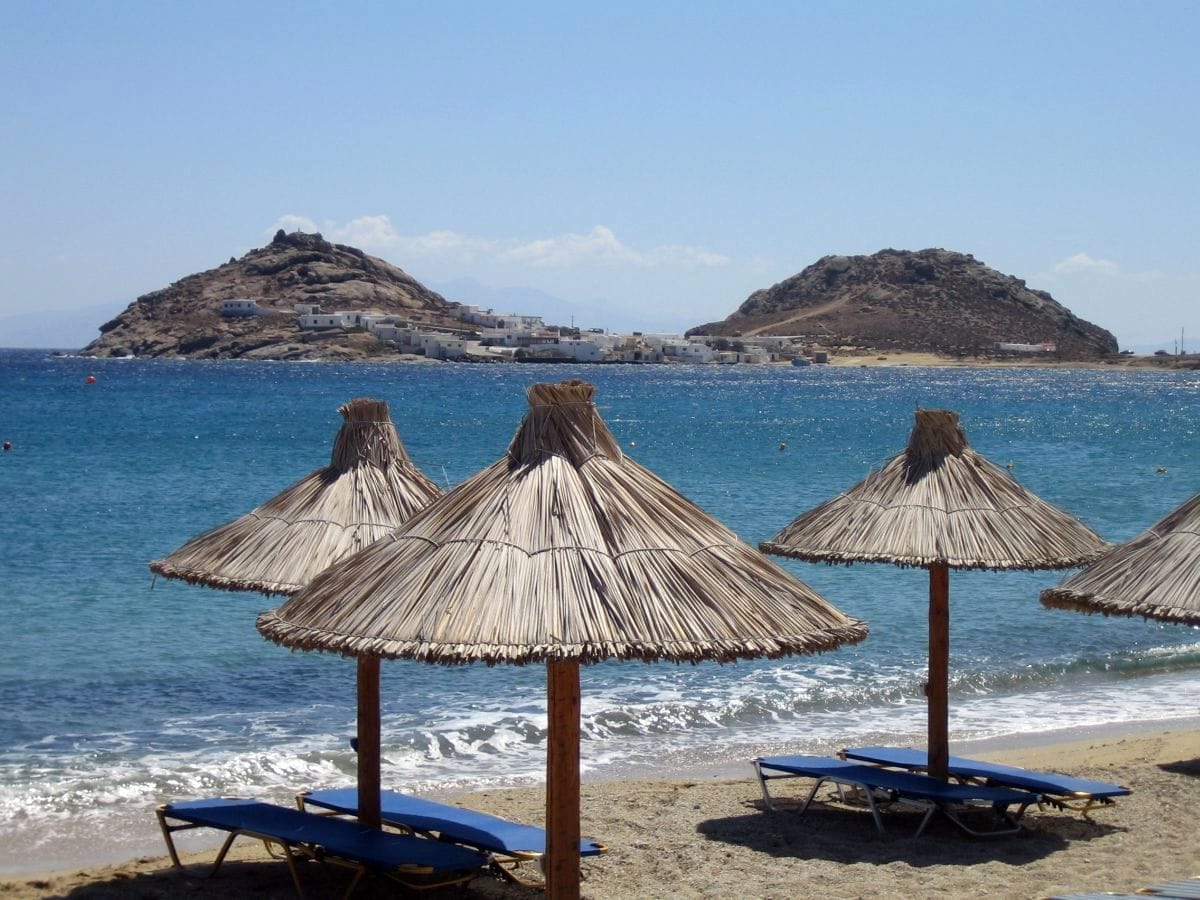
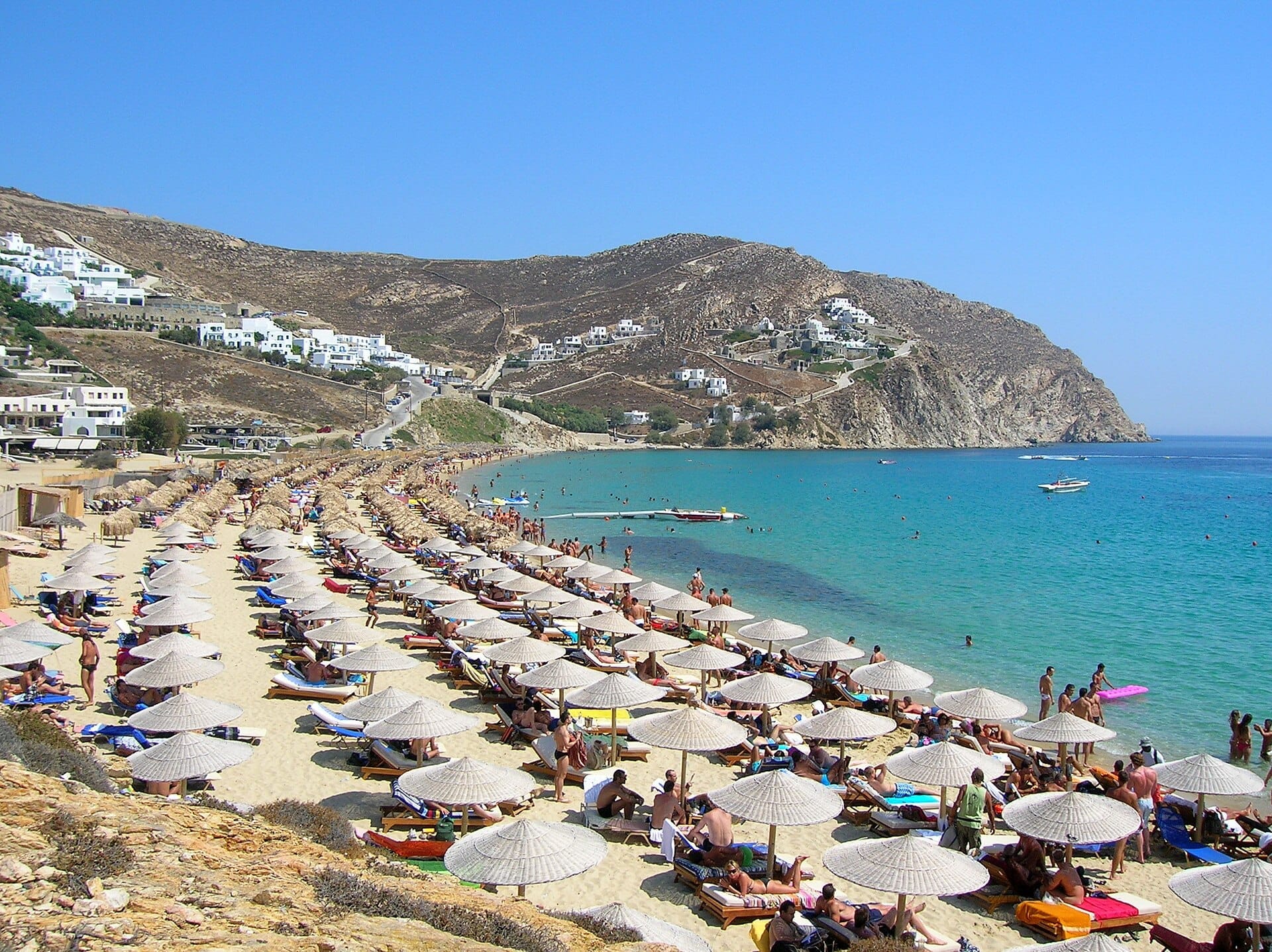
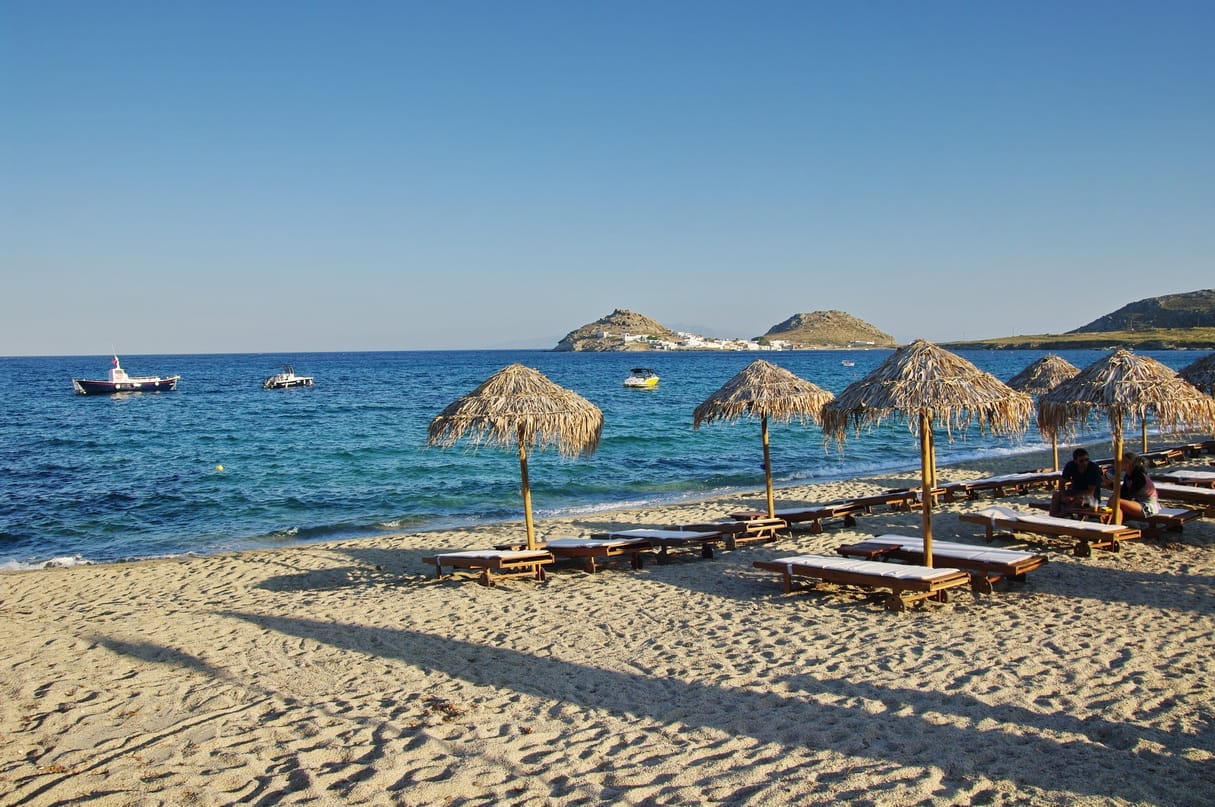
Elia and Kalafatis sit on the southeastern coast of Mykonos, offering a slower pace than the island's party-famous south shore. Elia claims the island's longest stretch of sand, while Kalafatis draws windsurfers and those seeking genuine quiet. Together they form Mykonos's most relaxed beach corridor.
Elia and Kalafatis are the southeastern coast's answer to Mykonos's louder, more choreographed beach scene. They share a quieter register, longer sand, and a crowd that tends to arrive by choice rather than by reputation.
Orientation
Elia and Kalafatis occupy the southeastern edge of Mykonos, roughly 8 to 10 km by road from Mykonos Town (Chora). They are not a single continuous resort zone but two distinct bays separated by several kilometers of rocky hillside and scrub. Think of them as neighboring chapters rather than the same story.
Elia sits at the end of a winding road that cuts inland from the south coast beach corridor. It is the farthest organized beach from Chora on this stretch, positioned just east of Agrari Beach. Travelers already familiar with Psarou and Platis Gialos will recognize the general direction: continue east past Paraga and Paradise, and the road gradually quiets as it approaches Elia.
Kalafatis occupies a separate bay further northeast, facing more directly east into the Aegean rather than south. The road to Kalafatis branches off near Ano Mera, the island's main inland village, which sits roughly midway between Mykonos Town and the Kalafatis coast. This routing matters practically: Kalafatis is often easier to reach via Ano Mera than by hugging the southern coastline.
There is no direct road connection between Elia and Kalafatis that avoids backtracking significantly. The straight-line distance between the two bays is about 3 km across the headland, but the road distance is around 6 to 6.5 km and requires at least partial return toward the island's interior. Visitors planning to use both beaches in a single day should rent a vehicle or factor in a taxi fare rather than relying on the public bus.
ℹ️ Good to know
Elia and Kalafatis are grouped together on maps and in travel writing because of their shared southeastern location and similar character, but they serve different moods. Elia is more organized and social; Kalafatis is rawer and suited to water sports and solitude.
Character and Atmosphere
The first thing you notice arriving at either beach is the relative absence of noise. No DJ sets audible from the parking area, no queues at the entrance gate, no Instagram photographers blocking the path. Both Elia and Kalafatis run on a different tempo from the beach clubs of Paradise or Psarou, and that is precisely why certain visitors make the effort to reach them.
Elia in the morning is one of the more pleasant experiences the island offers. The light arrives early over the low hills to the east and falls directly on the sand by mid-morning. The beach is long enough that even in peak season you can find a relatively uncrowded position toward the western end near the rocks that separate it from Agrari. By noon the sunbeds fill, the tavernas do steady business, and the atmosphere is social but unhurried. Afternoons bring more wind off the Aegean, which provides relief from the heat but can make the water choppy.
Elia also carries a well-established reputation as one of Mykonos's most LGBT-friendly beaches, with the smaller coves between Elia and Agrari particularly favored. The beach has an unofficial nude-friendly character in these areas, with no enforcement and no self-consciousness about it. This is not a recent branding exercise but a long-standing community reality.
Kalafatis reads differently. The bay faces east, which means the afternoon light comes from behind you as you face the water, a quality that photographers and sailors notice. The beach itself is sandier and more exposed to the island's prevailing northerly winds, called the meltemi, which blow strongest from July through August. This makes Kalafatis a natural fit for windsurfing and kitesurfing, with rental and instruction available on the beach. The crowd skews younger and more active during the summer wind season, then quiets considerably in June and September when conditions are calmer.
After dark, neither area offers much independently. A handful of tavernas stay open for dinner, the hotels have their terraces, and the mood is genuinely relaxed. Anyone looking for Mykonos nightlife will need to make the trip back to Chora or the south coast clubs. That trade-off is the point for many guests who stay here.
What to See and Do
The main activity at both locations is the beach itself. Elia Beach is widely cited as the largest single beach on Mykonos, stretching roughly 500 meters of fine golden sand. It is organized with sunbeds and parasols across most of its length, with a free section at the western end near the rocks. The water is clear and deepens gradually, making it suitable for swimming at most tide states.
The walk over the rocks between Elia and Agrari is worth doing in the cooler morning or late afternoon. It takes about 10 to 15 minutes each way on a rough path and opens onto a much smaller, quieter cove. Agrari sees a fraction of Elia's visitors and has a single taverna. For those comfortable with the terrain, it offers a noticeable step down in crowd density. Similarly, Kalafatis Beach has a rawer edge that rewards exploration to either end of the bay.
Water sports at Kalafatis are the main organized activity on that side of the island. Windsurfing and kitesurfing equipment rental is available on the beach, with instructors catering to beginners and experienced riders. The consistent summer winds make this one of the better spots in the Cyclades for these sports. Paddleboarding and kayaking are also available when conditions are calmer.
A practical excursion from either base is the inland village of Ano Mera, about 4.5 km from Kalafatis and 7–8 km from Elia. The village square has a working local rhythm that the beach zones lack entirely: a traditional kafeneion, the 16th-century Monastery of Panagia Tourliani, and a handful of tavernas where Mykoniotes actually eat. It makes a good half-day contrast to two days of beach.
Swimming and sunbathing at Elia Beach, the island's longest sand
Rock-path walk between Elia and Agrari for a quieter cove
Windsurfing and kitesurfing lessons and rentals at Kalafatis
Snorkeling along the rocky headlands at either bay
Half-day trip to Ano Mera village and the Monastery of Panagia Tourliani
Water taxi connection from Elia to Platis Gialos and the wider south coast beaches
💡 Local tip
If you want to visit both Elia and Kalafatis in one day, rent a scooter or car from Mykonos Town in the morning. The taxi journey between the two beaches takes about 8 to 10 minutes, but coordinating taxis from remote bays in peak season can mean long waits. A vehicle gives you full flexibility over timing.
Eating and Drinking
The food scene at Elia and Kalafatis is organized around beach tavernas and hotel restaurants rather than a diverse dining neighborhood. This is not a complaint so much as a description: the restaurants here serve grilled fish, fresh salads, and the standard Cycladic lineup with reasonable competence, and the settings justify the prices more readily than the food itself.
At Elia, several tavernas operate directly on or immediately behind the beach, offering lunch through dinner service. Fresh catch is grilled to order, mezedes are available for sharing, and the view of the water at sunset makes an adequate meal feel better than it might elsewhere. Expect prices that reflect the location: Mykonos beach dining is uniformly expensive by Greek standards, and Elia is no exception. A meal for two with wine at a beachfront taverna will run considerably more than the same food in Ano Mera or a side street in Chora.
Kalafatis has fewer options and a slightly more casual character. The tavernas here tend to be simpler, with plastic chairs and laminated menus, which in Greece is often a sign that the food-to-price ratio is more favorable. The handful of spots near the beach road do solid grilled octopus, horiatiki salad, and cold Mythos on ice. There is no cafe culture to speak of, and nothing stays open particularly late.
For a broader meal choice, Ano Mera is the practical option. The village square has traditional Greek tavernas that cater to locals as well as tourists, and the prices are noticeably lower. For the full range of Mykonos dining, the variety of options in Mykonos Town is unmatched. Read more in our guide to what to eat in Mykonos for island-wide context.
Getting There and Around
Both Elia and Kalafatis are served by the KTEL Mykonos public bus network, but on separate routes. Buses to Elia depart from the Old Port (south bus station) in Mykonos Town; the journey takes roughly 25 to 35 minutes depending on traffic and stops. Kalafatis is served by a different route, typically passing through or near Ano Mera. There is no direct bus connection between the two beaches: traveling between them by public transport requires returning to Mykonos Town or Ano Mera and changing.
Taxis are available but not always easy to summon from remote beach locations in high season. The taxi stand in Mykonos Town (Taxi Square, also called Manto Mavrogenous Square) is the main dispatch point. From the beach, you are largely dependent on calling ahead, asking a hotel to arrange transport, or walking to a more accessible road point. The drive from Mykonos Town to Elia takes around 20 to 25 minutes; to Kalafatis slightly longer depending on the route via Ano Mera.
Elia can also be reached by water taxi from Platis Gialos on the south coast. Boats run seasonally and connect the main south-coast beaches in sequence, making it possible to combine Platis Gialos, Paraga, Paradise, and Elia in a single day without renting a vehicle. This is one of the more enjoyable and practical ways to approach Elia, particularly if you are already staying on the south coast.
Renting a scooter or ATV from Mykonos Town is the most flexible option for this part of the island. The roads to Elia and Kalafatis are narrow and winding but paved, and most of the journey is on roads with light to moderate traffic outside the main beach rush hours. For a broader overview of island transport options, see our guide to getting around Mykonos.
⚠️ What to skip
Bus frequency to both Elia and Kalafatis drops sharply outside peak season (July to August) and in the evenings. If you plan to stay for sunset and dinner, arrange your return transport before you settle in for the afternoon. Stranded passengers at the Elia bus stop after 7 pm are a common sight in shoulder months.
Where to Stay
Accommodation at Elia and Kalafatis consists of small boutique hotels, studios, and private villas scattered among the hillside above and behind the beaches. There is no dense hotel strip in either location. The properties tend to sit back from the beach road with sea views, private pools, and a quiet character suited to guests who specifically want to be away from the density of Mykonos Town or the south coast resort hotels.
Elia has a slightly wider selection of mid-range to upscale hotels, some with direct beach access or very short walks to the sand. Staying here is a genuine commitment to a slower pace: you are not going to stumble into a late-night bar or find a convenience store open at midnight. Grocery runs and most services require a trip toward Ano Mera or Mykonos Town.
Kalafatis attracts a more independently minded guest: couples and families who want space, surfers and windsurfers who are booking around conditions, and travelers who find the south-coast beach club scene actively unappealing. The villas and studios in the Kalafatis area tend to be better value per square meter than comparable properties in Ornos or Platis Gialos, though the trade-off is accessibility.
Travelers uncertain about committing to this level of remoteness should read our full where to stay in Mykonos guide, which compares all the main areas across different travel styles and budgets.
💡 Local tip
If you want the quiet of Elia or Kalafatis but also easy access to Mykonos Town's restaurants and nightlife, consider staying here for the middle nights of a longer trip rather than your entire stay. The contrast makes both experiences feel more intentional.
Honest Assessment: Is This Area Right for You?
Elia and Kalafatis work well for a specific type of Mykonos visitor: someone who wants genuine beach time, a degree of seclusion, and does not need the island's nightlife infrastructure within walking distance. For first-time visitors to Mykonos with a short trip, basing yourself here makes the logistics of seeing the island considerably more complicated. For repeat visitors, or those who have specifically come to decompress, it can be the best choice on the island.
The honest drawbacks are real. Transport is inconvenient without a vehicle, dining options are limited, and the nighttime atmosphere is essentially nothing. If you are traveling with people who have different expectations about the trip, staying in this area can create friction. Both beaches are also exposed to the meltemi, and Kalafatis in particular can be near-unusable for swimming during peak wind days in July and August.
For context on how these beaches compare to the wider island, see our best beaches in Mykonos guide and the Mykonos on a budget guide if cost is a factor in your planning.
TL;DR
Elia is widely considered Mykonos's largest beach, with organized sunbeds, clear water, and an established LGBT-friendly and nudist character toward the Agrari end.
Kalafatis is a separate bay best suited to water sports enthusiasts and those seeking genuine quiet; wind conditions can be strong in peak summer.
Neither area has meaningful nightlife; after-dark transport back to Mykonos Town requires advance planning or a rental vehicle.
Best suited to repeat Mykonos visitors, couples seeking seclusion, water sports travelers, and anyone who finds the south coast beach clubs actively off-putting.
Water taxis from Platis Gialos to Elia offer a practical and scenic alternative to the bus for day visitors staying elsewhere on the island.
Three days is exactly enough time to cover Mykonos properly — the labyrinthine alleys of Chora, the UNESCO ruins of Delos, the south-coast beach scene, and a genuine taste of the island's nightlife. This day-by-day itinerary gives you the structure, the practical details, and the honest advice to make it work.
Mykonos has a beach for every type of traveler. This guide covers the 12 best beaches on the island, from the legendary party scene at Paradise to the car-free calm of Agios Sostis, so you can find exactly the day you're looking for.
Mykonos rewards travelers who time their visit carefully. This guide breaks down every season by weather, crowd levels, prices, and what's actually open, so you can decide when the island works best for your trip.
Delos is one of Greece's most extraordinary archaeological sites, and it sits just 30 minutes by boat from Mykonos. This guide covers ferry schedules, entry fees, the best ruins to prioritize, and whether a guided tour is worth the extra cost.
Mykonos is a small island with a surprisingly complex transport puzzle. From the KTEL bus network and south-coast caiques to the island's notoriously scarce taxis and rental vehicles, this guide breaks down every way to get around — with real prices, practical tips, and honest warnings about what doesn't work as well as you'd hope.
Mykonos has a reputation that precedes it: luxury prices, wall-to-wall tourists, and beach clubs that run until dawn. But the island is more layered than that. This guide cuts through the hype to tell you exactly who Mykonos is worth visiting for — and who should skip it.
Mykonos has some of the world's most famous beach clubs, from full-day party venues at Paradise Beach to bohemian sunset gatherings at Scorpios. This guide breaks down where to go, what to expect, what things actually cost, and how to book before peak season fills up.
Mykonos is far more than a party island. For couples, it offers sunset cocktails at Little Venice, private-pool suites above the Aegean, quiet beaches with turquoise water, and a day trip to the ancient ruins of Delos. This guide covers the best romantic experiences, when to go, where to stay, and how to avoid the crowds.
Mykonos is Greece's most polished luxury destination, combining world-class hotels, private beach clubs, superyacht culture, and some of the Aegean's best dining. This guide cuts through the hype with specific advice on when to go, where to stay, how to get around, and what actually justifies the price tag.
Mykonos has one of Europe's most legendary party scenes, from clifftop superclubs to sun-soaked beach raves and intimate cocktail bars in Chora's whitewashed alleys. This guide covers the best venues, realistic prices, seasonal timing, and the honest trade-offs so you can plan a night out that actually matches your expectations.
Mykonos has a reputation as one of Greece's most expensive islands, and that reputation is mostly earned. But visiting without hemorrhaging money is entirely possible if you understand how pricing works, when to go, and where to spend versus save. This guide breaks it all down honestly.
Everything you need to plan the trip from Mykonos to Santorini: which ferry operators run the route, how long the crossing takes, what fares to expect by season, whether flying makes sense, and how to fit in stops at Paros or Naxos along the way.
Both islands dominate Cyclades itineraries, but they deliver completely different experiences. This guide breaks down the real differences between Mykonos and Santorini across scenery, beaches, nightlife, budget, and logistics so you can choose the right one — or plan both smartly.
Mykonos delivers more than beach clubs and late nights. This guide covers the top things to do in Mykonos, Greece — from ancient ruins on Delos and windswept Cycladic lanes to family beaches and genuine local culture — with practical logistics for every type of traveler.
Mykonos has a distinct culinary identity that goes far beyond generic Greek salads and souvlaki. This guide covers the island's signature foods, honest price expectations, where to eat well on any budget, and the restaurants worth planning your day around.
Choosing where to stay in Mykonos shapes your entire trip. This guide breaks down every key area, from the lively lanes of Chora to the family-friendly shores of Ornos, with honest advice on prices, logistics, and who each neighborhood actually suits.