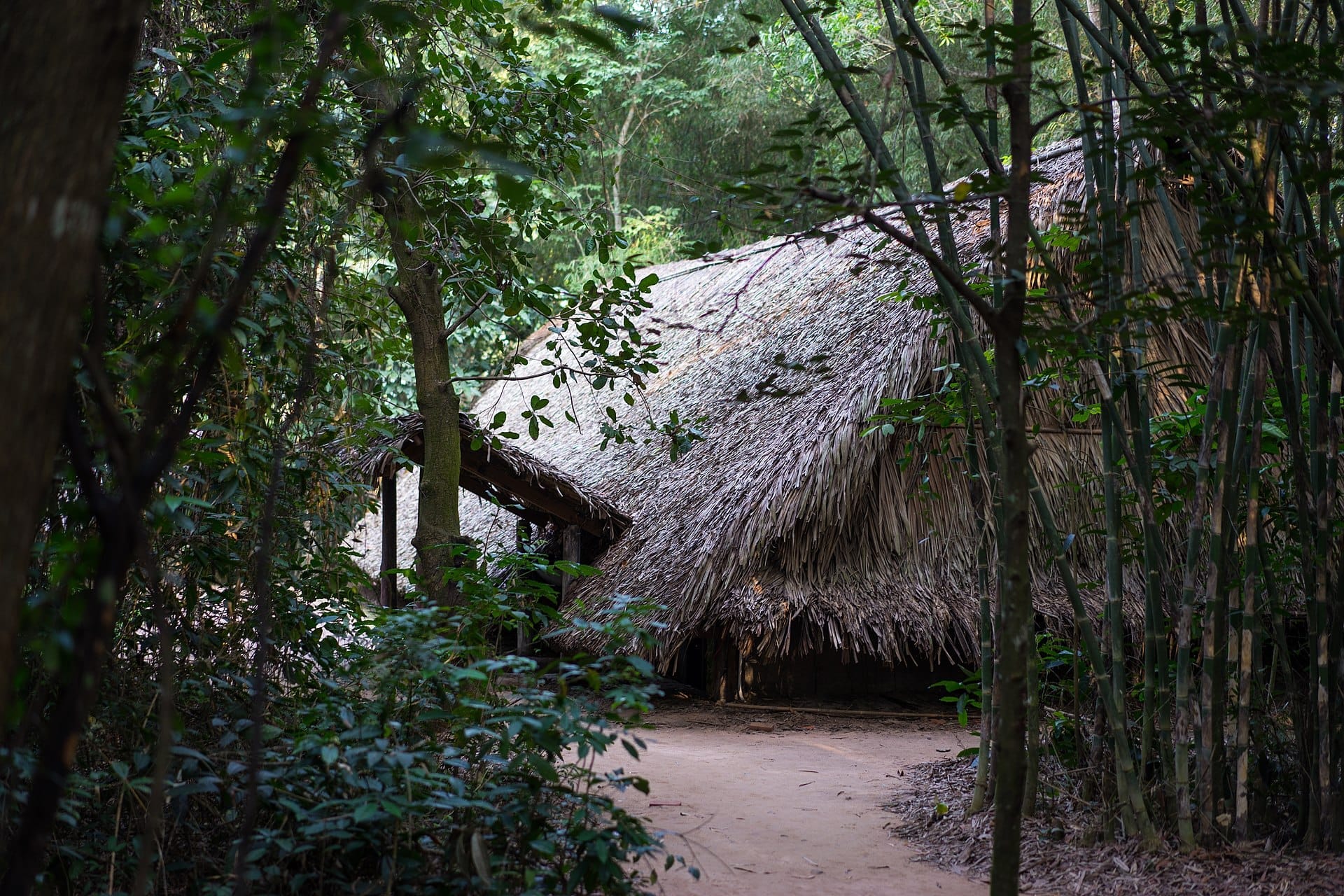
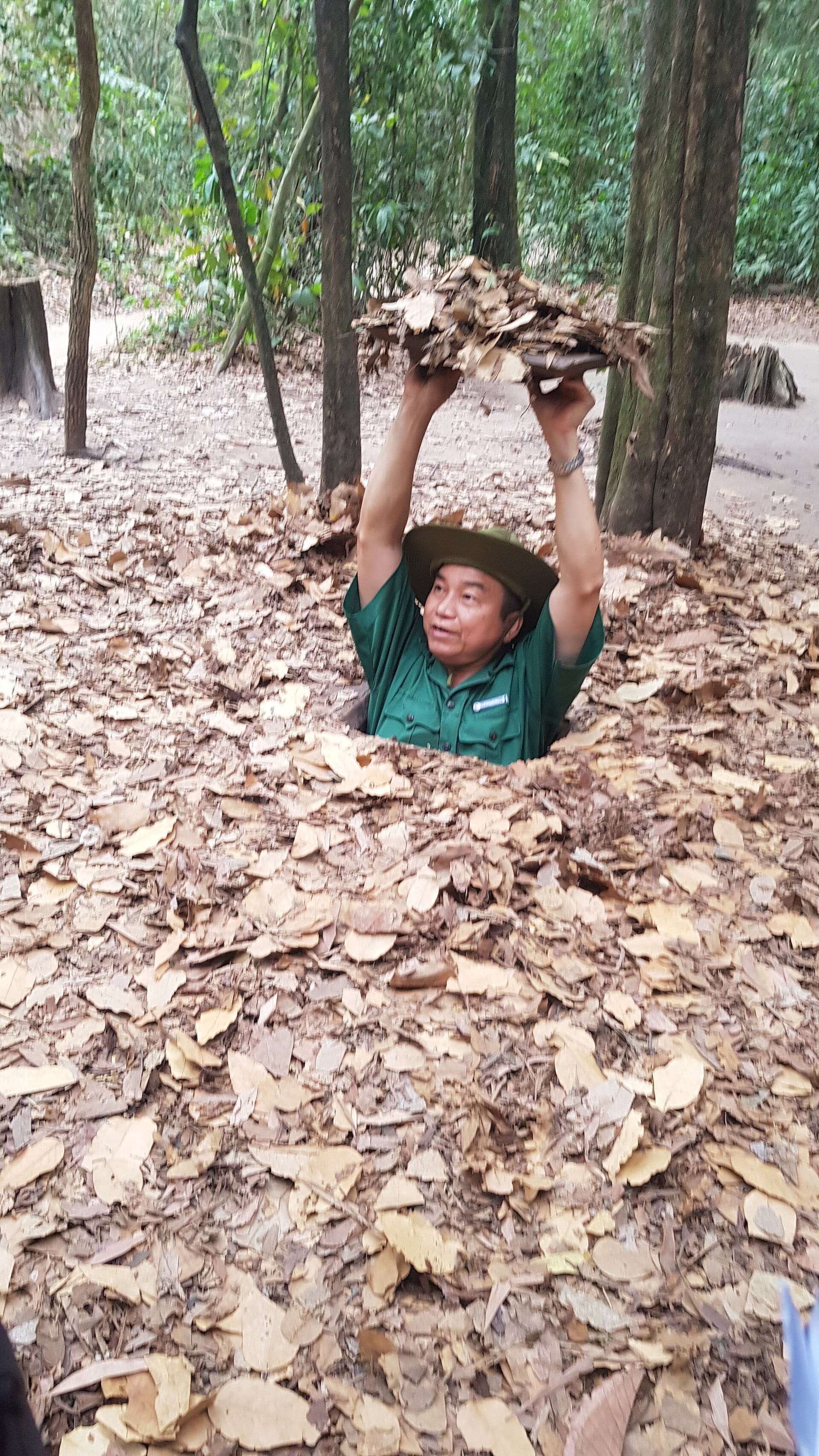
Củ Chi sits on the northwestern fringe of Ho Chi Minh City, roughly 40 kilometers from the urban core. It is best known internationally for the Cu Chi Tunnels, the remarkable underground network used during the Vietnam War, but the district also offers a genuine glimpse of rural life that feels worlds apart from central Saigon.
Củ Chi is where the city gives way to open fields, rubber plantations, and a landscape shaped as much by history as by the land itself. Most visitors come for the Cu Chi Tunnels, one of Vietnam's most significant wartime sites, but those who linger discover a quieter, slower version of Ho Chi Minh City that few travelers take time to understand.
Orientation
Củ Chi occupies the far northwestern edge of Ho Chi Minh City, stretching toward the borders of Tây Ninh and Bình Dương provinces. The district sits roughly 35 to 40 kilometers from District 1, which makes it one of the most remote parts of the city's administrative territory. In 2025, several communes within the district were reorganized, with Tân Phú Trung, Tân Thông Hội, and Phước Vĩnh An merging to form a single Củ Chi commune covering nearly 65 square kilometers. For practical purposes, most visitors refer to Củ Chi as the broader district rather than any specific commune.
The terrain here is noticeably different from the flat, concrete-dense cityscape of central Saigon. The land is low-lying but interspersed with fields, water channels, and patches of secondary forest. The Sài Gòn River runs along parts of the district's eastern boundary, and the landscape carries the kind of open quality you rarely feel until you are well clear of the city's suburban sprawl. Coming from District 1, the transformation is gradual: the high-rises thin out after Bình Thạnh and Thủ Đức, replaced first by low warehouses and industrial zones, then eventually by roadside stalls and farmland.
For travelers building a mental map of Ho Chi Minh City, Củ Chi sits at the opposite end of the spectrum from the dense, walkable streets of District 1 or the Chinese-influenced lanes of Cholon. It is best understood not as an urban neighborhood but as a rural district that happens to fall within one of Southeast Asia's largest cities.
Character & Atmosphere
Early morning in Củ Chi has a texture you will not find in the city center. Around dawn, local markets along the main district roads fill with vendors selling fresh produce, live poultry, and river fish. The smell of pho and bánh mì drifts from small family-run stalls, and the traffic is mostly motorbikes and three-wheeled transport vehicles rather than the taxi and rideshare mix of downtown Saigon. The air is noticeably cleaner, and on clear mornings the horizon actually has depth to it.
By mid-morning, tour buses begin arriving at the tunnel sites, and the area around Ben Duoc and Ben Dinh takes on a different energy: groups of international visitors, guides with loudspeakers, souvenir stands. This is the version of Củ Chi most travelers see. Step even a short distance away from the main tunnel compounds, however, and the tourist infrastructure disappears almost immediately. Back roads lead through rubber tree plantations, past small pagodas, and alongside irrigation channels where locals fish in the late afternoon shade.
At night, Củ Chi is quiet in a way that surprises visitors who arrive expecting something like the city. The district town area has restaurants, local drinking spots, and some street food, but there is no nightlife strip, no bar quarter. Families eat early, streets empty by nine or ten in the evening, and the sounds shift from traffic to insects and frogs. For travelers accustomed to the non-stop energy of central Ho Chi Minh City, this can feel either deeply restful or slightly disorienting depending on what you came for.
ℹ️ Good to know
Củ Chi is not a neighborhood to wander and stumble upon things. The attractions are spread across a large rural district, and the best experiences require some planning, either through an organized tour or with a reliable map and your own transport.
What to See & Do
The primary reason most travelers make the trip is the Cu Chi Tunnels, and the site fully justifies the journey. The tunnel network originally stretched more than 250 kilometers beneath the district, connecting villages, military command posts, field hospitals, weapons caches, and living quarters. During the Vietnam War, the tunnels allowed Viet Cong fighters to operate under one of the most heavily bombed areas in history. Today, two sections of the network are open to visitors: Ben Dinh, closer to Ho Chi Minh City and typically busier, and Ben Duoc, further northwest and generally considered the more authentic and less commercial of the two.
At both sites, visitors can enter sections of the tunnels (widened slightly from the original dimensions for modern visitors), watch demonstrations of trap mechanisms and wartime tools, and walk through reconstructed living and working spaces. The experience is physically demanding in places: the original tunnels were designed for smaller frames, and even the widened sections require crouching. The combination of heat, darkness, and confined space gives a visceral sense of what daily life underground involved that no museum exhibit can replicate.
Beyond the tunnels themselves, the district has a handful of lesser-visited sites that reward travelers with a full day to spend. The Ben Duoc Memorial Temple is a large, solemn monument dedicated to the soldiers who died in the area during the war. The Phuoc Hiep Rubber Plantation gives context to the district's agricultural character: rubber trees were used for cover and strategic concealment during the conflict and remain a significant local industry today. Smaller village pagodas and the Sài Gòn River banks offer quiet spots that see almost no foreign visitors.
Ben Duoc Tunnel Site: the larger and more atmospheric of the two main visitor complexes, with a memorial temple on site
Ben Dinh Tunnel Site: closer to the city, better for day-trippers with limited time
Ben Duoc Memorial Temple: a significant war memorial worth the short detour
Phuoc Hiep Rubber Plantation area: context for the district's agricultural identity
Sài Gòn River banks near Phước Vĩnh An: peaceful, off-the-tour-circuit scenery
💡 Local tip
Ben Duoc is worth the extra 15 kilometers if you have the time. It receives far fewer visitors than Ben Dinh, the guides tend to be more engaged with smaller groups, and the surrounding environment feels less like a theme park and more like a genuine historical site.
Eating & Drinking
The food in Củ Chi reflects its rural character. This is not a destination for restaurant-hopping or cocktail bars, but it does offer some of the most straightforward, ingredient-led Vietnamese cooking you will find within Ho Chi Minh City's boundaries. The local specialty that most visitors encounter is rau muống (water morning glory) prepared in various ways, along with freshwater fish dishes, grilled meats, and the kind of simple com binh dan (worker's rice plates) that form the backbone of everyday Vietnamese eating.
Around the tunnel complexes, there are canteen-style restaurants catering to tour groups, serving set Vietnamese meals at reasonable prices. These are functional rather than exceptional. For better quality, the small town center of Củ Chi district has local pho stalls and bánh mì shops that open from around 6am, and informal nhà hàng (restaurants) where grilled river fish and vegetable dishes are the order of the day. Prices throughout the district are noticeably lower than in central Saigon.
Travelers planning a day trip should consider eating breakfast or lunch at a local roadside stall on the way in, rather than relying on the tourist canteens near the tunnels. For a broader sense of what the food scene looks like across the city before you go, the Ho Chi Minh City street food guide gives useful context on regional ingredients and dishes you are likely to encounter.
Getting There & Around
Getting to Củ Chi from central Ho Chi Minh City takes between one and two hours depending on traffic and mode of transport. The journey of roughly 40 kilometers passes through some of the city's most congested suburban corridors, so early morning departures are strongly recommended. Arriving by 8am means beating the worst of the midday heat at the outdoor tunnel sites as well.
The most common options are organized day tours (widely available from operators in District 1 and Phạm Ngũ Lão), private car hire, or renting a motorbike and riding yourself. The main route from the city center follows Highway 22 (Quốc lộ 22) northwest through Hóc Môn and into the district. This road is straightforward but busy, and motorbike riders should be comfortable with Vietnamese highway traffic before attempting it independently.
Public buses do connect Ho Chi Minh City to Củ Chi. Bus routes from Chợ Lớn Bus Station and An Sương Terminal run into the district, though journey times are long and connections are not straightforward for travelers unfamiliar with the city's bus network. Ride-hailing apps like Grab operate in Ho Chi Minh City and can be used to book cars for the trip, though costs for a round trip with waiting time add up quickly.
Within Củ Chi itself, the two tunnel sites are separated by about 15 kilometers and are not within walking distance of each other or of the district town. Visitors without their own transport will need to arrange onward movement between sites through their tour operator, a hired motorbike taxi (xe ôm), or a Grab car. The rural road network is generally in good condition, and cycling between sites is possible for those who enjoy longer rides in the heat.
For a full overview of how to navigate the city's various transport options, the getting around Ho Chi Minh City guide covers everything from metro lines to xe ôm and ride-hailing apps.
⚠️ What to skip
Củ Chi sits outside the area currently served by Ho Chi Minh City's metro system. Metro Line No. 2 (Bến Thành to Tham Lương) was in planning and construction stages as of 2025-2026, but it does not extend to Củ Chi. Verify current public transit options before your trip, as infrastructure in the outer districts is evolving.
Where to Stay
The overwhelming majority of travelers visit Củ Chi as a day trip from Ho Chi Minh City rather than staying overnight. There is a small selection of guesthouses and ecolodge-style accommodation in the district, but the options are limited and the area offers little reason to base yourself here for more than one night unless you are traveling onward to Tây Ninh or the Cambodian border region.
For most visitors, the practical choice is to stay in District 1 or Phạm Ngũ Lão and make Củ Chi a day trip. This keeps you close to the city's restaurants, transit connections, and other attractions. The where to stay in Ho Chi Minh City guide breaks down the best areas and accommodation types for different travel styles and budgets.
If you do want to stay overnight in the district, look for accommodation in or near the Củ Chi town center rather than at isolated spots. Staying locally means you can visit the tunnel sites in the early morning before tour groups arrive, experience the local market scene at dawn, and have a more genuine sense of life in the outer districts of one of Southeast Asia's largest cities.
Củ Chi in Context: Day Trip or Deeper Dive?
Củ Chi is most often mentioned in the same breath as the Cu Chi Tunnels day trip, and for good reason: the site is genuinely one of the most significant historical experiences available within reach of Ho Chi Minh City. But treating Củ Chi purely as a tunnel visit risks reducing a complex, layered district to a single attraction.
The district's character, shaped by wartime history, agricultural traditions, and a pace of life that pre-dates the city's rapid development, offers something that central Saigon cannot: perspective. Standing in a rubber plantation in Củ Chi and thinking about the same landscape in the 1960s and 1970s changes how you read the war history at the War Remnants Museum back in the city. The two sites work well together as part of a broader engagement with Vietnamese history.
For travelers building a fuller itinerary, pairing a Củ Chi day trip with visits to the Reunification Palace and the War Remnants Museum in District 1 gives the most coherent narrative arc through Ho Chi Minh City's wartime history. The Ho Chi Minh City itinerary guide offers suggestions on how to sequence these experiences across multiple days.
TL;DR
Củ Chi is a rural district 40 kilometers northwest of central Ho Chi Minh City, best known for the Cu Chi Tunnels war-history site.
Best visited as a day trip from District 1 or Phạm Ngũ Lão; overnight stays are possible but limited in accommodation options.
Plan for a half-day minimum at the tunnels; Ben Duoc is the quieter and more atmospheric of the two main sites.
Ideal for travelers interested in the Vietnam War, Vietnamese rural life, or anyone wanting contrast to the dense urban energy of central Saigon.
Not recommended for travelers seeking nightlife, shopping, or walkable neighborhood exploration: this is a wide, rural district that requires your own transport or an organized tour.
Ho Chi Minh City's tropical climate divides sharply into a dry season and a wet season, and timing your visit makes a bigger difference than most travelers expect. This guide breaks down every month, from ideal dry-season windows to the pros of traveling in the rain.
Ho Chi Minh City rewards deep exploration, but some of the most memorable experiences in southern Vietnam sit just beyond the city limits. These are the best day trips from Ho Chi Minh City, from underground war history to slow-boat river journeys.
Ho Chi Minh City's transport network is more layered than most visitors expect. From the newly opened Metro Line 1 to app-based motorbike taxis that slice through gridlock, this guide breaks down every practical way to get around Saigon, with honest assessments of what actually works.
Whether you have a long weekend or nearly a week, this guide breaks down exactly how to spend 2, 3, or 5 days in Ho Chi Minh City. From the war history of District 1 to the Chinese temples of Cholon and the tunnel networks of Cu Chi, every day is mapped out with honest advice on timing, crowds, and what's genuinely worth your time.
From cheap beers on Bùi Viện to cocktails 40 floors above the Saigon River, Ho Chi Minh City's nightlife runs seven days a week and rarely stops before 3 AM. This guide breaks down every scene by neighborhood, budget, and vibe so you spend less time deciding and more time out.
From crispy bánh xèo in District 4 to late-night snails on Nguyễn Thượng Hiền Street, Ho Chi Minh City's street food scene is one of the most diverse and affordable in Southeast Asia. This guide breaks down the essential dishes, the best neighborhoods to find them, honest pricing, and the traps worth avoiding.
Ho Chi Minh City, still widely called Saigon, packs more experiences per square kilometer than almost any city in Southeast Asia. This guide covers the top attractions, day trips, nightlife, food, and practical planning tips so you can spend less time deciding and more time exploring.
Ho Chi Minh City's food scene runs from sidewalk plastic stools to contemporary kitchens earning Michelin recognition. This guide cuts through the noise with specific restaurants, real prices in Vietnamese Dong, neighborhood breakdowns, and honest assessments of what's worth your time.
Choosing where to stay in Ho Chi Minh City (Saigon) shapes your entire trip. This guide breaks down the best neighborhoods by travel style and budget, with honest assessments of what each area delivers — and what it doesn't.