Smithfield Square: Dublin's Grandest Open Plaza
Smithfield Square, officially Smithfield Plaza, is the largest open paved public space in central Dublin, located in the north inner city's Dublin 7 district. Once the site of monthly horse fairs dating to the 1600s, it is now a broad, windswept civic space flanked by whiskey distilleries, independent bars, and event venues. Entry is free, the Luas stops practically at its edge, and the surrounding neighbourhood rewards a longer look.
Quick Facts
- Location
- Smithfield, Dublin 7, north inner city
- Getting There
- Luas Red Line – Smithfield stop (2-min walk); Four Courts stop (5-min walk)
- Time Needed
- 30–60 minutes for the square; 2–3 hours including nearby attractions
- Cost
- Free to enter; ticketed events vary
- Best for
- Architecture enthusiasts, whiskey lovers, event-goers, local atmosphere
- Official website
- www.dublintown.ie/business/smithfield-square
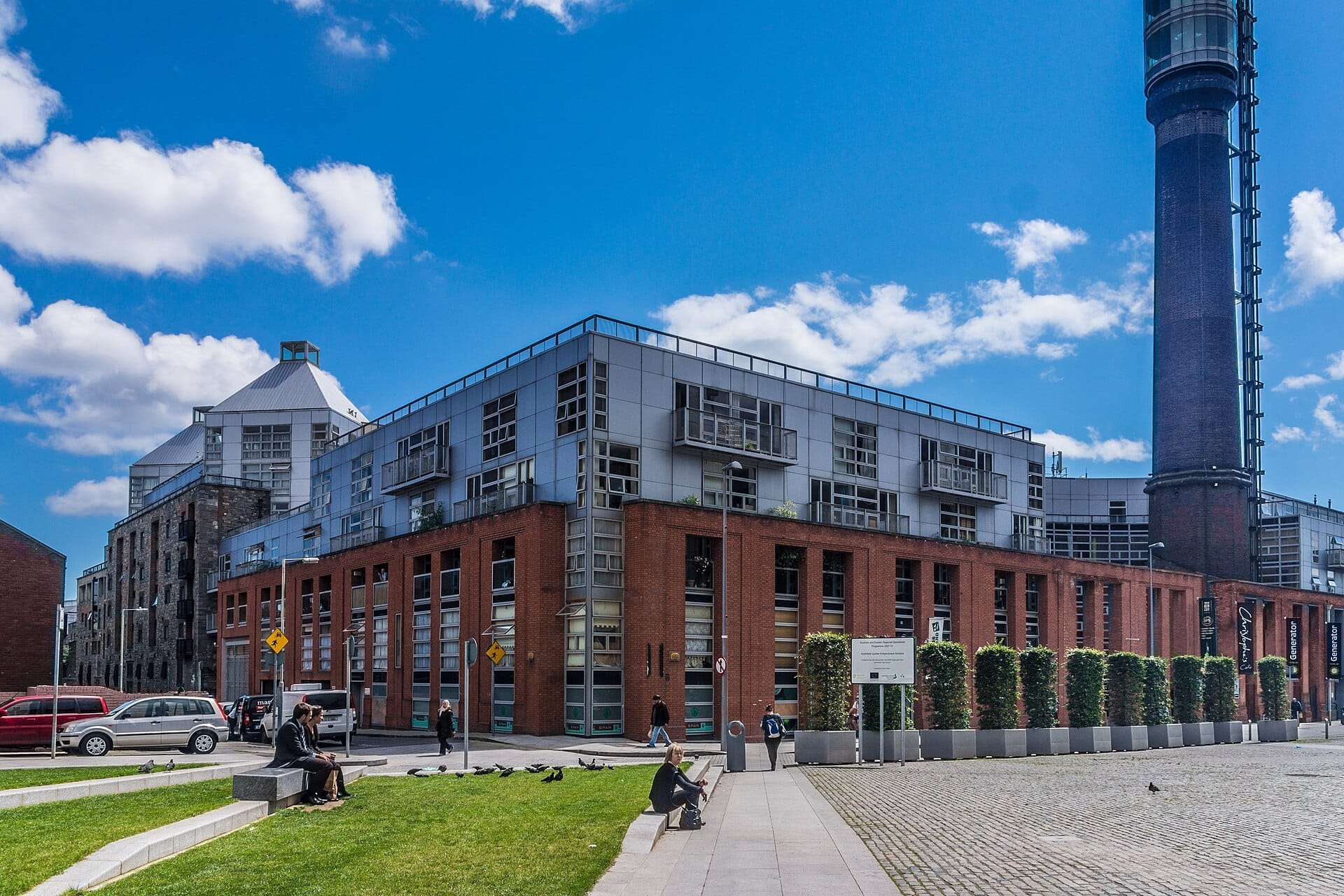
What Smithfield Square Actually Is
Smithfield Plaza, as it is officially named, is the largest open paved public area in central Dublin. It sits in postal district D7, roughly bounded by the River Liffey to the south, Bow Street to the east, Queen Street to the west, and North Brunswick Street to the north. The square is not a manicured park or a heritage museum. It is a working civic space, granite-paved and exposed, that has absorbed centuries of commerce, noise, and reinvention without losing the feeling that it has always been slightly too big for its surroundings.
In Irish, the area is known as Margadh na Feirme, meaning Farm Market, which tells you something about its original purpose. The square was laid out in its recognizable form by the 18th century and appears clearly on a 1756 map of Dublin as an established market space. For centuries it was the venue for monthly horse fairs, with dealers riding in from the countryside to trade livestock in the open air. That tradition persisted well into the 20th century. The cobblestones of those fairs are gone, replaced by the current granite paving, but the scale of the space still makes sense only when you picture it full of animals and dealers.
💡 Local tip
The Luas Red Line stops directly at Smithfield, making it one of the easiest squares in Dublin to reach from the city centre or Heuston Station. No bus connections required.
How the Square Changes Through the Day
Smithfield in the morning is quiet and a little austere. The wide granite expanse reflects grey sky. Delivery vehicles pull up along the flanking streets, and workers from the surrounding offices and apartment blocks cut across the square on their way to the Luas. There is a stillness here that is unusual for a capital city square, and it suits the scale of the place. The Victorian warehouses and converted grain stores on the periphery are impressive in low light, their brick facades darkened with age.
By midday the square fills with workers eating lunch on the granite steps and benches around the gas flame columns, which are a distinctive feature of the redesigned plaza. In the afternoon, particularly at weekends, visitors drift in from the nearby Jameson Distillery or the Old Jameson Distillery building on Bow Street, which edges almost directly onto the square. The relationship between the distillery and the square is close enough that you can smell traces of the production process on certain days, a sweet, malty warmth drifting across the open paving.
Evenings shift the mood considerably. The surrounding bars and restaurants pull in a crowd, and the square itself becomes a transit point between venues. During summer, the long northern-latitude dusk keeps the space photogenic well past 9pm. In winter, the TwinkleTown Christmas experience takes over the square with ice rinks, fairground stalls, and temporary structures, transforming it into something entirely different. Those events carry their own ticket prices and hours, separate from the square itself.
Tickets & tours
Hand-picked options from our booking partner. Prices are indicative; availability and final rates are confirmed when you complete your booking.
Giant's Causeway, Dark Hedges, and Belfast Tour from Dublin
From 85 €Instant confirmationFree cancellationDublin self-guided audio tour
From 10 €Instant confirmationBird of Prey, Cliffs of Moher and Aillwee Cave from Dublin
From 201 €Instant confirmationFree cancellationGame of Thrones Studio tour with return transfer from Dublin
From 63 €Instant confirmationFree cancellation
The Architecture Around the Square
The buildings framing Smithfield are not the uniform Georgian terraces you find south of the Liffey. This is a more industrial Dublin, defined by 19th-century warehouses and distillery buildings. Several have been converted into hotels and apartments, and the resulting mix of raw brick, modern glass insertions, and civic infrastructure gives the square an honest, unpolished quality that sits apart from the more tourist-facing streetscapes elsewhere in the city.
The Jameson Distillery on Bow Street, now the Jameson Distillery Bow St. visitor experience, is the most visited building in the immediate area and occupies the original 1780 Bow Street Distillery site. Its chimney is a skyline landmark visible from across the square. On the opposite side, a series of repurposed industrial buildings now house bars and creative offices, with ground-floor shopfronts that have gradually become more occupied since the square's regeneration in the late 1990s.
The 12 large gas flame columns installed as part of the late-1990s regeneration project are architectural punctuation marks rather than features in their own right. They are lit at night and give the square a ceremonial quality during events, though in the daytime they read simply as tall metal poles. The overall redesign, which replaced the original uneven cobblestones and opened up the central area, was intended to make Smithfield a European-style civic piazza. The result is only partially successful: the scale works, but the square lacks the density of cafes and ground-floor activity that animates comparable European squares.
What to Do In and Around the Square
Smithfield is not a destination where you arrive, look around, and leave. Its value is as a hub for a cluster of things worth doing in the Smithfield and Liberties area. The Jameson Distillery experience on Bow Street is the obvious anchor. For something with more local character, the Teeling Whiskey Distillery is a short walk south into the Liberties and offers a working production facility with tours.
A five-minute walk east along the quays brings you to the Four Courts, the 18th-century courthouse complex designed by James Gandon, with its distinctive copper-green dome sitting above the Liffey. It is not open for general tourist access in the way a museum is, but the exterior and riverside quayside walk are worth the short detour.
The Cobblestone pub on the northwest corner of the square is one of the better-regarded traditional music venues in Dublin, known for informal sessions rather than ticketed performances. It has become a point of cultural reference in debates about development pressures in the area and is a practical destination if you want to hear live traditional music in an unpretentious setting.
If you are building a wider itinerary, Smithfield connects logically with the National Museum of Ireland – Decorative Arts and History at Collins Barracks, a ten-minute walk to the west. The museum is free and occupies one of the oldest continuously occupied barracks in the world.
Practical Information for Visitors
Smithfield Square is publicly accessible at all times with no admission charge. There are no gates or barriers. The granite paving is level and extensive, making it generally navigable for wheelchairs and pushchairs, though some of the surrounding streets and venue entrances vary in accessibility. Individual venue accessibility should be confirmed directly with operators.
Photography works best in the early morning when the square is empty and the brick facades catch low-angle light from the east. At midday in summer the open paving can feel blinding under flat white sky. The gas flame columns are photogenic at dusk when lit. For event photography, the Christmas market period (usually from late November) transforms the square significantly with temporary structures, warm lighting, and crowds.
⚠️ What to skip
Smithfield Square is open and exposed. In autumn and winter, wind funnels across the wide paving with some force. A layer you can close at the front is more useful here than it might seem in milder parts of the city.
Getting there is straightforward. The Luas Red Line Smithfield stop is approximately a two-minute walk from the square's edge and connects directly to the city centre, Heuston Station, and points west. The Four Courts Luas stop, about five minutes away, provides an alternative. The square is roughly a 15-minute walk from the core city centre area around O'Connell Street.
Honest Assessment: Who This Is For, Who Might Be Disappointed
Smithfield Square rewards visitors who are interested in urban fabric and the texture of a neighbourhood rather than polished attractions. The square itself is not particularly beautiful in the conventional sense. It is large, uncluttered, and historically layered, but it does not offer the ornamental gardens of St. Stephen's Green or the Georgian symmetry of Merrion Square. If your main interest is postcard Dublin, this is the wrong side of the Liffey.
What it does offer is a corner of Dublin that functions as a real place rather than a stage set. The neighbourhood has genuine character, particularly around the pub and market edges of the square. Visitors who combine the square with the Jameson Distillery, a walk along the quays, and an evening at the Cobblestone will leave with a more rounded sense of the city than those who stay entirely in Temple Bar or the Grafton Street corridor.
Visitors travelling with very young children will find the open paving practical for pushchairs but limited in specific child-oriented features. Families looking for hands-on activity are better served by planning the visit around a distillery tour or the nearby National Museum.
Insider Tips
- The Cobblestone pub on the northwest corner hosts informal traditional music sessions most evenings. These are participatory affairs rather than performances, and arriving early on a Thursday or Friday gives you a better seat before it fills.
- The viewing platform above the Chimney at Smithfield (at the base of the former Jameson Distillery chimney) offers an elevated view across the square and northside Dublin. Check current operating status and hours directly with the venue before visiting, as availability has varied over time.
- If you are visiting during the Christmas market period, midweek mornings see far smaller crowds than weekend afternoons. The ice rink and stalls are more accessible, and queues at surrounding venues are shorter.
- For the best architectural light on the brick warehouse facades around the square, aim for the hour after sunrise in spring and autumn. The low eastern light catches the texture of the Victorian brickwork in a way that flat midday light entirely misses.
- The Luas Red Line from Smithfield takes you directly to Heuston Station in minutes, which is the departure point for trains to Galway, Cork, and Limerick. If Smithfield is your last stop before leaving Dublin, the connection is very convenient.
Who Is Smithfield Square For?
- Whiskey enthusiasts building a north inner city distillery trail
- Architecture and urban history visitors interested in industrial Dublin
- Travellers who want evening traditional music in a non-tourist setting
- Visitors combining a Smithfield visit with Collins Barracks or the Four Courts quayside walk
- Event-goers during the Christmas market and seasonal festival season
Nearby Attractions
Other things to see while in Smithfield & The Liberties:
- Christ Church Cathedral
Christ Church Cathedral has anchored Dublin's skyline for nearly a thousand years, predating the city's most famous landmarks by centuries. This guide covers what you actually see inside, when to go, how to get there, and whether the admission fee is worth it.
- Dublinia Viking and Medieval Museum
Dublinia brings over a thousand years of Dublin's earliest history to life through immersive reconstructions of Viking longships, medieval streetscapes, and hands-on archaeology exhibits. Housed in the 19th-century Gothic Revival Synod Hall beside Christ Church Cathedral, it rewards curious visitors of almost any age.
- Guinness Open Gate Brewery
Tucked inside the St. James's Gate complex on James's Street, the Guinness Open Gate Brewery is a working experimental taproom where Guinness brewers test recipes that never make it to supermarket shelves. No queues, no theatrics, just serious beer in a real brewery setting.
- Guinness Storehouse
The Guinness Storehouse takes you through seven floors of brewing history at St James's Gate, the birthplace of one of the world's most recognisable drinks. The experience ends at the rooftop Gravity Bar with a complimentary pint and views across the Dublin skyline. It draws more visitors than any other paid attraction in Ireland, and whether that's a recommendation or a caution depends entirely on what you're after.