National Museum of Ireland – Decorative Arts & History: Collins Barracks Explored
Housed inside a former 18th-century army barracks on the north bank of the Liffey, the National Museum of Ireland – Decorative Arts & History offers free access to centuries of Irish craftsmanship, military history, and design. From Waterford glass to Easter Rising artefacts, it rewards slow, curious visitors.
Quick Facts
- Location
- Collins Barracks, Benburb Street, Dublin 7, D07 XKV4
- Getting There
- Luas Red Line (Museum stop) or Dublin Bus routes along Arran Quay / Benburb Street
- Time Needed
- 1.5 to 3 hours depending on depth of interest
- Cost
- Free admission
- Best for
- History lovers, design enthusiasts, rainy-day visits, families with older children
- Official website
- www.museum.ie/en-ie/museums/decorative-arts-history
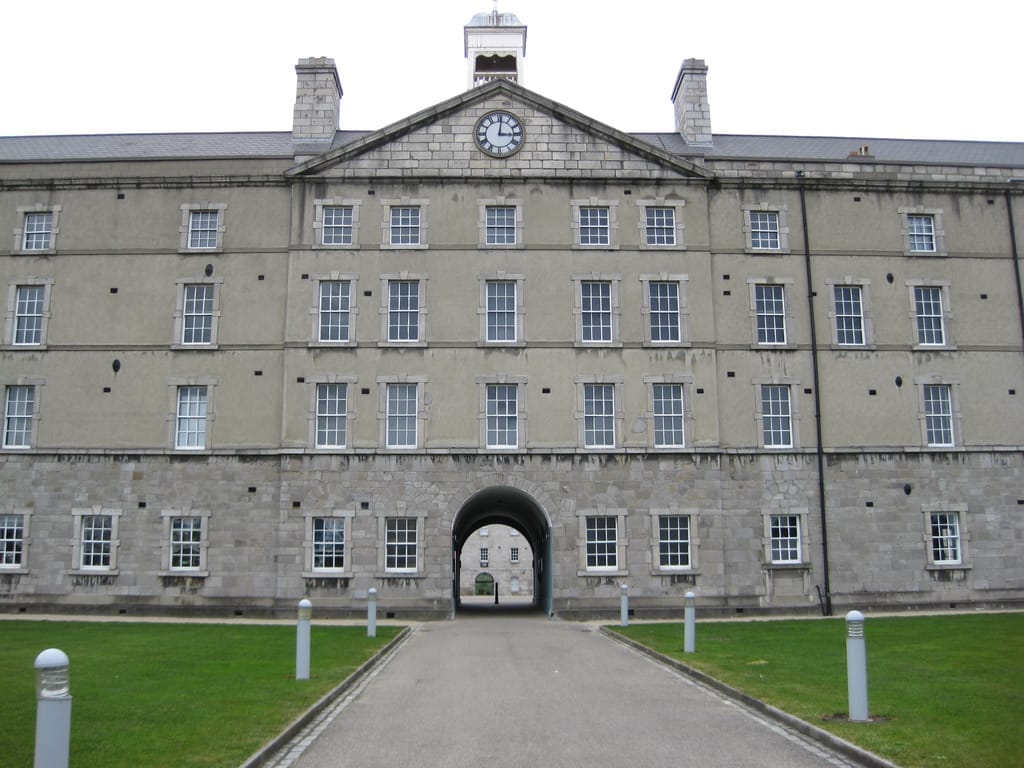
What Is the National Museum of Ireland – Decorative Arts & History?
The National Museum of Ireland – Decorative Arts & History occupies Collins Barracks, a vast neoclassical military complex on Benburb Street, on the north side of the River Liffey. The barracks date to the early 18th century, making the building itself one of the oldest continually occupied barracks in the world before the Irish state repurposed it. Since 1997, it has housed the decorative arts and history collections of the National Museum of Ireland, an institution whose roots go back to 19th-century museums founded in 1877.
What makes this branch distinct from the better-known Archaeology branch on Kildare Street is its scope: where Kildare Street goes deep into prehistoric Ireland, Collins Barracks spans a different kind of national story. Furniture, Irish silver, Waterford glass, military uniforms, political memorabilia, fashion, jewellery, and items from Ireland's colonial and post-independence history all share space here. The result is a collection that feels like a thorough, carefully curated version of Irish material culture across five centuries.
💡 Local tip
Admission is free. No booking is required for general entry, though guided tours may need pre-arrangement. Check the official museum website for current opening hours before your visit, as they can change on public holidays.
The Building: Collins Barracks Itself
Before you step inside a single gallery, the building earns its own attention. The central square courtyard, visible as you approach from Benburb Street, is an imposing piece of late-baroque civic architecture. Granite colonnades run around the inner yard, and the scale of the original barracks, which once housed thousands of soldiers, gives the whole complex an air of institutional gravity that most museums simply lack.
Collins Barracks was originally known as the Royal Barracks. After Irish independence it was renamed in honour of Michael Collins, the revolutionary leader killed in 1922 during the Civil War. That renaming is itself a minor piece of Irish political history. When you stand in the courtyard, you are standing on ground that served British imperial military purposes for over two centuries, and that context threads through much of what you find inside.
The courtyard is accessible from the Luas Museum stop, making orientation easy. Even on a clear day, the open courtyard can be windy, so a layer is worth having if you plan to linger outside.
Tickets & tours
Hand-picked options from our booking partner. Prices are indicative; availability and final rates are confirmed when you complete your booking.
Giant's Causeway, Dark Hedges, and Belfast Tour from Dublin
From 85 €Instant confirmationFree cancellationDublin self-guided audio tour
From 10 €Instant confirmationBird of Prey, Cliffs of Moher and Aillwee Cave from Dublin
From 201 €Instant confirmationFree cancellationGame of Thrones Studio tour with return transfer from Dublin
From 63 €Instant confirmationFree cancellation
What to Expect Inside: The Collections
The galleries are spread across several floors and wings. The layout can feel non-linear on a first visit, so picking up the free floor plan at the entrance desk pays off. The collections break roughly into categories: decorative arts (furniture, ceramics, silver, glass, textiles), Irish and international design, and military and political history.
The Irish silver collection is one of the finest in existence. Pieces dating from the 17th century onward show the sophistication of Dublin craft guilds at their peak, and the hallmarking system used in Ireland gives each piece a traceable provenance. Nearby, the Irish glass cases feature Waterford and other regional glasshouses, with forms ranging from heavy Georgian decanters to delicate 19th-century goblets. The craftsmanship here is not symbolic or representative. These are actual objects made by named craftspeople, which gives the gallery a different texture to rooms filled with ancient artefacts.
For visitors interested in Easter Rising history, Collins Barracks holds significant material. Personal belongings, correspondence, uniforms, and weapons connected to 1916 and the wider independence period are displayed with strong interpretive context. This complements what you find at the GPO Witness History museum on O'Connell Street, though the approach here is more object-focused and less theatrical.
The fashion and textiles galleries display Irish linen, lace, and clothing across several centuries, with particular attention to how materials and trade shaped domestic life. It is a quieter corner of the museum, often overlooked, and worth slowing down for.
How the Experience Changes by Time of Day
Mornings, particularly weekday mornings, are the most peaceful time to visit. The large internal spaces feel almost contemplative before midday, and you can spend unhurried time with individual cases. School groups arrive from mid-morning and can fill certain galleries with noise and movement, though they tend to move in concentrated bursts and clear out fairly quickly.
On weekend afternoons, families with children are the dominant audience. The museum handles this reasonably well; younger visitors tend to gravitate toward the military history sections, and the decorative arts galleries stay relatively calm. That said, if you are visiting for close study of delicate objects or want quiet with the silver and glass rooms, a Tuesday or Wednesday morning is the most reliable option.
ℹ️ Good to know
The Luas Red Line has a dedicated Museum stop directly outside Collins Barracks, which makes arrival simple from the city centre. Journey time from Abbey Street is roughly four to five minutes.
Practical Walkthrough and Photography Notes
Allow at least 90 minutes for a solid overview, though two to three hours is more satisfying if the decorative arts collections interest you. The building is large enough that fatigue sets in if you try to cover everything systematically. A better approach is to identify two or three galleries in advance and give those proper attention, then browse the rest.
Photography is generally permitted in the galleries without flash. Natural light from the tall windows means daytime visits offer reasonable conditions for photographing objects, though some display cases create reflections that require patience and angle adjustment. The courtyard outside photographs well in almost any weather; the colonnades and granite textures hold up in flat grey light, which is not uncommon in Dublin.
Collins Barracks sits on the western fringe of the Smithfield-Liberties area. After your visit, the neighbourhood rewards further exploration: Jameson Distillery on Bow Street is a ten-minute walk east, and Smithfield Square lies in the same direction, offering food and coffee options.
Accessibility and Practical Logistics
The museum is accessible, with lifts between floors and step-free routes through the main galleries. For visitors with specific mobility requirements, the museum's official website details current facility arrangements, and it is worth confirming before visiting as these can be subject to maintenance.
There is a cafe on site and a museum shop near the entrance. Coat check facilities are available. Bag sizes follow standard museum policy; larger backpacks may need to be stored.
If you are planning a wider Dublin museum day, the National Museum of Ireland – Archaeology on Kildare Street and the National Gallery of Ireland are both free and form a logical full-day circuit, though Collins Barracks is on the opposite side of the city centre and requires a separate journey.
Honest Assessment: Who Will Get the Most From This Museum
Collins Barracks is genuinely undervisited compared to the Archaeology branch or the Guinness Storehouse. That is partly because it requires some interest in material culture and design history to engage fully. Visitors looking for a single dramatic centrepiece, the kind of object that defines a whole museum, may find the experience diffuse. The strength here is cumulative: rooms of Irish silver, furniture, glass, and textiles build a picture of Irish domestic and civic life that no single artefact could provide.
If your time in Dublin is limited to two or three days and your interest is primarily in prehistoric Ireland, Viking Dublin, or Celtic artefacts, the Kildare Street branch is a higher priority. But if you have a free half-day, especially on a grey afternoon when outdoor plans feel less appealing, Collins Barracks offers genuine depth without a ticket cost or a queue.
Visitors building a broader Dublin itinerary can find useful framing in the best museums in Dublin guide, which covers how the National Museum's four branches fit together and how to prioritise across a multi-day visit.
Insider Tips
- The Curator's Choice series, where museum staff highlight individual objects from the collection, is displayed in certain galleries and provides context that the main label text does not. Take time to read these if you find them.
- The courtyard is a pleasant spot for a quiet break if the weather allows. Benches are available and the space is calm compared to more central Dublin locations.
- The Luas Museum stop is directly outside the building's main entrance on Benburb Street, but the stop name is easy to miss if you are scanning for 'Collins Barracks' on the tram display. Look for 'Museum' on the Red Line direction board.
- The fashion and textiles galleries on the upper floors are consistently the least crowded rooms in the building, even on busy days. If you want solitude with a collection, start there.
- Printed floor maps are available free at the entrance. The building's layout is not immediately intuitive, and the floor plan is a genuine help rather than just an optional extra.
Who Is National Museum of Ireland – Decorative Arts & History For?
- Travellers with a specific interest in Irish political and military history from the 18th to 20th centuries
- Design and craft enthusiasts interested in Irish silversmithing, glassmaking, and furniture
- Budget-conscious visitors looking for a substantive, free indoor experience
- Families with older children (10 and above) who can engage with historical displays
- Visitors seeking a quieter alternative to the more crowded National Museum branch on Kildare Street
Nearby Attractions
Other things to see while in Smithfield & The Liberties:
- Christ Church Cathedral
Christ Church Cathedral has anchored Dublin's skyline for nearly a thousand years, predating the city's most famous landmarks by centuries. This guide covers what you actually see inside, when to go, how to get there, and whether the admission fee is worth it.
- Dublinia Viking and Medieval Museum
Dublinia brings over a thousand years of Dublin's earliest history to life through immersive reconstructions of Viking longships, medieval streetscapes, and hands-on archaeology exhibits. Housed in the 19th-century Gothic Revival Synod Hall beside Christ Church Cathedral, it rewards curious visitors of almost any age.
- Guinness Open Gate Brewery
Tucked inside the St. James's Gate complex on James's Street, the Guinness Open Gate Brewery is a working experimental taproom where Guinness brewers test recipes that never make it to supermarket shelves. No queues, no theatrics, just serious beer in a real brewery setting.
- Guinness Storehouse
The Guinness Storehouse takes you through seven floors of brewing history at St James's Gate, the birthplace of one of the world's most recognisable drinks. The experience ends at the rooftop Gravity Bar with a complimentary pint and views across the Dublin skyline. It draws more visitors than any other paid attraction in Ireland, and whether that's a recommendation or a caution depends entirely on what you're after.