Liulichang Cultural Street: Beijing's Antiques and Ink Arts Corridor
Liulichang Cultural Street is an 800-meter stretch of Qing-dynasty-style shopfronts in Xicheng District where calligraphy supplies, antique seals, classical paintings, and old books have been traded for centuries. Entry is free, the atmosphere is unhurried, and the detail-to-detail quality of the shops rewards slow walkers.
Quick Facts
- Location
- No. 25 South Xinhua Street, Xicheng District, Beijing
- Getting There
- Beijing Subway Line 2, Hepingmen Station (walk south); buses 7, 14, 15
- Time Needed
- 1.5 to 3 hours for a thorough walk; more if you browse inside shops
- Cost
- Free to enter the street; shops price individually
- Best for
- Art collectors, calligraphy enthusiasts, cultural explorers, unhurried browsers
- Official website
- r.visitbeijing.com.cn/attraction/365
What Liulichang Actually Is
Liulichang Cultural Street (琉璃厂文化街) is an 800-meter pedestrian corridor in Xicheng District, divided into East and West sections by South Xinhua Street. The name translates roughly as 'glazed-tile factory street,' a direct reference to the Yuan- and Ming-dynasty kilns that once fired ceramic roof tiles for imperial buildings, temples, and high-status residences in this part of the city. The kilns are long gone, but the name stuck, and over time the area evolved into something else entirely: a concentrated marketplace for ink sticks, calligraphy brushes, antique seals, classical rubbings, old maps, and traditional paintings.
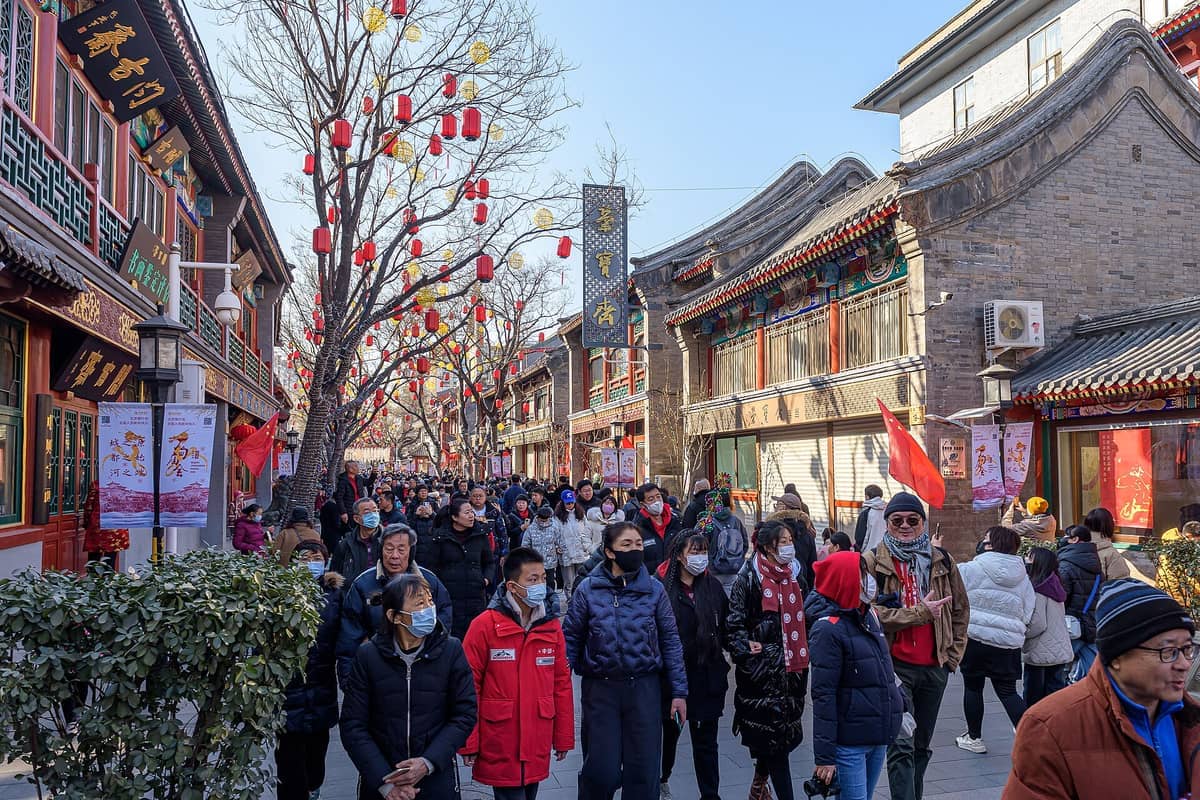
By the Qing dynasty, scholars arriving in Beijing for the imperial examinations clustered in this neighborhood. Bookshops, print sellers, and antique dealers followed, and the street became one of the most intellectually alive commercial corridors in the city. What you see today is a restoration of Qing-style facades, with grey-tiled roofs, carved wooden signboards, and red lacquered doorframes. The architecture is reconstructed rather than original, and it's worth knowing that upfront. The buildings' interiors, however, house shops whose inventories and reputations go back generations.
ℹ️ Good to know
Entry to Liulichang Cultural Street is free. Individual shops set their own prices and hours. The street is listed as open year-round, all day, but smaller shops may close on Mondays or during public holidays. Verify with individual shops if you have a specific purchase in mind.
The Street at Different Times of Day
Arrive before 9:30 in the morning and you will often find shop owners rolling up their bamboo blinds, arranging inkstones in the window display, and drinking tea at wooden counters with no particular urgency. The street smells faintly of pine soot and old paper at this hour, a combination that comes from the ink products and the stacks of aged books visible through half-open doors. This is genuinely the best time to ask questions: proprietors are relaxed, and a surprising number speak workable English or will pull out a phone to translate.
By midday, tour groups arrive in clusters and the western section in particular fills up around the larger, more famous shops like Rongbaozhai. The sound shifts from quiet ink-grinding to tour guides speaking into microphones. Browsers still have space to move, but the rhythm of the street changes noticeably. If you want to photograph the shopfronts without people in the frame, early morning is your window.
Late afternoon brings a calmer second period. Groups have moved on, light falls at an angle across the carved signboards, and the street takes on a more photogenic quality. A few shops begin closing around 5:30 or 6:00 PM. There is no dramatic evening scene here — this is not a night market and the street does not operate after dark with any consistent activity.
Tickets & tours
Hand-picked options from our booking partner. Prices are indicative; availability and final rates are confirmed when you complete your booking.
Private guided tour of Hangzhou's West Lake and cultural sites
From 319 €Instant confirmationFree cancellationZhengzhou private cultural tour to Shaolin temple and Longmen Grottoes
From 424 €Instant confirmationFree cancellationMing dynasty, village Cuandixia and Liulichang street private tour
From 340 €Instant confirmationFree cancellationSmall group tour of Tian'anmen Square and the Forbidden City
From 43 €Instant confirmationFree cancellation
What You Will Find Inside the Shops
The shops along Liulichang divide roughly into three categories. The first is traditional stationery and artist supplies: brushes ranked by bristle type and firmness, inkstones from Guangdong and Anhui, pine-soot and oil-soot ink sticks, and rice paper in dozens of weights and textures. These are working tools sold seriously to practicing calligraphers and painters, not tourist trinkets. Prices for quality items start modest and climb steeply as you move toward aged materials or named craftspeople.
The second category is antiques and reproductions: stone seals, bronze fittings, porcelain, rubbings from historical stelae, and hand-scroll paintings. Buyers should approach antique claims with reasonable skepticism. Authentic pieces do exist alongside well-made reproductions, and the line between them is not always made clear. If you plan to spend significant money, it is worth knowing that authentication is your responsibility, and export of genuine cultural relics from China requires official documentation.
The third category is books and prints, concentrated mainly in the older, quieter shops toward the eastern section. Old maps of Beijing, woodblock print reproductions, classical poetry collections, and art history volumes appear here. Even visitors who cannot read Chinese often find the visual materials worth browsing.
⚠️ What to skip
Bargaining is acceptable in smaller shops and stalls, but fixed-price shops (often marked) do not negotiate. Avoid any shop that aggressively invites you in from the street — legitimate dealers here do not need to recruit customers.
Rongbaozhai and the Anchor Shops
Rongbaozhai (荣宝斋), founded in 1672, is the single most significant shop on the street and arguably one of the most important art supply and art sales businesses in China. It occupies a large multi-story space on West Liulichang and carries original works by contemporary Chinese artists, classical reproductions produced using a painstaking wood-block watercolor technique the house has practiced since the late Qing period, and a comprehensive selection of artist materials. The reproduction prints, some requiring hundreds of individually carved blocks, are considered serious works in their own right. Prices are clearly marked and the shop does not bargain.
Daiyuexuan (戴月轩) specializes in brushes and has supplied calligraphers and painters for well over a century. The shop is small, the staff is expert, and the inventory ranges from inexpensive student brushes to handmade goat-hair or weasel-hair tools that cost several hundred yuan. If you want a single souvenir that is genuinely useful and culturally specific, a quality brush from Daiyuexuan is a better choice than most things sold on tourist shopping streets elsewhere in Beijing.
For context on how Liulichang fits into Beijing's broader art scene, the Beijing contemporary art guide traces the city's art world from traditional ink culture through to the galleries of the 798 district — a useful companion read before or after your visit.
Getting There and Moving Around
The most straightforward route is Beijing Subway Line 2 to Hepingmen Station. Exit the station and walk south along South Xinhua Street for roughly 550 meters. The grey-tiled shopfronts become visible before you reach the intersection. Buses 7, 14, and 15 also serve the area. Taxis and ride-hailing apps can drop you directly at the street address.
East and West Liulichang are connected by a pedestrian overpass at South Xinhua Street, which reportedly includes elevators. The main street surface is paved and level, though individual shops have doorstep thresholds that vary. Comprehensive step-free access throughout all shops cannot be confirmed, so visitors with mobility equipment should be aware that some interiors may present challenges.
Liulichang sits in Xicheng District, close enough to other significant sites that a half-day can be combined with a visit to the Dashilar shopping street just to the east, or the traditional lanes of the broader Xicheng neighborhood to the north.
Photography and Practical Notes
The street photographs well in overcast conditions, when the grey of the tiles and the red of the lacquerwork read clearly without the harsh contrast of direct sun. Rainy days are actually quite appealing here: reflections on the stone pavement, fewer visitors, and shop interiors lit warmly against the wet exterior. Bring a wide-angle lens for the full shopfront facades and a macro if you want detail shots of inkstones or carved seals. Most shops allow interior photography if you ask; many are happy for it.
For broader guidance on photographing Beijing's traditional streetscapes and hutong alleys, the Beijing photography guide includes specific advice on timing, locations, and camera settings for the city's older districts.
Beijing's air quality varies by season and weather conditions; on high-pollution days, outdoor photography may have a hazy quality and extended time outdoors may be uncomfortable for sensitive visitors. Check current air quality readings before planning a full day in this part of the city.
Is Liulichang Worth Your Time?
If your interest is Chinese art, calligraphy, or material culture, Liulichang is one of the few places in Beijing where you can engage seriously with these things at street level, without museum glass between you and the objects. The density of specialist knowledge concentrated in a single 800-meter strip is unusual and worth an unhurried two hours.
If you are looking for lively street food, a market atmosphere, or interactive culture, this is the wrong street. Liulichang is quiet and commercial in a particular, focused way. It does not have the social energy of Nanluoguxiang or the culinary pull of Guijie. Visitors who prioritize sensory variety or crowd energy often find it underwhelming.
First-time visitors to Beijing fitting Liulichang into a broader itinerary can use the 3-day Beijing itinerary to see how it connects with nearby landmarks including the Temple of Heaven and the hutong neighborhoods of Xicheng.
Insider Tips
- Visit the side alleys running off the main street. Several small, less-touristed dealers occupy these lanes, and prices tend to be lower than on the main corridor.
- If you want a personal seal carved with your name in Chinese characters, several shops on East Liulichang offer this service while you wait. Bring a transliteration of your name or ask the carver for a suggested character combination — many are happy to recommend one.
- Rongbaozhai's upper floors are often overlooked by visitors who browse the ground level and leave. The upper galleries carry original contemporary works and a selection of high-quality art books not available downstairs.
- The street is open all day but shops vary. If you have a specific destination in mind, call ahead or arrive before noon to avoid finding it closed.
- Bring cash (Chinese yuan/RMB). Larger shops accept mobile payment via WeChat Pay or Alipay, and some take cards, but smaller dealers often prefer cash for anything under a few hundred yuan.
Who Is Liulichang Cultural Street For?
- Calligraphers, painters, and anyone serious about sourcing traditional Chinese art materials
- Collectors of antique seals, rubbings, or classical prints who can evaluate what they are buying
- Travelers interested in Chinese intellectual and cultural history beyond the major monuments
- Photographers looking for traditional shopfront architecture without the crowds of major tourist zones
- Anyone wanting a genuinely local, non-performative shopping experience in a historic district
Nearby Attractions
Other things to see while in Xicheng District:
- Beihai Park
Beihai Park is one of Beijing's oldest and best-preserved imperial gardens, covering roughly 69 hectares with more than half the area given over to a large lake. Dating back over a thousand years, it offers a rare mix of imperial architecture, Buddhist monuments, and open green space within walking distance of the Forbidden City.
- Beijing Planetarium
Beijing Planetarium (北京天文馆) is located in Xicheng District near Beijing Zoo. It runs dome theater shows, 3D and 4D screenings, and permanent science exhibitions across two buildings. Here's what a visit actually looks like.
- Beijing Zoo
Beijing Zoo is one of China's oldest and largest zoological parks, covering over 80 hectares in Xicheng District. Home to the city's most accessible giant panda viewing experience, it draws millions of visitors each year. This guide covers what to expect, when to go, and how to make the most of your time there.
- Capital Museum
The Capital Museum (首都博物馆) in Xicheng District is Beijing's premier civic museum, tracing the city's history across three millennia. Admission is free, the permanent galleries are genuinely impressive, and it rarely gets as crowded as the Forbidden City — making it one of the smartest stops in central Beijing.