Jeanneke Pis: Brussels' Other Peeing Statue (and What to Actually Expect)
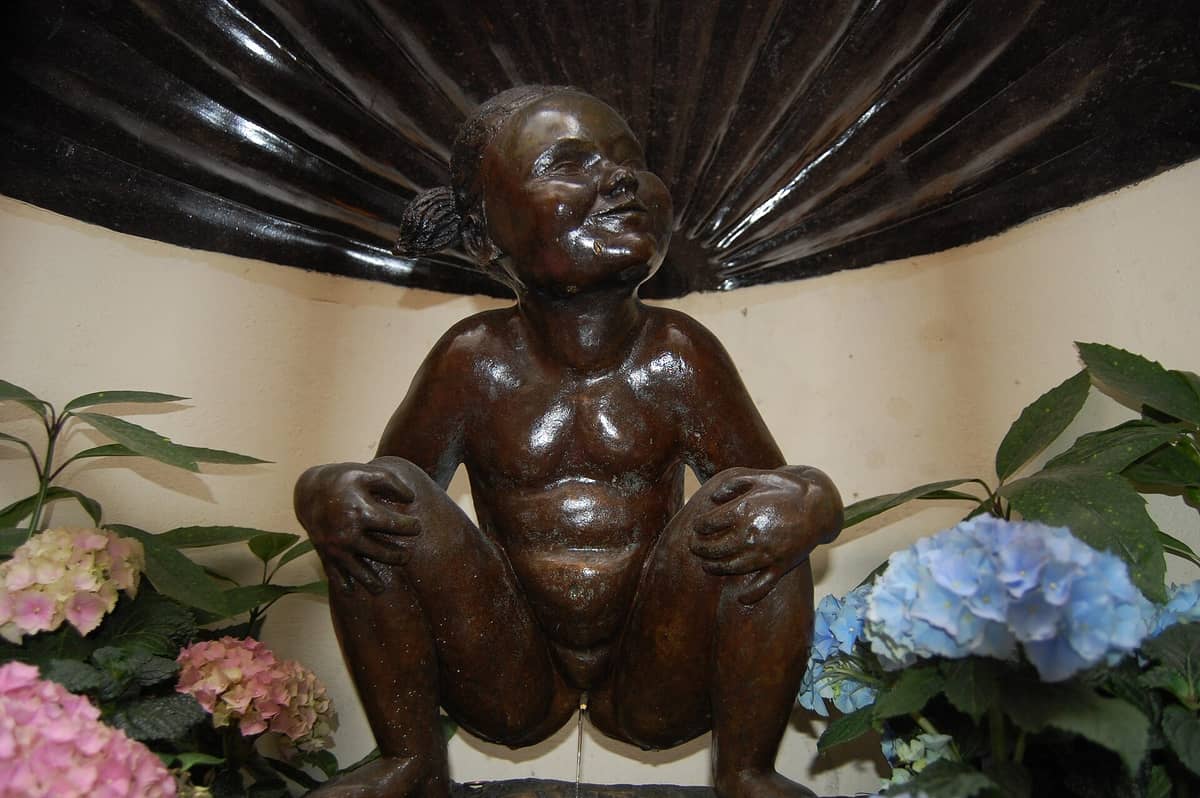
Jeanneke Pis is a small bronze fountain depicting a squatting girl, installed in 1987 as a playful counterpart to the famous Manneken Pis. Tucked inside a narrow dead-end alley in the Îlot Sacré district, it's free, always accessible, and takes about five minutes to see — but the surrounding streets tell a more interesting story than the statue itself.
Quick Facts
- Location
- Impasse de la Fidélité 10–12, Îlot Sacré, 1000 Brussels (3–5-minute walk northeast of Grand-Place)
- Getting There
- Metro lines 1 & 5, station Gare Centrale (Brussels-Central); also De Brouckère on lines 1 & 5
- Time Needed
- 5–15 minutes at the statue; 30–60 minutes if combining with nearby attractions
- Cost
- Free — no ticket required
- Best for
- Curious first-time visitors, families completing Brussels' trio of peeing statues, and anyone passing through the Îlot Sacré
- Official website
- http://www.jeannekepis.be
What Jeanneke Pis Actually Is (and Isn't)
Jeanneke Pis is a small bronze fountain set into a shallow stone basin at the end of Impasse de la Fidélité, a narrow cul-de-sac that branches off Rue des Bouchers in central Brussels. Inaugurated in 1987, the statue depicts a young girl crouching in the act of urinating — conceived deliberately as a female counterpart to the much older and far more famous Manneken Pis, which stands only a few hundred metres away. The creator, Denis Adrien Debouvrie, installed it in this tucked-away alley to give it a sense of discovery rather than spectacle.
The statue is modest in scale. It sits behind a metal grille, which was added to protect it from theft and vandalism, and visitors view it from the alley side. A small chain-link fence is typically decorated with padlocks left by visitors, a tradition that has accumulated over the years. Water trickles from the fountain into the basin below, a gentle sound that is often the first thing you notice as you turn into the alley, before you even see the statue.
ℹ️ Good to know
Jeanneke Pis is part of Brussels' informal trio of peeing statues, alongside Manneken Pis and Zinneke Pis. If you're making the circuit, allocate around 90 minutes on foot to visit all three.
The Alley and Its Setting: What You'll Actually See
Impasse de la Fidélité is short enough that you can see the statue from its entrance. The alley is paved with worn cobblestones, flanked on both sides by the backs and side walls of restaurants that line Rue des Bouchers. At midday, the smell of frites and grilling meat drifts in from either end. In summer, restaurant staff sometimes prop open side doors, and the sounds of kitchen work echo against the stone walls.
The grille in front of the statue is often strung with small coins tucked between the iron bars, placed there by visitors as tokens of luck. In winter, when tourist foot traffic drops and the restaurant terraces disappear, the alley feels quieter and the statue itself becomes easier to photograph without crowds pressing in from behind you.
The surrounding streets of the Îlot Sacré neighborhood are worth pausing in. The Grand-Place is a two-minute walk southwest, and the Galeries Royales Saint-Hubert — Brussels' ornate 19th-century shopping arcade — is an equal distance in the opposite direction. Most visitors encounter Jeanneke Pis as part of a natural loop between these two landmarks.
Tickets & tours
Hand-picked options from our booking partner. Prices are indicative; availability and final rates are confirmed when you complete your booking.
Brussels self-guided audio tour with Train World ticket
From 28 €Instant confirmationGhent tour from Brussels
From 43 €Instant confirmationFree cancellationTablet Workshop at Choco-Story Brussels
From 45 €Instant confirmationShared tour of Delft and the Keukenhof Estate from Brussels
From 86 €Instant confirmationFree cancellation
Historical Context: A 1987 Statue With an Older Idea
Unlike Manneken Pis, which dates to the early 17th century and carries centuries of folklore, Jeanneke Pis is a contemporary work with a clear commercial origin. Denis Adrien Debouvrie created it in 1987 partly to raise funds for research into incurable diseases and partly as a tongue-in-cheek contribution to Brussels' street sculpture tradition. It was never intended to carry deep historical symbolism, and understanding that upfront prevents a common visitor disappointment.
Brussels has a long tradition of wry, self-deprecating civic humour, and Jeanneke Pis fits squarely into that tradition. The city embraces the absurdity of making a peeing child into a beloved symbol, and the addition of a female counterpart in 1987 extended the joke rather than deepened it. That said, it has since taken on a genuine place in Brussels' street iconography, appearing on city maps and in nearly every guidebook published since the 1990s.
Best Time to Visit and How Light Affects the Experience
The alley runs roughly north-south, which means direct sunlight reaches the statue for only a short window in the afternoon on clear days. For photography, overcast conditions — common in Brussels for much of the year, given the city's temperate maritime climate — actually work well, producing even light without harsh shadows on the bronze surface.
Mornings before 10:00 are the calmest. The nearby restaurant district of Rue des Bouchers doesn't fully come to life until late morning, and the groups touring from Grand-Place tend to arrive after 10:30. If you're visiting in July or August, expect the alley to be crowded from mid-morning through the evening. In those peak summer months, the statue can feel less like a discovery and more like a checkpoint on a group tour route.
💡 Local tip
Visit before 10:00 in summer or just after the lunch rush clears (around 14:30–15:00) for the best chance of a relatively uncrowded view. The statue is accessible 24 hours, and an evening visit can be atmospheric, though the alley lighting is dim.
Getting There: Transit, Walking, and Practical Navigation
The most direct metro access is via Brussels-Central station (Gare Centrale), served by metro lines 1 and 5. From the station exit on Boulevard de l'Impératrice, the walk to Impasse de la Fidélité takes under 10 minutes on foot, passing through the lower end of the Îlot Sacré. De Brouckère station, also on lines 1 and 5, is a slightly longer walk from the north but deposits you closer to Rue des Bouchers.
If you're approaching on foot from the Grand-Place, exit the square via Rue de la Colline or Rue des Harengs, head northeast along Rue Chair et Pain, and turn into Rue des Bouchers. Impasse de la Fidélité is a small alley on your left, marked by a modest sign. It is easy to miss if you are walking quickly, which many visitors do in this restaurant-heavy corridor.
The alley is cobblestoned and narrow. Wheelchair access is not officially documented, and while there are no steps at the entrance, the uneven paving and tight dimensions can be challenging for mobility aids. The statue itself is at ground level, visible from the alley without any need to step up or down.
Photography: What Works and What Doesn't
The main photographic challenge is the metal grille in front of the statue. With a wide-aperture lens and a close approach, you can blur the fence almost completely out of the frame. With a smartphone camera, the grille will typically be visible. A tight crop on the statue itself, shot through the wider gaps in the ironwork, tends to produce cleaner results.
The alley walls and the padlocked fence provide more interesting compositional elements than the statue alone. Wide shots that incorporate the stone walls and the chain of locks often communicate the character of the place more effectively than a tight shot of the bronze figure. Avoid using flash at night — it creates flat, overexposed results on the bronze surface and underexposes the surrounding alley.
Honest Assessment: How Much Time Does This Deserve?
Jeanneke Pis is worth a five-to-ten minute stop if you are already in the Îlot Sacré area. It is not, on its own, a reason to cross the city. Visitors who arrive expecting the cultural weight of Manneken Pis (itself a small statue with an oversized reputation) will find Jeanneke Pis even more underwhelming in isolation. Its value is largely contextual: as part of Brussels' running civic joke about peeing statues, as a small piece of the Îlot Sacré streetscape, and as a free, low-effort addition to any walk through this part of the city centre.
Visitors with very limited time in Brussels and a full itinerary can reasonably skip it. Those with children who have already enjoyed Manneken Pis will likely find the parallel amusing and worth the short detour. Architecture or street-art enthusiasts will want to spend more time on the Galeries Saint-Hubert or hunting Art Nouveau facades nearby than lingering here.
⚠️ What to skip
Rue des Bouchers, the main street leading to Impasse de la Fidélité, is lined with tourist-oriented restaurants known for aggressive touting. You are not obligated to accept menus thrust at you, and dining here is generally considered poor value compared to options in surrounding neighborhoods.
Combining Jeanneke Pis with the Broader Îlot Sacré
The Îlot Sacré (the 'Sacred Island') is the pedestrianised block of medieval street grid between Grand-Place and the Galeries Saint-Hubert. A walk through it connects several worthwhile stops: the Brussels Town Hall and the Maison du Roi on Grand-Place itself, the gilded arcades of the Galeries Royales, and the narrow Rue des Bouchers for its sheer visual density of restaurant signage and hanging seafood displays.
The complete circuit of Brussels' three peeing statues — Manneken Pis, Jeanneke Pis, and Zinneke Pis — makes for a pleasant 60-to-90-minute walk that takes in several distinct corners of central Brussels. Zinneke Pis, created in 1999 and depicting a small dog, is the most recent addition and sits further northwest near the canal area.
Insider Tips
- The padlocks on the fence in front of the statue aren't an official tradition — they've simply accumulated over the years. There's no ceremony or significance to adding one, but many visitors do it anyway as a personal gesture.
- If the alley feels crowded, step back to the entrance and glance down: the slight elevation change from the street gives you a cleaner line of sight over the heads of people closer to the fence.
- The nearby Galeries Royales Saint-Hubert, just a 90-second walk north, is far more architecturally impressive and makes a natural pairing. The light inside the glass-and-iron arcade is particularly good in the late afternoon.
- Avoid Rue des Bouchers itself for eating. The streets one block east or west of the tourist corridor offer significantly better quality at similar or lower prices.
- The statue occasionally wears small costumes or accessories placed by visitors or passers-by, similar to the more elaborate wardrobe changes that Manneken Pis receives officially. Catching it 'dressed' is a matter of luck.
Who Is Jeanneke Pis For?
- First-time visitors to Brussels completing the city's informal trio of peeing statues
- Families with young children who will appreciate the humour and find the scale non-intimidating
- Travellers with a free hour in the Îlot Sacré who want a low-effort addition to a Grand-Place walk
- Photography enthusiasts interested in urban still-life subjects in tight alley settings
- Anyone curious about how a city builds and sustains quirky civic identity over decades
Nearby Attractions
Other things to see while in Grand-Place & Îlot Sacré:
- Belgian Comic Strip Center
Housed in a Victor Horta-designed Art Nouveau masterpiece, the Belgian Comic Strip Center tells the story of Belgium's extraordinary contribution to comic art. From Tintin to the Smurfs, this is one of Brussels's most rewarding museum experiences for visitors of almost any age.
- Brussels Beer Museum
Tucked into the cellars of a baroque guild house on the Grand-Place, the Belgian Brewers Museum (Musée des Brasseurs belges) tells the story of Belgian brewing through historic equipment, documents, and a glass of beer included with your €5 ticket. Small, unhurried, and genuinely atmospheric, it rewards curiosity about one of Belgium's defining cultural exports.
- Brussels Town Hall (Hôtel de Ville)
The Brussels Town Hall, or Hôtel de Ville de Bruxelles, is the Gothic building that has anchored the UNESCO-listed Grand-Place for centuries. Interior access is by guided tour only, making advance planning essential. The exterior, however, is free to admire at any hour.
- Cathedral of St. Michael and St. Gudula
Rising above a broad flight of stone steps just minutes from Grand-Place, the Cathedral of St. Michael and St. Gudula is the most architecturally significant church in Belgium. Entry to the main nave is free, the stained-glass windows are among the finest in Northern Europe, and the atmosphere shifts dramatically between early morning quiet and afternoon tour-group activity.