Belgian Brewers Museum: Beer History Under the Grand-Place
Tucked into the cellars of a baroque guild house on the Grand-Place, the Belgian Brewers Museum (Musée des Brasseurs belges) tells the story of Belgian brewing through historic equipment, documents, and a glass of beer included with your €5 ticket. Small, unhurried, and genuinely atmospheric, it rewards curiosity about one of Belgium's defining cultural exports.
Quick Facts
- Location
- Grand-Place 10, 1000 Brussels (Maison de l'Arbre d'Or)
- Getting There
- Metro: De Brouckère (lines 1, 5); tram: Bourse/Beurs (lines 3, 4); multiple STIB/MIVB bus lines stop near Grand-Place
- Time Needed
- 45–75 minutes
- Cost
- €5 per adult (includes one beer)
- Best for
- Beer enthusiasts, history buffs, anyone wanting a quiet break from the Grand-Place crowds
- Official website
- beermuseum.be/en
What Is the Belgian Brewers Museum?
The Belgian Brewers Museum, officially the Musée des Brasseurs belges in French and Museum van Belgische Brouwers in Dutch, occupies the vaulted cellars and ground floor of Grand-Place 10, the Maison de l'Arbre d'Or. This is not a large, purpose-built institution. It is a compact, character-rich museum run by the Belgian Brewers guild, preserved inside one of the most architecturally significant squares in Europe. The building itself is the first exhibit: a late 17th-century baroque guild house rebuilt after French troops bombarded Brussels and devastated much of the Grand-Place area in 1695. Within two years, the brewers and other guilds had reconstructed their houses in the baroque style you see today, a feat of civic pride that has shaped Brussels's identity ever since.
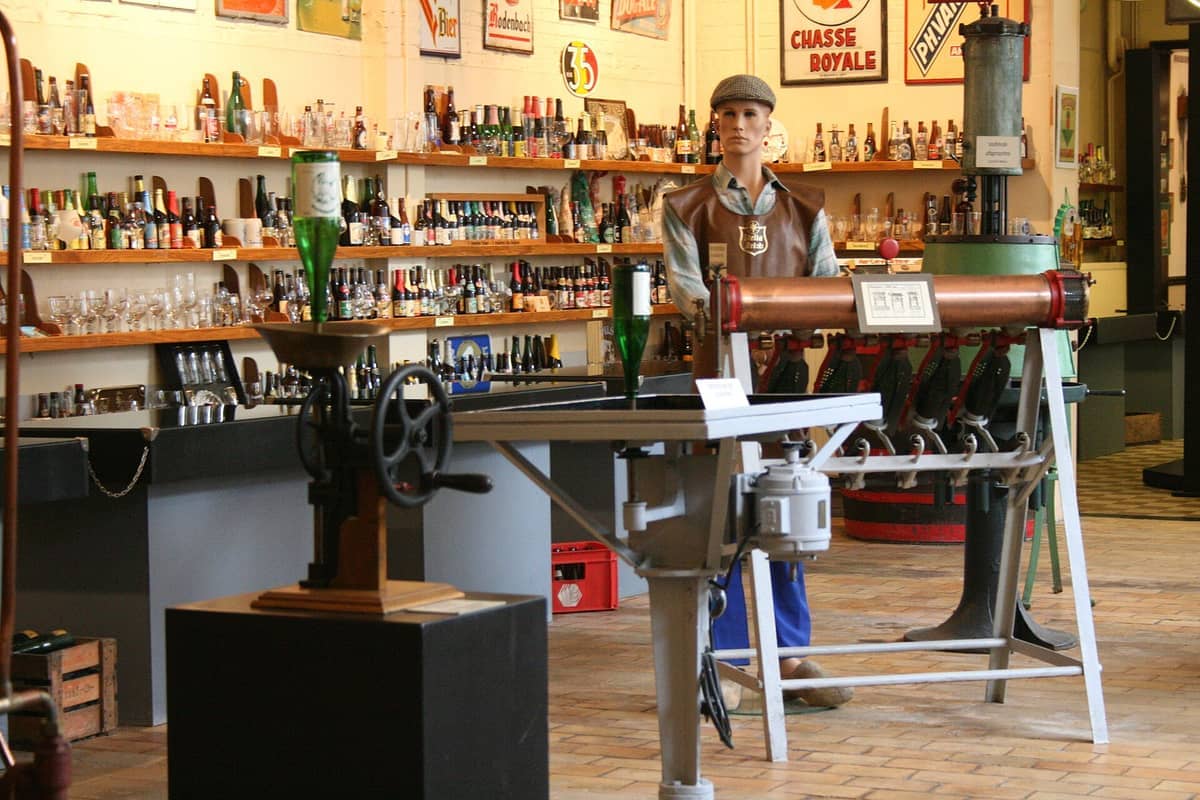
The museum's focus is historical rather than interactive. Expect old copper brewing kettles, fermentation vessels, bottling tools, guild documents, and explanatory panels tracing how Belgian brewing evolved from small monastic and household operations into the globally influential tradition it is today. The displays are relatively modest in scale, but the setting, stone-vaulted cellars beneath a working guild house steps from the Grand-Place cobblestones, lends the visit a sense of place that few beer-related attractions can match.
ℹ️ Good to know
Your €5 entry ticket typically includes one beer served at the bar. It is worth factoring this into your visit time: many people spend 20–30 minutes with the exhibits and then linger over their beer in the ground-floor bar, which faces toward the Grand-Place.
The Building: A UNESCO-Listed Baroque Shell
Grand-Place has held UNESCO World Heritage status since 1998, and the Maison de l'Arbre d'Or, named after the gilded horse at its summit (arbre d'or means golden tree, a heraldic reference), is one of its defining facades. The building belongs to the Corporation of Brewers, making it one of the few Grand-Place guild houses still in active use by its original professional body. Walking through the entrance arch feels deliberate: the stone is old, the stairs descend steeply into the cellar, and the air temperature drops noticeably.
The cellar space itself has thick stone walls, low barrel-vaulted ceilings, and uneven flagstone floors. It smells faintly of aged wood and stone. This is not a sterile, climate-controlled exhibition space. Whether that atmosphere enhances or complicates your visit will depend on how you feel about old buildings. Visitors with mobility limitations should note that access involves stairs and uneven surfaces; there is no publicly documented lift or adapted access route, so anyone with specific mobility needs is advised to call ahead on +32 2 511 49 87.
Tickets & tours
Hand-picked options from our booking partner. Prices are indicative; availability and final rates are confirmed when you complete your booking.
Guided walking tour with optional beer tasting in Brussels
From 19 €Instant confirmationFree cancellationPass to Brussels Choco-Story, Belgian Beer World, and bus tour
From 74 €Instant confirmationBrussels beer city exploration game and tour
From 10 €Instant confirmationFree cancellationBelgian Beer World entry and Brussels' landmarks audio guide
From 39 €Instant confirmation
Inside the Exhibition: What You Actually See
The displays are organized around the history and craft of Belgian brewing. You will find traditional brewing equipment including large copper kettles, wooden fermentation barrels, and hand-operated bottling machines, alongside guild records, vintage beer labels, and photographs documenting the development of Belgium's brewing industry from the 19th century onward. Explanatory text is available in multiple languages, typically including French, Dutch, and English, though the depth of English labeling can be variable.
The collection is not exhaustive by the standards of a national museum. It tells a curated story rather than attempting a comprehensive survey. What it does well is connect the physical objects to the social and economic history of Brussels and Belgium: the guild system that financed the Grand-Place's reconstruction, the evolution from farmhouse and abbey brewing toward industrial production, and the modern renaissance of specialty and Trappist beers that has made Belgian brewing globally recognized. If you arrive with some background knowledge of Belgian beer styles, you will get more from the visit.
For a much larger and more technologically immersive treatment of Belgian beer history, the Belgian Beer World at the Bourse a few minutes' walk away offers a different scale and format entirely. The two experiences are genuinely complementary rather than competing.
When to Visit and What to Expect at Different Times
The museum is open Monday and Wednesday through Saturday, with Tuesday and Sunday closed. Hours are approximately 11:00 to 17:00 Monday and Wednesday through Friday, and noon to 17:00 on Saturday, though these can vary by season. Verify on beermuseum.be before visiting, as discrepancies exist between sources. Ticket sales likely stop 30 minutes before closing.
Mornings on weekdays are the quietest. The Grand-Place fills with tourist groups from mid-morning onward, but the museum itself draws a more selective crowd. Midday on weekends can get busy, partly because visitors combine it with time on the square and partly because the included beer makes it a natural stopping point during a walking circuit. Late afternoon, in the hour before closing, tends to quiet down again.
The cellar stays cool year-round, which is welcome in summer. In winter, the stone environment can feel cold, so an extra layer is worth having if you plan to spend time in the lower level. Photography inside is generally low-light given the cellar setting; a phone with a decent low-light mode handles it reasonably well, though flash photography is inappropriate in the enclosed space.
💡 Local tip
The Grand-Place is at its most atmospheric in early morning before tour groups arrive, or in the evening when it is lit up. Timing your museum visit for late morning allows you to enjoy both: a quieter square on arrival, then the exhibits, then lunch nearby before the afternoon crowds peak.
Getting There and the Surrounding Area
The museum is at the heart of the Grand-Place and Îlot Sacré neighborhood, the historic core of Brussels. The nearest metro stations are De Brouckère on lines 1 and 5 and Gare Centrale on lines 1 and 5 (roughly a 3–6-minute walk), with Bourse/Beurs serving as a nearby tram stop; multiple STIB/MIVB bus lines serve the area. Multiple STIB/MIVB bus lines serve the area. The Grand-Place has no direct vehicle access, so however you arrive, the last stretch is on foot across the cobblestone square.
Once you have finished at the museum, the immediate neighborhood repays exploration. The Galeries Royales Saint-Hubert, Europe's oldest surviving covered shopping arcade, is less than two minutes away. The Manneken Pis is about a 4-minute walk southwest. For context on the Grand-Place's own history and the role of the guilds, the Maison du Roi across the square houses the Brussels City Museum and is worth pairing with this visit.
Honest Assessment: Is It Worth Your Time?
The Belgian Brewers Museum is a niche attraction. If you have a genuine interest in brewing history, guild culture, or the social history of Brussels, it earns its modest entry fee comfortably, and the beer included at the end is a pleasant touch. The building alone, a functioning baroque guild house on the most photographed square in Belgium, provides a sense of living history that purpose-built museums often lack.
If you are visiting the Grand-Place anyway and have an hour to fill, this is a reasonable choice. If you are expecting a large, dynamic museum experience with interactive installations, high production values, or a comprehensive survey of all Belgian beer styles, this will not meet those expectations. It is a small, historically grounded collection in an old building, and that is precisely its appeal for the right visitor.
Travelers who want a deeper dive into Belgian beer culture, including tastings and detailed style education, might find the Cantillon Brewery in Anderlecht more rewarding. Cantillon is a working lambic brewery with a museum component, and the sensory experience of an active brewery is quite different from the Brewers Museum's historical focus. They serve very different purposes and visiting both, if time allows, gives a rounded picture of Brussels's beer world.
⚠️ What to skip
The museum is not suitable for visitors with significant mobility limitations due to stepped access and uneven cellar floors. Contact the museum at +32 2 511 49 87 before visiting if you have specific accessibility requirements.
Insider Tips
- The included beer is served at the ground-floor bar, not in the cellar. After doing the exhibits, take your time at the bar: it faces toward the Grand-Place entrance and gives you a quieter vantage point than the square itself, especially useful when tour groups are circling outside.
- Tuesday is one of the days the museum is closed (it is also closed on Sunday). It is also one of the quieter days on the Grand-Place, which is slightly unfortunate timing. Double-check the opening hours on beermuseum.be before building an itinerary around a Tuesday visit.
- The Maison de l'Arbre d'Or facade is more detailed at close range than from across the square. Before you enter, look up at the gilded horse at the top of the building and the carved stonework on the pilasters. Most visitors walk straight past without noticing.
- Group rates (€4 per person for 10 or more) require prior coordination with the museum. If you are organizing a group visit, contact them in advance rather than arriving and expecting the discount at the door.
- If you are combining this with Belgian Beer World at the Bourse, do the Brewers Museum first. The historical context from the older museum makes the more interactive Bourse experience feel like a continuation rather than a standalone attraction.
Who Is Brussels Beer Museum For?
- Beer enthusiasts wanting historical context for Belgian brewing traditions
- Architecture and history lovers who appreciate the Grand-Place guild house setting
- Travelers with limited time who want a focused, one-hour cultural stop in the city center
- Couples or small groups looking for a low-key, affordable mid-morning activity
- Anyone who wants to experience the interior of one of the Grand-Place's baroque guild houses
Nearby Attractions
Other things to see while in Grand-Place & Îlot Sacré:
- Belgian Comic Strip Center
Housed in a Victor Horta-designed Art Nouveau masterpiece, the Belgian Comic Strip Center tells the story of Belgium's extraordinary contribution to comic art. From Tintin to the Smurfs, this is one of Brussels's most rewarding museum experiences for visitors of almost any age.
- Brussels Town Hall (Hôtel de Ville)
The Brussels Town Hall, or Hôtel de Ville de Bruxelles, is the Gothic building that has anchored the UNESCO-listed Grand-Place for centuries. Interior access is by guided tour only, making advance planning essential. The exterior, however, is free to admire at any hour.
- Cathedral of St. Michael and St. Gudula
Rising above a broad flight of stone steps just minutes from Grand-Place, the Cathedral of St. Michael and St. Gudula is the most architecturally significant church in Belgium. Entry to the main nave is free, the stained-glass windows are among the finest in Northern Europe, and the atmosphere shifts dramatically between early morning quiet and afternoon tour-group activity.
- Choco-Story Brussels
Choco-Story Brussels, officially the Musée du Chocolat, walks visitors through 3,000 years of chocolate history from ancient Mesoamerica to Belgian praline. Set a short walk from the Grand-Place, it combines exhibits, live demonstrations, and tastings into a 90-minute experience that works for families and curious adults alike.