Choco-Story Brussels: What to Expect at the Chocolate Museum
Choco-Story Brussels, officially the Musée du Chocolat, walks visitors through 3,000 years of chocolate history from ancient Mesoamerica to Belgian praline. Set a short walk from the Grand-Place, it combines exhibits, live demonstrations, and tastings into a 90-minute experience that works for families and curious adults alike.
Quick Facts
- Location
- Rue de l'Étuve 41, 1000 Brussels (Grand-Place / Îlot Sacré)
- Getting There
- Bus 48 (Manneken-Pis stop); premetro lines 3 & 4 (Anneessens)
- Time Needed
- 75–100 minutes
- Cost
- Adults €16 / Youth & Seniors €14 / Children (3–11) €10; audioguide included
- Best for
- Families, chocolate lovers, rainy-day visitors, first-time Brussels tourists
- Official website
- www.choco-story-brussels.be/eng/home
What Choco-Story Brussels Actually Is
Choco-Story Brussels, officially named Choco-Story Bruxelles – Le Musée du Chocolat, is a paid chocolate museum occupying a historic townhouse at Rue de l'Étuve 41, about 150 metres from both the Grand-Place and the Manneken Pis. It belongs to a broader Choco-Story network of chocolate museums operating under the Choco Story World umbrella, with sister locations across Europe. This is not a factory showroom or a brand flagship. It is a structured museum with a clear narrative arc, display cases of genuine artefacts and replica items, live chocolate-making demonstrations, and a tasting at the end.
The museum covers roughly 3,000 years of chocolate's history, starting with the cacao traditions of Mesoamerican civilisations (Olmec, Maya, Aztec) and tracing the commodity's journey through Spanish colonial trade, European court culture, industrial revolution-era manufacturing, and finally the emergence of Belgian praline and couverture chocolate as we know them today. The audioguide included in the ticket price is available in multiple languages and adds roughly 20 minutes of narration if used in full.
💡 Local tip
Last admission is at 17:00, and the museum closes at 18:00. Arriving before 15:30 gives you a comfortable window to see everything, including catching a live demo. The museum is closed on 25 December and 1 January — verify any other exceptional closures on the official site before your visit.
The Experience Floor by Floor
The museum is spread across multiple floors of a narrow building, connected by a standard lift and three platform lifts. The route is linear, so you follow the story chronologically without backtracking. Lighting in the early Mesoamerican sections is deliberately dim, which amplifies the sense of antiquity but can feel claustrophobic in a crowded group. The smell of warm chocolate becomes detectable from the second floor onward and grows stronger as you approach the demonstration room near the end.
The Mesoamerican section opens with carved stone replica vessels, original cacao-related artefacts, and explanatory panels about how the Maya prepared a bitter, spiced drink from ground cacao beans — nothing like modern chocolate. This section is genuinely informative and well-researched, covering the cultural and ritual significance of cacao rather than flattening it into a feel-good origin story.
As the route moves into 17th and 18th century Europe, the exhibits shift to porcelain chocolate pots, drinking vessels, and trade documentation. This section tends to be the quietest and rewards visitors who pause to read the labels rather than rush through. The industrial era display covers conching machines, early moulds, and the development of solid chocolate bars, with a focus on Belgian innovations by the late 19th century.
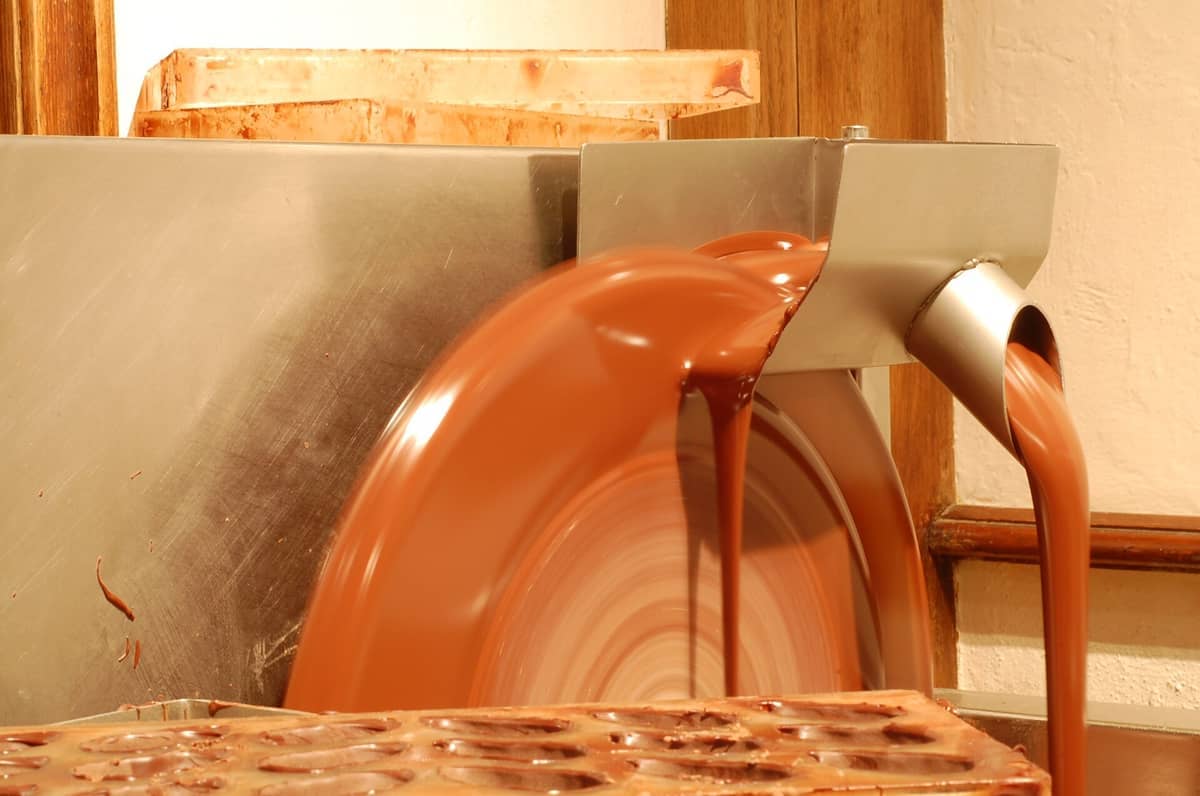
The live demonstration near the end of the route is the clearest highlight for most visitors. A chocolatier works at a marble slab, showing tempering technique, mould filling, and decoration. The demo runs at set times during the day; check the board at the entrance for the schedule on your visit day. The session ends with a tasting of two or three small chocolate pieces, which is included in the standard ticket.
Tickets & tours
Hand-picked options from our booking partner. Prices are indicative; availability and final rates are confirmed when you complete your booking.
Tablet Workshop at Choco-Story Brussels
From 45 €Instant confirmationPass to Brussels Choco-Story, Belgian Beer World, and bus tour
From 74 €Instant confirmationEntrance Tickets to the Choco Story Museum in Brussels
From 35 €Instant confirmationEntrance Tickets to the Choco Story Museum in Brussels
From 13 €Instant confirmation
How the Experience Changes by Time of Day
Mornings, particularly between 10:00 and 11:30, are noticeably quieter. School groups often arrive mid-morning but tend to move quickly and clear out by early afternoon. The sweet spot for adults who prefer calm is either the opening hour or after 16:00, when the day's crowds have thinned and the demonstrations still run.
Afternoons from 13:00 to 15:30 are the most congested period, coinciding with peak tourist foot traffic from the nearby Grand-Place and Manneken Pis. The corridor sections of the museum can feel quite narrow when multiple groups are in them simultaneously, and the demonstration area has limited standing space. Weekend afternoons, particularly in July and August, see the highest density. If you are visiting with small children or anyone with sensory sensitivities, a weekday morning is a materially better experience.
⚠️ What to skip
The museum uses several platform lifts with widths of approximately 70–85 cm. These are compulsory passages — there is no alternative route. Electric wheelchairs, pushchairs, and prams are not permitted inside. Manual wheelchair users can visit, but the tight lift dimensions mean standard compact models work better than wider electric chairs. Pushchairs must be left at the entrance.
Location and Getting There
Choco-Story Brussels sits on Rue de l'Étuve, the same pedestrian street that leads to the Manneken Pis. This puts it squarely in the historic centre, known locally as the Îlot Sacré, a compact area of medieval street patterns just south of the Grand-Place. Walking from the Grand-Place takes under three minutes. Walking from Brussels-Central station takes about ten minutes on a direct route through the lower city.
By public transport: bus 48 stops at Manneken-Pis, roughly 50 metres from the museum entrance. Premetro lines 3 and 4 stop at Anneessens, a four-minute walk away. Neither the metro nor the tram stops directly at the door, but the walk from Anneessens is flat and straightforward.
The neighbourhood is compact and walkable, which makes it easy to combine the museum with other central attractions. The Galeries Royales Saint-Hubert are a five-minute walk north, and the Manneken Pis is essentially next door. For a fuller picture of Belgian food culture, our guide to Belgian chocolate in Brussels covers the broader scene beyond the museum walls.
Ticket Prices and Booking
Admission for adults aged 27 to 65 is €16. Youth (12–26) and seniors (65+) pay €14. Children aged 3 to 11 pay €10. Visitors with reduced mobility also pay the reduced rate of €14. All individual tickets include the audioguide. There is no separate charge for the live demonstration or the tasting at the end, both of which are included in the standard entry.
A combo ticket combining entry to Choco-Story Brussels and the nearby FrietMuseum is available for individual visitors: adults pay €28, youth and seniors €24, and children (up to 11 years) €16. Separate, lower combo group rates apply to parties of 15 or more, with adult tickets dropping to €26.
ℹ️ Good to know
Tickets can be purchased at the door. Pre-booking online is possible and can help you skip short queues on busy afternoons, but is rarely essential except during school holiday peaks in July–August and at Easter.
Is Choco-Story Brussels Worth Your Time?
The honest answer depends on your expectations. If you are a serious chocolate professional or a food historian, the museum will cover ground you likely already know, and the depth of scholarly content does not match what a specialist archive or dedicated research trip would offer. The exhibits are well-curated and the artefacts are genuine, but the museum is primarily designed for curious general visitors and families, not industry experts.
For families with children aged 5 and up, first-time visitors to Brussels, and anyone interested in the cultural and commercial history of food, it is a solid 90-minute investment. It is especially good on a rainy Brussels afternoon — the city gets regular rainfall year-round, and the historic centre's cobblestones become slippery in wet weather. The museum offers a warm, sheltered, genuinely engaging alternative to standing outside. For more rainy-day options, see our guide to Brussels rainy-day activities.
Solo travellers who find interactive family museums too loud may prefer to visit early on a weekday. The museum is not over-designed for spectacle; the content carries the experience more than immersive technology does, which some visitors will appreciate and others will find underwhelming compared to more theatrical attractions.
Photography and Practical Details
Photography is generally permitted throughout the museum for personal use. The dimly lit Mesoamerican sections are challenging for smartphone cameras without night mode; the demonstration room, with warmer overhead lighting, is where most visitors get their best shots. The chocolatier at work at the marble slab is the obvious hero moment.
There is a shop at the exit selling chocolate products, including items made in the museum's style. Quality is generally good — it functions as a working retail space rather than a tourist trap add-on. Budget an extra 10–15 minutes if you plan to browse. Prices are in line with or slightly above what you would pay at a quality chocolate shop on the Grand-Place. English is spoken confidently by staff at both the entrance and the shop.
Brussels is bilingual (French and Dutch are both official languages of the Brussels-Capital Region), and the museum reflects this: all labels and signage appear in French, Dutch, and English as standard. The audioguide covers additional languages. For broader context on navigating Brussels as a visitor, our guide to getting around Brussels covers transport options in detail.
Insider Tips
- Arrive at or just after opening (10:00) on a weekday to have the Mesoamerican and colonial sections almost entirely to yourself. The crowd builds noticeably from 11:30 onward.
- Check the demonstration schedule at the entrance desk rather than waiting by the demo room. Knowing when the next session is lets you pace your visit so you arrive at the right moment without standing around.
- The combo ticket with FrietMuseum (Belgian fries museum) is worth considering if you have children or a dedicated interest in Belgian food culture. The FrietMuseum is a short walk away and the combined price saves a few euros over buying individually.
- The shop at the exit stocks filled pralines made on-site. These are fresher than pre-packaged versions sold at souvenir shops and make better gifts than most of what you will find near the Grand-Place.
- If the platform lifts are a concern for your group, contact the museum in advance. Staff can advise on specific dimensions and help assess whether your wheelchair model will fit the compulsory passage widths.
Who Is Choco-Story Brussels For?
- Families with children aged 5 and up looking for an engaging indoor activity
- First-time Brussels visitors wanting context for why Belgian chocolate has the reputation it does
- Travellers seeking a sheltered, warm option on a wet Brussels afternoon
- Food-curious adults interested in the history of cacao as a global commodity
- Groups wanting a structured activity that works across different age ranges
Nearby Attractions
Other things to see while in Grand-Place & Îlot Sacré:
- Belgian Comic Strip Center
Housed in a Victor Horta-designed Art Nouveau masterpiece, the Belgian Comic Strip Center tells the story of Belgium's extraordinary contribution to comic art. From Tintin to the Smurfs, this is one of Brussels's most rewarding museum experiences for visitors of almost any age.
- Brussels Beer Museum
Tucked into the cellars of a baroque guild house on the Grand-Place, the Belgian Brewers Museum (Musée des Brasseurs belges) tells the story of Belgian brewing through historic equipment, documents, and a glass of beer included with your €5 ticket. Small, unhurried, and genuinely atmospheric, it rewards curiosity about one of Belgium's defining cultural exports.
- Brussels Town Hall (Hôtel de Ville)
The Brussels Town Hall, or Hôtel de Ville de Bruxelles, is the Gothic building that has anchored the UNESCO-listed Grand-Place for centuries. Interior access is by guided tour only, making advance planning essential. The exterior, however, is free to admire at any hour.
- Cathedral of St. Michael and St. Gudula
Rising above a broad flight of stone steps just minutes from Grand-Place, the Cathedral of St. Michael and St. Gudula is the most architecturally significant church in Belgium. Entry to the main nave is free, the stained-glass windows are among the finest in Northern Europe, and the atmosphere shifts dramatically between early morning quiet and afternoon tour-group activity.