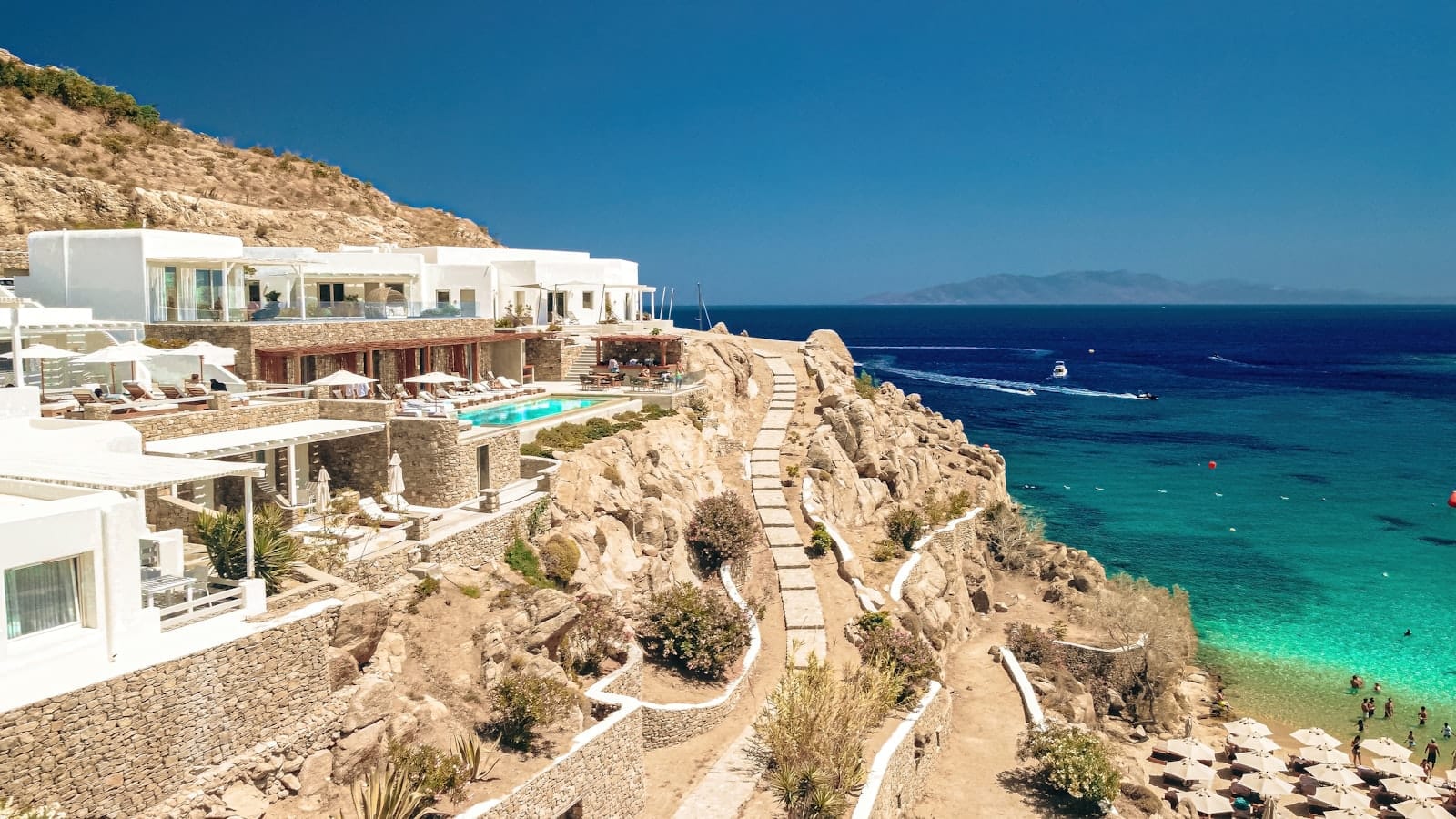
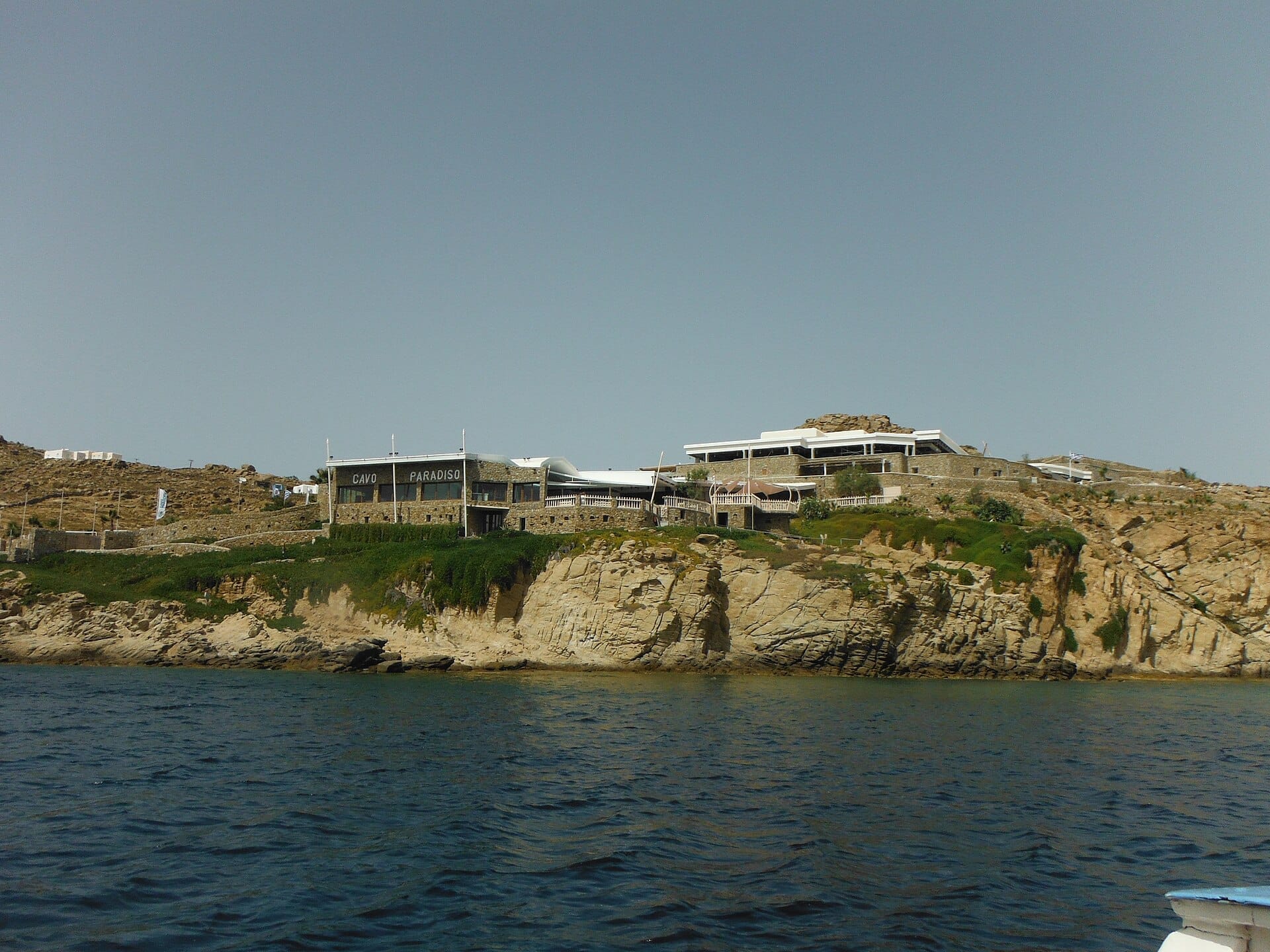
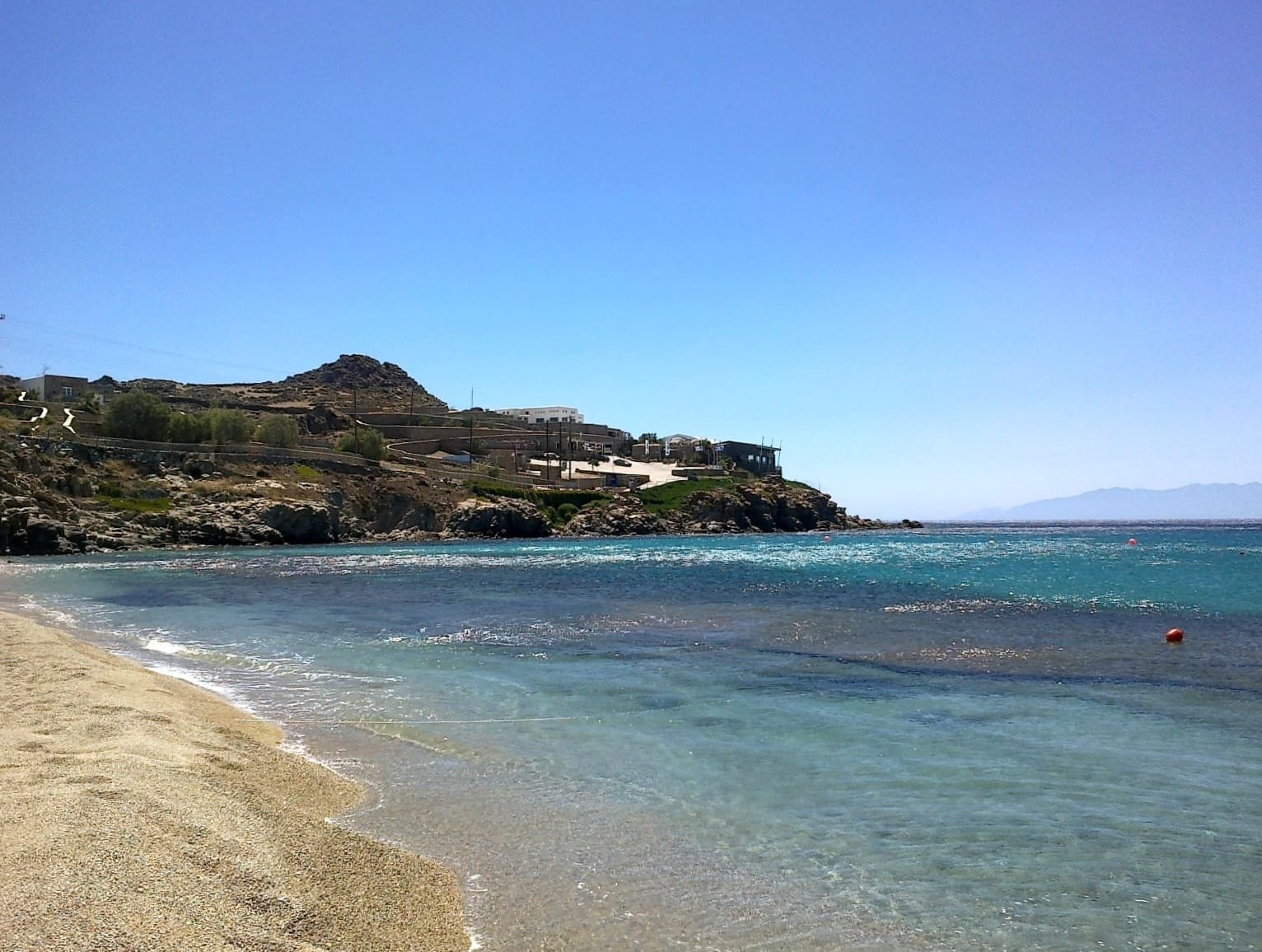
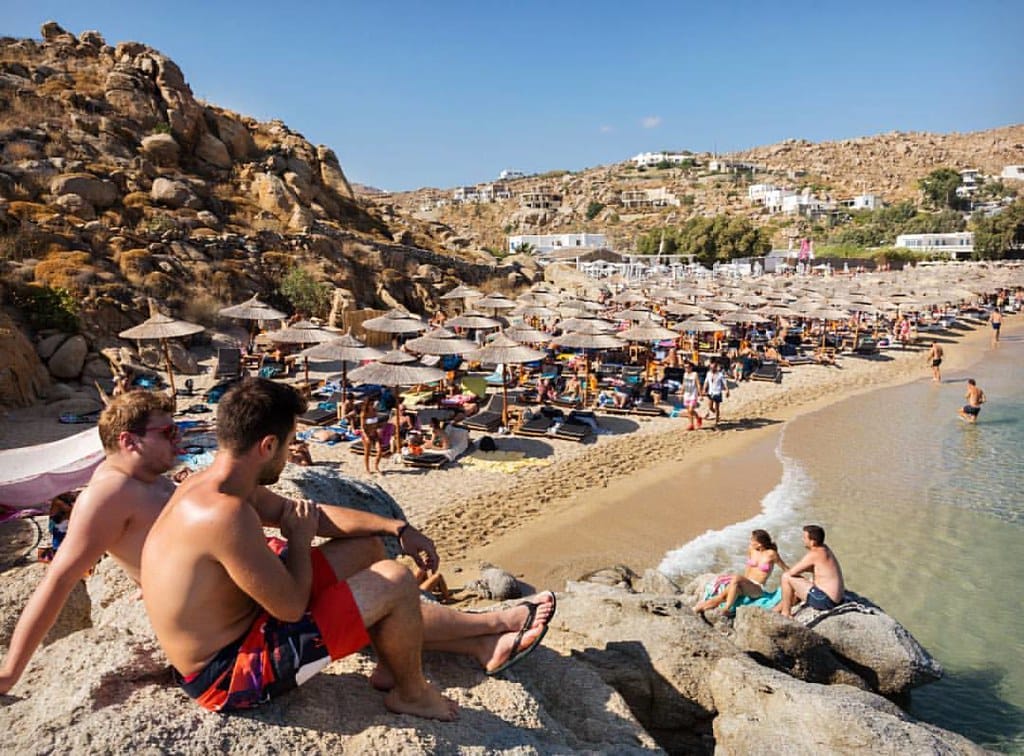
The Paradise and Super Paradise beach area occupies a dramatic stretch of Mykonos's south coast, drawing visitors who want organized sunbeds by day and some of the Aegean's most intense beach-club energy by night. These two beaches define what many people picture when they think of Mykonos at its most unrestrained.
On the south coast of Mykonos, roughly 5 to 6 kilometers from Mykonos Town, Paradise and Super Paradise beaches have earned a reputation that reaches well beyond Greece. They are the island's spiritual home of the beach-club scene: loud, organized, beautiful, and not remotely for everyone.
Orientation
The Paradise and Super Paradise beach area sits on the southern coastline of Mykonos, tucked into a series of south-facing bays that are sheltered enough for clear, calm water on most summer days. If you draw a line from Mykonos Town heading southeast, you pass through Ornos, then Platis Gialos, then Paraga before reaching Paradise Beach. Super Paradise lies to the southeast, separated from Paradise by a rocky headland that you can scramble over on foot or bypass entirely by water taxi.
The area sits almost directly south of Mykonos International Airport (JMK), which is roughly 4 kilometers away as the crow flies. The airport's proximity is a useful mental anchor: when you land and look south from the terminal, you are essentially looking toward this coastline. From Mykonos Town (Chora), the road distance to Paradise Beach is around 5 to 6 kilometers via the main southern road, passing through Platis Gialos. Super Paradise requires a separate, narrower road that branches off before Paradise and winds down to its own bay.
Further east along the same shoreline, the beaches of Agrari and Elia Beach continue the south-coast chain. Elia is the island's longest beach and offers a noticeably quieter atmosphere, making it a useful reference point: the further east you go from Paradise, the calmer things generally become. West of Paradise, Platis Gialos provides a more family-oriented alternative with its own organized sunbed operations.
ℹ️ Good to know
Paradise and Super Paradise are in the municipality of Mykonos and share the island’s main postal code (84600). They function as a self-contained area with their own accommodation, food, and nightlife options, but they are not a town or village in any traditional sense.
Character & Atmosphere
Arrive at Paradise Beach before 10am and you will find something surprisingly peaceful: sunbed attendants arranging cushions, the smell of the sea uncut by sunscreen and cocktails, and a narrow crescent of sand that looks genuinely beautiful in the early light. The water here is a deep Aegean blue-green, and the hills surrounding the bay give it a contained, amphitheatre-like quality. For about two hours in the morning, this is a place you could quietly appreciate.
By noon, the transformation is well underway. Music systems power up, the sunbeds fill shoulder-to-shoulder, and the first drinks orders start moving. By mid-afternoon in peak July and August, Paradise Beach is operating at full volume: multiple bars competing with overlapping sound systems, servers moving between rows of occupied sunbeds, and a crowd that skews young, international, and very much on holiday. The atmosphere is not aggressive, but it is relentless. Conversations happen at shouting distance.
Super Paradise has a similar arc but a slightly different character. The beach itself is shorter and the bay narrower, and the flagship Super Paradise Beach Club at its center has historically positioned itself at the upscale end of the party-beach spectrum. The crowd here has traditionally been mixed, with the beach maintaining a long association with Mykonos's LGBTQ+ scene alongside a broader international clientele. The vibe is polished rather than chaotic, though it shares the same fundamental energy as its neighbor: music, sun, and organized hedonism.
After dark, both beaches shift again. Paradise in particular hosts late-night events that run well past midnight, with the beach clubs transitioning from afternoon sessions into full nightclub mode. The noise carries easily in the still summer air. If you are staying in the area and hoping for an early night, that will require earplugs and a room facing away from the beach. This is not a warning buried in fine print: it is the defining reality of accommodation here.
⚠️ What to skip
Peak season at Paradise Beach (late June through August) can feel overwhelming for anyone who did not specifically plan for it. Sunbeds book out early, the road access becomes congested, and the music does not stop until very late. If you want Mykonos beaches without the full party intensity, Elia, Panormos, or Agios Sostis are better choices.
What to See & Do
The primary activity at both beaches is the organized beach-club experience itself: renting a sunbed and umbrella, swimming in the exceptionally clear water, and spending the day at varying levels of engagement with the surrounding scene. The Paradise Beach complex has been one of Mykonos's anchors for beach-party culture for decades, and Super Paradise Beach carries similar weight in the island's identity. Even if neither is your preferred style of beach, seeing them at full capacity is its own kind of spectacle.
Swimming is genuinely good at both locations. The south-facing bays are protected from the island's prevailing Meltemi winds, which blow from the north and northwest and can make the island's west-facing and north-facing beaches choppy. The water at Paradise and Super Paradise tends to be calmer and clearer on most summer days, which is a real advantage when the Meltemi picks up and other parts of the island become less appealing for swimming.
Watersports are available at organized beaches along this stretch: jet skiing, paddleboarding, and banana boat rides are standard summer offerings. The rocky headland between Paradise and Super Paradise is worth the scramble for the views down onto both bays, particularly in the late afternoon when the light hits the water at a low angle and the hills turn gold.
Day use of organized sunbeds at Paradise Beach Club or Super Paradise Beach Club (book ahead in July and August)
Swimming in the calm, south-facing bays
Watersports including jet skis, paddleboards, and banana boats
Cliff path walk between Paradise and Super Paradise bays
Late-afternoon and evening beach-club sessions with live DJ sets
Water taxi rides connecting the south-coast beaches
For travelers who want a complete picture of Mykonos's beaches, a guide to the best beaches in Mykonos puts Paradise and Super Paradise in context alongside quieter alternatives like Agios Sostis and Panormos.
Eating & Drinking
Food and drink at Paradise and Super Paradise are almost entirely organized around the beach-club model. The bars at the beach clubs serve cocktails, shots, beer, and soft drinks throughout the day, and light food options, primarily snacks, sandwiches, and grilled items, are available from the clubs themselves. Prices are firmly at the upper end of Mykonos standards, which is already higher than mainland Greece. Expect to pay significantly more for a cocktail here than you would at a taverna in Mykonos Town.
There are a small number of tavernas and restaurants within reach of Paradise Beach, particularly on the access road leading down to the beach. These offer more traditional Greek food at slightly more moderate prices than the beach clubs themselves: grilled fish, salads, moussaka, and the standard range of Cycladic dishes. They are worth seeking out if you want a proper meal rather than snacking at a sunbed.
The food scene in the wider south-coast area, including Platis Gialos and Ornos, is considerably more varied. If you are staying near Paradise and want a proper dinner without full beach-club pricing, a taxi or water taxi ride to Platis Gialos takes around ten minutes and opens up more options. For a full picture of what to eat on the island, the Mykonos food guide covers local specialties including kopanisti cheese, loukoumades, and fresh seafood.
💡 Local tip
If you are planning a full day at a beach club, some clubs offer packaged deals combining sunbed rental with a food and drink minimum spend. Booking these in advance online is both cheaper and more reliable than arriving on the day in high season.
Getting There & Around
There is no rail or metro system on Mykonos: access to Paradise and Super Paradise is by bus, taxi, private vehicle, scooter, or water taxi. Each option has a different trade-off between cost, convenience, and flexibility.
The public bus network on Mykonos runs seasonal routes from two main terminals in Mykonos Town: the Fabrika bus station (near the south side of town) and the Old Port bus stop. Buses to the south-coast beaches, including Paradise, run regularly in summer from Fabrika bus station on Fabrika Square. The journey takes around 20 to 30 minutes depending on traffic and stops. Note that Super Paradise is not directly served by the same bus route as Paradise: you either walk the rocky path between the two bays or take a separate taxi. For broader context on getting around the island, see the guide to getting around Mykonos.
Water taxis operate seasonally along the south coast, connecting Platis Gialos, Paraga, Paradise, Super Paradise, Agrari, and Elia. This is often the most convenient way to move between beaches once you are already on the southern coastline, and it avoids the narrow road to Super Paradise entirely. Boats run frequently during the day in peak season and the fares are fixed per route.
Taxis from Mykonos Town to Paradise Beach cost more than the bus and are subject to the island's standard metered rates, which increase in peak season. The road to Super Paradise is narrow and winding, and parking is limited near both beaches in high summer. Renting a scooter or ATV gives maximum flexibility for exploring the south coast at your own pace, but be aware that the road down to Super Paradise in particular requires careful driving.
Bus: From Fabrika bus station in Mykonos Town to Paradise Beach, seasonal service, approximately 20-30 minutes
Water taxi: Connects Platis Gialos, Paradise, Super Paradise, and Elia along the south coast
Taxi: Available from Mykonos Town and from the airport (approximately 3–4km from JMK to Chora, then further south)
Scooter or ATV rental: Best for flexible movement between south-coast beaches
On foot: Rocky path connects Paradise and Super Paradise bays (10-15 minutes, requires sturdy footwear)
Where to Stay
Accommodation in the Paradise and Super Paradise area is limited compared to Mykonos Town or the Ornos-Platis Gialos strip. What exists tends to fall into two categories: small hotels and guesthouses on the road leading down to Paradise Beach, and a handful of higher-end properties with direct beach access or hillside positions overlooking the bays. There are no large all-inclusive resorts, but boutique hotels and studios are present.
Staying directly in the Paradise area makes sense if your primary goal is beach-club access and you want to walk to the water rather than arrange transport each day. The trade-off is that you will hear the music, you will be away from Mykonos Town's restaurants and nightlife options, and you will need a plan for getting elsewhere on the island. For visitors who want to divide their time between beaches and the town, staying in Ornos or Platis Gialos and taking the water taxi to Paradise each day is a more practical arrangement.
Travelers focused on luxury should note that some of Mykonos's most exclusive properties are positioned elsewhere on the island, with better views and more privacy than the south-coast party zone offers. The Mykonos luxury guide and the broader guide to where to stay in Mykonos both provide a fuller picture of the island's accommodation zones.
⚠️ What to skip
If you are a light sleeper or traveling with children, accommodation within earshot of Paradise Beach is genuinely unsuitable during peak season. The beach clubs operate until very late, and the sound carries clearly on calm summer nights. Book a room with reviews that specifically confirm quiet nights if that matters to you.
Practical Tips & What to Know Before You Go
The Meltemi wind that dominates Mykonos in July and August blows from the north and northwest. Because Paradise and Super Paradise face south, they are among the island's most reliably calm beaches when the Meltemi is strong, which is a significant practical advantage. On days when the wind picks up and the north-facing beaches become choppy, this stretch of the south coast is where the island's beach crowds concentrate even more heavily than usual.
Tap water on Mykonos, as across much of the Cyclades, is subject to resource constraints. The island relies partly on desalination, and while local guidance varies, using bottled water for drinking is standard practice. Both beaches have vendors selling bottled water, but prices at beach clubs reflect the captive-audience situation: bringing your own is cheaper.
The broader context of Mykonos as a destination, including whether the island suits your travel style at all, is worth thinking through before committing to this particular area. The honest answer to the question of whether Mykonos is right for you is addressed directly in this guide on whether Mykonos is worth visiting. For the nightlife dimension specifically, the Mykonos nightlife guide explains how the beach-club scene at Paradise fits into the island's wider after-dark geography.
Currency is the euro (EUR). English is widely spoken at all beach clubs and most accommodation in this area. Emergency services in Greece are reached on 112. Greece's country dialing code is +30. The island operates on Eastern European Time (UTC+2 in winter, UTC+3 during summer daylight saving).
TL;DR
Paradise and Super Paradise are Mykonos's definitive party beaches: organized, loud, and deliberately designed for the beach-club experience rather than quiet relaxation.
Best for: travelers who specifically want the beach-club scene, younger visitors, LGBTQ+ travelers (particularly Super Paradise), and anyone whose Mykonos vision centers on daytime parties and sun.
Not ideal for: families with young children, light sleepers, budget travelers (pricing is high), or anyone who wants a traditional Greek beach experience.
South-facing aspect means calmer water than much of the island, even when the Meltemi blows, making these beaches a practical choice on windy days.
Getting here is easy by bus from Fabrika Square in Mykonos Town or by seasonal water taxi from Platis Gialos; Super Paradise is best reached by water taxi rather than the narrow road.
Top Attractions in Paradise & Super Paradise Beach Area
Three days is exactly enough time to cover Mykonos properly — the labyrinthine alleys of Chora, the UNESCO ruins of Delos, the south-coast beach scene, and a genuine taste of the island's nightlife. This day-by-day itinerary gives you the structure, the practical details, and the honest advice to make it work.
Mykonos has a beach for every type of traveler. This guide covers the 12 best beaches on the island, from the legendary party scene at Paradise to the car-free calm of Agios Sostis, so you can find exactly the day you're looking for.
Mykonos rewards travelers who time their visit carefully. This guide breaks down every season by weather, crowd levels, prices, and what's actually open, so you can decide when the island works best for your trip.
Delos is one of Greece's most extraordinary archaeological sites, and it sits just 30 minutes by boat from Mykonos. This guide covers ferry schedules, entry fees, the best ruins to prioritize, and whether a guided tour is worth the extra cost.
Mykonos is a small island with a surprisingly complex transport puzzle. From the KTEL bus network and south-coast caiques to the island's notoriously scarce taxis and rental vehicles, this guide breaks down every way to get around — with real prices, practical tips, and honest warnings about what doesn't work as well as you'd hope.
Mykonos has a reputation that precedes it: luxury prices, wall-to-wall tourists, and beach clubs that run until dawn. But the island is more layered than that. This guide cuts through the hype to tell you exactly who Mykonos is worth visiting for — and who should skip it.
Mykonos has some of the world's most famous beach clubs, from full-day party venues at Paradise Beach to bohemian sunset gatherings at Scorpios. This guide breaks down where to go, what to expect, what things actually cost, and how to book before peak season fills up.
Mykonos is far more than a party island. For couples, it offers sunset cocktails at Little Venice, private-pool suites above the Aegean, quiet beaches with turquoise water, and a day trip to the ancient ruins of Delos. This guide covers the best romantic experiences, when to go, where to stay, and how to avoid the crowds.
Mykonos is Greece's most polished luxury destination, combining world-class hotels, private beach clubs, superyacht culture, and some of the Aegean's best dining. This guide cuts through the hype with specific advice on when to go, where to stay, how to get around, and what actually justifies the price tag.
Mykonos has one of Europe's most legendary party scenes, from clifftop superclubs to sun-soaked beach raves and intimate cocktail bars in Chora's whitewashed alleys. This guide covers the best venues, realistic prices, seasonal timing, and the honest trade-offs so you can plan a night out that actually matches your expectations.
Mykonos has a reputation as one of Greece's most expensive islands, and that reputation is mostly earned. But visiting without hemorrhaging money is entirely possible if you understand how pricing works, when to go, and where to spend versus save. This guide breaks it all down honestly.
Everything you need to plan the trip from Mykonos to Santorini: which ferry operators run the route, how long the crossing takes, what fares to expect by season, whether flying makes sense, and how to fit in stops at Paros or Naxos along the way.
Both islands dominate Cyclades itineraries, but they deliver completely different experiences. This guide breaks down the real differences between Mykonos and Santorini across scenery, beaches, nightlife, budget, and logistics so you can choose the right one — or plan both smartly.
Mykonos delivers more than beach clubs and late nights. This guide covers the top things to do in Mykonos, Greece — from ancient ruins on Delos and windswept Cycladic lanes to family beaches and genuine local culture — with practical logistics for every type of traveler.
Mykonos has a distinct culinary identity that goes far beyond generic Greek salads and souvlaki. This guide covers the island's signature foods, honest price expectations, where to eat well on any budget, and the restaurants worth planning your day around.
Choosing where to stay in Mykonos shapes your entire trip. This guide breaks down every key area, from the lively lanes of Chora to the family-friendly shores of Ornos, with honest advice on prices, logistics, and who each neighborhood actually suits.