3 Days in Da Nang: The Perfect Itinerary
Three days is exactly enough time to cover Da Nang's best beaches, cultural landmarks, and day trips without rushing. This itinerary breaks it down day by day — with practical logistics, honest crowd and timing advice, and links to deeper guides for every stop.
Tickets & tours
Live prices and dates from our booking partner. If you book, we may earn a commission at no extra cost to you.
TL;DR
- Three days covers the major highlights: My Khe Beach, Marble Mountains, Son Tra Peninsula, Ba Na Hills, and a day trip to Hoi An or My Son.
- The best months for this itinerary are March–May and June–August — avoid November–February if rain will ruin your beach days. See the best time to visit Da Nang for a full breakdown.
- Budget roughly 2–8 million VND per person (around US$80–320) for three days excluding flights, depending on accommodation tier.
- Ba Na Hills needs a full day on its own — do not try to combine it with other major stops.
- Hoi An is only 45 minutes away by road and works perfectly as a day trip — no overnight stay needed. Check the Da Nang to Hoi An guide for transport options.
Before You Arrive: Logistics and Orientation

Da Nang (officially Thành phố Đà Nẵng) sits on the South Central Coast of Vietnam, roughly halfway between Hanoi and Ho Chi Minh City. It's a major port city with its own international airport — Da Nang International Airport (IATA: DAD) — located within the urban area, roughly 3–5 km from Hai Chau District, the commercial core. The city has a population of around 1.2 million and operates on Indochina Time (ICT, UTC+7). Getting oriented is straightforward: the Han River divides the downtown west bank from the beach strip on the east. Getting around Da Nang is easiest by ride-hailing apps (Grab is dominant) or motorbike rental for those comfortable with Vietnamese traffic.
A three-day Da Nang itinerary works best when structured as follows: Day 1 for the city itself and Son Tra Peninsula, Day 2 for Ba Na Hills as a full-day excursion, and Day 3 for a Hoi An day trip. If you prefer to skip Ba Na Hills — and it is not for everyone, particularly those who dislike theme park environments at altitude — you can swap Day 2 for Marble Mountains plus a deeper dive into the beach and local food scene.
💡 Local tip
Book Ba Na Hills tickets online in advance, especially for weekends and Vietnamese public holidays. Crowds at the cable car station can cause significant delays. Aim to arrive at the park gates when they open, usually around 08:00.
Day 1: City Highlights, Son Tra Peninsula, and the Dragon Bridge
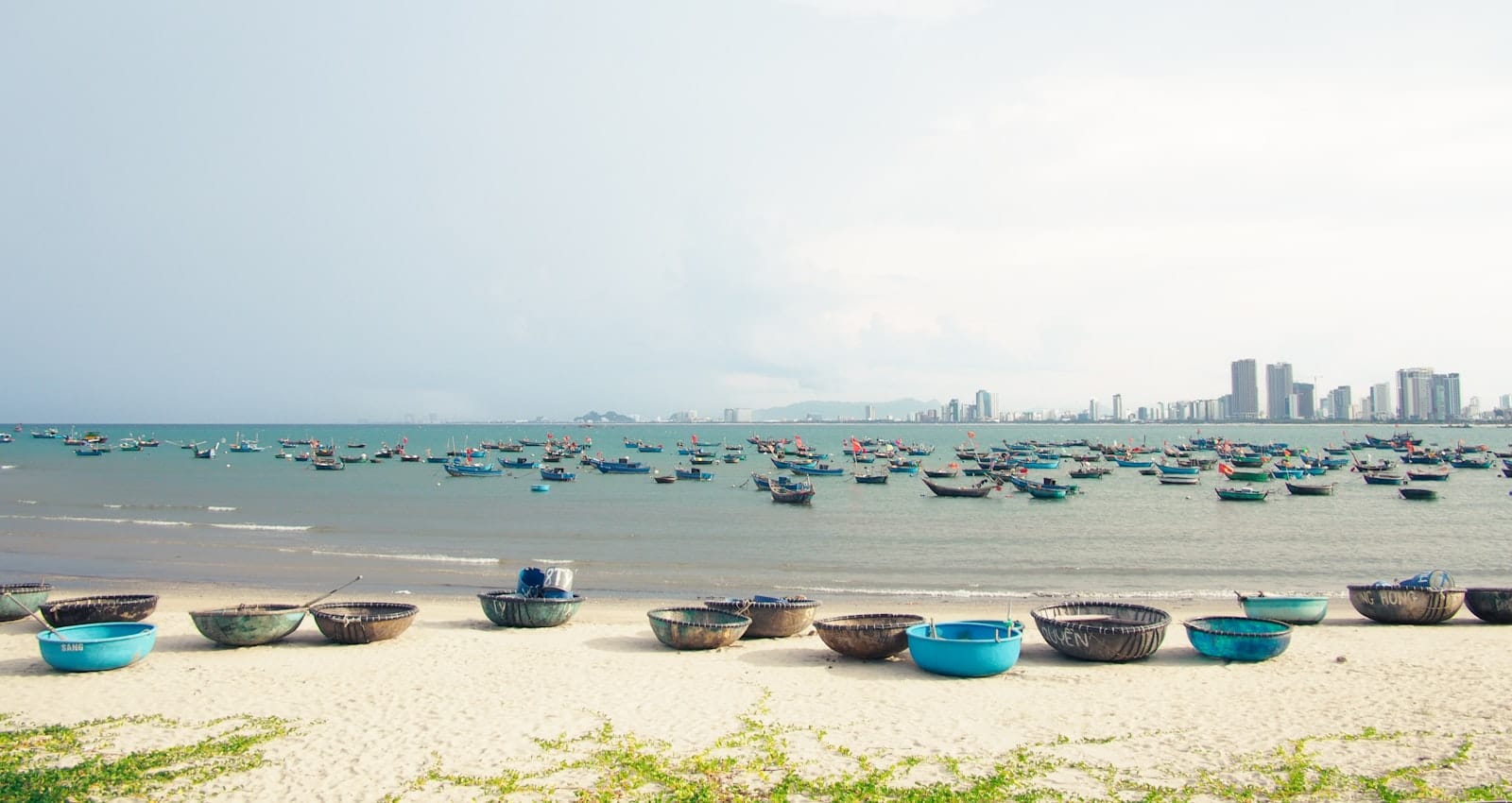
Start the morning at My Khe Beach, one of the longest and most swimmable stretches of sand in central Vietnam. The beach runs for roughly 30 km from Son Tra Peninsula down through Ngu Hanh Son District. Morning light here is excellent, and the water is generally calm from April through September. Arrive before 08:00 to beat the sun and find a quiet spot — by mid-morning on weekends it fills up considerably.
After the beach, drive or Grab up to Son Tra Peninsula — the forested headland that shelters Da Nang's harbor to the north. The main draw is Linh Ung Pagoda and the Lady Buddha statue, a white marble figure standing 67 meters tall on a hillside above the sea. The views from the base stretch across My Khe Beach and, on clear days, toward Hai Van Pass. เผื่อ 45–60 minutes here. If you're interested in wildlife, Son Tra is also home to a rare population of red-shanked douc langurs — look for them in the trees along the road up.
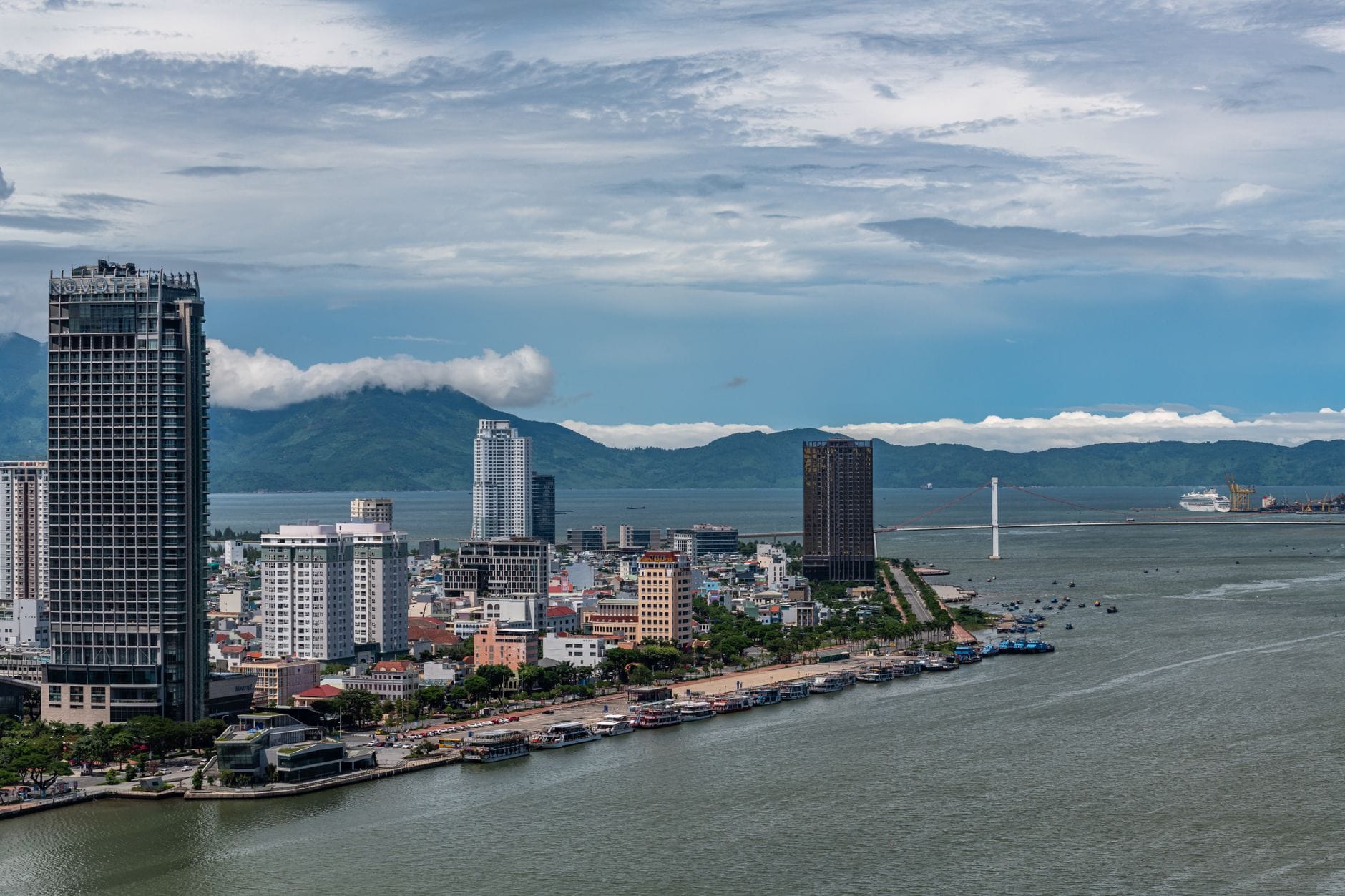
Afternoon is well spent exploring the downtown area around Han River. The Dragon Bridge (Cầu Rồng) is 666 meters long and worth seeing in daylight for photographs, but come back on Friday, Saturday, or Sunday evening at 21:00 for the fire and water show — the dragon head breathes fire and sprays water for about 15 minutes. It's free to watch from the riverbank. Combine this with a walk along Bach Dang Walking Street and dinner at one of the riverside restaurants.
⚠️ What to skip
The Dragon Bridge fire show only happens Friday, Saturday, and Sunday nights at 21:00. If your Day 1 falls on a different night, adjust your schedule accordingly — it's worth planning around.
Day 2: Ba Na Hills or Marble Mountains and Beach Time

Ba Na Hills is a resort and amusement complex in the mountains roughly 30 km west of Da Nang city. The centerpiece is the Golden Bridge — the photo-famous walkway held up by giant stone hands — but Ba Na Hills also includes a French village, a cable car system that holds world records, and a large amusement park. Entry tickets include the cable car and most rides, running around about 1,000,000 VND per adult depending on timing and promotions. Set aside the full day: travel there and back plus the cable car queues alone account for 3–4 hours.
Practical Assessment: Ba Na Hills is a polished, commercial experience rather than a nature escape. The Golden Bridge photographs well, but the surrounding complex is essentially a theme park with a French colonial aesthetic overlay. It is genuinely fun if you enjoy that kind of thing, excellent for families, and very popular with Vietnamese domestic tourists. If you came to Da Nang for authentic cultural immersion, it may feel incongruous. In that case, swap this day for the itinerary below.
The alternative Day 2: spend the morning at the Marble Mountains (Ngũ Hành Sơn) — five limestone and marble hills about 7 km south of the city center, containing caves, tunnels, Buddhist shrines, and sweeping views from the summit. เผื่อ 2–3 hours and wear shoes with grip. Afterward, stop at the Non Nuoc stone carving village at the base, where artisans have been cutting marble for centuries. The afternoon frees up for more beach time at Non Nuoc Beach, which sits immediately adjacent and tends to be quieter than My Khe.
Day 3: Hoi An Day Trip (or My Son Sanctuary)

Hoi An Ancient Town is approximately 30 km south of Da Nang — about 45 minutes by car or motorbike — and is the obvious day trip choice for most visitors. The old town is a UNESCO World Heritage Site, a compact network of preserved trading-port architecture, tailors, lanterns, and canals. Entrance tickets to the main heritage zones cost around 150,000 VND. Go early: Hoi An in the morning before tour buses arrive from Da Nang hotels is a genuinely different experience from Hoi An at noon. Plan to be there by 08:00–08:30, explore through lunch, and return to Da Nang in the late afternoon. The Da Nang to Hoi An guide covers all transport options and what to prioritize once you arrive.
My Son Sanctuary is the other major option — a UNESCO-listed complex of Cham-era Hindu temples dating from the 4th to 15th centuries, about 70 km from Da Nang (roughly 1.5 hours by road). My Son is genuinely atmospheric and historically significant, but it requires a longer journey and is typically done on a guided half-day or full-day tour. If you are interested in Cham history or prefer ruins to colonial-era architecture, choose My Son over Hoi An for this slot. Doing both in the same day is not recommended.
✨ Pro tip
If you visit Hoi An on Day 3, time your return to Da Nang for the evening so you can stop at the Helio Night Market or Han Market before heading to the airport or train station. It's a good way to pick up last-minute souvenirs and eat well for under 100,000 VND.
Food, Markets, and Evenings
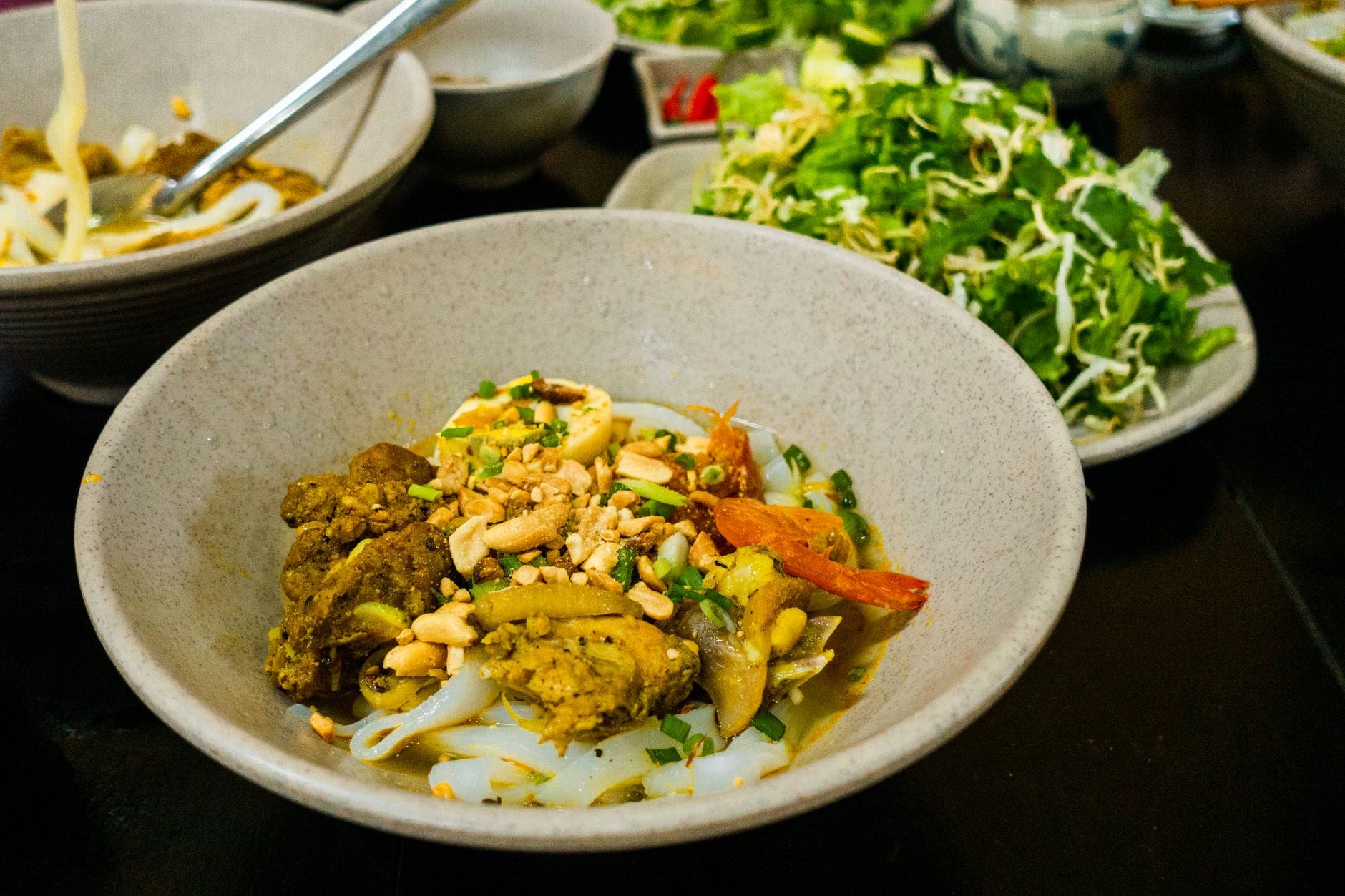
Da Nang has its own distinct food identity — it is not just a stopover between Hue and Hoi An. The local dish to prioritize is mì Quảng, a turmeric-yellow noodle dish with pork, shrimp, and a small amount of rich broth topped with peanuts and rice crackers. Bánh xèo (sizzling rice pancakes) and bún chả cá (fish cake noodle soup) are also Da Nang staples. For a full breakdown of what and where to eat, the Da Nang food guide covers street stalls, local restaurants, and price expectations.
For evening street food and market browsing, the Helio Night Market operates on weekends near the city center, offering a mix of food stalls, games, and local produce. Han Market (open 06:00–19:00 daily) is the daytime market for fresh produce, dried goods, and textiles. Neither is a tourist trap per se, but both draw crowds — Han Market is more authentic, Helio Night Market is more photogenic.
- Mì Quảng Da Nang's signature noodle dish — turmeric broth, pork, shrimp, peanuts, rice crackers. Available at small local eateries from around 30,000–50,000 VND.
- Bún chả cá Fish cake noodle soup unique to Da Nang. Light, savory, and best eaten at breakfast or lunch from street-side stalls.
- Bánh xèo Crispy sizzling pancakes filled with bean sprouts, shrimp, and pork, wrapped in rice paper with herbs. Order at dedicated bánh xèo restaurants for the full experience.
- Seafood at My Khe The strip of seafood restaurants near My Khe Beach offers grilled fish, crab, and clams at moderate prices — around 200,000–500,000 VND per person depending on what you order.
Practical Tips for 3 Days in Da Nang
- Use Grab for most urban transport — it's reliable, metered, and cheaper than negotiating with street taxis. Expect 30,000–70,000 VND for most city-center trips.
- Rent a motorbike (around 150,000–250,000 VND per day) only if you are experienced with Vietnamese traffic — the city roads are manageable, but highways toward Ba Na Hills and Marble Mountains carry fast-moving trucks.
- Drink bottled or filtered water throughout your stay — tap water in Da Nang is not safe to drink.
- Carry small VND notes for street food, market stalls, and temple entrance fees. Many local vendors do not accept cards.
- Dress modestly for Linh Ung Pagoda, Marble Mountains temples, and any religious sites — shoulders and knees should be covered. Lightweight trousers and a shawl are easy to pack.
- Emergency numbers: Police 113, Fire 114, Ambulance 115. Vietnam country code is +84, Da Nang area code 236.
For accommodation, most first-time visitors stay in the My Khe beach strip or the Han River downtown area — both positions work well for this itinerary. The beach strip is better if you prioritize sea access; downtown is better if you prefer restaurants and city life within walking distance. The Da Nang accommodation guide covers neighborhoods, price ranges, and which areas suit different travel styles.
FAQ
Is 3 days enough for Da Nang?
Yes — three days is genuinely sufficient to cover the major highlights: city beaches, Son Tra Peninsula, Marble Mountains or Ba Na Hills, and a day trip to Hoi An or My Son. You won't see everything, but you won't feel rushed either. A fourth day adds breathing room for slower mornings, additional day trips (such as Hai Van Pass), or more beach time.
What is the best time of year for a 3-day Da Nang trip?
March through August is the dry season, with the calmest beaches and most reliable weather for outdoor activities. June through August brings the least rainfall. November through February is the rainy season — expect frequent heavy showers that can disrupt outdoor plans, though indoor and cultural sites remain accessible. March–May is often considered the sweet spot: warm, dry, and less crowded than peak summer.
Can I do Hoi An as a day trip from Da Nang?
Easily. The two cities are about 30 km apart — roughly 45 minutes by taxi, ride-hail, or motorbike. Most 3-day Da Nang itineraries include Hoi An as a day trip rather than requiring an overnight stay. Leaving Da Nang by 07:30–08:00 gives you a full day in the Ancient Town before returning for dinner.
How much should I budget for 3 days in Da Nang?
A practical range is 2–8 million VND per person (roughly US$80–320) excluding flights, covering accommodation, food, local transport, and attraction entries. Budget travelers staying in hostels and eating street food can manage around US$80–120. Mid-range travelers with a decent hotel and Ba Na Hills tickets will spend closer to US$150–250. Costs rise quickly if you add spa treatments, fine dining, or luxury resorts on My Khe.
Do I need to visit Ba Na Hills on a Da Nang trip?
No — Ba Na Hills is optional and not for everyone. It's a commercial resort and theme park complex. The Golden Bridge photographs are striking, but the overall experience is more entertainment-park than authentic Vietnam. Skip it if you prefer cultural depth, and use the day for Marble Mountains, Non Nuoc Beach, the Museum of Cham Sculpture, or a longer Hoi An visit instead.
Tickets & tours
Live prices and dates from our booking partner. If you book, we may earn a commission at no extra cost to you.
Planning a trip? Discover personalized activities with the Nomado app.