My Khe Beach: Da Nang's Most Accessible Stretch of Coast
My Khe Beach (Bãi biển Mỹ Khê) My Khe Beach (Bãi biển Mỹ Khê) runs for roughly 9 kilometers along Võ Nguyên Giáp Street in Phước Mỹ Ward, Son Trà District, making it one of the most visited beaches in Da Nang. Entry is free, the water is clear from April through August, and the beach sits close enough to the city center that you can walk back to your hotel with sand still on your feet.
Quick Facts
- Location
- Võ Nguyên Giáp Street, Phước Mỹ Ward, Sơn Trà District, Da Nang
- Getting There
- 5–15 min by taxi or ride-hail from central Da Nang; walkable from some nearby hotels
- Time Needed
- 2–4 hours for a beach session; all day if you walk the full length
- Cost
- Free public access; sunbed and umbrella rentals vary by operator
- Best for
- Swimmers, early-morning joggers, families, and travelers wanting a beach day without a resort price tag
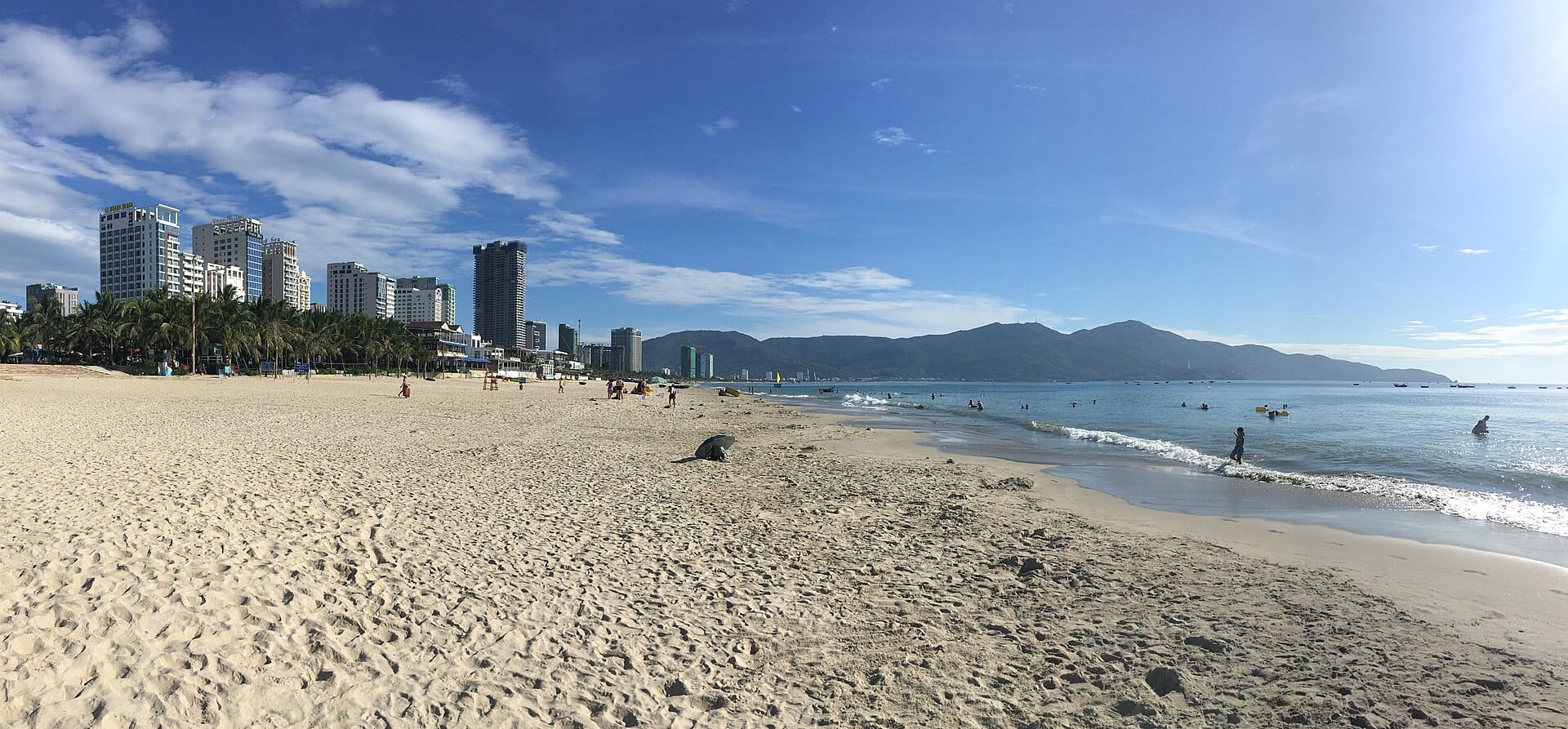
What My Khe Beach Actually Is
My Khe Beach (Bãi biển Mỹ Khê) is a publicly accessible stretch of coastline on Da Nang's eastern shore, running roughly 9 to 10 kilometers along Võ Nguyên Giáp Street in Son Tra District. The sand is pale and wide, the gradient into the water is gradual enough for casual swimmers, and there are no entry fees of any kind.
The beach's connection to Da Nang's urban core is part of what makes it unusual. You are not driving an hour out of town to reach a resort enclave. The city is right there behind you: apartment towers, coffee shops, seafood restaurants, and the occasional convenience store. For travelers who want a real beach without detaching from everything else Da Nang offers, this is the setup.
ℹ️ Good to know
My Khe Beach is public and free, 24 hours a day. However, lifeguards operate seasonally, and roped-off swimming zones are typically maintained during daytime hours in peak months. Outside those hours and months, swim with caution and pay attention to flag warnings.
How the Beach Changes Through the Day
Early morning at My Khe is genuinely different from the version that appears in afternoon travel photos. By 5:30 or 6:00 AM, local residents are already on the sand: groups doing aerobics, individuals jogging the waterline, older visitors wading up to their knees in the shallow surf. The light is soft, the air temperature is cooler than it will be in a few hours, and the smell of salt water is strongest before the heat of the day pushes it back. This is the most photogenic hour and, for non-swimmers, one of the most pleasant times to simply walk the beach.
By mid-morning the sun is already working hard. Vendors with carts appear, renting sunbeds and umbrellas, selling drinks and snacks. The beach fills steadily from around 8:00 AM onward, with domestic tourists and international visitors taking up the shaded sections in front of the main resort hotels. The water in front of the roped zones is busy but never uncomfortably crowded except during major Vietnamese holidays.
Midday between 11:00 AM and 2:00 PM is the phase most travelers skip entirely, and correctly so. The sun is directly overhead, the sand reflects heat upward, and UV intensity is high. If you are not under an umbrella, this stretch of the day is uncomfortable. The beach noticeably quiets between noon and 1:00 PM as the mid-morning crowd retreats to restaurants and hotels.
Late afternoon from around 4:00 PM is the second peak. The light turns golden, families return, and the beach takes on a relaxed social quality: people playing volleyball, children in the shallows, couples watching the transition toward sunset. Evening brings a different scene again: the restaurants and bars along Võ Nguyên Giáp Street fill up, and sections of the beach near the better-lit areas stay populated until 9:00 or 10:00 PM.
Tickets & tours
Live prices and dates from our booking partner. If you book, we may earn a commission at no extra cost to you.
Da Nang Airport Pick-Up or Drop-Off Transfer Service
From 7 €Instant confirmationFree cancellationFull-day Hoi An city and My Son sanctuary tour from Danang
From 88 €Instant confirmationFree cancellationFull-day Ba Na Hills exploration from Da Nang
From 112 €Instant confirmationFree cancellationBach Ma National Park trekking day tour from Danang
From 109 €Instant confirmationFree cancellation
Water Conditions and Swimming Safety
The South China Sea along Da Nang's coast behaves differently depending on the season, and My Khe is no exception. From roughly April through August, conditions are often favorable: the water is clear, waves are gentle to moderate, and the sea temperature is warm. These are the months when the roped swimming zones are staffed and the beach operates at its most organized.
From September through March, Da Nang enters its wet season, and the sea changes character. Stronger swells, increased wave height, and occasional typhoon-related surges make swimming risky, particularly for anyone who is not a confident ocean swimmer. The beach does not close during this period, but the flags matter more. A red flag means no swimming. Respect it.
⚠️ What to skip
Da Nang's wet season runs from roughly September through March. During this period, waves at My Khe can be significantly stronger than they appear from the shore. Do not enter the water when a red flag is posted, even if the surface looks calm.
For a broader picture of how beach conditions fit into your trip planning, the best time to visit Da Nang guide covers seasonal patterns across the city in more detail.
History and Context
My Khe Beach is not new to international attention. During the Vietnam War, U.S. military personnel used rest and recreation facilities in the Da Nang beach area, and references to 'China Beach' in American accounts of that period often referred to this area and its immediate surroundings. The name 'China Beach' does not correspond to any official Vietnamese place name, but it persists in some older travel writing and in the American cultural memory of the war. Vietnamese sources use Bãi biển Mỹ Khê consistently.
Da Nang itself, as a centrally governed municipality on the South Central Coast, has developed rapidly since the late 1990s, and the beach corridor along Võ Nguyên Giáp Street reflects that transformation. What was once a largely undeveloped shoreline is now flanked by a mix of mid-range hotels, international resort properties, and a growing restaurant and bar scene. The urbanization continues in phases: construction projects are a common backdrop along certain sections of the beach road.
Practical Walkthrough: Navigating the Beach
The beach runs parallel to Võ Nguyên Giáp Street for its entire length, which means access is straightforward at almost any point. There is no single main entrance. You simply cross the road, pass through one of the gaps between beach clubs or open sections, and you are on the sand. Parking for motorbikes and bicycles is informal but widely available at various points along the strip. Taxis and ride-hail apps (Grab is the most commonly used in Da Nang) drop off and pick up directly on Võ Nguyên Giáp Street.
The northern end of the beach, closest to Son Tra Peninsula, is generally quieter and has longer unbroken stretches of sand with fewer vendors. The central and southern sections, particularly the zone in front of the larger resort hotels, are more developed: more sunbed operators, more food options, and more noise from the nearby road. If you want a calm morning walk, head north. If you want convenience, infrastructure, and a beach club atmosphere, the central section delivers it.
Some sections of beach directly in front of large resort hotels have restricted access or operate as semi-private zones for guests. These are not the majority of the beach, and free public sections are always available nearby, but it is worth knowing that a stretch of apparently open sand may have a resort barrier at the high-tide mark.
My Khe sits within the broader My Khe Beach area, which also includes seafood restaurants and residential neighborhoods worth exploring. The Da Nang beaches guide compares My Khe with other coastal options along the city's 60-kilometer shoreline.
What to Bring and What to Wear
Sun protection is the single most important practical consideration at My Khe. The beach faces east, which means the morning sun hits directly, and UV index values in Da Nang are high for most of the year. Sunscreen with a high SPF, a hat, and a cover-up for midday are not optional extras if you are spending more than an hour outside.
Flip-flops or sandals that come off easily are more practical than shoes with laces. The sand between the road and the water is fine and hot in the afternoon. Bringing a small dry bag or waterproof pouch for your phone and valuables is sensible if you plan to swim. While petty theft on Da Nang's beaches is not a significant reported problem, leaving electronics unattended on a towel is the kind of risk that is easy to avoid.
Fresh water showers are available at various points along the beach, particularly near the main beach clubs and resort access points. Changing facilities exist but vary in quality and availability. If you are arriving directly from a hotel with a pool or gym, the setup is more comfortable than if you are arriving from a day of sightseeing with a full bag.
Photography at My Khe
The beach photographs best in the hour after sunrise and the hour before sunset. At those times the light is directional and warm, the crowds are smaller or more naturally distributed, and the sky over the East Sea tends to hold some texture. Midday photography in bright sun produces flat, harsh images unless you are working specifically with the color contrast of the water.
The northern end of My Khe, where the beach curves toward Son Tra Peninsula, offers a cleaner horizon and less construction in the background. For elevated views of the entire coastline, the Da Nang viewpoints guide covers several vantage points that put the full arc of the beach in frame.
Who Might Not Enjoy My Khe
My Khe is a city beach, and it carries all the characteristics that label implies. Visitors expecting the seclusion of a remote tropical island will find the backdrop of hotels and road traffic a disappointment. The beach is clean by Vietnamese urban standards, but it is not pristine in the way that less-developed coastlines can be. During Vietnamese national holidays, particularly in the summer months, the central sections fill quickly and the atmosphere leans toward crowded rather than relaxed.
Travelers willing to go further afield can reach Non Nuoc Beach to the south, which has a quieter character and sits near the Marble Mountains, or the more secluded coves of Son Tra Peninsula's beaches to the north.
Insider Tips
- Arrive before 6:30 AM if you want the beach to yourself. The early-morning local crowd is present but concentrated in specific exercise zones; the rest of the sand is quiet, the light is excellent, and the temperature is genuinely comfortable.
- The seafood restaurants on the streets one block back from Võ Nguyên Giáp Street tend to have lower prices and more locally oriented menus than the beachfront establishments. Look for plastic chairs and hand-written menus on chalkboards.
- If you are renting a sunbed, confirm the price before you sit down. Rates vary between operators and there is no fixed standard. Agreeing on the fee upfront avoids an awkward conversation when you are already settled and sun-tired.
- The northern section of the beach near Son Tra Peninsula stays calmer on weekends when the central and southern zones fill up. If you have a motorbike, it takes about 5 minutes to ride past the resort corridor into genuinely open space.
- During the Da Nang International Fireworks Festival, typically held in the summer months, sections of the beach provide an unobstructed view of the display over the Han River. Check the festival schedule in advance and arrive on the beach by early evening to secure a spot.
Who Is My Khe Beach For?
- Early risers who want a beach walk before the heat sets in
- Families with children who need easy access, gradual water entry, and nearby food options
- Budget travelers who want a beach day without any admission costs
- Photographers working the golden hour, particularly at sunrise facing east over the South China Sea
- Visitors combining a beach afternoon with evening dining along the Võ Nguyên Giáp Street restaurant strip
Planning a trip? Discover personalized activities with the Nomado app.