Non Nuoc Beach: Da Nang's Most Underrated Stretch of Sand
Non Nuoc Beach (Bãi biển Non Nước) runs for roughly 5–8 kilometres along the Ngu Hanh Son coastline in southern Da Nang, backed by the stone formations of the Marble Mountains. Free to enter and open around the clock, it offers cleaner sightlines, softer crowds, and a more contemplative atmosphere than the city's more famous strips of sand.
Quick Facts
- Location
- Hoa Hai & Khue My wards, Ngu Hanh Son District, Da Nang — approx. 8–10 km southeast of city center
- Getting There
- Taxi or ride-hail via Vo Nguyen Giap Street / Truong Sa Street; no direct metro — Da Nang has no metro system
- Time Needed
- 2–4 hours for a beach visit; half-day if combining with Marble Mountains
- Cost
- Free (public beach, no admission fee)
- Best for
- Swimmers, photographers, couples, and anyone pairing the beach with a Marble Mountains visit
What Non Nuoc Beach Actually Is
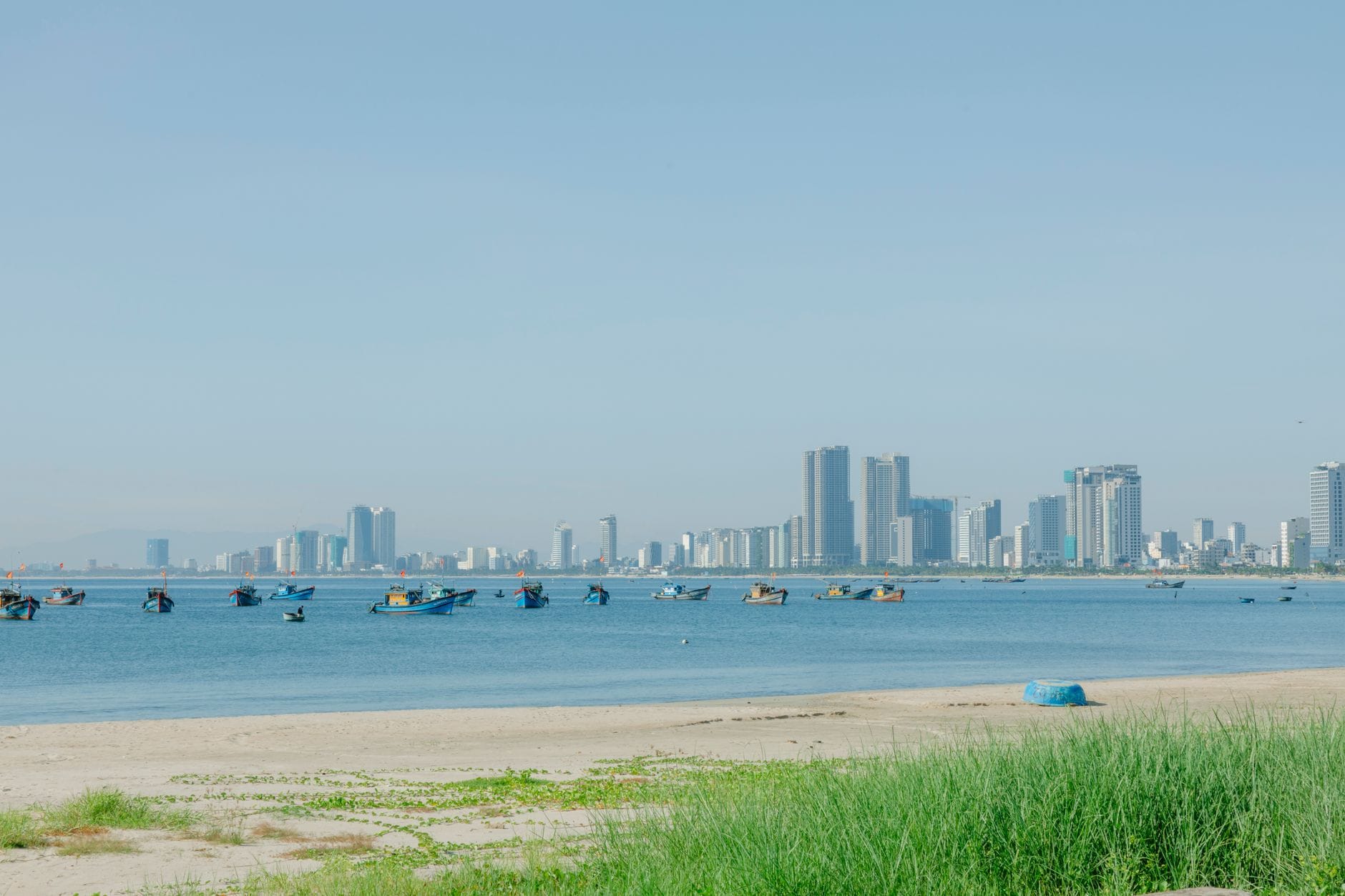
Non Nuoc Beach is a public, free-access stretch of coastline in Da Nang's Ngu Hanh Son District, running south from the base of the Marble Mountains toward the Quang Nam provincial boundary. The beach is officially within Hoa Hai and Khue My wards and is accessed primarily along Truong Sa Street, a coastal road that parallels the shoreline for several kilometres. Most tourism sources describe the beach as approximately 5–8 kilometres long, though the broader coastal strip in this area extends further.
The sand here is noticeably white and fine-grained, the result of coastal geology influenced by the Marble Mountains themselves. The gradient is gentle, which makes wading comfortable and swimming relatively safe in calm weather. The water colour shifts from pale turquoise in the shallows to a deeper blue-green further out, particularly in the dry season months of May through August when sediment runoff from inland is minimal.
Forbes once listed Non Nuoc among the world's most beautiful beaches, a recognition that surprised few people who have visited during the quiet morning hours. What the ranking didn't capture is the contextual drama: the five marble and limestone peaks of the Marble Mountains rise directly behind the beach's northern end, giving the shoreline a backdrop that no other beach in Da Nang can match.
How the Beach Changes Through the Day
Early morning is the most rewarding time to be here. Between 5:30 and 7:30am, local residents use the beach for tai chi, morning swims, and walking. The light at this hour catches the marble peaks from the northwest and the sea surface is often glassy. There are almost no international visitors at this time. The air smells of salt and, faintly, of incense drifting from nearby pagodas.
By mid-morning, beach vendors and umbrella rental operators set up along the central sections of Truong Sa Street. Chairs and umbrellas are available for hire from small operators directly on the sand — prices are negotiable and typically modest by any standard. From around 10am to 2pm the heat becomes serious. The sand reflects light intensely and UV exposure is high; this is when the beach thins out slightly as locals retreat and day-trippers from central Da Nang take their place.
Late afternoon, roughly 4pm to sunset, brings a second wave of activity that is gentler than the midday rush. The light softens and the Marble Mountains cast long shadows across the northern end of the beach. Photographers should position themselves near the water's edge looking north-northwest to capture both the peaks and the reflective wet sand. Sunset itself is behind the mountains from this vantage point, so the sky colours in the east, over the sea, rather than above the horizon — which produces an unusual, diffuse golden quality rather than a dramatic fireball effect.
💡 Local tip
For the best combination of light, cooler temperatures, and manageable crowds, arrive before 8am or after 4pm. The beach's proximity to the Marble Mountains means morning shade forms quickly on the northern section — useful if you want to read or rest without full sun exposure.
Tickets & tours
Live prices and dates from our booking partner. If you book, we may earn a commission at no extra cost to you.
Da Nang Airport Pick-Up or Drop-Off Transfer Service
From 7 €Instant confirmationFree cancellationFull-day Hoi An city and My Son sanctuary tour from Danang
From 88 €Instant confirmationFree cancellationFull-day Ba Na Hills exploration from Da Nang
From 112 €Instant confirmationFree cancellationBach Ma National Park trekking day tour from Danang
From 109 €Instant confirmationFree cancellation
Setting and Surroundings: The Marble Mountains Connection
Non Nuoc Beach's defining geographical feature is its proximity to the Ngu Hanh Son — the five marble and limestone hills that give the surrounding district its name. The hills are named after the five classical elements in Vietnamese cosmology: Kim (metal), Moc (wood), Thuy (water), Hoa (fire), and Tho (earth). Thuy Son, the largest, is the one most visitors climb. It contains caves, pagodas, and viewpoints overlooking the exact stretch of beach described here. If you visit the Marble Mountains first and look seaward from the summit, you'll be looking down at Non Nuoc Beach — which gives you a useful spatial sense of the whole area before you descend to the waterline.
Immediately south of the beach's northern access points, the Non Nuoc stone carving village operates along the road toward the mountains. Workshops here produce marble sculptures ranging from small souvenirs to full-sized Buddhas. The sound of chisels on stone is audible from the street most mornings. If you're driving or riding between the beach and the mountains, you'll pass through the village automatically — it's not a detour.
The beach's location within Ngu Hanh Son District means it sits at a natural transition point between Da Nang's urban beach strip to the north and the quieter coastal zones approaching Hoi An to the south. The atmosphere is more resort-corridor than city beach, and the crowd profile reflects this: a higher proportion of guests staying at the large hotels along Truong Sa Street, fewer day-trippers on foot.
Swimming, Safety, and Sea Conditions
The sea at Non Nuoc is generally calmer than at the exposed northern beaches during the dry season (April through August), when swells are small and the water temperature is warm. This is when swimming is at its most enjoyable and when the water achieves that characteristic blue-green clarity that appears in most photographs of the beach.
⚠️ What to skip
Da Nang's coast, including Non Nuoc, experiences stronger surf, rip currents, and rough conditions during the wet season (September through March). Red flag warnings are posted at beach access points — take these seriously. Drowning incidents occur on Vietnamese beaches every year, disproportionately among visitors unfamiliar with local current patterns.
During the wet season, the beach itself remains open and accessible, but swimming conditions deteriorate significantly between October and January. Some visitors come during this period specifically for the dramatic sky and wave photography, which can be striking. If that's your purpose, the beach is still worth visiting — just stay out of the water.
Lifeguard presence varies by section and time of year. The stretches adjacent to the large resort hotels tend to be better monitored. Public access points between resort sections may have no supervision at all. Families with children should swim in front of staffed hotel beach areas where possible, even if they are not guests.
Getting There and Getting Around
Non Nuoc Beach sits roughly 8 to 10 kilometres southeast of central Da Nang, depending on your starting point and which part of the beach you're heading to. From Da Nang International Airport (IATA: DAD), the drive is approximately 9 to 17 kilometres by road. The most straightforward route follows Vo Nguyen Giap Street southward along the coast, which eventually becomes Truong Sa Street running parallel to the beach.
Taxis and ride-hailing apps (Grab is the dominant app in Da Nang) are the most practical options for most visitors. Da Nang has no metro or light rail system. City buses serve some routes but are not consistently convenient for beach access from the city center. If you're already staying near the Marble Mountains or the resort strip, the beach is often within walking distance. For a broader look at getting around the city, the getting around Da Nang guide covers your options clearly.
Motorbike rental is practical for this part of Da Nang if you're comfortable with Vietnamese traffic patterns. The coastal road between My Khe and Non Nuoc is straightforward to navigate and the distances are short. Parking along Truong Sa Street is informal but generally easy to find outside peak weekend hours.
Practical Details: What to Know Before You Go
Non Nuoc Beach is a public beach with no admission fee and no closing time. It is open 24 hours a day year-round. Amenities vary significantly by section. The resort-fronted stretches of beach (several large international hotels line Truong Sa Street) have sun loungers, beach bars, and showers available to guests; some allow non-guests to use facilities for a fee. Public sections have fewer fixed amenities, though mobile vendors sell water, coconuts, and snacks during busy periods. For context on Da Nang's broader beach options, the Da Nang beaches guide lays out how Non Nuoc compares to My Khe and the other coastal areas.
Bring sunscreen with a high SPF rating — the tropical sun at this latitude is intense, and the beach's orientation means little natural shade on the open sand. A hat and protective clothing for the walk between your transport and the waterline will matter more than most visitors expect. Reef-safe sunscreen is worth considering given the proximity to coral formations further south along the central Vietnamese coast.
Photography: the Marble Mountains as backdrop work best from the water's edge or shallow water, looking roughly north-northwest. A wide-angle lens captures both the peaks and the foreground sand in a single frame. For detail shots of the rock formations, morning light from the east illuminates the eastern faces of the hills directly. Evening light creates good warmth but the mountains fall into shadow earlier than the beach itself.
If you plan to combine the beach with the Marble Mountains in a single outing — a logical pairing — consider visiting the mountains first (they open in the morning) and descending to the beach in the late afternoon. This sequencing also positions you for the best beach light. The Da Nang viewpoints guide includes perspectives from the Marble Mountains summit that look directly down onto this beach.
Who Should Skip Non Nuoc Beach
If your priority is beach nightlife, water sports facilities, or a dense strip of restaurants and bars within walking distance, Non Nuoc will feel thin. The beach has none of the concentrated food and entertainment infrastructure that builds up around My Khe's more central sections. Evenings here are quiet; the resort hotels have their own dining but the surrounding streets offer limited standalone options compared to the city center.
Visitors looking for the full beach-town social experience are better served closer to Da Nang's urban core. The stretch around My Khe Beach has more amenities, more evening energy, and easier access to the city's restaurants and nightlife. Non Nuoc appeals to people who want the sand and sea without the surrounding noise.
Insider Tips
- The section of beach immediately north of the large resort hotels — accessible via small side streets off Truong Sa — tends to be noticeably less crowded on weekends when the central resort sections fill up. Walk ten minutes from the main access points and the crowd thins considerably.
- The Marble Mountains admission covers a sunrise visit if you arrive at opening time. Climbing Thuy Son first and looking down at Non Nuoc Beach from the summit gives you a striking orientation to the whole coastal landscape before you descend to the water.
- Bring cash. The informal vendors, umbrella rental operators, and many smaller cafes along Truong Sa Street don't reliably accept cards. Small denomination VND notes make transactions easier.
- The wet sand at the waterline after a wave recedes creates excellent mirror reflections of the Marble Mountains for photography — worth timing your shots to coincide with this brief window rather than shooting from dry sand.
- If you're staying in Hoi An rather than Da Nang, Non Nuoc is the closest decent beach to your base — roughly 17–30 kilometres north. It makes for a straightforward half-day trip without the longer drive to Da Nang proper.
Who Is Non Nuoc Beach For?
- Swimmers and water-lovers who want calm, clear conditions in the dry season (April–August)
- Photographers combining the beach with a Marble Mountains visit for dramatic backdrops
- Couples looking for a quieter, less crowded alternative to My Khe
- Families staying in the Ngu Hanh Son resort corridor who want beach access without a long transfer
- Hoi An-based travelers making a half-day trip north to the nearest decent beach
Nearby Attractions
Other things to see while in Marble Mountains (Ngu Hanh Son):
- Linh Ung Pagoda (Marble Mountains)
Founded in 1825–1826 during the Nguyen Dynasty and designated a national historical and cultural site, Linh Ung Pagoda sits on the eastern slope of Thuy Son (Water Mountain) within the Marble Mountains complex. It is older than its more famous namesake on Son Tra Peninsula and rewarding for anyone who has made the climb to explore the caves and terraces above.
- Marble Mountains (Ngu Hanh Son)
The Marble Mountains, or Ngu Hanh Son, are a cluster of five marble and limestone hills rising from the coastal plain between Da Nang and Hoi An. Each peak holds caves, temples, and carved shrines layered across centuries of Cham, Vietnamese, and Buddhist history. This guide covers what you will actually find there, how long to spend, and how to get the most out of the visit.
- Non Nuoc Stone Carving Village
Non Nuoc Stone Carving Village sits at the base of the Marble Mountains in Da Nang's Ngu Hanh Son District, where artisans have shaped marble, granite, and sandstone into sculpture for nearly four centuries. Entry is free, the workshops are open to visitors, and the scale of production — hundreds of open-fronted studios lining the streets — is unlike anything you'll find in a gallery or market.
Planning a trip? Discover personalized activities with the Nomado app.