Lady Buddha Statue at Linh Ung Bai But Pagoda: The Complete Visitor Guide
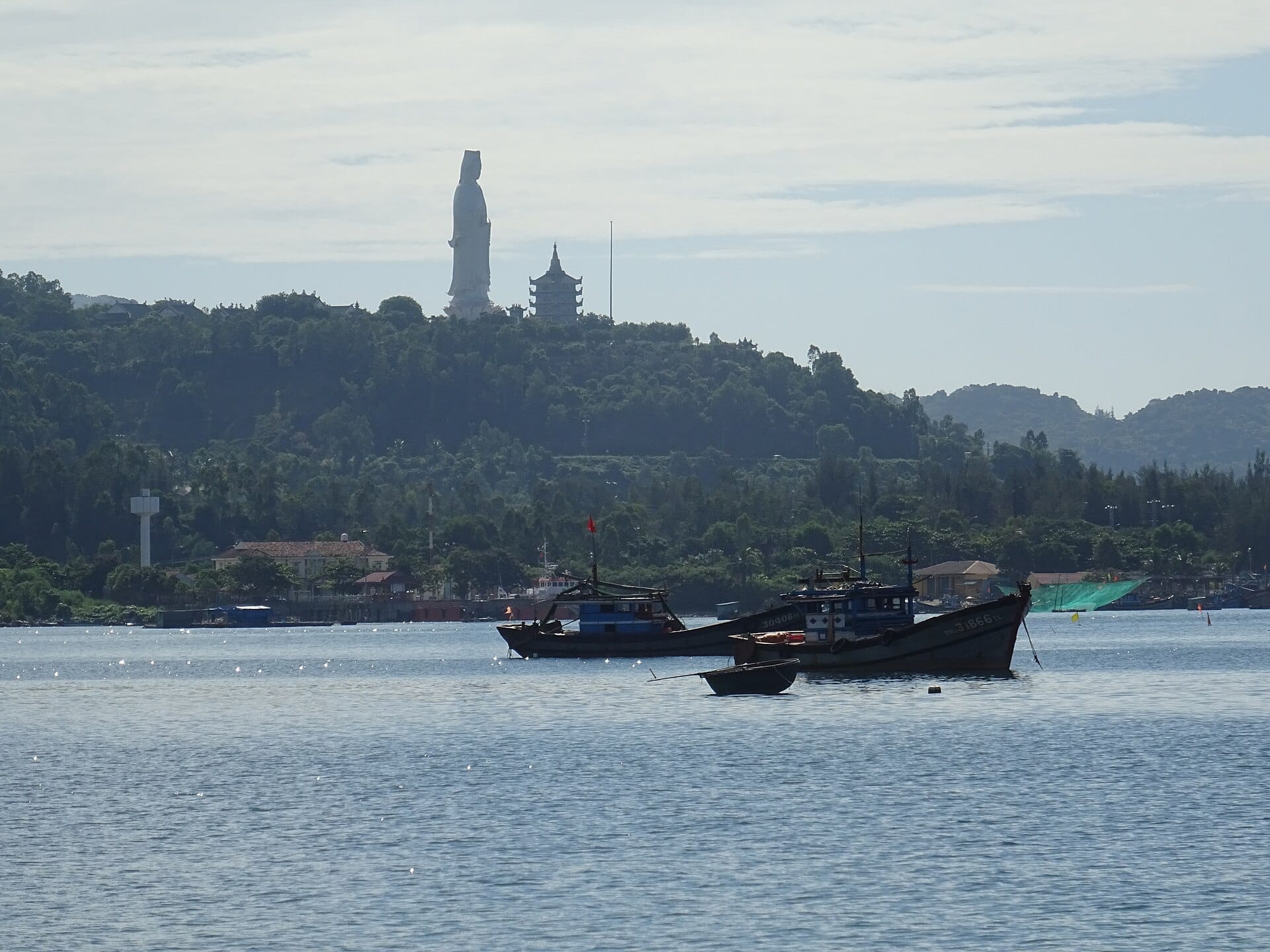
Standing 67 metres above the coastline of Son Tra Peninsula, the Lady Buddha statue at Linh Ung Bai But Pagoda is Da Nang's most recognisable landmark. The pagoda grounds are free to enter, beautifully maintained, and open daily from 06:00 to 21:00, making them one of the most accessible spiritual and scenic sites in central Vietnam.
Quick Facts
- Location
- Bai But, Hoang Sa Street, Tho Quang Ward, Son Tra District, Da Nang
- Getting There
- Taxi or motorbike from city centre (~10 km northeast); no direct public bus service
- Time Needed
- 1–2 hours
- Cost
- Free entry; voluntary donation for parking
- Best for
- Panoramic sea views, Buddhist architecture, photography, cultural experience
- Official website
- chualinhung.vn
What Is Linh Ung Bai But Pagoda?
Linh Ung Bai But Pagoda (Chùa Linh Ứng Bãi Bụt) is a Buddhist pagoda complex built on the western slope of Son Tra Peninsula, approximately 10 kilometres northeast of Da Nang city centre. Construction began in 2004 and the complex was formally inaugurated in 2010, covering roughly 20 hectares of forested hillside overlooking the East Sea.
The site is best known for its colossal Lady Buddha statue, a 67-metre representation of the Bodhisattva Avalokiteshvara standing on a lotus base 35 metres in diameter. The interior of the statue contains 21 Buddha statues arranged across 17 floors, though the interior is not generally accessible to casual visitors. By height, the statue is among the tallest standing Buddha figures in Vietnam.
The pagoda is one of three Linh Ung Pagodas in Da Nang, the others being at Marble Mountains and on the Ngu Hanh Son area, but this Bai But location on Son Tra is by far the most visited, largely because of the scale of the statue and the coastal panorama that surrounds it.
💡 Local tip
Arrive before 08:00 on weekdays to experience the grounds in near-silence, with incense smoke drifting through the frangipani trees and monks conducting morning rituals. This is a genuinely different experience from the midday crowds.
The Lady Buddha Statue: Scale, Symbolism, and Sight Lines
The statue faces the East Sea, a deliberate orientation rooted in Vietnamese Buddhist belief: the Lady Buddha gazes outward to watch over fishermen and sailors, sheltering the city from storms and hardship. Local fishing communities have long held this peninsula sacred, and the pagoda formalises that relationship between the sea, the city, and the divine.
At 67 metres, the figure is tall enough to be spotted from My Khe Beach on the opposite shore and from boats several kilometres offshore. Up close, the scale is genuinely disorienting: the lotus petals at the base are each large enough for a person to stand inside, and the gentle expression on the face requires binoculars or a telephoto lens to appreciate from the ground. The robes are rendered in white-painted concrete, with folds designed to suggest movement even though the material is entirely static.
The surrounding complex contains 18 smaller arhat statues (representations of Buddhist sages), a large main prayer hall with lacquered interior columns, and several ceremonial gates. The grounds blend formal paving, stone lanterns, and tropical planting that softens the scale of the architecture. For context on how this fits within Da Nang's broader peninsula environment, see the guide to Son Tra Peninsula.
Tickets & tours
Live prices and dates from our booking partner. If you book, we may earn a commission at no extra cost to you.
Marble Mountain, Lady Buddha and Han River Night Cruise with Dinner
From 65 €Instant confirmationFree cancellationLady Buddha, Marble Mountains, and Hoi An City Tour from Da Nang
From 48 €Instant confirmationFree cancellationSon Tra Peninsula snorkeling
From 15 €Instant confirmationTour to Marble Mountains, Monkey Mountain and Lady Buddha
From 34 €Instant confirmationFree cancellation
How the Experience Changes Throughout the Day
Early morning, roughly 06:00 to 08:30, belongs almost entirely to worshippers. The smell of sandalwood and joss sticks is strongest then, the prayer bells ring at irregular intervals, and the coastal light is soft and directional, making this the best window for photography of both the statue and the sea below. The access road up through Son Tra is still cool and shaded, and you may share it only with monks, joggers, and the occasional troop of red-shanked douc langurs moving through the canopy overhead.
By mid-morning, tour groups begin arriving from Da Nang hotels and Hoi An day trips, and by 10:30 the plaza around the base of the statue fills steadily. The experience does not become unpleasant, but the reflective atmosphere of the early hours gives way to something louder and more social. Food and souvenir vendors set up near the parking area; the scent of grilled corn and iced coffee drifts up from the lower terrace.
Late afternoon, from around 16:00 onward, is the second quiet window. The tour buses have gone, the light turns amber over the East Sea, and the statue is particularly photogenic against the western sky. Sunset from the upper terrace can be spectacular if there is haze over the water, though the statue itself faces east, so the best light on the face occurs in the morning hours. Visitors staying until dusk will see the complex lit with warm floodlights, a noticeably different and atmospheric presentation of the architecture.
ℹ️ Good to know
The grounds are officially open until 21:00. The lit statue after dark is visible from much of the northern Da Nang coastline, but the pagoda interior buildings close earlier in the evening.
Getting There and Practical Navigation
There is no direct public bus route to the pagoda. Most visitors arrive by motorbike, private car, or taxi. The standard route from central Da Nang follows Vo Van Kiet Street north across the Han River, then continues along Vo Nguyen Giap Street (the coastal boulevard beside My Khe Beach) before turning onto Hoang Sa Street, which winds north around the base of Son Tra Peninsula. The drive from Dragon Bridge takes roughly 20 to 25 minutes without traffic.
Grab (Vietnam's dominant ride-hailing app) works reliably for this route and is usually cheaper than metered taxis. If you plan to spend time exploring more of the peninsula after your visit, consider renting a motorbike for the day: Son Tra has excellent coastal roads, and attractions including Son Tra Mountain summit and several quieter beaches are within a short ride. The Son Tra Peninsula area guide covers these options in detail.
Parking is free with a voluntary donation, and the lot is large enough to handle the midday peak without significant queuing. From the parking area, a gently sloping paved path leads up to the main gate and prayer hall. The walk to the base of the Lady Buddha statue from the gate is short but involves some steps, and the surface is uneven in places. Visitors with limited mobility should note that the site lacks dedicated accessibility infrastructure such as ramps or lifts.
⚠️ What to skip
The road along Hoang Sa Street hugging the peninsula cliff can be narrow in sections and gets slippery after rain. If you are renting a motorbike for the first time in Vietnam, consider taking a taxi instead, especially in wet season (September through March).
Dress Code, Etiquette, and What to Bring
Linh Ung Bai But Pagoda is an active place of worship, not a heritage museum. Shoulders and knees should be covered before entering the prayer hall; the pagoda provides cloth wraps at the entrance for visitors who arrive in beach clothing, but bringing your own lightweight layer is more comfortable in the heat. Shoes are removed before entering temple buildings, and bare feet on stone steps can be hot at midday in summer months.
Photography is permitted throughout the grounds, including inside the prayer hall in most areas, but photograph worshippers only from a respectful distance and without flash during active ceremonies. Drones require special permission and are not appropriate for casual use at a religious site of this significance. Speaking quietly within the inner complex is expected, particularly in the morning hours when monks are present.
Bring water. The climb through the grounds in midday heat is moderate but the sun exposure on the open plaza around the statue base is intense from late morning to mid-afternoon. There are no water sellers inside the main religious area, though vendors operate near the parking lot.
Photography Tips and the View Factor
The Lady Buddha statue is one of Da Nang's most photographed subjects, and the challenge is finding an angle that feels fresh. The classic wide-angle shot from directly below the lotus base captures the scale but loses the sea context. For a composition that includes both the statue and the coastline behind it, walk to the far right of the upper terrace and shoot across the body of the statue toward the open water. On clear days, the northern arc of Da Nang Bay is visible, and on particularly clear mornings you can see the ridge of Hai Van Pass to the north.
The 18 arhat statues around the complex perimeter are individually carved with distinct expressions and postures, and they make excellent portrait-style subjects in the soft morning light. The main gate, with its layered rooflines and carved stonework, photographs well from outside the complex looking in. If you visit at dusk, the floodlit statue against a deep blue sky can be captured from the lower terraces without crowds obscuring the foreground.
For a broader collection of Da Nang's best elevated vantage points, the Da Nang viewpoints guide is worth reading before you plan your itinerary.
Who This Attraction Is and Is Not For
Linh Ung Bai But Pagoda works well for a wide range of visitors: those interested in Vietnamese Buddhist practice, anyone seeking a dramatic viewpoint over the coast, families with children who can handle the modest walking involved, and photographers of all skill levels. The free entry and generous opening hours remove most of the logistical friction that complicates other Da Nang attractions.
That said, visitors expecting a purely scenic lookout without religious context may find the setting more complex than anticipated. This is a functioning pagoda, not a theme park, and the experience is richer if you approach it with some curiosity about the site's spiritual role in the city. If your priority is a high-altitude panorama over Da Nang rather than a cultural visit, the summit area of Son Tra Mountain offers a different kind of perspective. Alternatively, day-trippers combining this with the Marble Mountains and Non Nuoc Beach get a well-rounded half-day in Da Nang's southern and northern coastal zones.
Travellers with significant mobility limitations should plan carefully: the grounds involve sloping paths, steps, and uneven stone surfaces, and no accessibility aids are in place. The most visually impactful part of the visit, standing at the base of the Lady Buddha statue, is reachable without major difficulty, but the upper terraces require more effort.
Insider Tips
- The red-shanked douc langurs that live on Son Tra Peninsula are sometimes visible in the tree canopy along the access road in the early morning. Drive slowly and look upward into the larger trees between the coastal road and the pagoda entrance.
- The 18 arhat statues around the perimeter each have a small nameplate in Vietnamese and sometimes English. Taking time to read them gives the visit a layer of depth that most tour groups skip entirely.
- If you visit on the 1st or 15th of the lunar calendar, you will find the pagoda at its most active: local worshippers arrive in larger numbers with offerings of fruit, flowers, and incense, and the atmosphere is markedly more intense. Check the lunar calendar before you travel if you want this experience, or if you prefer a quieter visit, avoid those dates.
- The small café and rest area near the parking lot serves Vietnamese iced coffee and fresh coconut at reasonable prices. It is a good place to sit and watch the variety of visitors arriving before you head into the complex.
- Combine the pagoda visit with the drive around the northern tip of Son Tra Peninsula for an uninterrupted coastal road that most tourists skip. The peninsula beaches on the eastern side see far fewer visitors than My Khe.
Who Is Lady Buddha Statue (Linh Ung Bai But Pagoda) For?
- Cultural and spiritual travellers curious about Vietnamese Buddhism in an active context
- Photographers seeking the Lady Buddha's coastal backdrop in morning or evening light
- Families looking for a free, manageable half-morning activity with strong visual impact
- First-time Da Nang visitors building a one- or two-day city overview itinerary
- Travellers combining the pagoda with a broader Son Tra Peninsula motorbike loop
Nearby Attractions
Other things to see while in Son Tra Peninsula:
- Son Tra Mountain & Ban Co Peak
Rising to 696 metres above the East Sea (South China Sea), Son Tra Mountain (Núi Sơn Trà) anchors the Son Tra Peninsula northeast of Da Nang. Its highest point, Ban Co Peak (Đỉnh Bàn Cờ), rewards the climb with sweeping coastal panoramas, dense tropical forest, and surprisingly close encounters with rare Red-shanked Douc langurs. Entry is free.
- Son Tra Night Market
Son Tra Night Market, known locally as Chợ Đêm Sơn Trà, is a free-entry pedestrian market spread across nearly 200 stalls on the east bank of the Han River, minutes from the Dragon Bridge. It runs nightly from around 5:30 PM and draws a mix of locals shopping for produce, tourists hunting for souvenirs, and visitors eating their way through Vietnamese street food. It is unpretentious, affordable, and genuinely lively after dark.
- Son Tra Peninsula Beaches
The beaches of Son Tra Peninsula sit inside a protected nature reserve on the northeastern edge of Da Nang, roughly 10 km from the city center. Unlike the wide resort strips of My Khe, these coves are compact, largely undeveloped, and backed by dense jungle rather than hotel towers. Entry is free, and the water is generally clear outside of storm season.
Planning a trip? Discover personalized activities with the Nomado app.