Bach Dang Walking Street: Da Nang's Riverside Promenade Explained
Opened in June 2024, Bach Dang Walking Street runs along the west bank of the Han River between Dragon Bridge and Tran Thi Ly Bridge. Free to enter, it operates daily from mid‑afternoon to midnight, with stricter vehicle bans on weekend evenings, and offers food kiosks, live performances, and unobstructed river views — making it one of the most accessible evening destinations in central Da Nang.
Quick Facts
- Location
- Bach Dang Street, Hai Chau District, Da Nang — west bank of the Han River, between Dragon Bridge and Tran Thi Ly Bridge
- Getting There
- Taxi or ride-hail from anywhere in central Da Nang; no metro. Common entry points include the Dragon Bridge and APEC Park end in the north, from which you can walk south along the promenade.
- Time Needed
- 45–90 minutes for a leisurely full walk; longer if you stop to eat or watch bridge performances
- Cost
- Free admission. Budget extra for food, drinks, and souvenirs from kiosks (prices in Vietnamese đồng, VND)
- Best for
- Evening strollers, couples, families, and anyone wanting a no-cost introduction to Da Nang's riverfront
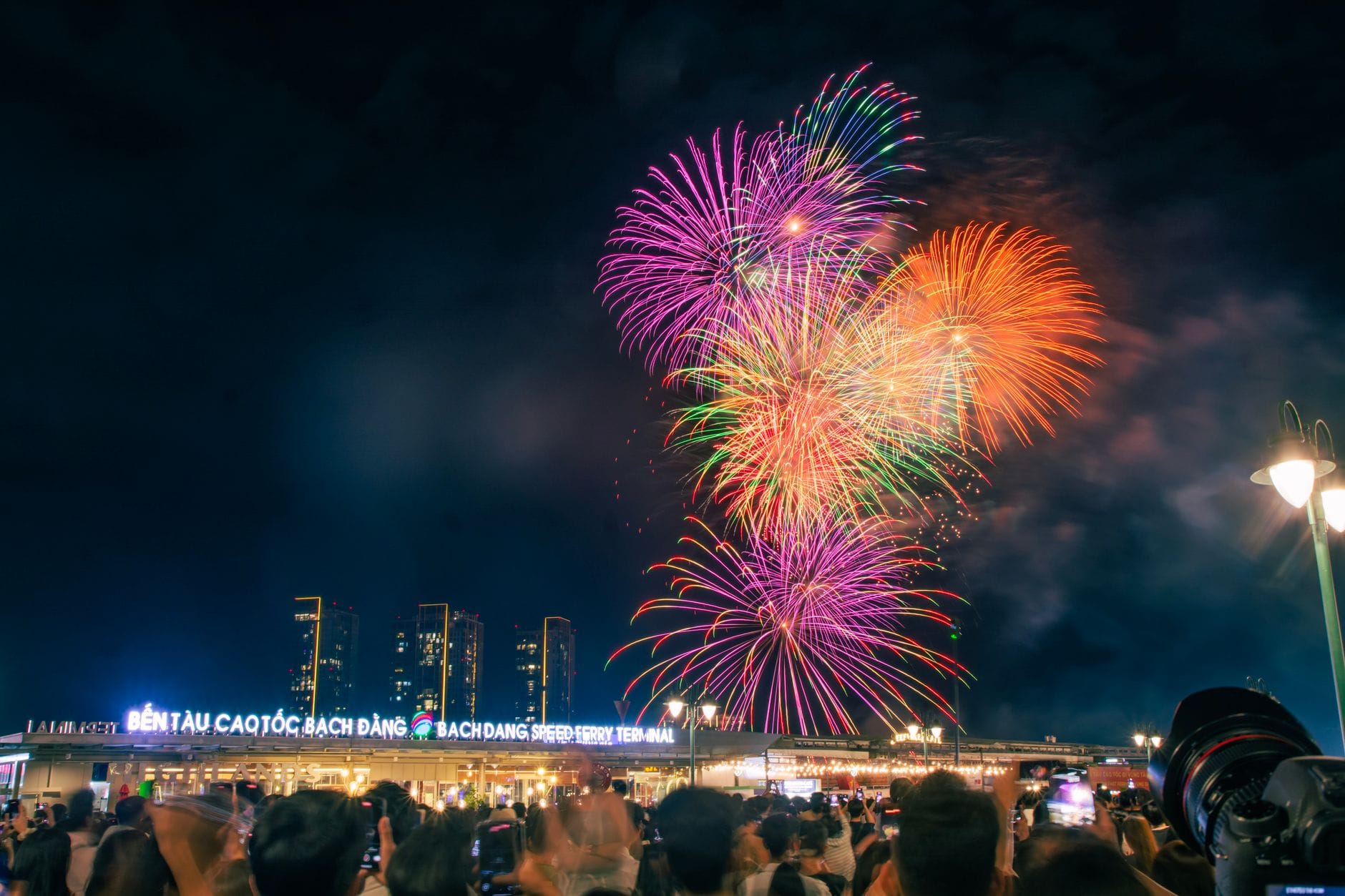
What Is Bach Dang Walking Street?
Bach Dang Walking Street (Phố đi bộ Bạch Đằng) is Da Nang's first officially designated pedestrian promenade, inaugurated on the evening of 7 June 2024 as a pilot project running through 2028. It stretches roughly 1 to 1.2 kilometres along Bạch Đằng Street on the western bank of the Han River, from Dragon Bridge and APEC Park in the north down to Tran Thi Ly Bridge in the south, placing it squarely in the Hai Chau District core of the city.
The street itself has long been one of Da Nang's most prominent riverside roads, lined with hotels, cafes, and government buildings facing the water. Converting its eastern lane into a pedestrian and kiosk zone — and closing the entire road to vehicles on weekend evenings — was a deliberate move to give the city a social gathering spine comparable to walking streets in Hoi An or Hanoi's Old Quarter, but with a distinctly modern, river-facing character.
ℹ️ Good to know
Operating hours: 3:00 PM – midnight, daily. On Friday, Saturday, and Sunday evenings, the full street between Dragon Bridge and Tran Thi Ly Bridge is closed to vehicles. Monday through Thursday, only the eastern lane is reserved for pedestrians and kiosks; other lanes remain open to one-way traffic at 40 km/h.
How the Street Changes by Time of Day
Arrive at 3:00 PM on a weekday and the scene is relatively quiet. The air off the Han River carries a faint saltwater edge mixed with the smell of coffee drifting from the cafes behind you. A few vendors are setting up folding kiosks along the eastern lane, arranging souvenir keychains and drinks in styrofoam coolers. The afternoon light hits the river at a low angle, turning it from grey-green to copper, and the bridges are still free of the crowds that will arrive later.
By 6:00 PM, the dynamic shifts noticeably. Families begin occupying the low stone seating along the riverfront, vendors are fully operational, and the competing smells of grilled corn, sugarcane juice, and fried snacks become hard to ignore. On weekday evenings, you will still hear motorbikes on the lanes beside you, which some visitors find distracting from what they expected to be a purely pedestrian experience.
Friday through Sunday evenings are a different category entirely. With the road fully closed, the entire width of Bach Dang becomes walkable, and the crowd density increases significantly after 7:00 PM. Street performers, small musical acts, and organised cultural presentations appear on temporary stages. The Dragon Bridge fire-and-water show, which runs on weekend nights, draws large crowds to the northern end of the promenade. Expect slow walking pace, shoulder-to-shoulder sections near the bridge, and a noise level that makes conversation at normal volume difficult.
💡 Local tip
For photography, the 30 minutes before sunset (roughly 5:30–6:00 PM depending on season) offers soft golden light on the river and bridges without the weekend night crowds. The Tran Thi Ly Bridge end of the promenade is typically less congested than the Dragon Bridge end and offers a cleaner sightline back north along the water.
Tickets & tours
Live prices and dates from our booking partner. If you book, we may earn a commission at no extra cost to you.
Bach Ma National Park trekking day tour from Danang
From 109 €Instant confirmationFree cancellationPrivate Return Transfer from Da Nang to Bach Ma National Park
From 103 €Instant confirmationFree cancellationBach Ma National Park Trekking full day tour with lunch
From 113 €Instant confirmationFree cancellationFull-Day Car Hire and Driver from Hoi An Center to Bach Ma
From 1.617 €Instant confirmationFree cancellation
The Setting: Han River, Bridges, and the Urban Context
The Han River at this point is wide — wide enough that the opposite eastern bank feels like a separate neighbourhood, which it is. Looking east from the promenade, you see the modern Pham Van Dong beach road corridor. Looking north, the Dragon Bridge dominates: a 666-metre structure shaped as a dragon in mid-flight, completed in 2013, that has become the defining image of contemporary Da Nang. Looking south, the cable-stayed Tran Thi Ly Bridge provides a cleaner, more architectural silhouette.
The walking street connects naturally to the broader Han River downtown area, which is the commercial and civic heart of the city. Directly behind the promenade (to the west) are Da Nang's main civic buildings, hotels, and the cathedral district. This is not a peripheral attraction — it is located at the geographic and social centre of the city, which makes it easy to combine with other nearby stops.
The Dragon Bridge fire and water show happens on Friday, Saturday, and Sunday nights at approximately 9:00 PM (verify current schedule locally). Positioning yourself at the northern end of the walking street gives you a front-row view without needing to stand on the bridge itself, which gets crowded quickly. The show lasts only a few minutes but draws the largest single crowd concentration of the evening.
What You'll Actually Find on the Street
The kiosk layout is organised into rough zones: food and beverage vendors concentrate toward the middle section, souvenir and craft stalls lean toward the southern end near Tran Thi Ly Bridge, and the northern section near Dragon Bridge tends to fill with performers and spectators. The food on offer skews toward accessible, inexpensive Vietnamese street snacks: bánh mì, fresh spring rolls, grilled meats, iced drinks, and coconut-based desserts.
The riverfront railing runs the full length of the promenade and provides a continuous place to lean and look at the water. The paving is flat and even, making the walk genuinely comfortable for strollers, wheelchairs, and anyone who does not want to watch their footing. At least two public restrooms are located along the route, and several parking areas serve visitors arriving by motorbike or car on weekdays.
For those who want a longer evening, the walking street connects logically to the Han Market a short walk to the south and west, and to the Helio Night Market further inland — two contrasting options for extending a Da Nang evening.
Historical Context: Why Bach Dang Street?
Bach Dang Street is named after the Bach Dang River in northern Vietnam, site of the famous 938 CE naval battle in which Ngo Quyen defeated the Southern Han fleet — a foundational moment in Vietnamese independence. Streets bearing this name appear in several Vietnamese cities as a form of civic commemoration, and Da Nang's Bach Dang has historically been the city's most prestigious riverfront address.
Before the walking street project, the road functioned purely as urban traffic infrastructure, separating pedestrians on the narrow sidewalk from the Han River view behind a continuous railing. The 2024 pilot conversion represents a broader shift in Da Nang's urban planning: the city has invested heavily in its riverfront identity over the past decade, with bridge lighting, the Asia Park Sun Wheel on the opposite bank, and now a dedicated pedestrian corridor as the centrepiece.
Understanding this helps set expectations. Bach Dang Walking Street is not an old-town heritage zone or a historic market — it is a planned urban activation project, still relatively new and still developing its identity. Visitors expecting the weathered charm of Hoi An's ancient streets will find something different: clean, well-lit, modern, and oriented toward river views and casual socialising rather than cultural immersion.
Practical Walkthrough: How to Approach the Visit
The most natural entry point is the Dragon Bridge end in the north, arriving by taxi or ride-hail. From there, you walk south along the river at whatever pace suits you, stopping at vendors, leaning on the railing, and working your way to the Tran Thi Ly Bridge end before turning back or continuing into the city behind. The full one-way distance is just over a kilometre, so a single pass takes 20–30 minutes at a slow pace without stops.
Wear comfortable flat shoes — there is no uneven terrain, but you will likely be on your feet for an hour or more. Light, breathable clothing is appropriate year-round given Da Nang's warm climate; in the wet season (roughly September through March), a compact rain layer is sensible since the open riverside has no shelter from sudden showers. There is no dress code requirement for the promenade itself, though modesty norms apply if you are planning to visit the cathedral or any temple in the surrounding area.
⚠️ What to skip
During peak tourist season (June–August) and on public holidays, the weekend night crowds near Dragon Bridge can become very dense. Keep bags zipped and be aware of your surroundings in the most congested sections. Children and elderly visitors may find the weekend peak hours (8:00–10:00 PM) uncomfortable due to crowd pressure.
For a broader overview of how this promenade fits into a multi-day trip, see the 3 days in Da Nang itinerary, which positions Bach Dang as a natural first-evening stop given its central location and zero entry cost.
Practical Assessment: Worth Your Evening?
Bach Dang Walking Street is a genuinely pleasant place to spend an evening, particularly on weekends when it functions as a true pedestrian zone. The river views are among the best in the city, the food is inexpensive, and the energy after dark is lively without being overwhelming — at least until the Dragon Bridge show draws the main crowd surge.
That said, it is a young attraction still finding its character. The kiosk mix is somewhat generic by Vietnamese walking-street standards, and the cultural programming varies in quality. Visitors who have spent time in Hoi An or Hanoi may find it underwhelming by comparison. And on weekday afternoons before 5:00 PM, there is frankly not much to see — the atmosphere has not yet fully developed.
Who should skip it: travellers with very limited time who are prioritising cultural or natural attractions. If you have only one day in Da Nang, a sunset walk here is still worthwhile, but it should not displace time at the Marble Mountains or a morning at My Khe Beach. For travellers staying multiple nights, it is an easy and free way to fill an evening without planning effort.
Insider Tips
- Visit on a Tuesday or Wednesday evening to experience the promenade with a fraction of the weekend crowd. The food vendors are still operating, the river is just as beautiful, and you can actually have a conversation while walking.
- The best unobstructed photograph of Dragon Bridge from street level is taken from roughly the midpoint of the promenade, looking north, about 15 minutes after sunset when the bridge lights are fully active but the sky still holds some blue.
- Sugarcane juice (nước mía) vendors along the promenade press it fresh to order — it is one of the most refreshing and affordable drinks on the street, typically around 15,000–20,000 VND. Look for the stalls with visible sugarcane stalks and a mechanical press.
- If you are planning to watch the Dragon Bridge fire-and-water show on a weekend night, arrive at the northern end of the walking street by 8:30 PM to secure a good sightline. The show is brief and the crowd builds fast in the final 20 minutes before it starts.
- The Tran Thi Ly Bridge end of the promenade, which most visitors reach last or not at all, offers a quieter seating area and a view back north along the full river corridor — a better spot for a slow drink than the more congested central section.
Who Is Bach Dang Walking Street For?
- First-time visitors to Da Nang who want a low-effort, no-cost orientation to the city's riverfront on their first evening
- Couples looking for a scenic evening walk with easy access to riverside cafes and views of the illuminated bridges
- Families with children who want open, flat, safe walking space with food options and the Dragon Bridge show as a built-in highlight
- Travellers who want to combine several central attractions in one evening, using the promenade as a connector between Han Market and the cathedral district
- Digital nomads and longer-stay visitors looking for a reliable evening routine that requires no planning or advance booking
Nearby Attractions
Other things to see while in Han River & Downtown:
- Asia Park & Sun Wheel
Asia Park, home to the 115-metre Sun Wheel Ferris wheel, is Da Nang's most recognizable evening landmark. Open from late afternoon into the night, it offers sweeping city views, a modest collection of rides, and an easy, affordable few hours on the western bank of the Han River.
- Con Market
Con Market, known locally as Chợ Cồn, is the beating commercial heart of central Da Nang. Covering around 14,000 square metres in Hai Chau District, this sprawling market has served the city since at least the 1950s and remains the place where locals actually shop. Entry is free, the food is exceptional, and the atmosphere changes completely depending on what time you arrive.
- Da Nang Cathedral (Pink Church)
Built in 1923 by French priest Louis Vallet, Da Nang Cathedral is the city's only surviving French colonial-era church. Officially the Sacred Heart of Jesus Cathedral, it stands nearly 70 meters tall on Tran Phu Street in Hai Chau District, painted an unmistakable shade of rose pink and crowned by a rooster-shaped weathervane that gives it a second, more affectionate nickname: Nha Tho Con Ga.
- Da Nang Fine Arts Museum
The Da Nang Fine Arts Museum holds more than 1,000 works of Vietnamese art and traditional handicrafts across three floors in central Hai Chau District. Entry costs 20,000 VND, hours are daily 8am to 5pm, and the whole experience typically takes about 1 to 2 hours. It rewards curious visitors — but those expecting a world-class collection may need to adjust expectations.
Planning a trip? Discover personalized activities with the Nomado app.