Con Market (Chợ Cồn): Da Nang's Most Authentic Local Market
Con Market, known locally as Chợ Cồn, is the beating commercial heart of central Da Nang. Covering around 14,000 square metres in Hai Chau District, this sprawling market has served the city since at least the 1950s and remains the place where locals actually shop. Entry is free, the food is exceptional, and the atmosphere changes completely depending on what time you arrive.
Quick Facts
- Location
- Intersection of Hùng Vương and Ông Ích Khiêm streets, Hải Châu District, Da Nang
- Getting There
- 10–15 min by taxi or ride-hail from Da Nang Airport via Nguyễn Tri Phương and Điện Biên Phủ. Parking along Ông Ích Khiêm for motorbikes and cars.
- Time Needed
- 1.5 to 3 hours depending on how seriously you shop or eat
- Cost
- Free entry. Purchases in Vietnamese đồng (VND) only — bring cash.
- Best for
- Food lovers, curious travellers, souvenir hunters, photographers
What Con Market Actually Is
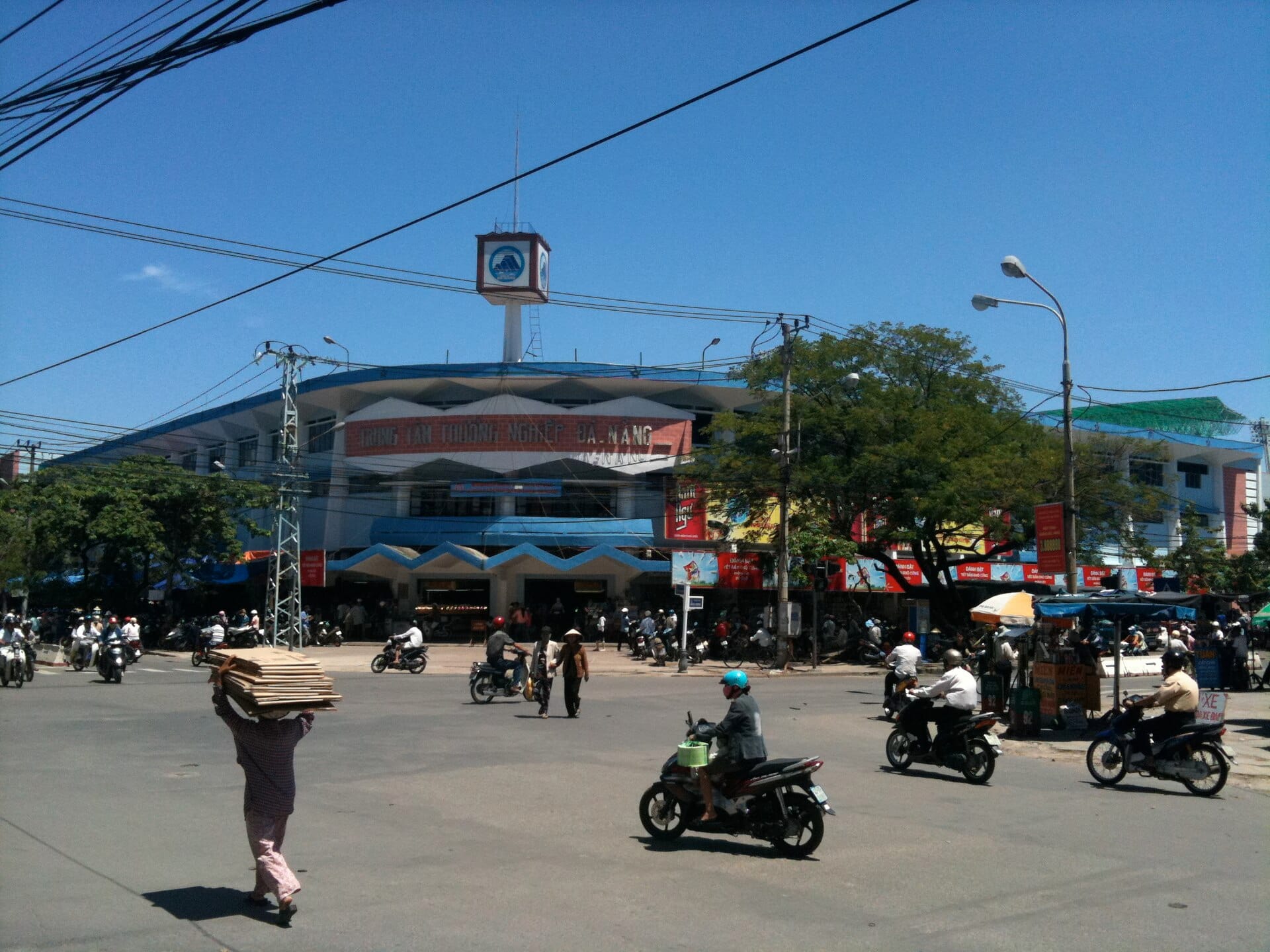
Con Market, officially Chợ Cồn, sits at the intersection of Hùng Vương and Ông Ích Khiêm streets in Hai Chau District, the administrative and commercial core of Da Nang. At roughly 14,000 square metres, it is the city's largest traditional market and one of the oldest, with roots going back to the mid-20th century. The name comes from the sandy hill, a 'cồn cát', on which the original trading ground was established. A formal market structure was built in the 1950s, and while the building has been modernised over the decades, the chaotic, productive energy inside has never really changed.
This is not a market built for tourists. The vendors here sell to the same families that have been coming for generations. You will find dried seafood stacked in jute sacks, plastic buckets of live shellfish, entire sections given over to fabric and tailoring, rows of hardware, and food stalls serving bowls of rice noodle soup to workers who clock in at 6am. That said, it is genuinely accessible to visitors who want to see how the city actually functions beyond its beachfront hotels.
💡 Local tip
Bring cash in Vietnamese đồng. Most stalls do not accept cards or foreign currency, and ATMs inside the market are not reliable. Exchange money before you arrive.
How the Market Changes Through the Day
Arriving before 8am puts you inside Con Market at its most intensely local. The air is thick with the smell of charcoal grills, steamed rice flour, and the sharp brine of fresh fish being unpacked from polystyrene boxes. Vendors arrange their produce with precise speed. Regular customers — older women in conical hats, motorbike delivery workers, restaurant owners stocking up — move through the stalls with the confidence of people who have done this hundreds of times. This is the best window into how a Vietnamese city feeds itself.
By mid-morning, foot traffic increases and the market fills with general shoppers. The food section inside the main building winds down by around 15:00, but the surrounding streets pick up where it leaves off. From mid-afternoon into the evening, outdoor stalls along the perimeter activate: grilled corn, skewers, bánh tráng cuốn thịt heo (rice paper rolls with pork), and fresh fruit shakes appear with different vendors running a different rhythm entirely.
Avoid midday visits if heat bothers you. The interior of the market building is poorly ventilated, and between roughly 11:00 and 14:00, temperatures inside can be genuinely uncomfortable in the dry season months of April through August. Early morning or late afternoon is the smarter call on any day.
Tickets & tours
Live prices and dates from our booking partner. If you book, we may earn a commission at no extra cost to you.
Monkey and Marble Mountains, Coconut Basket Boat and Hoi An City Tour
From 68 €Instant confirmationFree cancellationPrivate transfer from Da Nang Airport to Intercontinental Hotel or hotel in Son Tra Peninsula or vice versa
From 30 €Instant confirmationFree cancellationHalf-Day Tour to Cam Thanh Eco Water Coconut Village with Fishing
From 67 €Instant confirmationSunset tour in the Cam Thanh Coconut Village
From 33 €Instant confirmation
The Food: What to Eat and Where to Look
The food at Con Market is the main reason travellers with any curiosity about Vietnamese cooking should make the trip. The indoor food section, active from around 07:00 to 15:00, serves some of the most honest Central Vietnamese cooking in the city. Mì Quảng, the turmeric-tinted noodle dish that defines the region, appears in multiple variations. Bánh xèo, the sizzling rice-flour crepe stuffed with shrimp and bean sprouts, is made fresh to order and costs a fraction of what restaurant menus charge.
Look for the section where older women run low tables and plastic stools. These are typically the longest-standing food vendors in the market, and their menus are unwritten, sometimes entirely in Vietnamese, which just means you point at what the person next to you is eating. Bún bò Huế, the spicy beef and pork noodle soup, is another Central Vietnamese staple that appears regularly and is worth seeking out.
If you want context for the wider food culture before visiting, the Da Nang food guide covers the dishes and neighbourhoods in detail. It helps to arrive at Con Market already knowing what you want to try.
ℹ️ Good to know
Indoor food stalls run from approximately 07:00 to 15:00. The outdoor street-food perimeter activates from around 15:00 into the evening. Plan accordingly — they are two different food experiences.
Shopping: What's Worth Buying
Con Market divides roughly into sections by product type, though the borders are informal and subject to drift. The ground floor and surrounding stalls handle fresh produce, dried goods, and street food. Upper levels and inner corridors carry fabric, clothing, household items, and electronics. The dry goods section stocks specialties that make sensible souvenirs: dried lotus seeds, peppercorns from the Central Highlands, dried shrimp and squid, and a range of instant noodle blends that actually reflect regional cooking rather than mass-market production.
The fabric section is genuinely useful if you are spending time in Da Nang or Hoi An. Tailors work on-site or adjacent to the market, and fabric prices here are lower than at the tourist-facing shops along the beachfront. Budget a separate visit if custom tailoring is the goal, since measuring and fitting takes time.
For a broader picture of what and where to shop in Da Nang, the Da Nang shopping guide gives context on how Con Market compares to Han Market and the city's newer commercial areas.
💡 Local tip
Bargaining is expected in most product sections, but not at food stalls. For clothing, fabric, and souvenirs, an opening counter-offer of around 60-70% of the first price is a reasonable starting point.
Con Market vs. Han Market: Which One Is Worth Your Time
The comparison comes up repeatedly. Han Market sits closer to the riverfront and has been more actively positioned for tourists, with a cleaner layout and more English-speaking vendors. Con Market is larger, louder, less curated, and significantly more representative of how Da Nang residents actually shop and eat.
If you have limited time and want one market visit that shows you the city rather than a version of it adjusted for visitors, Con Market is the stronger choice. If you want a market that is easier to navigate independently on a first attempt, or if you are travelling with young children who may find the crowding and odours overwhelming, Han Market is more manageable. The two markets are not far apart, and covering both in a single morning is feasible.
Practical Details: Getting There and Moving Around
The market is located at the intersection of Hùng Vương and Ông Ích Khiêm, in Hai Chau District, the central urban district of Da Nang. From Da Nang International Airport, the standard route runs via Nguyễn Tri Phương, through the Điện Biên Phủ tunnel, and along Điện Biên Phủ to Hùng Vương. By taxi or ride-hail app, this takes roughly 10 to 15 minutes under normal traffic. Grab and other ride-hailing services operate in Da Nang and are generally the cleanest option for fare transparency.
Motorbike parking is available along Ông Ích Khiêm and at several points around the market perimeter. The market has multiple street-level entrances, which means orientation inside can be disorienting on a first visit. Pick one entrance and walk straight through to understand the layout before backtracking to the sections that interest you. The market opens at around 06:00 and typically winds down by 19:30, with most stalls closing progressively after 17:00.
For getting around the wider city, including bus routes and ride-hail tips, see the getting around Da Nang guide.
⚠️ What to skip
Watch your belongings in crowded sections, particularly in the narrow interior aisles during peak morning hours. Keep bags in front of your body and phones in a secure pocket.
Who Should Probably Skip This
Con Market rewards curiosity and a tolerance for sensory intensity. The smell of fresh fish, dried seafood, and livestock areas is real and unfiltered. The interior corridors are narrow, the lighting is uneven, and the noise level is high throughout the morning. Travellers who find crowded, unair-conditioned spaces genuinely uncomfortable, or who prefer the structure of a curated shopping experience, will likely find this frustrating rather than interesting. It is also a difficult environment for pushchairs or for anyone with limited mobility, since the floor surface is uneven and aisles frequently blocked by vendor equipment.
If a more comfortable market experience is the priority, the Helio Night Market offers a laid-back evening alternative with food stalls, games, and open-air space that is significantly easier to navigate.
Insider Tips
- The best bánh xèo at Con Market is typically found at stalls near the main Hùng Vương entrance — look for the ones with the loudest sizzle and the longest queue of locals.
- If you arrive after 07:30 on a weekday, the best tables at the food stalls are already taken. Go earlier, or accept that you may eat standing. Regulars never seem to mind.
- The upper floors of the market building are significantly less visited by tourists and carry a wider range of household goods, textiles, and practical items at prices well below street-level stalls.
- ATMs near the market perimeter are more reliable than any inside the building. Withdraw cash on the way in rather than counting on finding a working machine once you are inside.
- Morning is for fresh produce and food. If souvenir shopping or fabric is the goal, arriving between 09:00 and 11:00 is ideal — vendors are set up fully but not yet fatigued from the day.
Who Is Con Market For?
- Food travellers wanting to eat Central Vietnamese dishes at local prices in an unfiltered setting
- Photographers looking for candid market life, morning light through corrugated roofing, and vendor portraits
- Independent travellers building a picture of how Da Nang functions beyond its tourist zones
- Shoppers hunting for dried regional produce, spices, and fabrics to bring home
- Anyone spending multiple days in Da Nang who wants at least one hour that feels genuinely unscripted
Nearby Attractions
Other things to see while in Han River & Downtown:
- Asia Park & Sun Wheel
Asia Park, home to the 115-metre Sun Wheel Ferris wheel, is Da Nang's most recognizable evening landmark. Open from late afternoon into the night, it offers sweeping city views, a modest collection of rides, and an easy, affordable few hours on the western bank of the Han River.
- Bach Dang Walking Street
Opened in June 2024, Bach Dang Walking Street runs along the west bank of the Han River between Dragon Bridge and Tran Thi Ly Bridge. Free to enter, it operates daily from mid‑afternoon to midnight, with stricter vehicle bans on weekend evenings, and offers food kiosks, live performances, and unobstructed river views — making it one of the most accessible evening destinations in central Da Nang.
- Da Nang Cathedral (Pink Church)
Built in 1923 by French priest Louis Vallet, Da Nang Cathedral is the city's only surviving French colonial-era church. Officially the Sacred Heart of Jesus Cathedral, it stands nearly 70 meters tall on Tran Phu Street in Hai Chau District, painted an unmistakable shade of rose pink and crowned by a rooster-shaped weathervane that gives it a second, more affectionate nickname: Nha Tho Con Ga.
- Da Nang Fine Arts Museum
The Da Nang Fine Arts Museum holds more than 1,000 works of Vietnamese art and traditional handicrafts across three floors in central Hai Chau District. Entry costs 20,000 VND, hours are daily 8am to 5pm, and the whole experience typically takes about 1 to 2 hours. It rewards curious visitors — but those expecting a world-class collection may need to adjust expectations.
Planning a trip? Discover personalized activities with the Nomado app.