Wembley Stadium: England's National Stadium
Wembley Stadium is the largest sports venue in the UK, with a 90,000-seat capacity and a landmark arch visible from across northwest London. Whether you're attending a match, a concert, or taking the official stadium tour, this guide covers everything you need to plan your visit.
Quick Facts
- Location
- South Way, Wembley, London HA9 0WS, United Kingdom
- Getting There
- Wembley Park (Jubilee & Metropolitan lines); Wembley Stadium (Chiltern Railways); Wembley Central (Bakerloo line & Overground)
- Time Needed
- 2–3 hours for the stadium tour; full day for an event
- Cost
- Tour tickets priced in GBP — check current prices at wembleystadium.com/tours. Event tickets vary by fixture and seat category.
- Best for
- Football fans, concert-goers, sports history enthusiasts, families
- Official website
- www.wembleystadium.com
What Wembley Stadium Actually Is
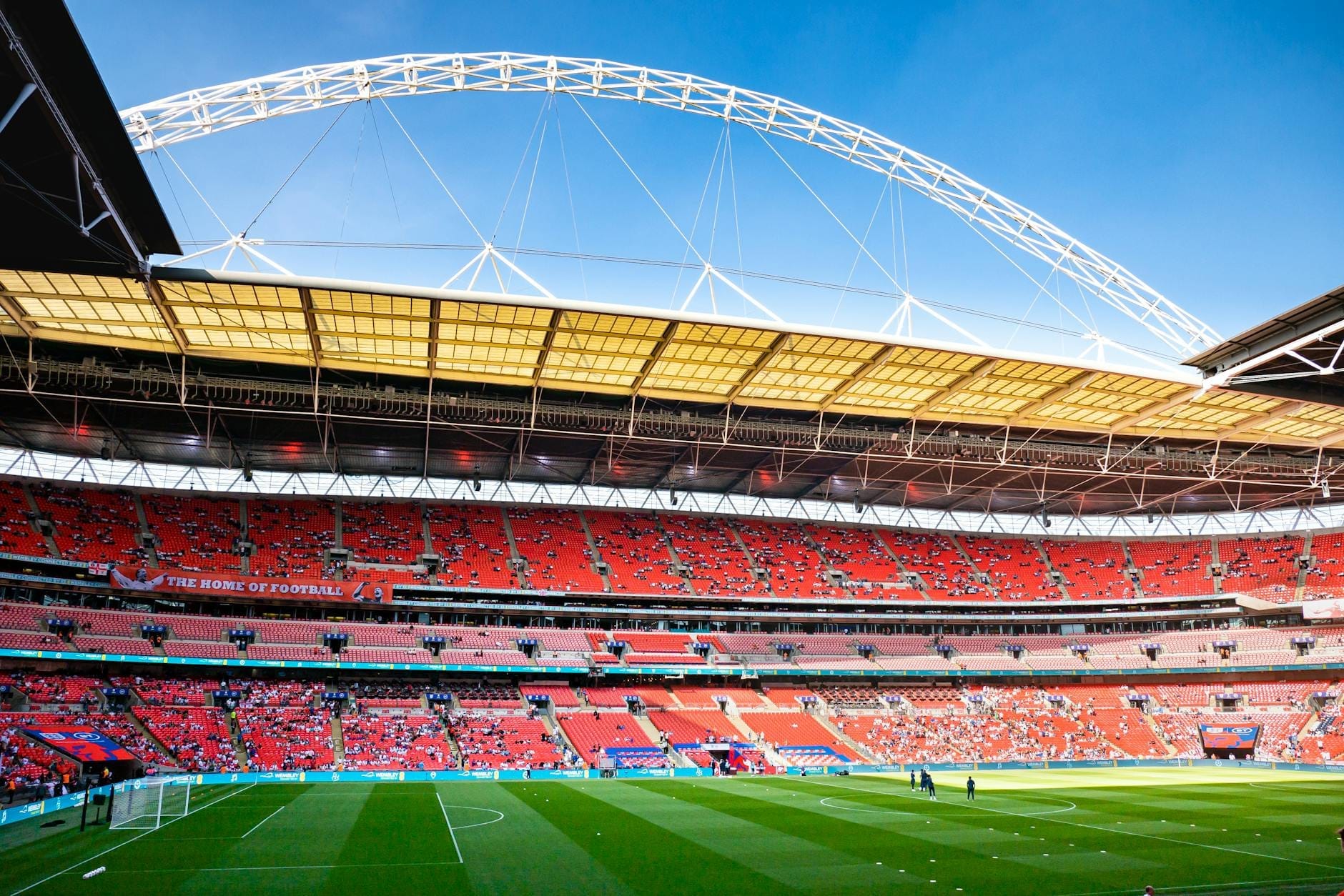
Wembley Stadium, currently branded as Wembley Stadium connected by EE, is the national football stadium of England and the largest sports venue in the United Kingdom. Sitting in the London Borough of Brent in northwest London, it holds 90,000 seats, making it the second-largest stadium in Europe by seating capacity. The roof structure is designed so that every seat is covered, which matters considerably in London's unpredictable weather. The defining visual feature is the steel arch: 133 metres tall, it spans the entire roof and can be seen from miles around, functioning as an unofficial landmark for the whole neighbourhood.
This is not primarily a tourist attraction in the conventional sense. Wembley has no permanent exhibition to wander through on a Tuesday afternoon. What it offers is either an event, which can be transformative, or a structured stadium tour, which gives access to areas ordinarily off-limits. If you have no particular interest in football or live events, it may not justify the journey from central London. But if sport or music is part of your trip, few venues anywhere in the world carry the same weight of occasion.
A Century of History on This Site
The original stadium, known as the Empire Stadium, opened in 1923 ahead of the British Empire Exhibition. Its first FA Cup Final, that same year between Bolton Wanderers and West Ham United, attracted a crowd estimated at over 200,000, far exceeding capacity, and the match became known as the White Horse Final after a police horse named Billy helped clear the pitch. King George V officially opened the wider exhibition complex on 23 April 1924.
That original structure stood for eight decades, hosting the 1948 Olympic Games, the 1966 FIFA World Cup Final, and concerts by artists from Queen to Michael Jackson. It was demolished in 2003, and the current stadium rose on the same footprint, opening in 2007 after several years of construction delays. The new build retained the Wembley name but replaced the twin towers, which had been the stadium's symbol for generations, with the single arch. That change remains a point of contention among purists, though the arch has since established its own identity in London's skyline.
Today the stadium serves as the home of the England national football team and hosts the FA Cup Final each May, the League Cup Final, play-off finals, NFL London games, and some of the largest music concerts in the country. Beyoncé, Coldplay, and Ed Sheeran have all sold out multiple nights here.
Tickets & tours
Hand-picked options from our booking partner. Prices are indicative; availability and final rates are confirmed when you complete your booking.
London luggage storage in Wembley Stadium
From 5 €Instant confirmationFree cancellationWembley Stadium tour
From 20 €Instant confirmationFree cancellationTickets for Starlight Express the Musical at the Troubadour Wembley Park Theatre
From 0 €Instant confirmationBrentford FC football game at GTech Community Stadium
From 0 €Instant confirmation
The Stadium Tour: What You Actually See
The official Wembley Stadium Tour operates on selected dates and must be booked in advance via the official website. Tours are not available on event days, so check the calendar carefully before planning around it. The tour takes roughly 75 to 90 minutes and covers areas including the players' tunnel, the pitch-side dugouts, the changing rooms, the press conference room, and the Royal Box, where you can sit where FA Cup winners have lifted the trophy.
💡 Local tip
Book your tour at wembleystadium.com/tours and check availability before building a day around it. Tours do not run on event days, and availability can be limited on weekends.
The players' tunnel is one of those spaces that lands differently depending on your relationship with football. The floor is smooth underfoot, the walls narrow, and the noise of the crowd is entirely absent, which creates an odd, charged silence. Walking out into the bowl of the empty stadium is the tour's centrepiece moment: 90,000 seats arranged in a steep rake, the pitch perfectly striped below, the roof letting in a pale London light. For anyone who has ever watched an event here, it reads differently on the tour. For first-time visitors with no prior connection to the venue, it is still an impressive scale of architecture.
The changing rooms are functional rather than glamorous, but seeing the England dressing room with kit pegs and individual bays gives a sense of proximity to something usually entirely out of view. The Royal Box seats are the predictable selfie spot, and there is usually a modest queue for it on busy tour days.
Attending an Event: What the Day Looks Like
Gates typically open two to three hours before kick-off or show time. Arriving early has real advantages: the concourses are wide and the food and drink queues are manageable. Leave it until 30 minutes before the start and you may spend the first half of whatever you came for waiting in a crush at a food stand. The stadium runs a cashless payment system, so bring a card or make sure your phone's payment wallet is set up.
The approach from Wembley Park station is via Olympic Way, a broad pedestrian boulevard lined with flags and temporary food vendors on event days. The walk takes around 10 minutes and is usually part of the atmosphere. On major event days, that same walk after the event becomes a slow-moving river of people. Patience is required; the crowd disperses efficiently once moving, but the first 20 minutes outside the gates can feel very dense.
⚠️ What to skip
On event days, all three nearby stations (Wembley Park, Wembley Stadium, Wembley Central) become extremely busy. Plan to arrive at least 90 minutes before the event starts if travelling by Tube, and factor in significant post-event delays when planning onward travel.
Sightlines from seats vary noticeably by tier. The lower tier provides proximity to the action but a shallower viewing angle. The upper tier is steep enough that looking down to the pitch can feel vertiginous for those uncomfortable with heights, though it provides excellent overview sight lines. The roof keeps most rain off, though seats near the open ends can still catch wind and drizzle on a cold match day.
Getting There and Getting Around
The most straightforward route from central London is the Jubilee line to Wembley Park, which takes around 20 minutes from Bond Street, including an easy cross‑platform change at Baker Street. The Metropolitan line also calls at Wembley Park. Wembley Stadium station (served by Chiltern Railways from Marylebone) is the closest station to the turnstiles but has less frequent service. Wembley Central, on the Bakerloo line and London Overground, adds a slightly longer walk but provides another option when the Jubilee line is at capacity. For a broader view of how to navigate London's transport network, see Getting Around London.
Driving to Wembley for events is possible but strongly discouraged by the stadium and TfL. Parking is limited and road congestion around the venue after events can result in very long delays. The Tube is the reliable choice for almost all visitors.
The stadium is fully accessible, with step-free access routes, wheelchair spaces at multiple levels, and accessible seating areas. Assistive listening systems are installed throughout the bowl. Specific access requirements, including Personal Assistant ticket arrangements, are handled through the official accessibility booking process detailed on the stadium's website.
Wembley Beyond the Stadium
The area immediately around the stadium has developed significantly since the 2007 opening, with a retail and leisure complex including the London Designer Outlet adjacent to the venue. It is not a neighbourhood with much to hold visitors for a full day, however, and most people treat the stadium as a destination in isolation rather than part of a wider area itinerary. If you are building a longer day in north or west London, consider pairing a Wembley tour with a visit to Kew Gardens or heading into central London afterwards via the Jubilee line to access the West End.
Wembley sits on a full-day London itinerary most naturally when combined with other destinations along the same Tube lines. If sport and spectacle are central to your trip, London has other venues worth including: The O2 Arena in Greenwich offers a comparable concert experience with more surrounding attractions, while Queen Elizabeth Olympic Park in Stratford provides a broader sporting heritage site to explore.
Photography and Practical Details
For photography, the arch reads best from Olympic Way, particularly in the late afternoon when low-angle light catches the steel structure. From inside on a tour, the wide-angle view of the empty bowl is the obvious shot, though you will need the widest lens available to capture the full sweep. Personal cameras and phones are permitted on the tour; check the current policy for your specific event type if attending as a spectator, as some concerts restrict professional camera equipment.
The stadium's bowl faces roughly north, so outdoor pitch photography during daytime events will put the sun at your back when shooting from the south stands and into your face from the north. For evening events, the floodlighting is strong and even across the pitch surface.
ℹ️ Good to know
Bag restrictions are enforced at events. Small bags (typically under a set size limit) are permitted; larger bags may be refused entry. Check the specific bag policy for your event on the official Wembley website before you travel.
Insider Tips
- For the tour, try to book a weekday morning slot. Crowds are noticeably thinner, your group will be smaller, and there is more time to linger in spaces like the players' tunnel without feeling rushed.
- If you are attending a sold-out event and have a choice of Tube station for departure, Wembley Central on the Bakerloo line often clears faster than Wembley Park after major events, even though the walk is slightly longer.
- The Royal Box visit is a highlight of the tour, but the view from the top of the lower tier looking back at the arch from inside the bowl is less photographed and arguably more impressive as a sense of scale.
- On event days, the food concessions inside the stadium are expensive and limited. Eating beforehand in the area around Wembley Park station or along Wembley High Road will save both money and queuing time.
- The stadium arch is lit at night in different colours to mark events and national occasions. If you are in northwest London in the evening and see it lit up, it usually signals something significant is on, and the Olympic Way approach will be worth a walk even if you are not attending.
Who Is Wembley Stadium For?
- Football fans wanting to walk the same turf as England internationals and see the FA Cup Final venue up close
- Concert-goers attending one of the major touring acts that play residencies here each summer
- Families with older children who have an interest in sport or live events
- Visitors interested in large-scale contemporary architecture and engineering
- Sports history enthusiasts following the lineage from the 1923 Empire Stadium through the 1966 World Cup Final to the present
Nearby Attractions
Combine your visit with:
- Abbey Road
The Abbey Road zebra crossing in St John's Wood is one of the most photographed stretches of tarmac in the world, immortalised by the Beatles on the cover of their 1969 album. Entry is free, it's accessible around the clock, and the Grade II listed studios next door still operate as a working recording facility. Here's everything you need to know before you visit.
- Alexandra Palace
Perched on one of north London's highest ridges, Alexandra Palace is a Grade II-listed Victorian landmark that combines a 196-acre park, a restored theatre, a year-round ice rink, and a live music venue. Entry to the park is free, and the views across the city stretch further than almost anywhere else at ground level.
- Dulwich Picture Gallery
Opened in 1817, Dulwich Picture Gallery is Britain's first purpose-built public art gallery, designed by Sir John Soane and housing over 600 European masterpieces. Set in the quiet streets of Dulwich Village, it offers a rare combination of architectural beauty, world-class paintings, and a unhurried atmosphere that larger central London galleries rarely manage.
- Hampton Court Palace
Hampton Court Palace stands on the banks of the River Thames in East Molesey, Surrey, roughly 30 minutes by train from central London. With Tudor kitchens, baroque state apartments, a famous hedge maze, and 60 acres of formal gardens, it offers more depth than almost any other royal site in England. This guide covers everything you need to plan a visit well.