Dulwich Picture Gallery: Britain's First Purpose-Built Public Art Gallery
Opened in 1817, Dulwich Picture Gallery is Britain's first purpose-built public art gallery, designed by Sir John Soane and housing over 600 European masterpieces. Set in the quiet streets of Dulwich Village, it offers a rare combination of architectural beauty, world-class paintings, and a unhurried atmosphere that larger central London galleries rarely manage.
Quick Facts
- Location
- College Road, Dulwich Village, London SE21 7AD
- Getting There
- West Dulwich or North Dulwich rail stations (approx. 10–20 min from Victoria or London Bridge)
- Time Needed
- 1.5 to 3 hours
- Cost
- Adults £10 (collection); Art Fund members free
- Best for
- Art lovers, architecture enthusiasts, quiet weekday culture seekers
- Official website
- www.dulwichpicturegallery.org.uk
Why Dulwich Picture Gallery Deserves Your Attention
Dulwich Picture Gallery is not a compromise destination you visit when the National Gallery is too crowded. It is, by its own historical standing, the more significant building: opened in 1817, it preceded the National Gallery's founding by several years and is widely recognised as Britain's first purpose-built public art gallery and the oldest public art gallery in England. The architect was Sir John Soane, the same mind behind the Sir John Soane's Museum in Holborn, and the gallery he designed here remains one of the most quietly influential pieces of museum architecture in the world.
The collection, founded on the bequest of Sir Francis Bourgeois RA in 1811, holds over 600 European masterpieces spanning French, Italian, and Spanish Baroque painting, alongside British portraits from the Tudor period through to the 19th century. Rembrandt, Rubens, Poussin, Gainsborough, Canaletto, and Murillo all appear here, not as isolated highlights but as part of a coherent, considered collection assembled with real purpose.
💡 Local tip
The gallery is closed on Mondays. Opening hours are Tuesday to Sunday, 10:00–17:00 for the Gallery and 10:00–17:00 for the Shop and Café (with adjusted hours on certain dates — check the official site before you go). The Sculpture Garden opens daily from 08:00, making it a peaceful morning detour even when the gallery itself is shut.
The Architecture: What Soane Built and Why It Still Matters
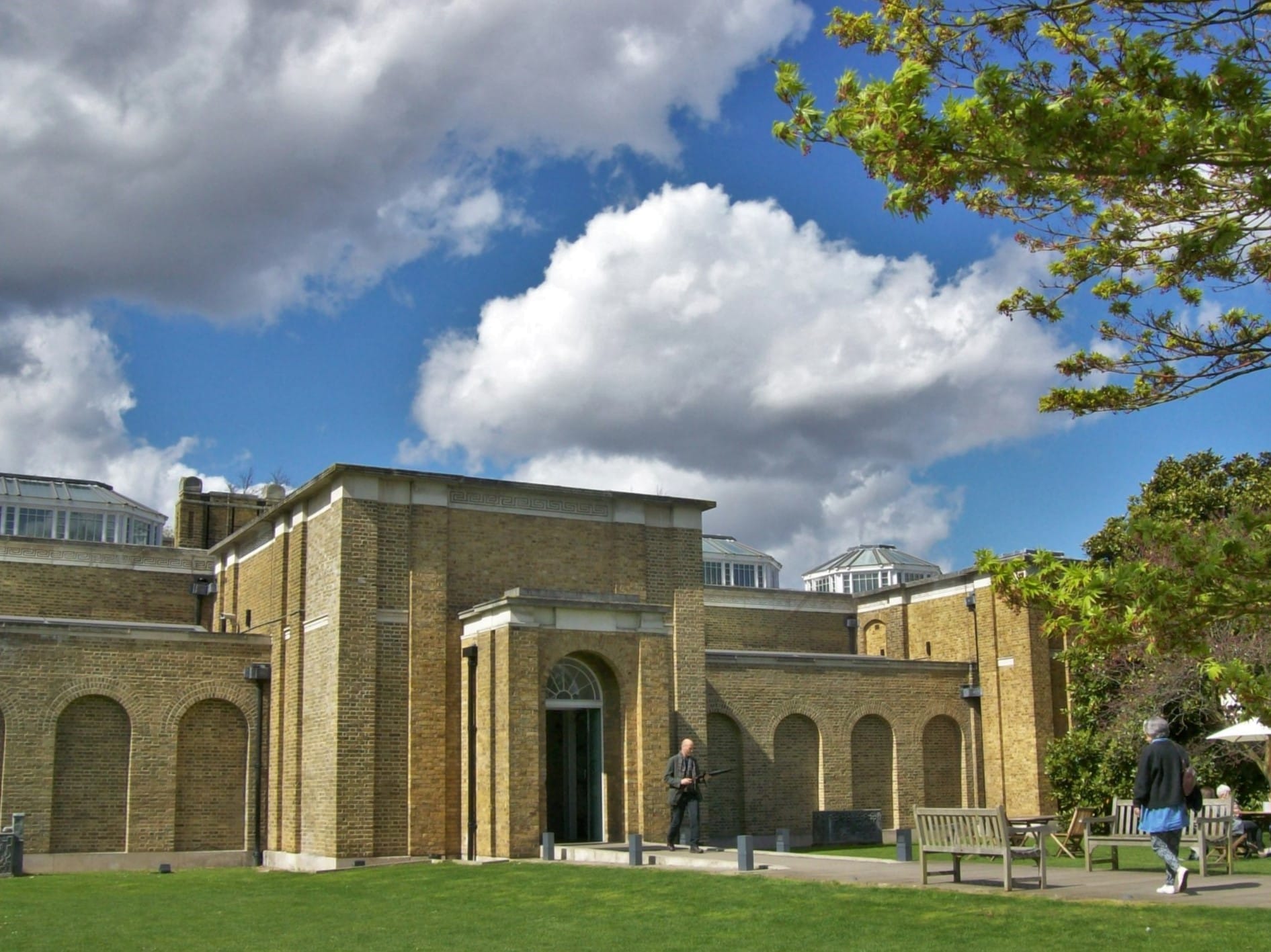
Before you look at a single painting, spend a few minutes examining the building itself. Soane's design, begun in 1811 and opened to the public in 1817, solved a problem that still challenges museum architects today: how do you light paintings without damaging them or flattening them with artificial glare? His answer was a series of roof lanterns, skylights set into a shallow, vaulted ceiling that draw in diffuse natural light from above. The result is a warm, even luminosity across the gallery walls that no electric lighting system has convincingly replicated.
The exterior is plain brick in a way that feels almost deliberately modest. The building does not announce itself with columns or a grand portico. It sits on College Road in Dulwich Village with a quiet confidence, and that restraint carries through to the interior. The gallery rooms are human-scaled, proportioned for looking rather than for impressing. Walking through them on a quiet Tuesday morning, with light shifting through the lanterns and the sounds of south London suburb life filtering in faintly from outside, is a very different experience from standing in a vast central London atrium.
If Soane's architecture interests you, his central London museum is worth combining into a longer trip. The Sir John Soane's Museum in Lincoln's Inn Fields is free to enter and operates as the architect's preserved home and studio, showing the same inventive approach to light and space applied to a domestic setting.
Tickets & tours
Hand-picked options from our booking partner. Prices are indicative; availability and final rates are confirmed when you complete your booking.
Official National Gallery highlights 1-hour guided tour
From 22 €Instant confirmationFree cancellationLondon National Gallery Entrance Ticket and Self-Guided Tour
From 9 €Instant confirmationBritish Museum and National Gallery Semi-Private Guided Tour
From 125 €Instant confirmationFree cancellationLondon National Gallery Ticket and Self-Guided Tour in Spanish
From 15 €Instant confirmation
The Collection: What You're Actually Looking At
The permanent collection contains over 600 works, but the gallery rooms are not large, and the hanging is selective rather than encyclopaedic. That restraint is an advantage. You are not confronted with hundreds of paintings competing for attention across enormous walls. Each room contains a manageable number of works, and the quality is consistently high.
The Dutch and Flemish holdings are particularly strong. Rembrandt's Girl at a Window (c.1645) and Jacob de Gheyn III are here, the latter notable for having been stolen and returned four separate times, making it the most stolen painting in the world by some accounts. Rubens is represented with several works. The French collection includes Poussin at his most precise and structured. Spanish Baroque painting, often underrepresented in London collections, appears through Murillo and others with real substance.
British portraiture occupies a distinct section. Gainsborough's full-length portraits have the easiness and colour that made him fashionable in the 18th century, and seeing them in a space this size, rather than at a distance across a crowded room, changes what you notice. The brushwork in the backgrounds, the texture of fabric, the way Gainsborough handled the light through trees: all of it is legible here in a way that reproduction cannot convey.
ℹ️ Good to know
Temporary exhibitions run alongside the permanent collection and may carry a separate admission charge. The core collection ticket is £10 for adults. Art Fund members receive free entry to the collection and permanent displays. Always confirm current pricing at dulwichpicturegallery.org.uk before your visit.
Visiting by Time of Day: How the Experience Changes
Weekday mornings, particularly Tuesday through Thursday before 12:00, offer the gallery at its quietest. Visitor numbers are low, the natural light through the lanterns is at its most useful in the morning hours when the sun's angle is shallow, and the staff-to-visitor ratio makes it easy to ask questions. If you want to spend twenty minutes with a single Rembrandt without anyone standing in front of it, this is when to come.
Weekend afternoons bring a different energy. The café and canteen become lively, families with children tend to be more present, and the temporary exhibition spaces fill up. The gallery handles these numbers gracefully given its size, but the experience of being alone with a painting becomes harder to find. Weekend visits are enjoyable, just different in character: more social, more active, with a greater chance of overhearing conversations about the works.
The Sculpture Garden, open from 08:00 daily, is worth visiting before the gallery opens if you arrive early. On a clear morning it is peaceful: birdsong from the surrounding Dulwich Village gardens, no street noise of any consequence, and rotating sculptural installations set on grass and gravel paths. It functions as a natural decompression space, good for before or after the paintings.
Getting There: Easier Than the Address Suggests
Dulwich sits in south London, technically in the London Borough of Southwark, and the address often puts visitors off. In practice, the journey from central London is straightforward and takes around 10–20 minutes by train, depending on the service. From London Victoria, trains to West Dulwich run regularly; from London Bridge, trains to North Dulwich also serve the area well. Both stations are approximately a 5–10 minute walk from the gallery on College Road. Check National Rail or the TfL journey planner for current timetables and fare options, as these change.
There are no Tube stations in Dulwich, which is part of why the area has kept its quiet, village character. Buses serve the surrounding streets but the train is the most reliable option from central London. Cycling is feasible via Cycleway 23, and the roads around Dulwich Village are calmer than most of inner London.
If you are planning a full day of art in south London, the gallery pairs naturally with the Tate Modern on the South Bank — though the contrast in scale and atmosphere between the two is striking enough that back-to-back visits in a single day can feel overwhelming. Many visitors prefer to dedicate the day to Dulwich alone and combine it with a walk through Dulwich Village or the neighbouring Dulwich Park.
Practical Details and Who Might Not Enjoy This Visit
The gallery building is relatively compact. Step-free outdoor access is available through the grounds, and the gallery provides accessibility information and contact options for visitors with specific needs on its website. Visitors with access requirements are advised to contact the gallery in advance, as some areas of the historic building have limitations.
Photography for personal use is permitted in the permanent collection, though restrictions may apply in temporary exhibitions. The natural top-light makes for good photography conditions: even, diffuse, and flattering to the paintings. Avoid flash.
If you need the volume and breadth of a major encyclopaedic museum, or the spectacle of a blockbuster temporary exhibition, Dulwich Picture Gallery is not designed to deliver that. The permanent collection, while high quality, covers specific areas of European painting rather than offering a survey of world art history. Visitors expecting the scope of the British Museum or the National Gallery will find the collection narrower. That is not a failing; it is a feature. But it matters for setting expectations.
For a fuller picture of London's art museum landscape, the best museums in London guide covers the range from encyclopaedic collections to specialist galleries, which helps in planning how Dulwich fits into a broader visit.
⚠️ What to skip
The gallery is closed on Mondays. A small number of additional closure dates apply around certain holidays and installation periods. Confirm opening before travelling, as the journey from central London, while manageable, makes a wasted trip frustrating.
The Surrounding Area: Dulwich Village
Dulwich Village is one of the most unexpected parts of inner London. The surrounding streets have Georgian and Victorian houses, independent cafes, and an unhurried pace that sits in genuine contrast with the areas most visitors associate with the city. The gallery's position here is not an accident: it was built as part of the Dulwich College estate and has always had a relationship with the surrounding community.
Dulwich Park, a short walk from the gallery, is large, well-maintained, and far less visited than Hyde Park or Regent's Park despite being similarly pleasant. It makes a natural extension to a gallery visit, particularly in warmer months when the café tables outside the gallery fill up and visitors linger longer than intended.
South London has more to offer culturally than many visitors realise. The Horniman Museum in nearby Forest Hill is another south London institution with an unusual and undervisited collection, and the two can be combined in a single day for visitors interested in exploring beyond the central zones.
Insider Tips
- The gallery's café and canteen are good, not just convenient. The canteen in particular has a loyal local following and is worth factoring into your timing rather than treating as an afterthought.
- The Jacob de Gheyn III by Rembrandt has been stolen four times and returned four times, making it the most stolen painting in the world by some accounts. Ask a gallery attendant about its full history — it is a remarkable story for a small, unassuming portrait.
- If you visit on a day when natural light is strong and angled, the roof lanterns produce a visible shift in the quality of light across the gallery rooms as you move between them. Walking the rooms in sequence from one end to the other gives you the full range of what Soane designed.
- Art Fund members get free entry to the permanent collection. If you visit multiple London museums, an Art Fund membership pays for itself quickly and is worth calculating before you buy individual tickets.
- Dulwich Village has several independent coffee shops within a few minutes' walk of the gallery. Arriving slightly early for a coffee and a walk along College Road before the doors open helps you settle into the pace the gallery rewards.
Who Is Dulwich Picture Gallery For?
- Art enthusiasts who want extended time with Old Masters without competing for space
- Architecture lovers interested in Soane's approach to museum design and natural lighting
- Visitors seeking a quieter, less tourist-heavy London cultural experience
- Couples or solo travellers planning a half-day in south London away from the centre
- Anyone with an Art Fund membership looking to make use of free gallery entry
Nearby Attractions
Combine your visit with:
- Abbey Road
The Abbey Road zebra crossing in St John's Wood is one of the most photographed stretches of tarmac in the world, immortalised by the Beatles on the cover of their 1969 album. Entry is free, it's accessible around the clock, and the Grade II listed studios next door still operate as a working recording facility. Here's everything you need to know before you visit.
- Alexandra Palace
Perched on one of north London's highest ridges, Alexandra Palace is a Grade II-listed Victorian landmark that combines a 196-acre park, a restored theatre, a year-round ice rink, and a live music venue. Entry to the park is free, and the views across the city stretch further than almost anywhere else at ground level.
- Hampton Court Palace
Hampton Court Palace stands on the banks of the River Thames in East Molesey, Surrey, roughly 30 minutes by train from central London. With Tudor kitchens, baroque state apartments, a famous hedge maze, and 60 acres of formal gardens, it offers more depth than almost any other royal site in England. This guide covers everything you need to plan a visit well.
- Horniman Museum and Gardens
Set on a hilltop in Forest Hill, south-east London, the Horniman Museum and Gardens brings together anthropology, natural history, and musical instruments under one Grade II* listed roof. The gardens cover over 16 acres and offer sweeping views across the city. Admission to the museum and gardens is free, making this one of London's most rewarding afternoons for families, curious adults, and anyone who has already done the central museum circuit.