Sir John Soane's Museum: The Architect's House That Became a National Treasure
Sir John Soane's Museum at 13 Lincoln's Inn Fields is one of London's most unusual attractions: a free, labyrinthine historic house-museum where a neo-classical architect crammed a lifetime of art, antiquities, and architectural inventions into three adjoining Georgian townhouses. There is nothing else quite like it in the city.
Quick Facts
- Location
- 13 Lincoln's Inn Fields, Holborn, London WC2A 3BP
- Getting There
- Holborn Underground (Central & Piccadilly lines), 5-minute walk
- Time Needed
- 1–2 hours (allow longer if you take a Highlights Tour)
- Cost
- Free entry; ticketed Highlights Tours available (check soane.org for pricing)
- Best for
- Architecture enthusiasts, art lovers, curious travellers who enjoy something offbeat
- Official website
- www.soane.org
What Is Sir John Soane's Museum?
Sir John Soane's Museum is a national museum occupying three adjoining Georgian townhouses on the north side of Lincoln's Inn Fields in Holborn. It was the home of Sir John Soane (1753–1837), one of Britain's most inventive neo-classical architects, and it remains almost exactly as he left it at his death. In 1833, Soane secured an Act of Parliament to preserve the house and its contents in perpetuity — an extraordinary act of institutional self-invention that created the UK's smallest national museum.
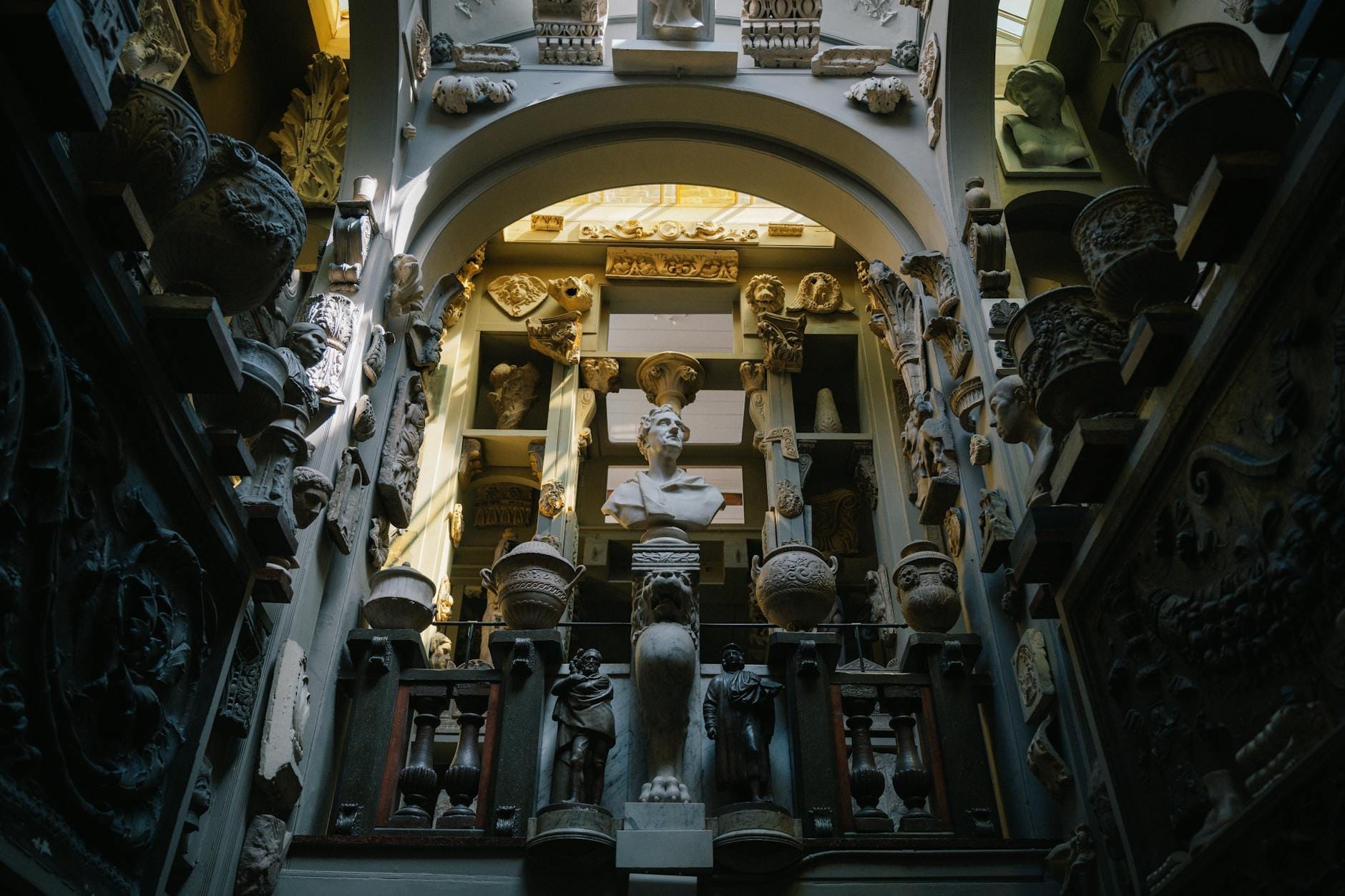
What visitors find inside defies easy summary. Every surface, shelf, and alcove is occupied: ancient Egyptian sarcophagi, Roman fragments, Hogarth's original Rake's Progress paintings, architectural models, folios of drawings, and hundreds of objects Soane collected over decades of practice and travel. The building itself is as much the exhibit as the collection inside it — Soane designed No. 13 and the adjoining houses as a showcase for his ideas about light, space, and surprise.
💡 Local tip
Entry is free and no advance booking is required for standard visits. The museum is open Wednesday to Sunday, 10:00–17:00 (last admission 16:30), and is closed on Monday and Tuesday; opening hours on bank holidays may vary. Arrive at opening time on weekdays for the quietest experience.
The Architecture: A House Designed to Astonish
Soane did not just live in these houses — he rebuilt and remodelled them obsessively between 1792 and 1824. The exterior of No. 13 is distinctive even by the standards of Lincoln's Inn Fields: the façade features incised ornament, projecting loggia, and Coade stone casts that set it apart from its neighbours. But the real invention is inside.
Rooms are connected through unexpected thresholds. Mirrors multiply spaces and trick the eye into thinking corridors extend further than they do. Skylights cut through floors and ceilings to wash lower rooms with natural light in ways that feel almost contemporary. The Picture Room on the ground floor contains hinged wall panels — Soane's own solution to having more paintings than wall space — that open to reveal further canvases behind, including Hogarth's A Rake's Progress and An Election. This theatrical reveal still produces an audible reaction from visitors when a guide swings the panels open.
The Monk's Parlour and the Yard are a deliberately melancholic corner of the house, a mock-Gothic space Soane created as a kind of architectural joke and memento mori, complete with fragments of medieval stonework and an invented narrative about a fictional monk. It reads as eccentric to modern eyes, but it reveals the playfulness beneath Soane's scholarly exterior.
Tickets & tours
Hand-picked options from our booking partner. Prices are indicative; availability and final rates are confirmed when you complete your booking.
Soho Instagram a self-guided walking tour to top photo spots
From 6 €Instant confirmationFree cancellationTootbus London by Night: Bus tour
From 32 €Instant confirmationFree cancellationIFS Cloud Cable Car Ride and Uber Boat Hop-on Hop-off 1 Day Ticket
From 38 €Instant confirmationFree cancellationThe Making of Harry Potter Guided Tour of London Warner Bros. Studio
From 201 €Instant confirmationFree cancellation
The Collection: Antiquities, Paintings, and Curiosities
The collection at Sir John Soane's Museum spans ancient Egypt, classical Rome, Renaissance prints, and English painting. The single most spectacular object is the alabaster sarcophagus of Seti I, the Egyptian pharaoh who died around 1279 BC. It stands in the Sepulchral Chamber in the basement and is covered in hieroglyphic inscriptions. Soane bought it in 1824 after the British Museum declined to do so, and he threw a three-day party to celebrate its arrival. Standing next to it in the low-ceilinged basement room is a quietly extraordinary experience.
The paintings are equally significant. Soane's two complete series by William Hogarth — A Rake's Progress (1733) and An Election (1754–55) — are among the finest satirical sequences in British art. They hang in the Picture Room, and the story of how Soane acquired them is woven into the broader narrative of the house. Elsewhere, works by Canaletto, Piranesi's etchings of Rome, and Turner drawings fill walls and folios throughout the building.
The architectural models and drawings collection is less famous but equally rewarding for anyone interested in design history. Soane kept models of his own buildings, including the Bank of England (much of which was later demolished), making this one of the few places where his full body of work can be studied. If architecture is a particular interest, the British Museum is a 10-minute walk away and pairs well as a half-day itinerary around Holborn.
How the Experience Changes by Time of Day
The museum's rooms are small and, on busy days, visitors move through them in a slow queue. Weekend afternoons in summer are the most crowded, and the narrow stairways and low-ceilinged basement rooms can feel congested. The experience is noticeably better on a Wednesday or Thursday morning, when the house has a quieter, more contemplative atmosphere and you can linger in front of objects without pressure.
Natural light plays an enormous role in the experience, particularly in the Dome area at the centre of the house, where skylights and coloured glass cast different tones depending on the time of day and the season. On a bright winter morning, the light in the lower rooms has a particular quality that no artificial lighting can replicate. Visiting in the afternoon produces a different but equally interesting effect, especially in the Drawing Rooms on the first floor.
ℹ️ Good to know
Ticketed Highlights Tours run at 12:00 Wednesday to Sunday, and also at 11:00 on weekends. These are led by museum staff and provide significant additional context. Check current prices and availability directly at soane.org before your visit, as booking in advance is recommended.
Getting There and Practical Logistics
The easiest approach is via Holborn Underground station on the Central and Piccadilly lines, a five-minute walk south through the streets to Lincoln's Inn Fields. Temple station (Circle and District lines) is also within walking distance, roughly 15 minutes on foot. Several bus routes serve the surrounding streets: routes 1, 59, 68, 91, 168, 188, 243, and X68 stop on Kingsway, while routes 8 and 25 serve High Holborn.
The museum entrance is through the original front door of No. 13, which opens directly onto the main hall. There is no large foyer, no café, and no gift shop in the conventional sense — though a small selection of publications is available. Bags and coats can be left in the cloakroom. Photography is permitted throughout without flash, which makes the museum one of the better London attractions for photography, given the extraordinary visual density of every room.
Visitors with specific accessibility requirements are strongly advised to contact the museum in advance by phone (+44 (0)20 7405 2107) or email (admin@soane.org.uk). The historic nature of the building means that some rooms have limited space and movement is restricted behind stanchions in certain areas. The museum states that it welcomes disabled visitors and will make arrangements where possible, but the building's age and listed status impose real constraints.
Is It Worth Your Time? An Worth Knowing
For the right visitor, Sir John Soane's Museum is one of the most rewarding free attractions in London. The density of objects, the architectural inventiveness of the building, and the sense of being inside someone's personal world make it unlike any conventional museum. It rewards slow, attentive looking rather than the rapid circuit that works at larger institutions.
That said, it is not for everyone. Visitors who prefer wide open galleries, clear chronological displays, or interactive exhibits will find it claustrophobic and confusing. Young children, in particular, are likely to struggle with the restricted movement and the absence of hands-on elements. Families with kids might find better alternatives in the Natural History Museum or the Science Museum in Kensington.
Lincoln's Inn Fields itself is a pleasant Georgian square and a good place to sit before or after a visit. The broader Holborn area, which sits between the West End and the City of London, is worth exploring on foot. Nearby Temple Church and the Inns of Court are a short walk south and make for a natural extension to a half-day in this part of London.
⚠️ What to skip
The museum is closed on Mondays and Tuesdays. Plan accordingly — it is easy to arrive on a Monday and find the doors shut, especially if you are combining it with a walk through the area.
Nearby and How to Combine Your Visit
Sir John Soane's Museum sits at the edge of the West End, within easy reach of several other significant attractions. The British Museum is less than 10 minutes north on foot, and the two make a natural pairing for a full day focused on history and collections. Covent Garden is a 15-minute walk west, offering a complete change of pace for lunch or the afternoon.
For those building a broader London itinerary, the museum fits naturally into a day that combines Holborn, the Inns of Court, and the riverside. The 3-day London itinerary has suggested routes that can accommodate a morning visit here without overloading the schedule.
Insider Tips
- The Picture Room's hinged wall panels are the highlight of any guided tour. Even if you visit independently, ask a member of staff if the panels can be opened — they sometimes do this for interested visitors outside of formal tour times.
- The Sepulchral Chamber in the basement, where the sarcophagus of Seti I stands, is dimly lit and easy to miss on a self-guided visit. Head downstairs deliberately — many visitors skip it entirely.
- Wednesday morning at opening time is the single quietest window of the week. Arrive at 10:00 and you may have entire rooms to yourself for the first 30 minutes.
- The museum holds occasional late-night candlelit openings, which transform the atmosphere entirely. Check soane.org for upcoming special events as these sell out quickly.
- The Soane archive holds thousands of original architectural drawings, many by Soane himself. Researchers can arrange access, but even casual visitors can explore digitised versions of the collection through the museum's online catalogue.
Who Is Sir John Soane's Museum For?
- Architecture and design enthusiasts who want to understand how a Georgian architect thought and lived
- Art lovers seeking Hogarth's original Rake's Progress paintings in an intimate setting
- Solo travellers who enjoy slow, thoughtful museum visits without a fixed route
- Anyone looking for a free, high-quality London experience away from the main tourist circuit
- Travellers combining a morning in Holborn with visits to the British Museum or the Inns of Court
Nearby Attractions
Other things to see while in West End:
- British Library
The British Library holds over 170 million items spanning thousands of years of human thought, from the Magna Carta to Beatles lyrics. Entry to the building and permanent collection galleries is free, making it one of the most rewarding stops in central London for curious travellers.
- British Museum
The British Museum holds one of the world's great collections of human history and culture, spanning two million years across more than 60 free galleries. Entry to the permanent collection is free, but knowing how to navigate the scale of it makes the difference between a rewarding visit and an overwhelming one.
- Carnaby Street
Carnaby Street is the pedestrianised shopping district in Soho that defined the look of 1960s London and continues to draw fashion lovers, food hunters, and curious walkers today. Free to explore and five minutes from Oxford Circus, it rewards those who slow down and wander its connecting lanes.
- Coal Drops Yard
Coal Drops Yard is a redeveloped Victorian industrial estate in King's Cross, now home to independent retailers, restaurants, and bars set beneath strikingly restored brick vaults. The public outdoor spaces are free to enter and a short walk from King's Cross St Pancras station.