Horniman Museum and Gardens: London's Most Underrated Free Day Out
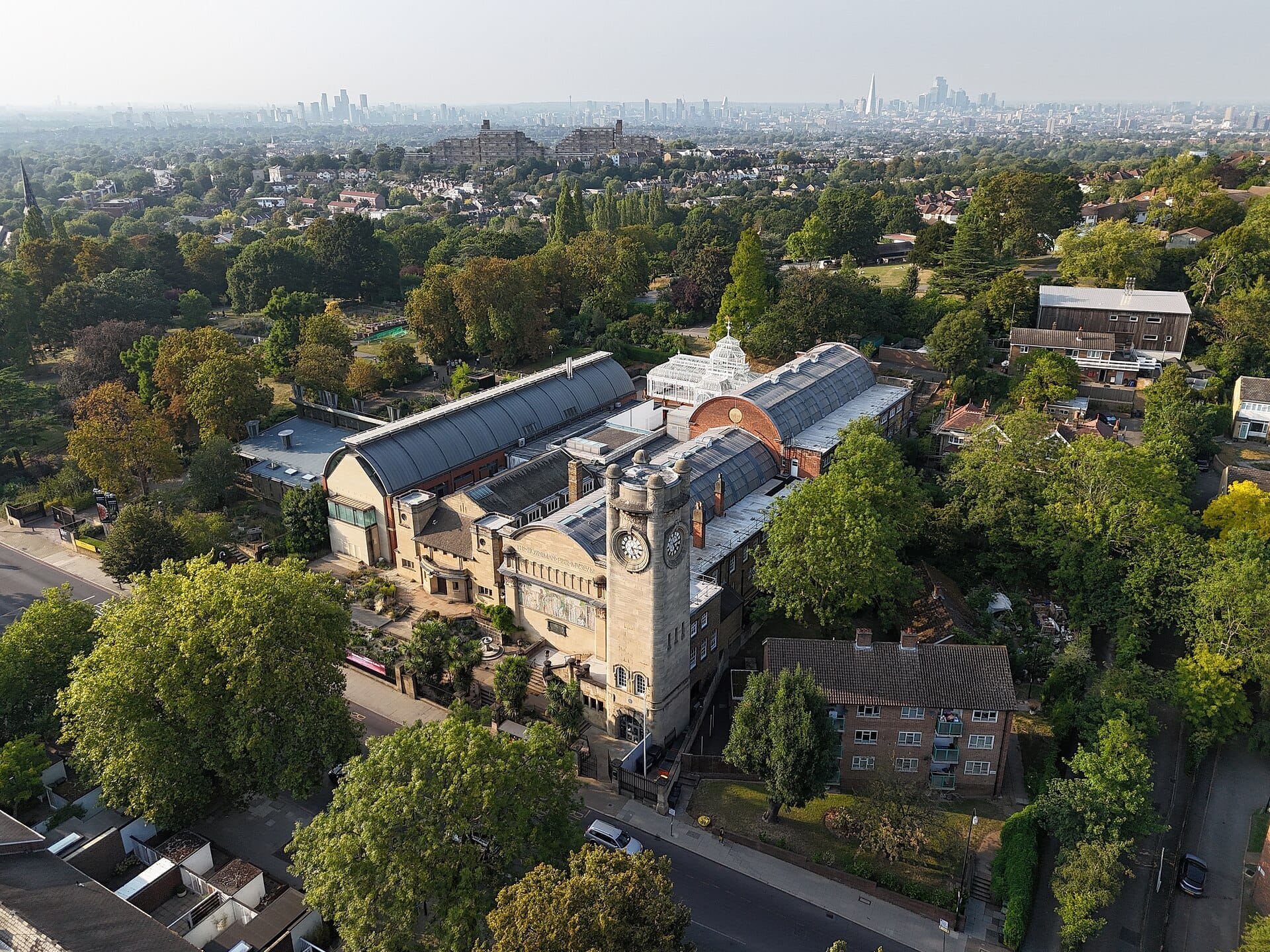
Set on a hilltop in Forest Hill, south-east London, the Horniman Museum and Gardens brings together anthropology, natural history, and musical instruments under one Grade II* listed roof. The gardens cover over 16 acres and offer sweeping views across the city. Admission to the museum and gardens is free, making this one of London's most rewarding afternoons for families, curious adults, and anyone who has already done the central museum circuit.
Quick Facts
- Location
- 100 London Road, Forest Hill, London SE23 3PQ
- Getting There
- Forest Hill station (London Overground, Windrush Line) – approximately 15 minutes from London Bridge by train
- Time Needed
- 2 to 4 hours depending on whether you visit the aquarium and butterfly house
- Cost
- Museum and gardens free; charges apply for the Aquarium, Butterfly House and select exhibitions
- Best for
- Families, museum enthusiasts, south London explorers, city-view seekers
- Official website
- www.horniman.ac.uk
What the Horniman Actually Is
The Horniman Museum and Gardens is one of those places that feels like a genuine discovery even though it has been open since 1901. Located on a ridge in Forest Hill, south-east London, it holds roughly 350,000 objects across three core collections: anthropology, natural history, and musical instruments. The building itself is a statement, designed by architect Charles Harrison Townsend in the Modern Style and now Grade II* listed. The mosaic on the front facade of the building, depicting 'Humanity in the House of Circumstance', stops most first-time visitors in their tracks before they have even stepped inside.
The museum grew out of the private collection of Frederick John Horniman, a tea trader who spent decades gathering objects from around the world during the late Victorian era. His family home, Surrey House, opened informally to the public in 1890. By 1901, the new Townsend-designed building had been completed, and Horniman gifted the entire site to the people of London. That founding ethos, of a collection built for public education and curiosity rather than prestige, still runs through how the museum feels to visit today.
The Horniman describes itself as London's only museum where environment, ecology and human cultures can be seen side by side at a global scale. That is not an empty claim. Within a single afternoon, you can move from a wall of African masks to a case of Victorian taxidermy to a room full of historical instruments from five continents. The breadth is unusual even by London standards.
💡 Local tip
Museum opening hours are 10:00 to 17:30 daily. The gardens open much earlier at 07:15 on weekdays (08:00 on Sundays and Bank Holidays) and close at 20:30, making them worth visiting independently if you are in the area at dusk. The museum and most paid areas are closed 24 to 26 December.
The Collections: What You Will Actually See
Natural History
The Natural History Gallery is anchored by one of London's most unexpectedly famous specimens: an overstuffed walrus acquired in the late 19th century. Taxidermists of the era had no reference point for how much a walrus should sag, so they kept adding stuffing until the animal looked almost spherical. It is funny and informative at the same time, which is a good summary of the gallery as a whole. The space covers British wildlife, global biodiversity, and ecological themes in displays that mix Victorian-era cases with more contemporary interpretive approaches.
Anthropology
The anthropology collection is substantial and serious. Objects from Africa, the Americas, Asia, and the Pacific sit alongside material that connects directly to the history of how such collections were assembled in the colonial period. The museum has been working through questions of provenance and repatriation with increasing transparency, and some display labels reflect that ongoing process. For visitors interested in world cultures and material history, this is a collection with real depth.
Music
The musical instrument collection is one of the largest in the world, with more than 7,000 instruments from virtually every tradition imaginable. It includes European orchestral instruments, gamelan sets, West African drums, Indian classical instruments, and a huge range of items that do not fit neatly into any regional category. Many items can be handled or heard on audio. For anyone with even a passing interest in music, this gallery repays slow attention.
Tickets & tours
Hand-picked options from our booking partner. Prices are indicative; availability and final rates are confirmed when you complete your booking.
Soho Instagram a self-guided walking tour to top photo spots
From 6 €Instant confirmationFree cancellationTootbus London by Night: Bus tour
From 32 €Instant confirmationFree cancellationIFS Cloud Cable Car Ride and Uber Boat Hop-on Hop-off 1 Day Ticket
From 38 €Instant confirmationFree cancellationThe Making of Harry Potter Guided Tour of London Warner Bros. Studio
From 201 €Instant confirmationFree cancellation
The Aquarium and Butterfly House
Both the Aquarium and the Butterfly House require separate timed tickets and carry an admission charge. The Aquarium is compact but well-curated, focusing on freshwater and marine ecosystems with a conservation framing. It is a better experience than its relatively modest size might suggest, partly because the exhibits are thoughtfully sequenced and partly because it is rarely overcrowded in the way that large standalone aquariums tend to be.
The Butterfly House is open from 10:30 to 16:00 daily. It is a tropical greenhouse with free-flying butterflies, and on a warm morning the combination of heat, humidity, and flashes of iridescent colour is striking. Small children tend to react very strongly to it, but adults with an interest in insects or plant environments will find it worth the extra cost too. Timed tickets should be booked in advance via the official website, especially during school holidays when capacity fills quickly.
⚠️ What to skip
During school holidays and summer weekends, timed tickets for the Butterfly House and Aquarium can sell out days in advance. Book online before you arrive rather than assuming you can buy at the door.
The Gardens and the View
The gardens cover more than 16 acres and are, for many regular visitors, the main reason to come. They occupy a hillside that drops away from the museum building, giving a broad panorama northward across London. On a clear day the skyline is unmistakable: the Shard, the towers of Canary Wharf, and on days with good visibility, the dome of St Paul's. The view is not as well-known as those from Parliament Hill or Primrose Hill, which means the garden benches facing north are often free even on busy days.
The gardens include formal beds, a sunken garden, a nature trail, a kitchen garden, and an animal enclosure with a small collection of farm animals. The animal walk is free and a consistent draw for visitors with young children. The overall feel of the gardens is relaxed and unpretentious: locals use them for picnics, dog walks, and lunch breaks. Early morning, before the museum opens, is when the gardens are at their quietest. The light on the south-facing slopes in the hour after sunrise is excellent for photography.
If you are planning a visit that combines the Horniman with other south London attractions, the gardens make a natural starting point before heading toward Dulwich Picture Gallery, which is about 20 minutes away by bus. Both can be covered in a single day without feeling rushed.
How the Experience Changes by Time of Day
The museum opens at 10:00 and the first hour is the calmest inside the galleries. School groups typically arrive from 10:30 onward, and by mid-morning the Natural History gallery in particular can become noisy. If the collections are your priority, arriving at opening gives you a noticeably quieter experience.
Midday on weekends brings the largest crowds to the gardens cafe and the outdoor areas near the animal enclosure. The cafe has limited seating and the queue moves slowly at peak times, so either bring your own food or plan to eat before noon or after 14:00. The gardens themselves remain spacious enough that crowd levels rarely become a real problem outside of organised events.
Late afternoon, from around 15:30 onward, is when the gardens come into their own on longer days. The light softens, the school groups leave, and the atmosphere shifts toward local families and couples unwinding after work or on a slow weekend. The gardens do not close until 20:30 on most days, which makes them viable for an early evening visit in spring and summer, something very few London museums can offer.
ℹ️ Good to know
The Horniman regularly hosts outdoor events, evening concerts, and seasonal markets in the gardens. Check the events calendar on the official website before your visit to see if anything is scheduled that might affect crowds or access.
Getting There and Practical Logistics
Forest Hill station is on the London Overground Windrush Line and sits roughly 15 minutes from London Bridge by train. From the station it is a short uphill walk to the museum entrance on London Road. The hill is noticeable but not steep enough to cause real difficulty, and the route is entirely on pavement. There is no parking area of note on site, and arriving by train is by far the most straightforward option.
Multiple bus routes serve Forest Hill from central and south London, making the museum accessible without needing to use the Overground. If you are travelling from south-east London specifically, buses can be more direct than going into a central interchange and back out.
For visitors planning a broader south London day, the Horniman pairs naturally with a morning at Greenwich Park followed by an afternoon at the Horniman, both reachable by Overground from central London without needing to cross the river by Tube.
The museum and gardens are broadly accessible, with level access through most of the ground floor and step-free routes through the gardens on main paths. Some slopes and uneven ground exist in parts of the garden, so visitors with significant mobility requirements should check the detailed access guide on the official website before visiting.
Who Should Know Before They Go
The Horniman is excellent for families with children between about three and twelve, for people who enjoy ethnographic and natural history collections, and for anyone looking for a substantive free day out away from the usual tourist corridor. The free admission makes it an easy recommendation without caveats for anyone with an interest in museums.
Visitors whose primary interest is major art collections or world-famous individual works will find more to engage with at the National Gallery or the Victoria and Albert Museum. The Horniman's strength is breadth and context rather than singular showpiece objects.
The journey from central London takes real time. Forest Hill is in Zone 3, and the trip from somewhere like Oxford Circus involves at least one change and around 30 to 45 minutes of travel. If you only have a few hours and are staying centrally, the museum is probably not the right choice purely on logistics. For visitors staying in south or south-east London, or for those who want to deliberately get away from the tourist-facing parts of the city, the trip is easy to justify.
The Horniman fits naturally into a wider south London itinerary. See our 3-day London itinerary for suggestions on how to balance central highlights with neighbourhood visits like this one.
Insider Tips
- The north-facing terrace near the top of the gardens is one of the least-known city viewpoints in London. Most visitors walk past it without stopping. Stand there for five minutes and orient yourself using the skyline.
- The walrus in the Natural History Gallery was overstuffed because Victorian taxidermists had no idea how much loose skin a walrus actually has. Read the accompanying label before looking at it and the display becomes significantly funnier.
- Timed entry tickets for the Butterfly House and Aquarium can be bought online in advance. Do this the day before, especially during school holidays, to avoid being turned away at the door.
- The gardens open well before the museum, from 07:15 on weekdays. If you are in the area early, a walk through before opening is a peaceful experience with almost no other visitors.
- The Horniman runs a programme of evening events and outdoor performances in the gardens during summer. These are popular with locals and largely unknown to tourists. Check the website events calendar a week before your visit.
Who Is Horniman Museum and Gardens For?
- Families with children between 3 and 12 who want a full day without a high admission bill
- Adults interested in anthropology, world music, or natural history collections with real depth
- Visitors who have already covered the major central London museums and want something different
- South and south-east London locals looking for a quality afternoon in their own area
- Anyone who wants a free hilltop park with a proper city view that is not crowded
Nearby Attractions
Combine your visit with:
- Abbey Road
The Abbey Road zebra crossing in St John's Wood is one of the most photographed stretches of tarmac in the world, immortalised by the Beatles on the cover of their 1969 album. Entry is free, it's accessible around the clock, and the Grade II listed studios next door still operate as a working recording facility. Here's everything you need to know before you visit.
- Alexandra Palace
Perched on one of north London's highest ridges, Alexandra Palace is a Grade II-listed Victorian landmark that combines a 196-acre park, a restored theatre, a year-round ice rink, and a live music venue. Entry to the park is free, and the views across the city stretch further than almost anywhere else at ground level.
- Dulwich Picture Gallery
Opened in 1817, Dulwich Picture Gallery is Britain's first purpose-built public art gallery, designed by Sir John Soane and housing over 600 European masterpieces. Set in the quiet streets of Dulwich Village, it offers a rare combination of architectural beauty, world-class paintings, and a unhurried atmosphere that larger central London galleries rarely manage.
- Hampton Court Palace
Hampton Court Palace stands on the banks of the River Thames in East Molesey, Surrey, roughly 30 minutes by train from central London. With Tudor kitchens, baroque state apartments, a famous hedge maze, and 60 acres of formal gardens, it offers more depth than almost any other royal site in England. This guide covers everything you need to plan a visit well.