Alexandra Palace: The People's Palace with Views Over All of London
Perched on one of north London's highest ridges, Alexandra Palace is a Grade II-listed Victorian landmark that combines a 196-acre park, a restored theatre, a year-round ice rink, and a live music venue. Entry to the park is free, and the views across the city stretch further than almost anywhere else at ground level.
Quick Facts
- Location
- Alexandra Palace Way, London N22 7AY
- Getting There
- Alexandra Palace rail station (15-min walk or short bus); Wood Green Tube (Piccadilly line, 10-min bus)
- Time Needed
- 2–4 hours for park and views; full day if attending an event or ice rink
- Cost
- Park entry is free; ticketed for events, ice rink, theatre, and specific activities
- Best for
- City views, live events, family days out, history enthusiasts
- Official website
- www.alexandrapalace.com
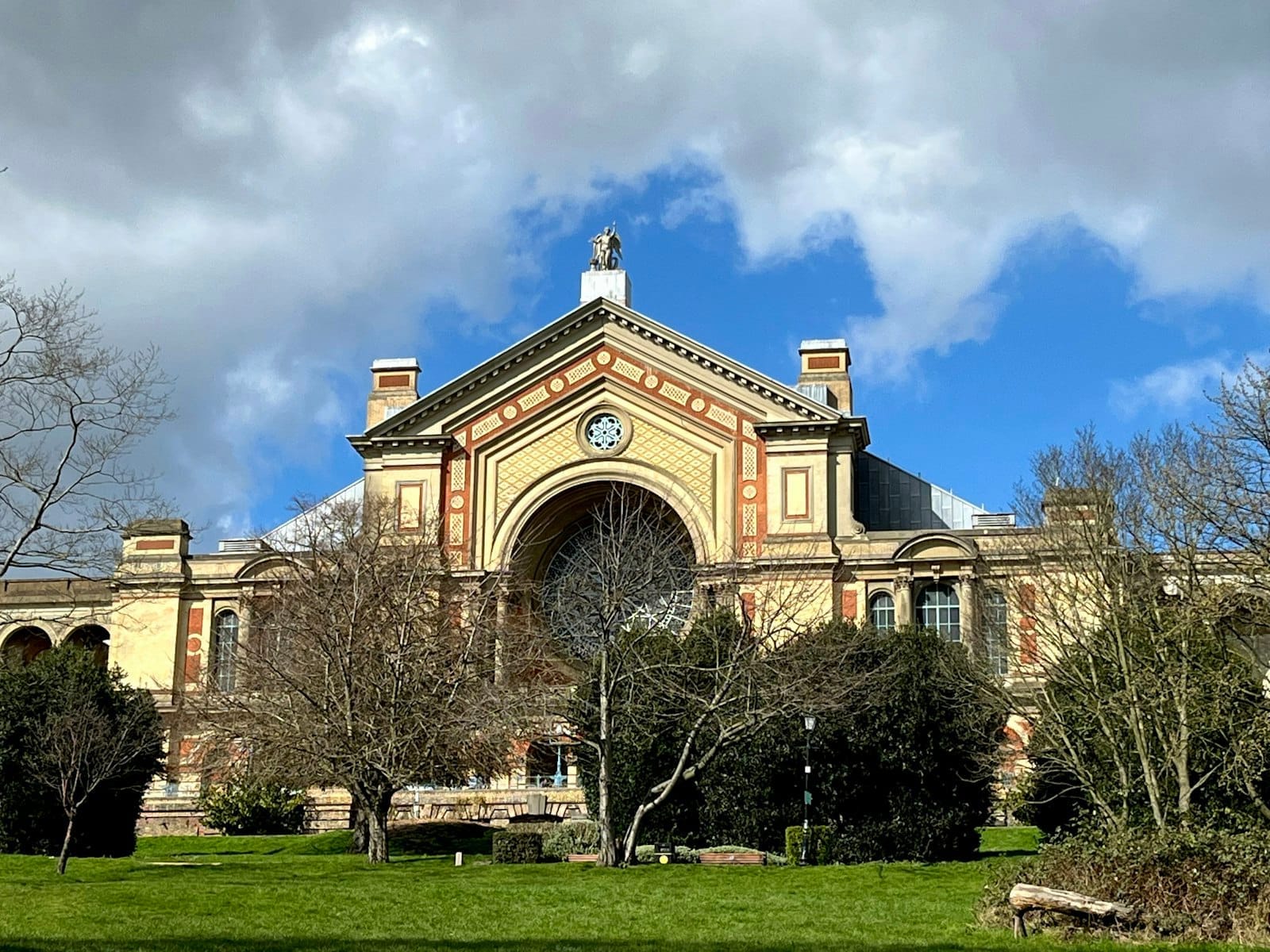
What Alexandra Palace Actually Is
Alexandra Palace is a large Victorian event and leisure complex sitting on a ridge in north London, roughly 100 metres above sea level, with unobstructed views across the city skyline. Most visitors simply call it Ally Pally. The palace itself stretches around 237 metres end to end and was built using approximately 15 million bricks, giving it a presence that is impossible to miss from the streets below. The surrounding park covers 196 acres and is free to enter at any time.
It was conceived as a "People's Palace", a public entertainment complex for working Londoners who had no access to private estates or clubs. The first building opened on 24 May 1873 but burned down just 16 days later. The rebuilt palace reopened in 1875 and has operated, with various interruptions and restorations, ever since. Today it functions as a multi-use venue: a theatre, a concert hall, an ice rink, a boating lake, and one of the finest free viewpoints in the city.
ℹ️ Good to know
Entry to Alexandra Park is free and open daily. The palace's interior spaces (ice rink, theatre, Great Hall concerts) require separate tickets booked via the official website. Always check current event listings before visiting, as interior access varies day to day.
The View: What You See and When to Go
The south-facing terrace in front of the palace is the reason many visitors make the trip. From here, the London skyline spreads out in almost cinematic fashion: the towers of Canary Wharf to the east, the dome of St Paul's Cathedral in the middle distance, the Shard and the cluster around London Bridge, and on clear days the hills of Surrey beyond. The view is wide rather than vertigo-inducing, which makes it more comprehensible than the view from a tall building looking straight down.
Early mornings are the clearest. By mid-morning on warm days, haze begins to build over the city. Autumn and winter, when the air is colder and drier, often produce the sharpest long-distance visibility. Sunset visits, particularly in late autumn when the sun drops behind the western skyline around 4pm, can be striking. For a concentrated set of London viewpoints compared, see our guide to the best views in London.
Weekday mornings are the least crowded. On summer weekends and during events, the terrace fills with picnickers, families, and groups. The grass slopes below the terrace become informal seating for anyone who has brought food. There are outdoor food and drink kiosks near the terrace when the weather and events permit, but the supply is not always reliable, so it is worth bringing your own.
Tickets & tours
Hand-picked options from our booking partner. Prices are indicative; availability and final rates are confirmed when you complete your booking.
Soho Instagram a self-guided walking tour to top photo spots
From 6 €Instant confirmationFree cancellationTootbus London by Night: Bus tour
From 32 €Instant confirmationFree cancellationIFS Cloud Cable Car Ride and Uber Boat Hop-on Hop-off 1 Day Ticket
From 38 €Instant confirmationFree cancellationThe Making of Harry Potter Guided Tour of London Warner Bros. Studio
From 201 €Instant confirmationFree cancellation
Broadcasting History: Where Television Began
One of Alexandra Palace's most overlooked distinctions is its role in the history of broadcasting. On 2 November 1936, the BBC launched the world's first regular high-definition public television service from a studio inside the building. That original transmitter mast still stands on the roofline, a visible remnant of the moment the medium was born. For anyone interested in media history, standing on the terrace and looking up at that mast is a strange experience.
A small BBC TV Studios gallery inside the palace occasionally opens during heritage events and special access days, including the annual Open House London weekend, when parts of the building not normally accessible to the public can be explored. The palace's formal Grade II listing by Historic England specifically notes its significance to broadcasting heritage alongside its architecture.
💡 Local tip
If architectural and heritage access is a priority, plan your visit around Open House London in September, when the palace typically opens spaces that are otherwise closed to general visitors.
The Park, the Lake, and the Activities
The 196-acre park surrounding the palace is where most of the casual day-visit activity takes place. The boating lake, visible from the south approach, rents out pedal boats and rowing boats when open seasonally. There is a pitch-and-putt course for anyone looking for a more structured activity. A Go Ape treetop adventure course operates within the park, aimed at older children and adults, requiring advance booking.
The park has a well-worn but pleasant quality. Paths wind between mature trees, dogs are everywhere on weekend mornings, and the grass banks below the terrace fill up remarkably fast on the first warm days of the year. It is far less formal than Regent's Park or Hyde Park, with more of a neighbourhood feel. Families with young children tend to congregate around the cafe areas and the gentler slopes near the lake.
The ice rink operates year-round and is one of the larger indoor rinks in London. Public skating sessions run alongside lessons, ice hockey leagues, and seasonal events including ice discos. Sessions are bookable in advance and tend to sell out on weekends and school holidays. Skate hire is available on site.
The Theatre and Live Events
The restored Victorian theatre inside the palace is one of the finest mid-sized performance spaces in London. With around 1,200 seats, it hosts theatre, opera, comedy, dance, and concerts. The acoustics in the space reward live music well, and the horseshoe balcony configuration means sightlines are good from most positions. The intimacy is genuine: even from the upper tier, performers are not far away.
The Great Hall, the palace's largest indoor space, is used for major concerts, club nights, trade shows, and large-scale events. It holds several thousand people. The programming at Alexandra Palace regularly includes internationally recognised artists and club promoters, and the venue has a strong reputation in the electronic music and alternative scenes. Checking the events calendar before visiting is worthwhile regardless of your interests, as large events significantly change how the site operates, including transport and parking.
⚠️ What to skip
On major event nights, bus and rail connections to Alexandra Palace station become very crowded after shows end. If arriving by public transport on a concert night, allow extra time and consider walking to Wood Green Tube station (about 25 minutes downhill) if queues at Alexandra Palace station are long.
Getting There and Getting Around the Site
The most direct route by public transport is the Alexandra Palace rail station on the line from Moorgate and Finsbury Park. From the station, the palace is either a 15-minute walk uphill or a short bus ride on the W3 service. Wood Green Underground station on the Piccadilly line is also served by buses to the palace, about 10 minutes by bus. Neither route is particularly straightforward for first-time visitors, so checking the TfL journey planner before you go is worth doing.
The site itself is large. From the park's southern entrance to the main terrace is a significant uphill walk. Comfortable footwear is important, particularly if you are visiting the park rather than just the palace interior. The palace is a Grade II-listed historic building, which means access provision varies between spaces. Visitors with specific mobility needs are advised to contact visitor.services@alexandrapalace.com in advance. For broader guidance on getting around London, our guide to getting around London covers transport options in detail.
Practical Considerations Before You Go
Weather matters more at Alexandra Palace than at most London attractions. The ridge position means it can be noticeably windier and cooler than the streets below. Even in summer, an extra layer is sensible for extended time on the terrace. In rain, the park becomes muddy in places and the views disappear behind low cloud, reducing the main draw significantly. Winter visits work well for crisp clear-day views, but the shorter daylight hours limit time outdoors.
There are cafes and food options within the palace complex, with quality and availability varying by day and season. The park itself has some kiosk-style food options. If you are planning a full day, bringing a picnic is a reliable strategy. Photography is straightforward from the terrace: a wide-angle lens captures the skyline well, and the palace facade itself photographs best in morning light when the sun is behind the viewer. For more photography ideas across the city, see our roundup of the most photographed spots in London.
Families with younger children will find the park and boating lake more engaging than the interior spaces, unless visiting specifically for an ice rink session or a family-targeted event. For older children and teenagers, Go Ape and the ice rink are the main draws. The palace is a reasonable full day out when combined with both park activities and an interior event or rink session.
Insider Tips
- The clearest city views from the terrace occur on cold, bright days between November and February. Summer haze can obscure the skyline significantly by mid-morning even on sunny days.
- Alexandra Palace station has very limited capacity after large concert events. Walking downhill to Wood Green Tube station (about 25 minutes) is often faster than waiting for multiple overcrowded trains.
- The BBC television mast on the roofline is the original 1936 structure. Looking up at it from the terrace while knowing it transmitted the world's first high-definition public broadcast is one of those quiet historical details that guidebooks tend to skip over.
- Open House London in September is one of the best times to visit if you want access to normally closed parts of the building, including the original BBC studios area. No booking is required for many open-access sessions, but it is worth confirming on the Open House website.
- For ice rink visits, book the specific session you want at least a week in advance on weekends and school holidays. Walk-up availability is limited and morning sessions tend to be less crowded than afternoon ones.
Who Is Alexandra Palace For?
- Londoners and visitors seeking a free city panorama without paying for a ticket to a tower or observation deck
- Families wanting a full day out that combines outdoor space, activities, and ice skating
- Music and live events fans, particularly those interested in large-scale concerts, club nights, or independent theatre
- History and architecture enthusiasts interested in Victorian public buildings and broadcasting heritage
- Photographers looking for wide London skyline shots at ground level, particularly at sunrise or on clear winter days
Nearby Attractions
Combine your visit with:
- Abbey Road
The Abbey Road zebra crossing in St John's Wood is one of the most photographed stretches of tarmac in the world, immortalised by the Beatles on the cover of their 1969 album. Entry is free, it's accessible around the clock, and the Grade II listed studios next door still operate as a working recording facility. Here's everything you need to know before you visit.
- Dulwich Picture Gallery
Opened in 1817, Dulwich Picture Gallery is Britain's first purpose-built public art gallery, designed by Sir John Soane and housing over 600 European masterpieces. Set in the quiet streets of Dulwich Village, it offers a rare combination of architectural beauty, world-class paintings, and a unhurried atmosphere that larger central London galleries rarely manage.
- Hampton Court Palace
Hampton Court Palace stands on the banks of the River Thames in East Molesey, Surrey, roughly 30 minutes by train from central London. With Tudor kitchens, baroque state apartments, a famous hedge maze, and 60 acres of formal gardens, it offers more depth than almost any other royal site in England. This guide covers everything you need to plan a visit well.
- Horniman Museum and Gardens
Set on a hilltop in Forest Hill, south-east London, the Horniman Museum and Gardens brings together anthropology, natural history, and musical instruments under one Grade II* listed roof. The gardens cover over 16 acres and offer sweeping views across the city. Admission to the museum and gardens is free, making this one of London's most rewarding afternoons for families, curious adults, and anyone who has already done the central museum circuit.