Tribune Tower: Chicago's Neo-Gothic Landmark and Its Secrets in the Stone
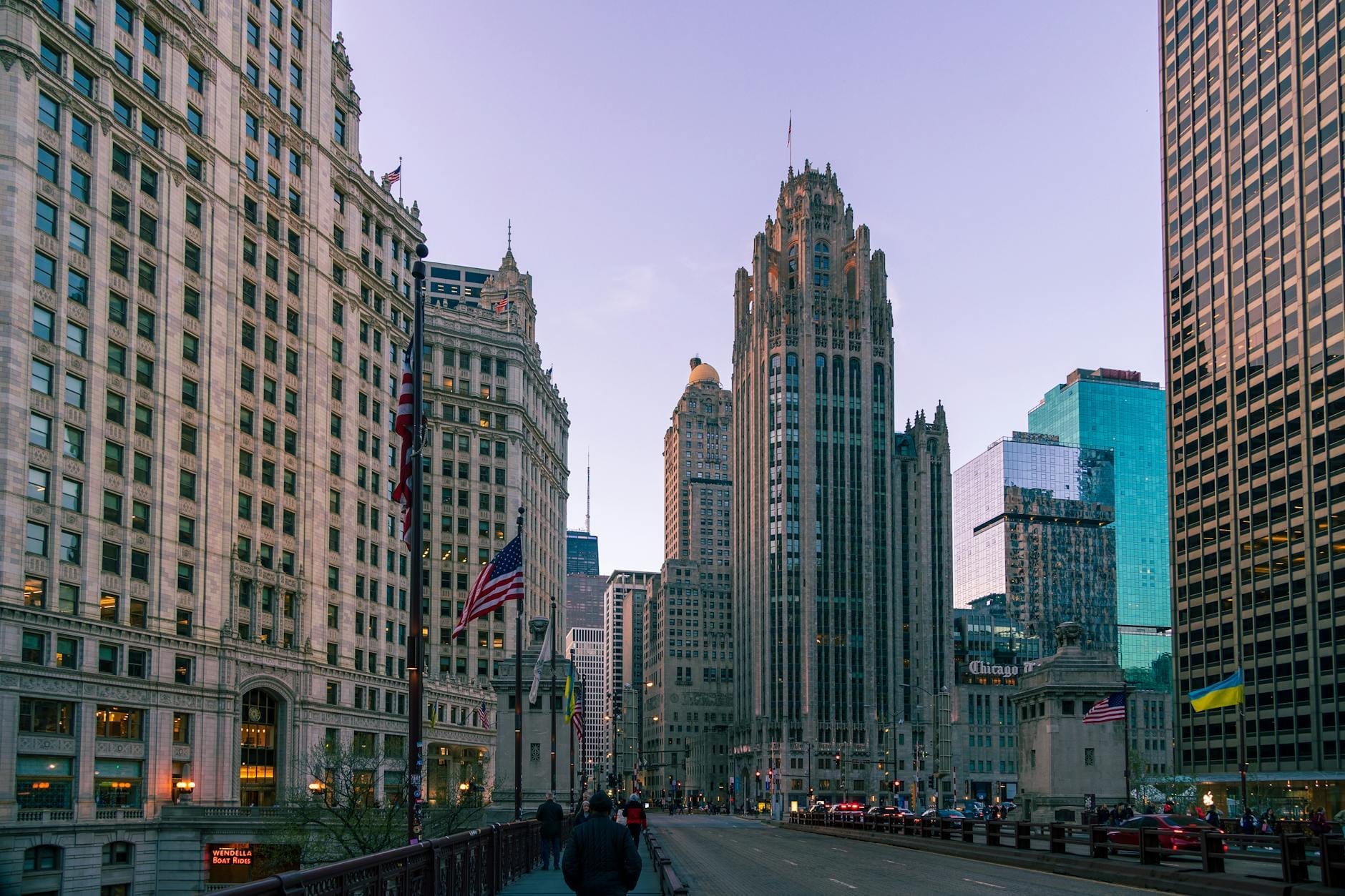
Tribune Tower stands at 435 North Michigan Avenue as one of Chicago's most distinctive skyscrapers, a 36-story neo-Gothic tower completed in 1925. Today it's a private residential building, but its street-level façade is an open-air museum of sorts, embedded with rock fragments from landmarks across the globe. Entry is free, and the payoff is real.
Quick Facts
- Location
- 435 N Michigan Avenue, Near North Side (Magnificent Mile), Chicago IL 60611
- Getting There
- Grand (Red Line) or State/Lake (Brown/Orange/Green/Pink/Purple lines); multiple Michigan Ave buses (26, 143, 146, 147)
- Time Needed
- 20–40 minutes for exterior; longer if combined with Riverwalk or Chicago Architecture Center
- Cost
- Free (exterior viewing from public sidewalk only; interior is private residential)
- Best for
- Architecture lovers, history buffs, photographers, curious walkers on Michigan Avenue
- Official website
- tribunetower.com
What Tribune Tower Actually Is Today
Tribune Tower completed in 1925 and standing 463 feet tall over Michigan Avenue, is no longer the home of a newspaper. The Chicago Tribune relocated its operations, and the building was converted into luxury residences, now marketed as Tribune Tower Residences. The conversion was completed around 2021 and earned a Richard H. Driehaus Foundation Preservation Award in 2023 for its careful approach to adaptive reuse.
What this means practically for visitors: there are no tickets, no lobby tours, and no observatory. The interior is private. But the exterior, which is where almost everything interesting happens, is fully accessible from the public sidewalk at any hour, free of charge.
ℹ️ Good to know
Tribune Tower is a free, exterior-only attraction. The building's interior is private residential space and is not open to visitors. Everything described in this guide takes place on or near the public sidewalk along North Michigan Avenue.
The Architecture: Why This Building Looked the Way It Did
Tribune Tower was born out of a 1922 international design competition organized by Chicago Tribune co-publishers Colonel Robert R. McCormick and Captain Joseph M. Patterson. They wanted 'the most beautiful office building in the world.' The winning design, submitted by architects John Mead Howells and Raymond Hood, delivered a soaring neo-Gothic tower with flying buttresses at its crown and detailed stonework throughout. It was unapologetically theatrical.
The competition itself became a landmark moment in architectural history. Over 260 entries arrived from 23 countries, and the second-place submission by Finnish architect Eliel Saarinen, though it lost, was so admired that it influenced a generation of American modernist architects. Hood himself would go on to design Rockefeller Center in New York. Standing in front of Tribune Tower today, you're looking at a building whose design contest shaped how American cities came to look.
The tower rises 36 floors and reaches 463 feet (141 m), with the upper portion tapering and ornamented with Gothic-inspired detailing that catches light differently depending on the time of day. In strong morning sun from the east, the vertical stonework throws fine shadows that give the facade real depth. At dusk, the upper sections glow a pale amber. On overcast days, the tower reads as severe and grey, which suits its Gothic character.
The building sits within the Michigan-Wacker Historic District and carries individual Chicago Landmark designation. If you want context for how it fits into the broader story of Chicago's architectural development, the Chicago Architecture Center is a short walk south and offers guided tours and exhibits that cover Tribune Tower in detail.
Tickets & tours
Hand-picked options from our booking partner. Prices are indicative; availability and final rates are confirmed when you complete your booking.
Go City | Chicago All-Inclusive Pass
From 127 €Instant confirmationFree cancellationiFLY Chicago Lincoln Park indoor skydiving experience
From 126 €Instant confirmationFree cancellationiFLY Chicago Rosemont indoor skydiving tickets
From 117 €Instant confirmationFree cancellationChicago lakefront neighbourhood bike tour
From 18 €Instant confirmationFree cancellation
The Stones in the Wall: The Detail Most People Walk Past
The lower section of the Tribune Tower facade contains more than 140 rock fragments and stones embedded directly into the exterior walls. Colonel McCormick spent decades collecting them, and correspondents and readers contributed specimens from around the world. Each piece is labeled with a small plaque identifying its origin.
The collection includes stones from the Parthenon in Athens, the Taj Mahal, the Great Wall of China, the Berlin Wall, the Alamo, the White House, Westminster Abbey, the Colosseum in Rome, and the Arc de Triomphe, among many others. There are fragments from Notre-Dame de Paris, from the Great Pyramid at Giza, and from a commemorative “moon rock” (actually terrestrial stone honoring the Apollo missions rather than a literal lunar sample, as noted in various architectural references).
The stones are embedded at street level and eye height, which means you can get very close. The texture varies dramatically, from smooth marble to rough volcanic basalt to pale limestone. Reading the plaques slowly and tracing a rough mental map of where each piece came from is genuinely engaging. Budget at least 15 minutes just for this.
💡 Local tip
Bring reading glasses if you need them. The identification plaques for the embedded stones are small and set into the wall. Morning light from the east makes them easier to read than the flat afternoon light. The best stretch of stones runs along the North Michigan Avenue facade and wraps slightly around the corner.
How the Experience Changes by Time of Day
Weekday mornings between 7 and 9 AM bring commuters streaming past, mostly ignoring the building entirely. This is actually one of the better times to examine the stones and facade in peace, because tourist foot traffic on Michigan Avenue is lighter. The eastern exposure means the stonework is well-lit without glare.
Midday on weekends is the most crowded. Michigan Avenue between the Chicago River and Grand Avenue functions as one of the city's main pedestrian corridors, and the sidewalk in front of Tribune Tower can feel congested. Photography of the full tower from street level is difficult because of crowds and because the building's height makes it hard to frame from directly below without a wide-angle lens.
Late afternoon in summer, when the light hits the tower from the west and southwest, produces the most dramatic upper-facade photographs. The Gothic crown and buttresses throw sharp shadows and the stonework takes on a warmer tone. Evening, once pedestrian density drops, is a good time for a quiet second pass at the embedded stones.
Getting There and Walking the Area
Tribune Tower sits at the south end of the Magnificent Mile, directly at the intersection of North Michigan Avenue and the Chicago River. From the Grand Red Line station, it's roughly a six-minute walk south. From State/Lake, it's a few minutes east and north. Multiple Michigan Avenue bus routes stop within half a block.
The location puts the tower at the start or end of any Magnificent Mile walk. The DuSable Bridge (Michigan Avenue Bridge) is immediately to the south, and crossing it gives you a good elevated view back toward the tower's base. The Chicago Riverwalk is accessible from the bridge approaches and adds a useful waterside perspective on the tower's lower floors from a distance.
Parking directly on Michigan Avenue is not practical. The nearest garage options are on nearby streets, but public transit or rideshare is strongly recommended for this stretch. The neighborhood is dense, walkable, and connected to most of the city's main transit lines within a few minutes on foot.
Photography Notes
Getting a full vertical shot of Tribune Tower from street level is harder than it looks. The building is 463 feet (141 m) tall, and the opposite sidewalk on Michigan Avenue isn't wide enough to provide clear separation. Your best angles are from the DuSable Bridge approach looking north, which gives a full-length view with some sky behind it, or from the south bank of the Chicago River. A 24mm or wider equivalent lens helps significantly.
For the embedded stones, close-up shots work well with a standard or slightly telephoto phone camera. Flat, overcast light is actually better for stone detail photography than direct sun, which can cause harsh shadows across the engraved plaques.
If architectural photography is a significant part of your visit, the Chicago architecture guide covers angles, timing, and context for photographing the city's major buildings, including several in this immediate area.
Honest Assessment: Is It Worth the Stop?
Tribune Tower is not a standalone destination that justifies a dedicated trip across the city. But as part of any walk on Michigan Avenue, it rewards a 20 to 30 minute stop more than most buildings in Chicago. The embedded stones are genuinely unusual, the architectural history is rich, and the building is striking enough to hold attention even without the context.
Travelers who may not find value here: those who find architectural history uninteresting, visitors with very limited time who need to prioritize major paid attractions, and anyone expecting a public interior or museum experience. The building offers none of those things. What it offers is a thoughtfully observed exterior that reveals detail the more time you spend with it.
For visitors trying to decide how Tribune Tower fits into a broader Chicago day, it pairs naturally with a Chicago Architecture Foundation river cruise departing nearby, or with a walk north along Michigan Avenue toward the Water Tower. A one-day Chicago itinerary that anchors on the Magnificent Mile can comfortably include Tribune Tower without adding significant time.
Insider Tips
- Start at the northwest corner of the building, where the largest concentration of labeled stones begins, and work clockwise around the facade. The plaques get easier to find once your eye adjusts to where they're positioned relative to the stones.
- The DuSable Bridge (Michigan Avenue Bridge), just south of the tower, offers the best full-building photograph angle. Walk to the midpoint of the bridge and look north for a clean shot with sky behind the Gothic crown.
- On rainy days, the wet limestone facade deepens in color and the Gothic detailing becomes more pronounced visually. If you happen to be in the area during light rain, it's worth pausing to look up.
- If you're interested in more than the exterior, the Chicago Architecture Center a few blocks south runs tours and has exhibits that give significant context to Tribune Tower's design competition and its influence on American skyscraper design.
- The building's lower arcade provides minor shelter from wind off the river in winter. Michigan Avenue funnels cold air aggressively in January and February, so dressing in proper layers isn't optional if you're spending time examining the facade in cold months.
Who Is Tribune Tower For?
- Architecture enthusiasts who want to trace the influence of the 1922 design competition on American skyscraper history
- Curious walkers already on Michigan Avenue who want a free, low-commitment stop with genuine historical density
- Photographers looking for Gothic skyscraper compositions that differ from Chicago's more commonly photographed modernist towers
- Travelers with children who enjoy the scavenger-hunt quality of finding stones from the Great Wall, the Colosseum, and the Taj Mahal embedded in a Chicago sidewalk
- Anyone on a budget who wants substantive Chicago architectural history without a ticket price
Nearby Attractions
Other things to see while in Magnificent Mile & Streeterville:
- 360 CHICAGO Observation Deck
Perched on the 94th floor of 875 North Michigan Avenue, 360 CHICAGO delivers panoramic views stretching across the city grid, Lake Michigan, and on clear days, four states. With the TILT ride, interactive displays, and a full bar, it offers more than just a lookout.
- American Writers Museum
Tucked on the second floor of 180 N. Michigan Avenue, the American Writers Museum makes a persuasive case that literature shaped the United States as much as any battlefield or boardroom. It's compact, thoughtfully curated, and rewards visitors who slow down.
- Centennial Wheel
Standing nearly 196 feet above the Lake Michigan shoreline, the Centennial Wheel at Navy Pier offers enclosed, climate-controlled gondola rides with some of the most expansive views of Chicago's skyline. Opened in 2016 to mark Navy Pier's 100th anniversary, it replaced a beloved predecessor and quickly became one of the city's most recognizable structures.
- Chicago Children's Museum
Perched inside Navy Pier on the lakefront, Chicago Children's Museum has been sparking curiosity in kids since 1982. With hands-on exhibits built for children under 10, it rewards an unhurried half-day visit. Here is exactly what to expect, when to go, and how to make the most of your time.