Chicago Children's Museum: The Complete Family Guide to Navy Pier's Best Attraction
Perched inside Navy Pier on the lakefront, Chicago Children's Museum has been sparking curiosity in kids since 1982. With hands-on exhibits built for children under 10, it rewards an unhurried half-day visit. Here is exactly what to expect, when to go, and how to make the most of your time.
Quick Facts
- Location
- 700 E Grand Avenue, Navy Pier, Chicago, IL 60611
- Getting There
- CTA bus routes serve Navy Pier directly; nearest 'L' stop is Grand (Red Line), then a bus or rideshare east to the pier
- Time Needed
- 2 to 3.5 hours for families with young children
- Cost
- $21 (Illinois residents) / $25 (non-residents) per person ages 1+. Under 1 free. Veterans free daily. Museums for All: $5 with EBT/WIC card.
- Best for
- Families with children roughly ages 1 to 10; rainy or cold weather days; toddler-focused outings
- Official website
- www.chicagochildrensmuseum.org
What the Chicago Children's Museum Actually Is
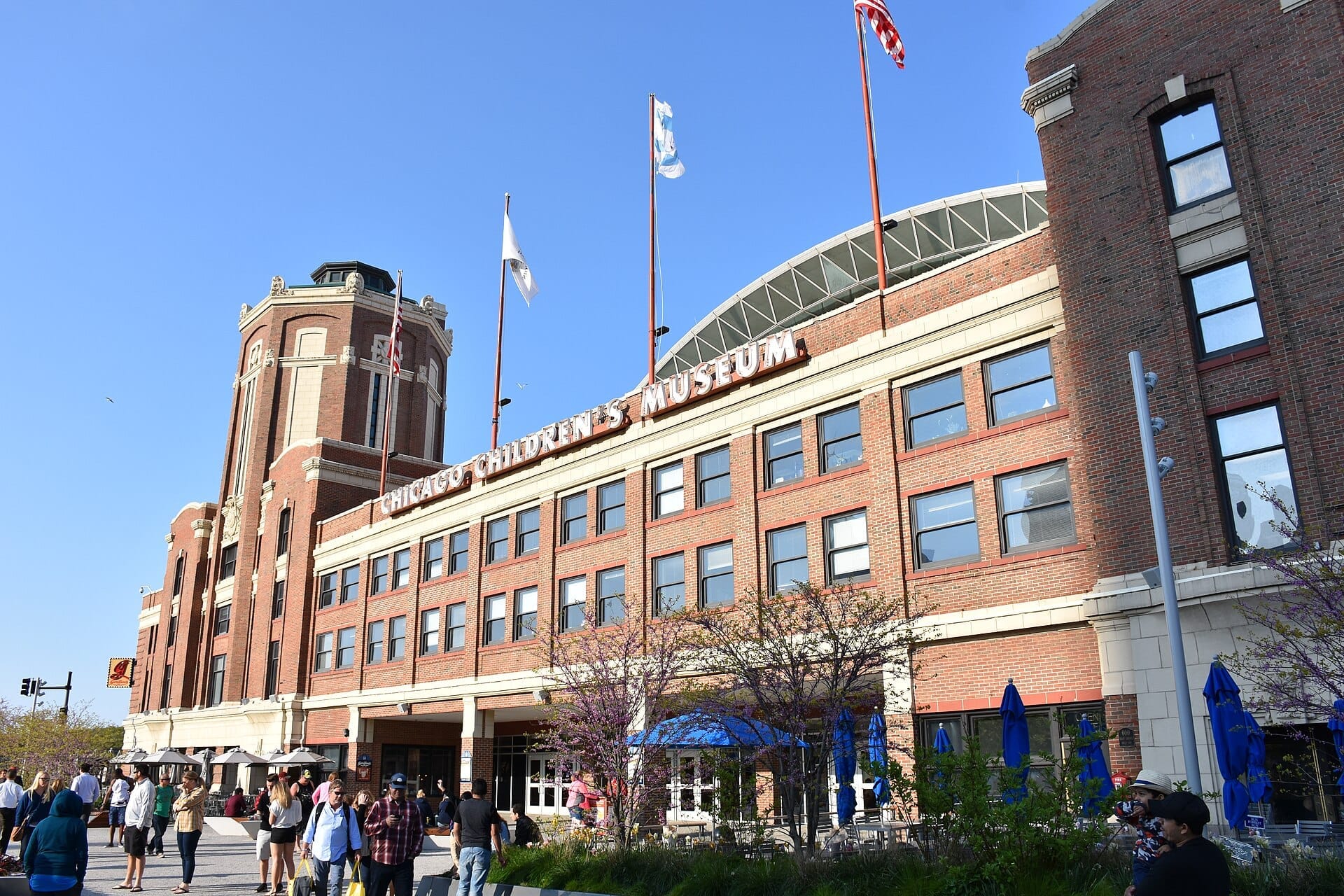
Chicago Children's Museum is a multi-story, entirely hands-on learning environment built for young children, located inside Navy Pier on the city's lakefront. Founded in 1982 by The Junior League of Chicago, it has grown into one of the most visited children's museums in the United States, drawing families from across Illinois and out-of-state visitors who pair it with a broader lakefront itinerary.
The museum is not a passive gallery. There are no velvet ropes, no hushed corridors, and nothing to simply look at. Every inch of the space is designed to be touched, climbed, splashed in, or built upon. The noise level reflects that: on a typical Friday afternoon it sounds like a well-supervised playground, with the occasional shriek of delight echoing off the high ceilings. Parents who arrive expecting a quiet cultural experience should calibrate expectations accordingly. But for a child aged two to eight, this is close to an ideal indoor environment.
ℹ️ Good to know
Entry policy: One adult (18+) and one child are required for museum admission. Children cannot enter without an adult, and adults cannot enter without a child.
The Exhibits: What Children Actually Encounter
The museum's exhibits rotate and evolve over time, so the specific installations may shift from visit to visit. That said, the museum's programming philosophy stays consistent: exhibits emphasize open-ended play, physical movement, and creative problem-solving over scripted activities or passive observation.
Water play is consistently among the most popular zones. Children can manipulate water flow, test floating objects, and experiment with simple hydraulics in a dedicated wet area. Staff provide waterproof smocks, but a change of clothes is worth packing regardless. The building exhibits draw older children in the four-to-nine range, who can engage with construction challenges involving oversized foam blocks, ramps, and connectors. There is also dedicated space for toddlers and infants, separated from the louder activity zones, where sensory materials and low-to-the-ground structures keep the youngest visitors occupied without overwhelming them.
For a sense of how the museum fits into Chicago's broader family landscape, it is worth comparing it with the city's other major family destinations. The museum's programming is deliberately urban and interior-focused, making it the go-to option when the weather outside is uncooperative. Chicago winters and unpredictable spring days make this distinction practical rather than academic.
Families visiting Chicago for multiple days may want to compare this with the more science-heavy Museum of Science and Industry in Hyde Park, which skews toward older children and has significantly more floor space, or with the free-admission Field Museum on Museum Campus for a very different kind of educational experience.
Tickets & tours
Hand-picked options from our booking partner. Prices are indicative; availability and final rates are confirmed when you complete your booking.
Go City | Chicago All-Inclusive Pass
From 127 €Instant confirmationFree cancellationiFLY Chicago Lincoln Park indoor skydiving experience
From 126 €Instant confirmationFree cancellationiFLY Chicago Rosemont indoor skydiving tickets
From 117 €Instant confirmationFree cancellationChicago lakefront neighbourhood bike tour
From 18 €Instant confirmationFree cancellation
How the Experience Changes by Time of Day
Opening time at 10:00 am on regular operating days is typically the least crowded window of the day. Families who arrive within the first 30 minutes tend to get the most space at the popular water and building exhibits before the mid-morning rush arrives. By 11:30 am, particularly on weekend mornings, the main activity floors fill noticeably and wait times at the most popular stations can stretch.
Weekday mornings from Wednesday through Friday are the museum's quietest periods. School groups do visit, but they tend to arrive in focused blocks and move through exhibits on guided schedules rather than free-roaming. Saturday and Sunday afternoons are the peak crowd window. The museum closes at 5:00 pm on those days, and final admission cuts off at 4:00 pm, so arriving after 3:00 pm on a weekend gives you significantly less time than the posted hours suggest.
⚠️ What to skip
The museum is closed on Tuesdays. Plan accordingly, especially if Tuesday falls in the middle of a short Chicago trip.
On weekdays, the museum closes at 2:00 pm Monday, Wednesday, and Thursday, which is an unusually early end time. This makes the museum a morning activity by necessity on those days. Friday through Sunday extend to 5:00 pm, giving more scheduling flexibility. Always check the official hours before visiting, as seasonal programming and special events can alter the standard schedule.
Getting There: Navy Pier Access
Navy Pier sits at the eastern end of Grand Avenue, extending into Lake Michigan about half a mile from the shoreline. It is not walkable from most downtown hotels in cold or wet weather, though it is reachable on foot from Streeterville and parts of the Magnificent Mile on pleasant days. The walk from Michigan Avenue takes roughly 15 to 20 minutes at a leisurely pace, passing through the Streeterville neighborhood.
By public transit, the Grand (Red Line) 'L' stop on the Red Line is the closest elevated train station, but it still requires heading east to the pier by bus or rideshare. CTA bus routes serve Navy Pier directly from multiple downtown points. For a broader orientation to the transit network, the complete guide to getting around Chicago covers the CTA system in detail.
Driving to Navy Pier is possible but parking at the pier structure is priced at a premium. On weekends especially, parking fees can add a meaningful cost to what might seem like a straightforward family outing. Rideshare drop-off works smoothly at the pier's main entrance. If you are combining the museum with other activities along Navy Pier, the parking cost becomes easier to justify.
💡 Local tip
If you are visiting on a weekend, consider arriving by rideshare or CTA bus rather than driving. Pier parking fees can add $20 to $40 or more to your total outing cost, depending on duration.
Tickets, Cost, and Who Gets In Free
General admission is $21 per person for Illinois residents (with proof of residency) and $25 per person for non-residents. This applies to both adults and children aged one and older. Children under one year enter free. Veterans and active military personnel receive free admission every day of the week with a valid military ID.
The museum participates in the Museums for All program, which offers $5 per person admission (up to six people per visit) for families presenting an EBT or WIC card along with a photo ID. This is a meaningful access initiative that keeps the museum within reach for lower-income families, and it is available every day rather than on designated discount days only.
If your Chicago itinerary includes multiple paid attractions, it is worth checking whether the Chicago CityPASS or Go Chicago Card includes the Children's Museum. Multi-attraction passes can reduce per-venue costs significantly for families with three or more days in the city.
The Broader Navy Pier Context
The museum occupies part of Navy Pier's interior complex, which means a visit can naturally extend into a wider pier experience. The Centennial Wheel, food vendors, the Chicago Shakespeare Theater, and seasonal attractions are all steps away. On clear days, the lakefront views from the pier's outdoor promenade are genuinely impressive, and the walk out to the pier's end gives children a sense of the scale of Lake Michigan that is difficult to convey in words.
Navy Pier also positions visitors close to the broader Streeterville and Magnificent Mile area. Combining a morning at the museum with an afternoon along the Magnificent Mile or a lakefront stroll makes for an efficient family day without requiring long transit legs between stops.
For families spending multiple days in Chicago and looking for additional outdoor time, the Navy Pier itself warrants exploration beyond the museum's walls. The pier has undergone significant renovation and hosts programming across all seasons, including a winter holiday market that pairs naturally with a museum visit during colder months.
Who Should Think Twice Before Visiting
The museum is calibrated almost entirely for children under 10. Adults visiting without young children will find little to engage with, and the noise and sensory intensity of the building on a busy day can be genuinely fatiguing for adults not accustomed to that environment. Travelers with children over the age of 10 or 11 may find their kids have outgrown the physical scale of most exhibits and will lose interest faster than the admission cost justifies.
The early weekday closing time of 2:00 pm is also a real constraint. If your mornings are occupied with another activity, you may arrive with only an hour or less of visiting time on Monday, Wednesday, or Thursday, which makes the per-person cost feel steep. On those days, aim to arrive no later than 11:00 am to get a full experience.
Insider Tips
- Pack a full change of clothes for each child, not just a backup shirt. The water play area is genuinely wet, and kids consistently soak through more than parents anticipate.
- Weekday mornings between 10:00 am and 11:30 am are when the building breathes. The water and building exhibits are most accessible, staff are less stretched, and children have more uninterrupted time at each station.
- The toddler zone is physically separated from the louder main exhibits. If you are visiting with a child under two alongside an older sibling, it helps to rotate between zones rather than trying to manage both at once in the high-energy areas.
- Proof of Illinois residency for the discounted rate can be a driver's license, state ID, or utility bill. The $4 per-person difference adds up for a group of four, so bring documentation if you qualify.
- If you plan to eat at Navy Pier after your visit, the food court and restaurant options inside the pier are convenient but priced for a tourist destination. Packing snacks for the museum visit itself is not permitted in exhibit areas, but the pier's outdoor seating areas allow for picnicking if weather cooperates.
Who Is Chicago Children's Museum For?
- Families with children ages 1 to 9 looking for a full indoor morning activity
- Rainy or cold weather days when outdoor lakefront options are not feasible
- Toddler-focused visits where hands-on sensory play is the priority
- Military families seeking free family admission in Chicago
- EBT/WIC cardholders looking for affordable, high-quality family attractions under the Museums for All program
Nearby Attractions
Other things to see while in Magnificent Mile & Streeterville:
- 360 CHICAGO Observation Deck
Perched on the 94th floor of 875 North Michigan Avenue, 360 CHICAGO delivers panoramic views stretching across the city grid, Lake Michigan, and on clear days, four states. With the TILT ride, interactive displays, and a full bar, it offers more than just a lookout.
- American Writers Museum
Tucked on the second floor of 180 N. Michigan Avenue, the American Writers Museum makes a persuasive case that literature shaped the United States as much as any battlefield or boardroom. It's compact, thoughtfully curated, and rewards visitors who slow down.
- Centennial Wheel
Standing nearly 196 feet above the Lake Michigan shoreline, the Centennial Wheel at Navy Pier offers enclosed, climate-controlled gondola rides with some of the most expansive views of Chicago's skyline. Opened in 2016 to mark Navy Pier's 100th anniversary, it replaced a beloved predecessor and quickly became one of the city's most recognizable structures.
- Chicago Harbor Lighthouse
Built in 1893, the Chicago Harbor Lighthouse stands on the breakwater at the entrance to Chicago Harbor, just east of Navy Pier. It cannot be entered, but viewed from the shoreline or water, it offers one of Chicago's most quietly striking lakefront scenes.