Navy Pier: Chicago's Lakefront Landmark, Honestly Assessed
Stretching 3,300 feet into Lake Michigan, Navy Pier is Chicago's most visited destination, drawing nearly 9 million people a year. Entry to the pier itself is free, but the real question is how to spend your time once you're there. This guide breaks it down honestly.
Quick Facts
- Location
- 600 E. Grand Avenue, Streeterville, Chicago, IL 60611
- Getting There
- CTA buses 29, 65, 66, and 124 serve the pier directly; Divvy bike-share at Polk Bros Park (Streeter Dr. & Grand Ave.)
- Time Needed
- 2–4 hours for a relaxed visit; a full day if you add cruises or ticketed attractions
- Cost
- Free entry to the pier; individual attractions and cruises charge separate fees (USD)
- Best for
- Families, first-time visitors, lake views, summer evenings, special events
- Official website
- navypier.org
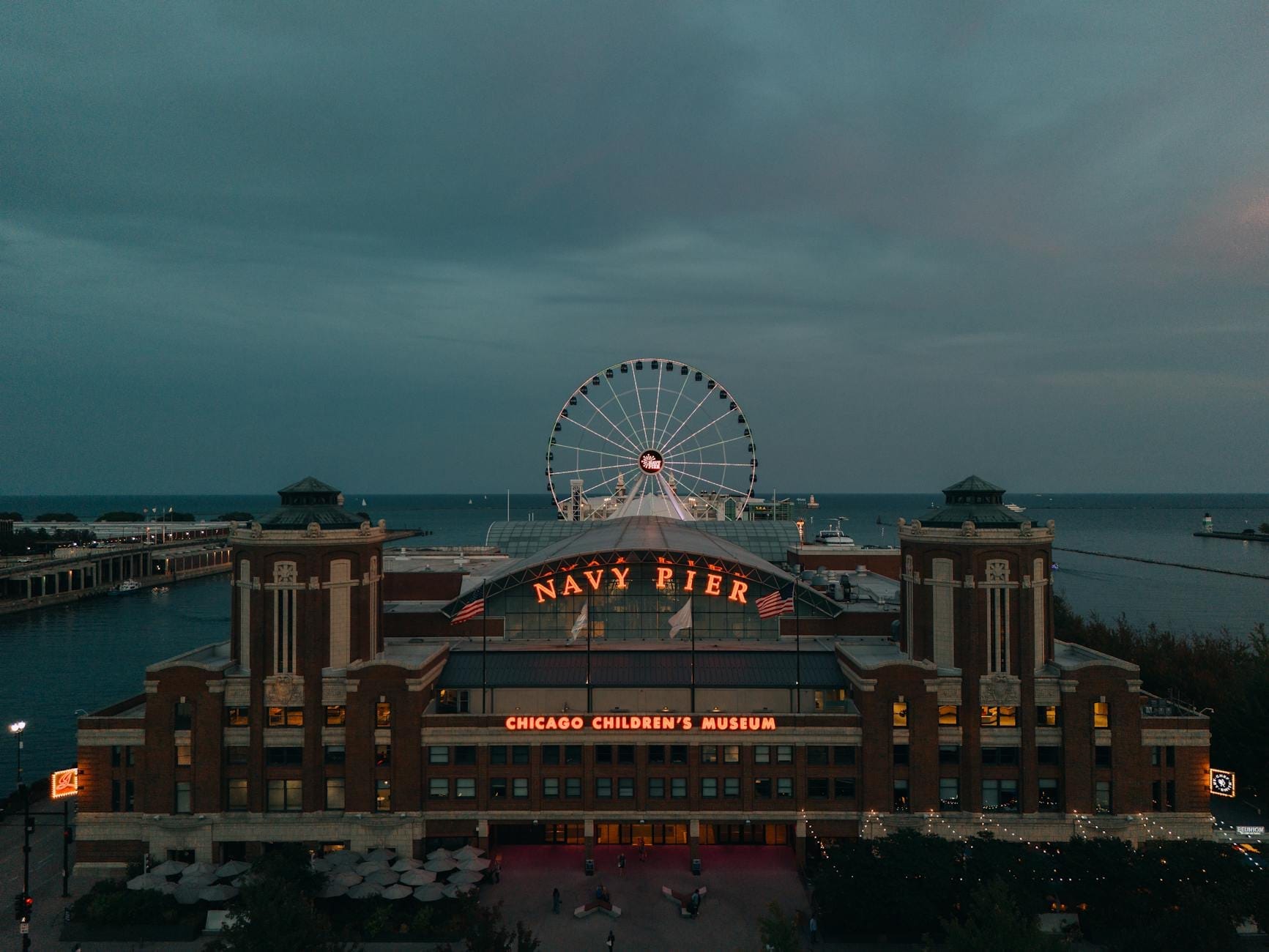
What Navy Pier Actually Is
Navy Pier is a 3,300-foot long pier jutting into Lake Michigan from the Streeterville neighborhood on Chicago's Near North Side. Originally built in 1916 as Chicago Municipal Pier, it was designed by architect Charles Sumner Frost as part of Daniel Burnham's vision for an inclusive, publicly accessible lakefront. The name changed to Navy Pier in 1927, a tribute to the nearly 4,000 naval officers who trained here during World War I, when the pier served as barracks, a recruitment center, and a Naval Auxiliary Reserve School.
Today the pier covers over 50 acres, stretching more than six city blocks over the water. It holds restaurants, retail shops, a Ferris wheel, a children's museum, cruise departure docks, event venues, and open-air promenades. The entry is free. What you spend depends entirely on what you do once you're there.
ℹ️ Good to know
Hours vary by season, day of week, and individual venue. Navy Pier is open year-round, but specific facilities follow their own schedules. Check navypier.org before you go, especially in winter or around holidays.
The Experience: Morning to Night
Early morning, before 10 a.m., the pier belongs almost entirely to joggers, dog walkers, and the occasional photographer hunting the clean light that comes off Lake Michigan at that hour. The air carries a faint lake smell, something between fresh water and iron, and the Ferris wheel sits still against a sky that is often cloudless in summer. This is when the pier feels genuinely peaceful, which is worth noting because it rarely does later in the day.
By midday in July or August, the crowds fill in fast. Families with strollers cluster near the Centennial Wheel and the Chicago Children's Museum. Cruise boats idle at the south docks. The food stalls and restaurants open in waves. The soundscape shifts from seagulls to recorded music, vendor calls, and the mechanical hum of carnival rides. If you are sensitive to noise and density, midday on a summer weekend is the version of Navy Pier you want to avoid.
Evening is when the pier earns its reputation. As the light drops over the city skyline behind you and the lake fades from blue to near-black, the atmosphere changes completely. Summer fireworks on Wednesday and Saturday nights draw large but manageable crowds to the outer promenade. The restaurants fill up and the Ferris wheel glows. From the far end of the pier, you get a view back toward downtown Chicago that is genuinely striking: the Wrigley Building and Tribune Tower frame the mouth of the Chicago River in the near distance, and the whole density of the skyline compresses into a single panorama.
For a broader look at the best spots to take in Chicago's skyline from a distance, see the Chicago views and viewpoints guide.
Tickets & tours
Hand-picked options from our booking partner. Prices are indicative; availability and final rates are confirmed when you complete your booking.
Skyline Lake boat tour from Navy Pier
From 28 €Instant confirmationFree cancellationArchitecture cruise on the Chicago River from Navy Pier
From 33 €Instant confirmationFree cancellationGo City | Chicago All-Inclusive Pass
From 127 €Instant confirmationFree cancellationiFLY Chicago Lincoln Park indoor skydiving experience
From 126 €Instant confirmationFree cancellation
The Centennial Wheel and Main Attractions
The Centennial Wheel, a 196-foot Ferris wheel at the center of the pier, is the attraction most people photograph before they ride it. Gondolas are climate-controlled and fully enclosed, which makes it comfortable in winter as well as summer. The ride takes about 13 minutes and gives unobstructed views of Lake Michigan to the east and the city to the west. It charges a separate fee; check navypier.org for current pricing.
The Chicago Children's Museum sits at the base of the pier and is a legitimate full-morning activity for families with kids under 12. It is separately ticketed. For families planning a full Chicago day with children, the Chicago with kids guide maps out how to combine Navy Pier with nearby family-oriented stops.
Cruise departures from Navy Pier cover everything from architecture tours to dinner cruises to speedboat rides. The Chicago Architecture Foundation River Cruise departs from the Chicago River rather than the pier itself, but several other architecture-focused boat tours do leave from Navy Pier's south docks. Booking in advance is strongly recommended in summer.
For the highly regarded architectural boat tour that follows the Chicago River, the dedicated Chicago Architecture Foundation River Cruise guide covers booking, what to expect, and how to get the most from it.
Getting There Without Driving
Several CTA bus routes serve Navy Pier directly, including routes 29 (State Street), 65 (Grand Avenue), 66 (Chicago Avenue), and 124 (Navy Pier Express, which runs seasonally). The pier is not on an 'L' rail line, but the Grand Avenue Red Line stop is about a 15-minute walk west, and the Chicago Avenue Red Line stop is a comparable distance northwest. Rideshare drop-off is convenient along Grand Avenue.
Divvy bike-share has a station at Polk Bros Park at the northwest corner of Streeter Drive and Grand Avenue. Cycling to the pier along the lakefront trail is a genuinely good option in fair weather. Seasonal water taxis operate on Lake Michigan with stops at Navy Pier, connecting to other lakefront destinations.
On-site parking exists in two garages plus valet, but parking costs accumulate quickly. If you are coming from downtown or the Magnificent Mile, walking the 10–15 minutes east along Grand Avenue or Illinois Street is straightforward and free.
💡 Local tip
In summer, the free trolley service along Illinois Street connects Navy Pier to the Red and Blue Line stops. Check with Choose Chicago or the Navy Pier website for the current season's schedule before relying on it.
Seasons, Weather, and When to Visit
Navy Pier is technically open year-round, but the experience varies enormously by season. Summer (June through August) is when the pier operates at full capacity: all restaurants and attractions are open, fireworks happen twice weekly, and programming is extensive. The tradeoff is crowds. Chicago's July average high is around 29°C (85°F), and the pier's exposed position over the water means there is usually a breeze, which helps, but also means sudden lake storms can move in fast. Check forecasts the morning of your visit.
Late spring (May) and early fall (September to early October) are quieter and often more pleasant for an outdoor promenade walk. The summer programming is mostly still active in September. Winter brings a different atmosphere: the Ferris wheel still operates on most days, some restaurants stay open, and the pier takes on a quieter, grayer quality that some people find atmospheric. The Christkindlmarket Chicago, held in the Loop, draws winter visitors to a different part of the city, but Navy Pier runs its own winter programming.
For a seasonal breakdown of the wider city, the best time to visit Chicago covers crowds, pricing, and weather across all four seasons.
⚠️ What to skip
Lake Michigan wind is real. Even on warm summer days, the far east end of the pier can feel 10 degrees cooler and significantly windier than the city streets behind you. Bring an extra layer if you plan to linger outside in the evening.
Honest Assessment: Worth Your Time?
Navy Pier is the most visited destination in the Midwest, and that fact does real work in shaping your expectations. It functions as a large commercial entertainment district built on a historic pier. The history is genuinely interesting, the lake views are excellent, and the evening fireworks are well-executed. But much of the retail and food is chain-oriented, and the daytime crowds in peak summer can make the experience feel like navigating a county fair in a parking garage.
The parts of the pier that consistently deliver: the free outer promenade walk, the Ferris wheel ride for the views, the lake-facing restaurant terraces at sunset, and the fireworks. The parts that consistently disappoint: the indoor mall section in midday summer crowds, the gift shops, and the fast-casual food options at premium prices.
Who should skip it: visitors who are primarily interested in architecture, independent dining, or cultural depth will find better uses for their time. The Art Institute of Chicago, the Chicago Riverwalk, and the lakefront trail north toward Lincoln Park offer more per hour for that type of traveler.
If you are specifically interested in the architectural and urban qualities of Chicago's waterfront, the Chicago Riverwalk is a more architecturally coherent experience just a mile west.
Photography and Practical Details
The best photography window at Navy Pier is the 30–45 minutes around sunset, when you can position yourself on the south promenade facing west and shoot the skyline in warm light with the lake in the foreground. The Ferris wheel at dusk is also worth photographing, particularly from the far eastern end of the pier where you get it framed against open sky.
Fireworks nights produce excellent long-exposure opportunities from the outer deck, but expect the good spots to be occupied well before launch time. A tripod is allowed in the open-air areas. The interior attractions and restaurants follow their own photography rules, which vary by venue.
Accessibility: Navy Pier is designed as a public space intended to be welcoming to all visitors. The pier's paved promenades are flat and wide. For specific details on wheelchair access, elevators to upper levels, and assisted services at individual venues, consult the accessibility pages on navypier.org, as each operator manages its own accommodations.
Insider Tips
- Arrive at Polk Bros Park (the landscaped entry plaza at the west end of the pier) around 8–9 a.m. for an almost crowd-free walk to the far end and back, with the city skyline behind you and nothing but open lake ahead.
- Fireworks nights (Wednesday and Saturday in summer) draw large crowds to the pier itself, but you can watch the same display from the lakefront path north of the pier with more space and a better angle. Montrose Beach or even the grassy areas closer to downtown, such as near Ohio Street Beach, offer clear sightlines.
- If you want food at a table with a lake view, book ahead. Walk-in availability at the waterfront restaurants on summer weekends is essentially zero after noon. The smaller grab-and-go vendors on the promenade move faster and often have better value.
- The Centennial Wheel tickets can sometimes be cheaper or come with promotions if purchased online in advance through the official Navy Pier website rather than at the gate on busy days.
- Water taxis between Navy Pier and the Michigan Avenue bridge area (near Wacker Drive) are a fast and scenic way to connect the pier to the river district, and the short ride gives you a useful sense of the city's lakefront geography.
Who Is Navy Pier For?
- First-time visitors who want to orient themselves to Chicago's lake-meets-city geography
- Families with children who can combine the Children's Museum, Ferris wheel, and open promenade in a single visit
- Summer evening visitors looking for the fireworks display and a lakefront dinner with skyline views
- Cruise-goers using the pier as a departure point for lake or river tours
- Photographers chasing the downtown skyline at golden hour from over the water
Nearby Attractions
Other things to see while in Magnificent Mile & Streeterville:
- 360 CHICAGO Observation Deck
Perched on the 94th floor of 875 North Michigan Avenue, 360 CHICAGO delivers panoramic views stretching across the city grid, Lake Michigan, and on clear days, four states. With the TILT ride, interactive displays, and a full bar, it offers more than just a lookout.
- American Writers Museum
Tucked on the second floor of 180 N. Michigan Avenue, the American Writers Museum makes a persuasive case that literature shaped the United States as much as any battlefield or boardroom. It's compact, thoughtfully curated, and rewards visitors who slow down.
- Centennial Wheel
Standing nearly 196 feet above the Lake Michigan shoreline, the Centennial Wheel at Navy Pier offers enclosed, climate-controlled gondola rides with some of the most expansive views of Chicago's skyline. Opened in 2016 to mark Navy Pier's 100th anniversary, it replaced a beloved predecessor and quickly became one of the city's most recognizable structures.
- Chicago Children's Museum
Perched inside Navy Pier on the lakefront, Chicago Children's Museum has been sparking curiosity in kids since 1982. With hands-on exhibits built for children under 10, it rewards an unhurried half-day visit. Here is exactly what to expect, when to go, and how to make the most of your time.