360 CHICAGO Observation Deck: What to Know Before You Go
Perched on the 94th floor of 875 North Michigan Avenue, 360 CHICAGO delivers panoramic views stretching across the city grid, Lake Michigan, and on clear days, four states. With the TILT ride, interactive displays, and a full bar, it offers more than just a lookout.
Quick Facts
- Location
- 875 N Michigan Avenue, 94th Floor, Chicago, IL 60611 (Magnificent Mile)
- Getting There
- CTA Red Line – Chicago station, approx. 6-minute walk
- Time Needed
- 1 to 2 hours
- Cost
- From $29 USD; TILT and packages cost more. Buy tickets in advance at 360chicago.com
- Best for
- City panoramas, sunset drinks, thrill-seekers, first-time visitors
- Official website
- 360chicago.com
What Is 360 CHICAGO?
360 CHICAGO Observation Deck sits on the 94th floor of 875 North Michigan Avenue, the 100-story skyscraper completed in 1969 and standing 1,128 feet (344 meters) tall. Formerly known as the John Hancock Center, the building is one of Chicago's most recognizable silhouettes, defined by its tapered form and the X-shaped bracing that runs up its facade. The observatory, originally branded as the John Hancock Observatory, was renovated and relaunched in 2014 as 360 CHICAGO following a multi-million-dollar upgrade.
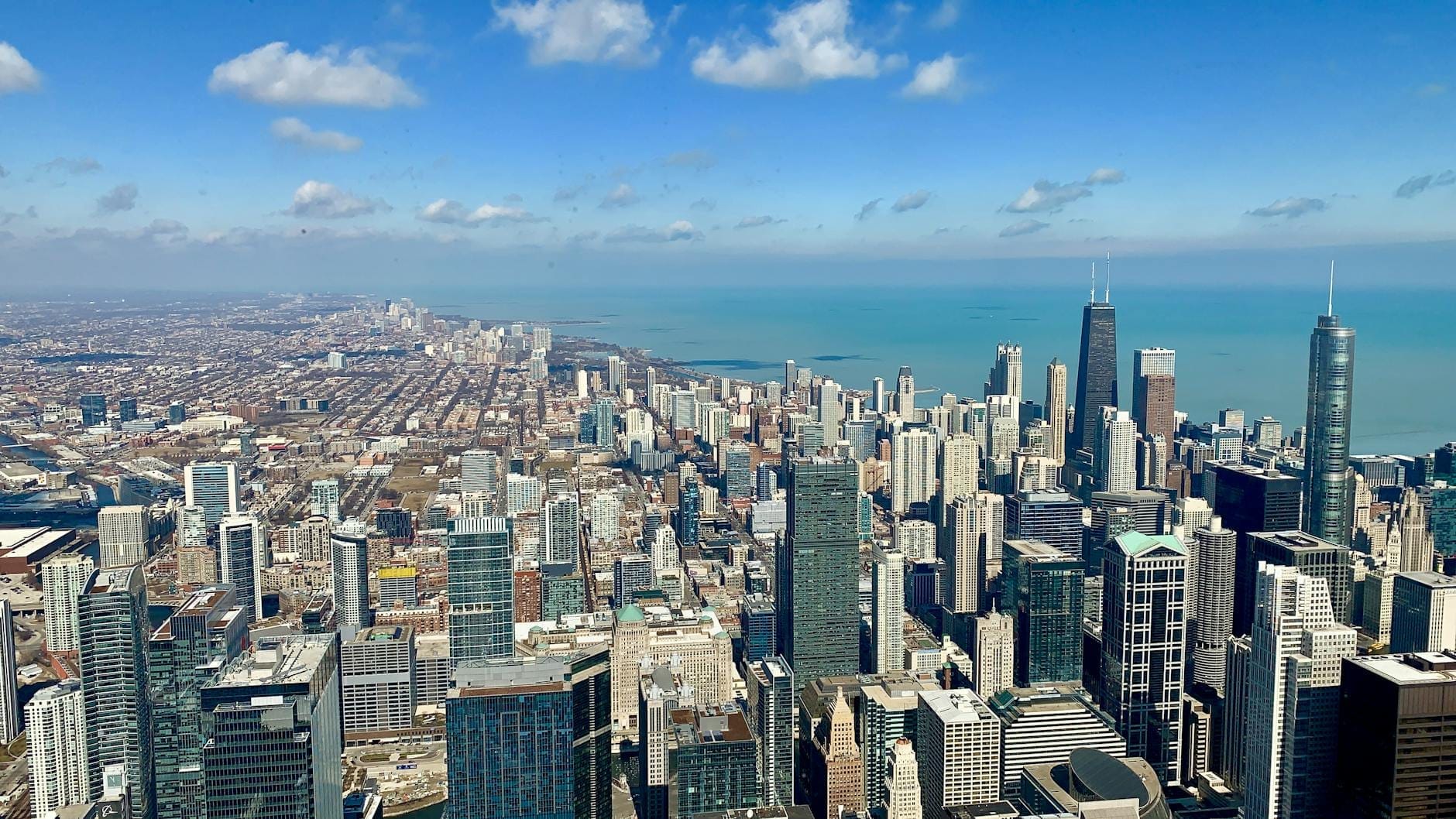
The deck itself sits approximately 1,000 feet above Michigan Avenue. From that height, the city's grid becomes visible as a single coherent system: the ruler-straight boulevards, the curve of the Chicago River, the lakefront stretching north and south, and on exceptionally clear days, the outlines of Indiana, Wisconsin, and Michigan. There are not many city views in the United States that put water, skyline, and grid into the same frame this cleanly.
💡 Local tip
Buy tickets online in advance at 360chicago.com. Walk-up pricing is higher, and weekend afternoons regularly sell out during peak tourist season (June through August).
The Experience: What You Actually See (and Feel)
The elevator ride up takes roughly 40 seconds. The transition from ground level to 94th floor is quick enough that the scale of it does not fully register until the doors open and the city is laid out below the windows. The observation floor wraps around all four sides of the building, which matters: you are not just looking south toward the Loop, you are also looking north along the lakeshore, east over Lake Michigan, and west into the flat interior of the country where the city dissolves into suburbs and then farmland.
Looking south on a clear afternoon, the entire skyline that defines Chicago in most photographs is visible from above. The Willis Tower, the Aon Center, and the cluster of towers in the Loop sit below and to the south. Looking north, the dense residential neighborhoods of Lincoln Park and Lakeview stretch along the shoreline, with Wrigley Field occasionally visible on game days when the stadium lights are on. The lake itself changes color significantly depending on the weather: deep blue in summer sun, grey-green under clouds, nearly black in winter.
Interactive touchscreens installed around the deck provide labels and historical context for landmarks in seven languages. They are genuinely useful for orientation, particularly for visitors who are new to Chicago and cannot yet identify the buildings by shape alone.
ℹ️ Good to know
360 CHICAGO is open daily from 9:00 AM to 11:00 PM. Hours are subject to change; confirm on the official site before your visit.
Tickets & tours
Hand-picked options from our booking partner. Prices are indicative; availability and final rates are confirmed when you complete your booking.
Highlights of Chicago private half-day tour with 360 observation deck
From 558 €Instant confirmationFree cancellation360 Chicago Observation Deck Tickets
From 26 €Instant confirmationFree cancellationBest of Chicago full-day tour
From 110 €Instant confirmationFree cancellationBig Bus tour of Chicago
From 0 €Instant confirmation
TILT: The Thrill Component
Marketed as Chicago's highest thrill ride, TILT is a moving platform on the 94th floor that slowly tilts visitors outward at an angle, so the window beneath your feet becomes your floor. The effect is less about speed or sudden drops and more about the slow, deliberate sensation of your body being angled over Michigan Avenue far below. It is worth noting that TILT is ticketed separately from general admission. If you are visiting with children or with people who have an aversion to heights, consider whether this add-on makes sense for your group.
The ride tends to draw short queues during slower weekday mornings. Weekend afternoons can mean a 20 to 30-minute wait at TILT itself even after you are on the floor. Factor this into your timing if the thrill component is a priority.
Best Time to Visit: Morning, Afternoon, or Sunset?
The time of day shapes the experience significantly. Early mornings on weekdays (before 11:00 AM) offer the smallest crowds and the clearest light for photography, particularly for views looking west and south. The light is soft, shadows are long, and you can take your time at the windows without people pressing around you.
Sunset is the most popular window for a reason. The sun drops behind the city to the west, casting orange and pink light across the grid and throwing long shadows between the towers. The sky over the lake turns colors that shift quickly. The Signature Lounge on the 96th floor, which once offered skyline views without observation-deck admission, has closed. If you want a drink with a view in this building, check current dining and bar options on-site rather than planning around the former lounge.
Night visits have their own appeal. The city grid lit from above is visually striking, and the crowds thin out after 9:00 PM. Winter evenings can be cold near the windows and the building itself can sway perceptibly in high winds, something some visitors find disorienting and others find fascinating.
⚠️ What to skip
On overcast or foggy days, views can be severely limited or completely obscured. Check the weather forecast before booking. A misty afternoon at 1,000 feet is mostly grey, not dramatic.
Getting There and Getting In
The building is located at 875 North Michigan Avenue, directly on the Magnificent Mile. The CTA Red Line Chicago station is approximately a 6-minute walk south along Michigan Avenue. The Red Line connects directly to downtown, O'Hare International Airport (Blue Line transfer at Clark/Lake), and neighborhoods to the north.
If you are staying along the Magnificent Mile or Streeterville, the building is likely walkable from your hotel. Ride-hail services (Uber and Lyft both operate in Chicago) can drop off at the building's entrance on Michigan Avenue. Parking in this corridor is expensive and generally not recommended for a short visit.
General admission starts from $29 USD, with TILT tickets and package combinations available at higher prices. Pricing is dynamic, meaning weekends and peak hours cost more. Booking in advance online consistently offers the best rate and skips the ground-floor queue.
Practical Details: What to Bring and Accessibility
Dress in layers. The observation floor is climate-controlled, but visitors who spend time near the large windows in winter will notice temperature variation. In summer, the air conditioning on the floor can be aggressive, so a light layer is worth having even in July.
Photography considerations: the windows at 360 CHICAGO are cleaned regularly and are generally clear, but reflections can be a persistent issue. Polarizing filters help. Pressing your camera lens directly against the glass eliminates most glare. Smartphone cameras with a wide-angle mode capture the full sweep of the view better than a standard focal length.
Access to the deck is via high-speed elevators with no stairs involved in the main visitor route. The floor itself is level and wide, making it accessible to visitors using wheelchairs or strollers. Visitors with specific mobility or sensory needs should contact 360 CHICAGO directly through the official website to confirm accommodations before arrival.
How It Compares to Skydeck Chicago
Chicago has two major observation decks worth comparing. Skydeck Chicago at Willis Tower sits higher at 1,353 feet and has the glass-floor Ledge boxes. 360 CHICAGO sits lower but offers a broader northward view along the lakeshore and the bar option that Skydeck does not provide. The two attract different crowds: Skydeck draws visitors focused on the height record and the glass floor, while 360 CHICAGO tends to attract a mix of tourists and locals who want a more relaxed experience with the option of a drink.
If you are comparing all of Chicago's high vantage points in one trip, the Chicago observation decks guide breaks down the differences between all major options, including free alternatives like the rooftop of the Chicago Cultural Center.
Who should skip this attraction: visitors who have already done Skydeck and are looking for a completely different experience may find the views conceptually similar. People who are severely acrophobic will not enjoy the TILT feature, though they can still visit the standard observation floor. Budget travelers should know that $29 plus per-person is a meaningful cost, and some of Chicago's outdoor viewpoints are free.
Insider Tips
- Visit on a weekday morning between 9:00 AM and 11:00 AM for the smallest crowds and best natural light. Weekend afternoons in summer are the most congested period.
- A former option in the same building, the Signature Lounge on the 96th floor, used to offer comparable views without an observation-deck admission ticket but is now closed; check current building dining and bar options if you are primarily after a drink with a view rather than a ticketed observatory experience.
- If you are visiting Chicago in winter, the deck is often far less crowded and the views can be extraordinary on clear cold days when visibility stretches well beyond the metro area. Dress warmly regardless of the interior temperature.
- Arrive within the first 30 minutes of opening (9:00 AM) if TILT is on your list. The TILT queue builds quickly once school groups and tour buses arrive, typically around 10:30 AM.
- The touchscreen displays are genuinely informative for landmark orientation. Spend a few minutes with them early in your visit before moving to the windows, particularly if you are not yet familiar with Chicago's skyline geography.
Who Is 360 CHICAGO Observation Deck For?
- First-time visitors to Chicago who want a full orientation of the city from above
- Couples looking for a sunset or evening experience with a bar option nearby
- Families with older children interested in the TILT ride or the interactive displays
- Photography enthusiasts seeking a clear north-facing view along the lakeshore
- Travelers with limited time who want the architectural overview that a guided boat tour provides, but faster
Nearby Attractions
Other things to see while in Magnificent Mile & Streeterville:
- American Writers Museum
Tucked on the second floor of 180 N. Michigan Avenue, the American Writers Museum makes a persuasive case that literature shaped the United States as much as any battlefield or boardroom. It's compact, thoughtfully curated, and rewards visitors who slow down.
- Centennial Wheel
Standing nearly 196 feet above the Lake Michigan shoreline, the Centennial Wheel at Navy Pier offers enclosed, climate-controlled gondola rides with some of the most expansive views of Chicago's skyline. Opened in 2016 to mark Navy Pier's 100th anniversary, it replaced a beloved predecessor and quickly became one of the city's most recognizable structures.
- Chicago Children's Museum
Perched inside Navy Pier on the lakefront, Chicago Children's Museum has been sparking curiosity in kids since 1982. With hands-on exhibits built for children under 10, it rewards an unhurried half-day visit. Here is exactly what to expect, when to go, and how to make the most of your time.
- Chicago Harbor Lighthouse
Built in 1893, the Chicago Harbor Lighthouse stands on the breakwater at the entrance to Chicago Harbor, just east of Navy Pier. It cannot be entered, but viewed from the shoreline or water, it offers one of Chicago's most quietly striking lakefront scenes.