Skydeck Chicago at Willis Tower: What to Expect Before You Go
Perched on the 103rd floor of Willis Tower, Skydeck Chicago puts you higher than almost any other major observation deck in the United States, with glass-floor Ledge balconies extending over the city grid far below. Here is everything you need to decide if it belongs on your itinerary.
Quick Facts
- Location
- 233 S Wacker Drive, The Loop, Chicago, IL
- Getting There
- Quincy (Brown/Orange/Pink/Purple lines) or Adams/Wabash (Brown, Green, Orange, Pink, and Purple lines) — both a short walk
- Time Needed
- 1 to 2 hours including queuing and The Ledge
- Cost
- General Admission from about US$30–35 (adults), US$24–30 (youth 3–11), free under 3. Expedited Entry from about US$55.
- Best for
- First-time visitors, architecture fans, families, clear-day panoramas
- Official website
- theskydeck.com
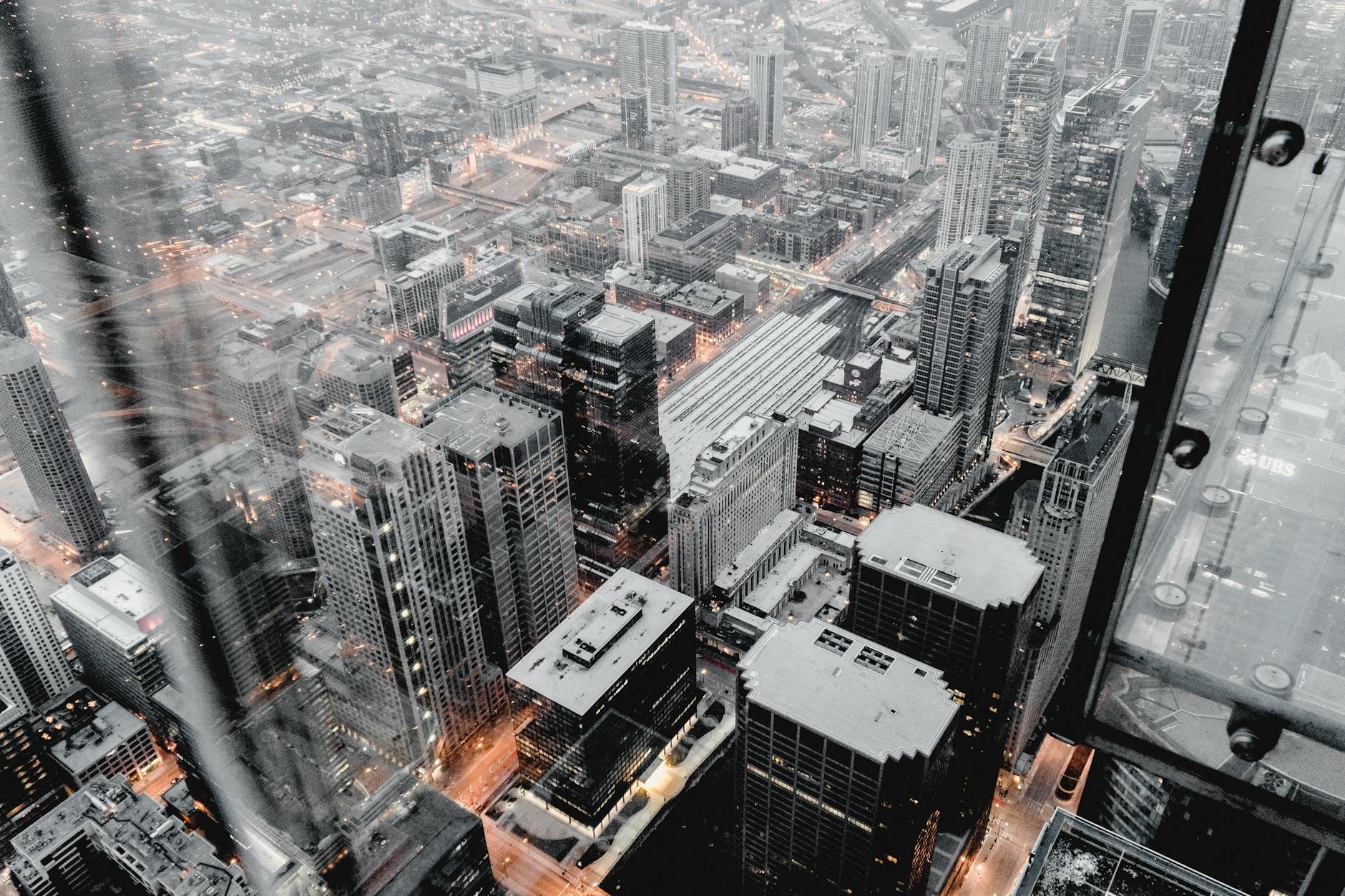
What Skydeck Chicago Actually Is
Skydeck Chicago at Willis Tower sits on the 103rd floor of the 110-story tower at 233 S Wacker Drive, roughly 1,353 feet (412 m) above the ground. That makes it one of the highest major observation decks in the United States. The tower itself opened in 1973 and held the title of world's tallest building for nearly 25 years, a record that shaped how Chicago saw itself during a pivotal decade of civic ambition.
The main draw beyond the panoramic floor-to-ceiling windows is The Ledge: four glass-floor balconies that extend 4.3 feet out from the building's facade, each roughly 4 feet deep, 10 feet wide, and 10 feet tall. The floor and walls are 1.5-inch laminated glass. When you step onto one, there is nothing between your feet and the street grid fourteen hundred feet below except transparent glass. For most visitors, that moment is the whole point of the trip.
💡 Local tip
Book tickets in advance on theskydeck.com to lock in the lowest available price and a specific entry window. Walk-up tickets are often more expensive and you may wait significantly longer during summer weekends.
The Building and Its Place in Chicago's Architectural Story
Willis Tower, formerly known as Sears Tower until 2009, was designed by Skidmore, Owings and Merrill (SOM) using a bundled-tube structural system, a solution that allowed the building to rise efficiently without requiring excessive steel. The nine interlocking tubes of varying heights give the tower its distinctive stepped silhouette, which reads clearly from almost any angle. That profile is as recognizable in Chicago's skyline as the Hancock's X-bracing to the north.
The building is a key reference point in any serious look at Chicago's architectural legacy. If you want broader context, the Chicago architecture guide covers the city's structural timeline from the 1871 fire through the modern supertall era, and helps frame why this tower matters beyond its height record.
The tower stands at the western edge of the Loop, so from the 103rd floor you look east across the entire downtown grid toward Lake Michigan, north along the river corridor toward the Magnificent Mile, south through the museum campus toward Hyde Park, and west into the residential neighborhoods that stretch uninterrupted toward the suburbs. On a clear day the view extends into Indiana, Michigan, and Wisconsin, and can reach up to 50 miles. On a hazy summer afternoon, the lake blends into the sky and the view compresses into layers of gray and silver.
Tickets & tours
Hand-picked options from our booking partner. Prices are indicative; availability and final rates are confirmed when you complete your booking.
Best of Chicago Guided tour with Skydeck and river cruise
From 136 €Instant confirmationFree cancellationGo City | Chicago All-Inclusive Pass
From 127 €Instant confirmationFree cancellationiFLY Chicago Lincoln Park indoor skydiving experience
From 126 €Instant confirmationFree cancellationiFLY Chicago Rosemont indoor skydiving tickets
From 117 €Instant confirmationFree cancellation
What the Visit Feels Like, Hour by Hour
Arriving at the Wacker Drive entrance on a busy Saturday morning, the lobby already has a queue forming before the elevator banks. The elevators are fast, covering the ascent in roughly 60 seconds, and the ascent includes a short film about the building's history projected on the cabin ceiling. Ears often pop once or twice on the way up.
The observation floor itself is wide and well-lit, with informational panels about what you can see in each direction and interactive displays about the building's construction. The Ledge balconies are positioned at intervals around the western and southern sides of the floor. Families with young children tend to hesitate at the threshold, then step out laughing or clutching the framing. Teenagers tend to go straight to the center of the glass and look down. Adults often do the same thing but with slightly less noise about it.
Midweek mornings, particularly Tuesdays and Wednesdays between opening and noon, are consistently the least crowded windows. Weekends in July and August are the peak of the peak, with queues for The Ledge itself adding 15 to 30 minutes beyond the main elevator wait. Winter visits, particularly on cold clear days in January or February, offer dramatically shorter queues and often the best horizontal visibility of the year, since low humidity and northwest winds after a cold front can push the view well past the Illinois state border.
ℹ️ Good to know
Evening access on select Thursday through Sunday nights is available for a separate ticketed dining experience, with typical late entries around 10:30 pm in summer and 9:30 pm in winter—check current times when booking. The city lit up at night reads completely differently from the daytime view, and queues are typically shorter than peak afternoon slots.
The Ledge: Managing Expectations Honestly
The Ledge is genuinely impressive as an engineering object and as an experience. But the glass scratches with use, and on busy days you will sometimes find yourself looking through a panel marked by previous visitors' shoes and handprints. Bring a lens cloth if you want clean photographs through the floor. The views looking straight down are better in the morning when the sun is still low and not backlighting the haze from the east.
People with a significant fear of heights should think carefully before booking. The Ledge is not optional in the sense that it can be avoided, but the main observation floor has solid railings and standard windows if you prefer not to step onto the glass. The experience of the floor-to-ceiling windows alone is vertiginous enough for most visitors who are mildly uncomfortable with heights.
⚠️ What to skip
Overcast days reduce the view substantially. Chicago's weather changes quickly; check the forecast the evening before and be flexible if possible. Cloud layers below 2,000 feet often mean you are looking at a white ceiling rather than the city.
Getting There and Practical Logistics
Willis Tower sits at the western edge of the Loop, making it straightforward to reach by CTA elevated train. The Quincy station (Brown, Orange, Pink, and Purple lines) is roughly a five-minute walk. The Adams/Wabash station (Brown, Green, Orange, Pink, and Purple lines) is slightly farther east. From either, the building's distinctive profile makes orientation easy. The official building entrance for Skydeck visitors is on the Wacker Drive side.
If you are combining the visit with other downtown stops, Cloud Gate in Millennium Park is about a 15-minute walk east, and the Chicago Architecture Center on the Riverwalk is similar. The Loop neighborhood repays a full half-day, especially if you combine the Skydeck with a walk along the Chicago Riverwalk.
Parking is available in the Willis Tower garage and in several nearby structures, but driving to the Loop adds cost and complexity that transit avoids easily. Rideshare drop-off on Wacker Drive works well outside of morning and evening rush hours, when traffic on that corridor can be slow.
General Admission typically starts around US$30–35 for adults and US$24–30 for youth ages 3 to 11; children under 3 enter free. Expedited Entry, which reduces queue time, typically starts around US$55. Prices are date-based and vary by demand, so early booking generally yields better rates. The Skydeck is also included in several city pass packages, which can offer savings if you are planning to visit multiple major attractions. Check whether the Chicago CityPASS covers current pricing before purchasing.
For a broader comparison of what Chicago's skyline looks like from different vantage points, the Chicago observation decks guide lays out the differences between Skydeck, 360 CHICAGO on the Hancock, and other elevated viewpoints so you can decide which suits your schedule and budget.
Photography Notes and What to Bring
The windows are cleaned regularly but will catch reflections if you press your lens directly against them. A lens hood or a flat piece of dark fabric held around the camera body eliminates most reflections. For The Ledge, shooting straight down through the floor glass works best with a wide-angle lens and a polarizing filter to cut glare. Smartphone cameras handle the panoramic views well in good light, but the glass panels do create autofocus confusion if you are shooting through them rather than at the view beyond.
Sunrise and the first two hours of morning light give the most dramatic directional shadows across the grid below. Late afternoon in summer, when the sun is still high enough to illuminate the full western expanse, is also strong. Overcast diffused light eliminates shadows entirely and flattens the visual depth of the city, which makes for less compelling photographs even if it looks fine to the naked eye.
There is a gift shop on the 103rd floor. Coats and bags can be carried up; there is no enforced weight limit on what you bring. Dress for the floor temperature, which is climate-controlled, but if you are visiting in winter, layers are wise since the building exterior is cold even if the interior is not.
Insider Tips
- Tuesday and Wednesday mornings, particularly in spring and autumn, consistently offer the shortest queues of the week. Arrive within the first 30 minutes of opening to walk straight onto The Ledge without waiting.
- Cold clear days following a northwest cold front in November through February often produce the longest-range visibility of the year, sometimes extending visibly into three states. The tradeoff is that the city below loses its summer color.
- The evening ticketed experience on select Thursday through Sunday nights provides a dramatically different view of the city and tends to attract a smaller, calmer crowd than the peak afternoon crush. Worth the specific reservation effort.
- If the view matters more to you than the glass floor, consider that 360 CHICAGO on the Hancock tower offers outdoor terrace access (with an additional charge) and a north-facing perspective that captures the lakefront differently. Skydeck's view is the stronger one for the full city grid, but the comparison is useful before you commit.
- The Skydeck is included in several bundled city attraction passes. If you are planning three or more major paid attractions in a single trip, check whether a pass reduces your total outlay before buying individual tickets.
Who Is Skydeck Chicago at Willis Tower For?
- First-time visitors to Chicago who want a full spatial orientation of the city's geography
- Families with children who can handle heights and will respond strongly to the glass-floor experience
- Architecture enthusiasts who want to understand the scale and logic of the city's skyline from above
- Photography travelers shooting on clear days, particularly in winter or early morning
- Anyone whose Chicago itinerary is built around landmark experiences rather than neighborhood exploration
Nearby Attractions
Other things to see while in The Loop:
- Art Institute of Chicago
One of the largest and most visited art museums in the United States, the Art Institute of Chicago anchors the eastern edge of the Loop with a collection of over 300,000 works spanning 5,000 years. From Georges Seurat's pointillist masterpiece to Grant Wood's American Gothic, the highlights alone demand the better part of a day.
- Buckingham Fountain
The Clarence Buckingham Memorial Fountain is one of the largest decorative fountains in the world, sitting at the heart of Grant Park since 1927. Free to visit during its seasonal run from spring through mid-October, it puts on hourly water displays and a nightly illuminated show that draws crowds from across the city.
- Chicago Architecture Center
Housed in Mies van der Rohe's One Illinois Center on the Chicago River, the Chicago Architecture Center packs nearly 10,000 square feet of exhibition space, a landmark scale model of the city, and access to some of the country's most informative architecture tours. It's the most comprehensive entry point into understanding what makes Chicago's skyline one of the world's most significant.
- Chicago Architecture Foundation River Cruise
The Chicago Architecture Center River Cruise aboard Chicago's First Lady is the most authoritative way to read the city's skyline. In 90 minutes, trained docents walk you through more than 40 landmark buildings across all three branches of the Chicago River, connecting architectural styles to the human decisions that shaped them.