Centennial Wheel at Navy Pier: Chicago's Lakefront Landmark from 196 Feet Up
Standing nearly 196 feet above the Lake Michigan shoreline, the Centennial Wheel at Navy Pier offers enclosed, climate-controlled gondola rides with some of the most expansive views of Chicago's skyline. Opened in 2016 to mark Navy Pier's 100th anniversary, it replaced a beloved predecessor and quickly became one of the city's most recognizable structures.
Quick Facts
- Location
- Navy Pier, 600 E Grand Ave, Chicago, IL 60611
- Getting There
- CTA buses serving Navy Pier from downtown; closest 'L' stop is Grand (Red Line), then a 15-min walk or bus east
- Time Needed
- 30–60 minutes for the ride; allow 2+ hours if combining with Navy Pier
- Cost
- Tickets from US$25; prices vary by date and ticket type — verify at navypier.org
- Best for
- Families, first-time visitors, couples at sunset, photography
- Official website
- navypier.org
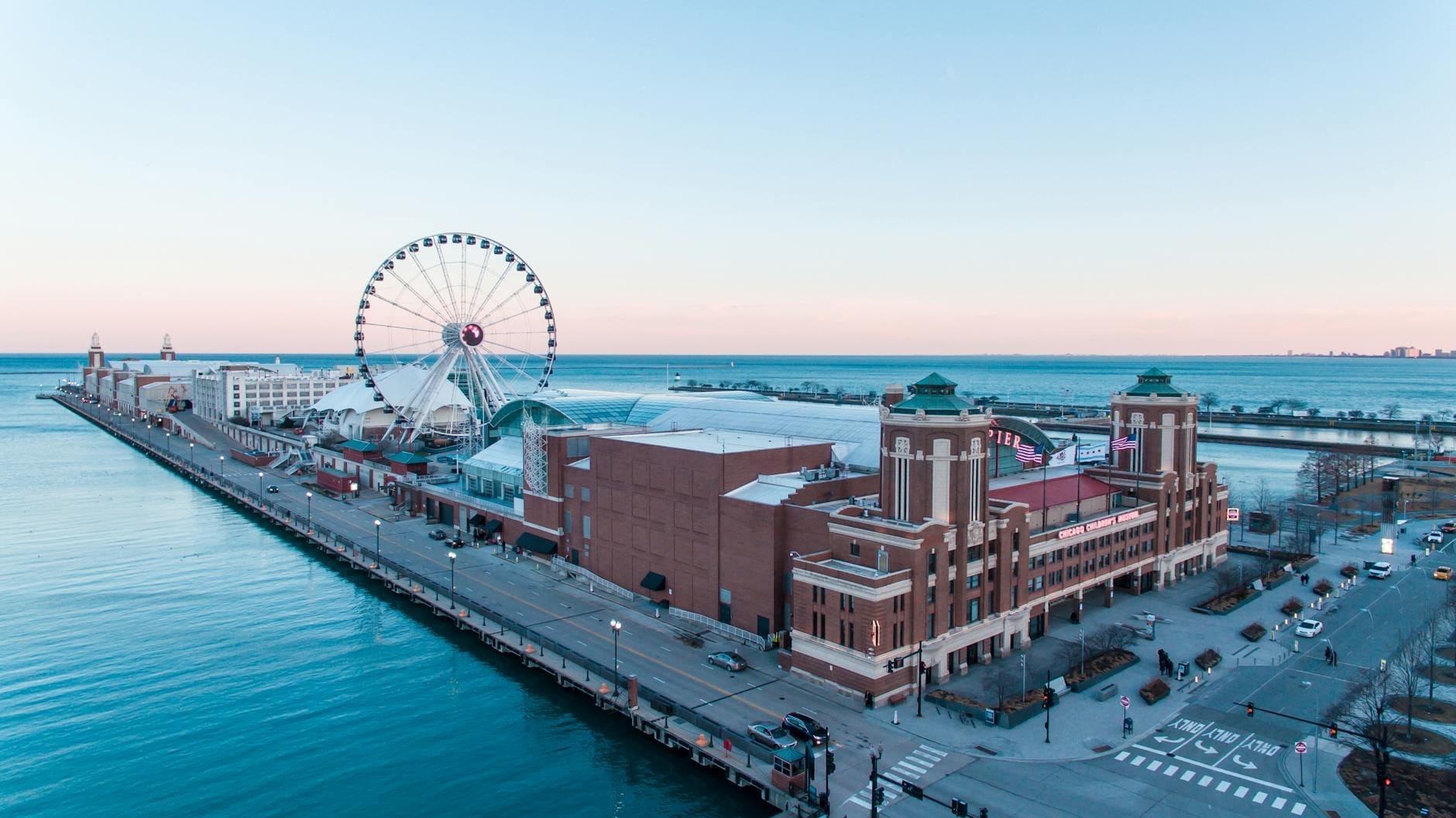
What the Centennial Wheel Actually Is
The Centennial Wheel is a giant observation Ferris wheel installed at Navy Pier, Chicago's iconic lakefront entertainment complex at 600 E Grand Ave. Reaching approximately 196 feet (about 60 meters) at its highest point, it holds 42 enclosed, climate-controlled gondolas, each designed to carry multiple riders in comfort through a full rotation that takes several minutes. This is not a thrill ride in the traditional sense; it is a slow, smooth ascent that rewards patience with a panorama you cannot replicate from street level.
The wheel debuted in May 2016, commissioned specifically to celebrate Navy Pier's centennial, which is how it earned its name. It replaced an earlier Ferris wheel that opened at the Pier on July 1, 1995, and stood roughly 50 feet shorter. The current version is taller, more modern, and built for year-round operation, something its predecessor could not always claim. The Centennial Wheel quickly became one of Navy Pier’s most popular attractions, a figure that speaks to its immediate popularity.
ℹ️ Good to know
The wheel runs year-round thanks to its enclosed gondolas. Typical hours run Tuesday through Sunday from around 10:00 or 11:00, closing between 21:00 and 22:00 depending on the day — but hours shift seasonally. Always confirm current hours at navypier.org before visiting.
The View: What You'll See from the Top
At the apex of each rotation, riders look west over the full sweep of the Chicago skyline: the Magnificent Mile's high-rise corridor, the cluster of towers in River North, and on a clear day, the faint outline of buildings stretching deep into the South Loop. The Willis Tower and One Prudential Plaza are unmistakable on the horizon. Turn your gaze north and you trace the shoreline's curve toward Lincoln Park and beyond; look east and south and you see nothing but Lake Michigan, the scale of which surprises many visitors who are experiencing it for the first time. The lake can look greenish-blue on bright afternoons, then shift to a dark, almost pewter gray under overcast skies.
Immediately below, the geometry of Navy Pier itself becomes clear: the long pier structure, the wave-shaped roof of the Festival Hall, and the small park areas at the pier's tip. The water surrounding the structure on three sides gives the view an almost aerial quality, similar to looking down from a low-altitude flight. On summer weekends, the lake dotted with sailboats and kayaks adds another layer to the scene.
💡 Local tip
Photography tip: bring a wide-angle lens or use your phone's ultra-wide mode. The gondola glass is generally clean but can catch glare in direct sunlight. Shooting toward the western skyline in the late afternoon, when the sun is behind you, produces sharper results than shooting into morning light.
Tickets & tours
Hand-picked options from our booking partner. Prices are indicative; availability and final rates are confirmed when you complete your booking.
Go City | Chicago All-Inclusive Pass
From 127 €Instant confirmationFree cancellationiFLY Chicago Lincoln Park indoor skydiving experience
From 126 €Instant confirmationFree cancellationiFLY Chicago Rosemont indoor skydiving tickets
From 117 €Instant confirmationFree cancellationChicago lakefront neighbourhood bike tour
From 18 €Instant confirmationFree cancellation
How the Experience Changes by Time of Day
Morning rides, roughly before noon, tend to be quieter. The light over the lake is softer, families with young children are just arriving, and the Pier itself has not yet reached peak foot traffic. The gondola glass fogs less easily in cooler morning air, and the queue is typically shorter. If your priority is a calm, contemplative ride with cleaner sightlines, midweek mornings are the sweet spot.
The late afternoon and early evening window, specifically the hour before and after sunset, is when the Centennial Wheel earns its most enthusiastic reviews. The downtown skyline catches the setting sun from the west, and the upper floors of Chicago's towers glow amber and copper before the city's LED lighting takes over. The transition from daylight to the fully illuminated nighttime skyline happens quickly and dramatically. Lines are longer during this window, especially on Friday and Saturday evenings, so budget an extra 20 to 30 minutes for the queue.
Night rides have their own appeal. Chicago's architectural lighting is thoughtful and dense, and from 196 feet you see the full grid of it spreading inland. The wheel itself is lit with color-changing LED strips visible from much of the surrounding lakefront area, which means you are also part of what others see from the ground. In winter, when the lakefront crowds thin dramatically and temperatures can drop well below freezing, the enclosed gondolas make a night ride genuinely comfortable in a way that open-air alternatives cannot match.
Historical Context: Navy Pier and Chicago's Ferris Wheel Legacy
Chicago has a particular relationship with the Ferris wheel. The original Ferris wheel, designed by George Washington Gale Ferris Jr., made its world debut at the 1893 World's Columbian Exposition in Jackson Park on Chicago's South Side. That structure stood 264 feet tall and carried 2,160 passengers per revolution. The Centennial Wheel does not match those dimensions, but it consciously echoes that legacy, and the connection is not subtle: Navy Pier frequently references the 1893 wheel in its own historical materials.
Navy Pier itself opened in 1916 as a municipal facility designed by Charles Sumner Frost, originally used for freight, passenger shipping, and later as a military training base during both World Wars. Its conversion into a public entertainment destination began in the 1970s and accelerated through the 1990s. The addition of the first Ferris wheel in 1995 marked a turning point in making the Pier a leisure anchor on the lakefront. The 2016 Centennial Wheel represents the latest chapter in that transformation.
If you want deeper context on Chicago's built environment and how Navy Pier fits into the broader story of the city's architectural ambitions, the Chicago Architecture Center on the Chicago Riverwalk offers excellent resources, tours, and exhibits covering exactly this kind of urban history.
Getting There and Practical Logistics
Navy Pier sits on the northern end of Streeterville, extending east into Lake Michigan from Grand Avenue. The most straightforward public transit option from downtown is taking a CTA bus east along Grand Avenue or Illinois Street. From the Grand station on the Red Line, several bus routes serve the Pier corridor, making it a short ride rather than a full walk. The walk itself from the Red Line station is manageable in good weather but runs about 15 minutes at a steady pace.
Rideshare drop-off points are available on the west end of the Pier. In summer, the Divvy bike-share network has stations nearby, and cycling along the lakefront trail to the Pier entrance is genuinely pleasant when the weather allows. Parking garages exist on the Pier property, but rates are significant, and given Chicago's traffic patterns around the lakefront on summer evenings and weekends, driving to this specific destination is rarely the most efficient choice.
Navy Pier's location puts it within easy reach of the Magnificent Mile and Streeterville neighborhoods, meaning you can combine a wheel ride with shopping, dining, or a walk along the lakefront without needing additional transit.
⚠️ What to skip
Weekend evenings in summer, particularly around major events at Navy Pier, can make the surrounding streets congested for both vehicles and pedestrians. If you are combining the wheel with dinner nearby, book your restaurant reservation in advance and arrive at the Pier earlier than you think necessary.
Weather, Seasons, and When to Go
The enclosed gondolas are the single most practical feature of the Centennial Wheel for visitors planning around Chicago's climate. Chicago winters are not mild: January mean temperatures hover around -3 degrees Celsius (about 27 degrees Fahrenheit), and lake-effect wind makes exposed lakefront areas feel significantly colder. The enclosed gondolas mean a winter ride is genuinely feasible and sometimes spectacular, with snow-covered park areas below and a city that looks austere and sharply defined in cold, clear air.
Summer, from June through August, is peak season. The lakefront is active with the North Avenue Beach crowd, Navy Pier fills with families and tour groups, and the Centennial Wheel lines are at their longest. July temperatures average around 24 degrees Celsius (75 degrees Fahrenheit) but can push higher, and thunderstorms in late afternoon are common. The wheel may suspend operations during lightning or severe wind conditions, so check weather forecasts if you are timing your visit precisely.
Late May through mid-June and September through early October offer a practical compromise: crowds are lighter than peak summer, weather is generally cooperative, and the lakefront has a less hectic atmosphere. For a full picture of timing your Chicago trip, the best time to visit Chicago guide covers seasonal trade-offs across the city's major attractions.
Accessibility and Family Considerations
The enclosed gondola design provides shelter from wind and rain, which matters particularly for visitors with young children or those who are sensitive to extreme temperatures. The climate-controlled cabins mean riders are not exposed to whatever is happening outside, making the experience more predictable and comfortable across age groups. For specific wheelchair boarding procedures and gondola dimensions, contacting Navy Pier directly before your visit is advisable, as the operator is best placed to confirm current boarding protocols.
For families planning a fuller day at Navy Pier, the Chicago Children's Museum is located on the Pier property and pairs naturally with a Centennial Wheel ride as part of a single outing.
Honest Assessment: Is It Worth the Price?
At a starting price of around US$20 per ticket, the Centennial Wheel is not cheap for what amounts to a single ride lasting several minutes. The view is genuinely impressive, but it is worth being clear-eyed: this is not a high-altitude observation deck. The 196-foot height is dramatic at ground level but modest compared to Skydeck Chicago at Willis Tower, which puts you at 1,353 feet, or 360 CHICAGO on the Hancock building. The Centennial Wheel's view is wide and lakefront-focused rather than truly aerial.
If your primary goal is a high-elevation citywide panorama, the Skydeck Chicago or 360 CHICAGO will deliver more altitude for a comparable or lower price. The Centennial Wheel earns its ticket price through the experience rather than the elevation: the slow rotation, the lakefront perspective that neither observation deck replicates, the seasonal lighting, and the simple pleasure of a Ferris wheel ride with a genuinely great backdrop. That combination works particularly well for first-time visitors, families, and anyone visiting at sunset.
ℹ️ Good to know
Who should consider skipping it: Visitors with limited time who are prioritizing art, architecture, or food. Solo travelers focused on efficiency. Anyone who has visited recently and found the view similar to what they remembered — the experience does not change dramatically from visit to visit.
Insider Tips
- Book tickets online in advance on busy summer weekends. Walk-up queues on Friday and Saturday evenings can stretch 30 to 45 minutes, and online pricing sometimes offers marginal savings over the gate.
- The western-facing gondola positions get the best sunset light over the skyline. You cannot choose your gondola, but if you are in a group, wait for a car that loads facing west when the queue allows.
- The Pier's outer walkway runs around both sides of the wheel boarding area. Before you ride, spend five minutes walking toward the Pier's east tip: the view back toward the skyline from the water's end sets up exactly what you are about to see from above and makes the ride more satisfying.
- On weekday mornings in spring or fall, the Pier's general footfall is low enough that you can walk onto the wheel with little to no wait. This is the most time-efficient window if you are combining the Pier with other stops.
- The wheel is lit with color-changing LEDs after dark and is visible from Grant Park, the lakefront trail, and the Museum Campus area to the south. If you want to photograph the wheel itself rather than from it, the eastern end of the Riverwalk and the shoreline near Maggie Daley Park offer clean sightlines from a distance.
Who Is Centennial Wheel For?
- First-time Chicago visitors who want an orientation to the city's lakefront geography
- Families with children who want a comfortable, weather-proof attraction at Navy Pier
- Couples planning a sunset or evening outing with a memorable skyline backdrop
- Photographers seeking a mid-altitude lakefront perspective not available from observation decks
- Winter visitors looking for a year-round outdoor experience that does not require braving the cold
Nearby Attractions
Other things to see while in Magnificent Mile & Streeterville:
- 360 CHICAGO Observation Deck
Perched on the 94th floor of 875 North Michigan Avenue, 360 CHICAGO delivers panoramic views stretching across the city grid, Lake Michigan, and on clear days, four states. With the TILT ride, interactive displays, and a full bar, it offers more than just a lookout.
- American Writers Museum
Tucked on the second floor of 180 N. Michigan Avenue, the American Writers Museum makes a persuasive case that literature shaped the United States as much as any battlefield or boardroom. It's compact, thoughtfully curated, and rewards visitors who slow down.
- Chicago Children's Museum
Perched inside Navy Pier on the lakefront, Chicago Children's Museum has been sparking curiosity in kids since 1982. With hands-on exhibits built for children under 10, it rewards an unhurried half-day visit. Here is exactly what to expect, when to go, and how to make the most of your time.
- Chicago Harbor Lighthouse
Built in 1893, the Chicago Harbor Lighthouse stands on the breakwater at the entrance to Chicago Harbor, just east of Navy Pier. It cannot be entered, but viewed from the shoreline or water, it offers one of Chicago's most quietly striking lakefront scenes.