Saatchi Gallery: Chelsea's Home for Provocative Contemporary Art
Housed in the grand Duke of York's Headquarters on King's Road, the Saatchi Gallery brings together some of the most challenging and talked-about contemporary art in London. Across 70,000 square feet of gallery space, it has welcomed over 10 million visitors since settling in Chelsea, rotating major exhibitions that range from emerging international artists to large-scale installations.
Quick Facts
- Location
- Duke of York's HQ, King's Road, Chelsea, London SW3 4RY
- Getting There
- Sloane Square (District & Circle lines), approx. 10-min walk
- Time Needed
- 1.5 to 3 hours depending on exhibition
- Cost
- Free for many shows; major ticketed exhibitions typically £15–£16. Verify on official site before visiting.
- Best for
- Contemporary art lovers, architecture admirers, cultural explorers
- Official website
- www.saatchigallery.com
What Is the Saatchi Gallery?
The Saatchi Gallery is one of London's most significant spaces for contemporary art, founded in 1985 by advertising and art collector Charles Saatchi. What started as a private showcase for his personal collection evolved into something far more public-facing: a gallery with a genuine appetite for risk, controversy, and discovery. In 2019, it became a registered charity (No. 1159977), cementing a shift from private collecting exercise to cultural institution with a broader public mission.
The gallery moved to its current home at the Duke of York's Headquarters on King's Road, Chelsea, where it now occupies roughly 70,000 square feet across multiple floors. That is a substantial footprint, enough to house exhibitions that include room-scale installations, painting cycles, sculpture gardens, and immersive digital works. Millions of visitors have passed through since the gallery settled here, making it one of the most-visited contemporary art venues in the country.
The Saatchi sits comfortably alongside Chelsea's other cultural draws. If you are building a full day in this part of London, the Chelsea Physic Garden is a short walk south, and the Kensington and Chelsea neighbourhood more broadly rewards extended exploration on foot.
The Building: Duke of York's Headquarters
The physical setting matters here. The Duke of York's Headquarters is a handsome early 19th-century military complex, built between 1801 and 1803 to designs attributed to John Sanders,. The building's neoclassical facade faces King's Road with a formal, almost ceremonial authority, and stepping through its entrance after the retail noise of the street outside produces a genuine shift in atmosphere.
Inside, the original structure has been adapted to create large, neutral gallery spaces that allow the art to do the work. Ceilings are high, natural light is carefully managed, and the scale of the rooms means even substantial installations rarely feel cramped. The contrast between the Georgian exterior and the contemporary work displayed inside is one of the quieter pleasures of a visit: Georgian cornice mouldings in the background, a ten-metre sculpture in the foreground.
💡 Local tip
Arrive via the King's Road entrance for the full effect of the facade. The courtyard area is often used for outdoor sculpture or event staging, and it is worth pausing there before heading inside.
Tickets & tours
Hand-picked options from our booking partner. Prices are indicative; availability and final rates are confirmed when you complete your booking.
Official National Gallery highlights 1-hour guided tour
From 22 €Instant confirmationFree cancellationLondon National Gallery Entrance Ticket and Self-Guided Tour
From 9 €Instant confirmationBritish Museum and National Gallery Semi-Private Guided Tour
From 125 €Instant confirmationFree cancellationLondon National Gallery Ticket and Self-Guided Tour in Spanish
From 15 €Instant confirmation
What the Exhibitions Are Actually Like
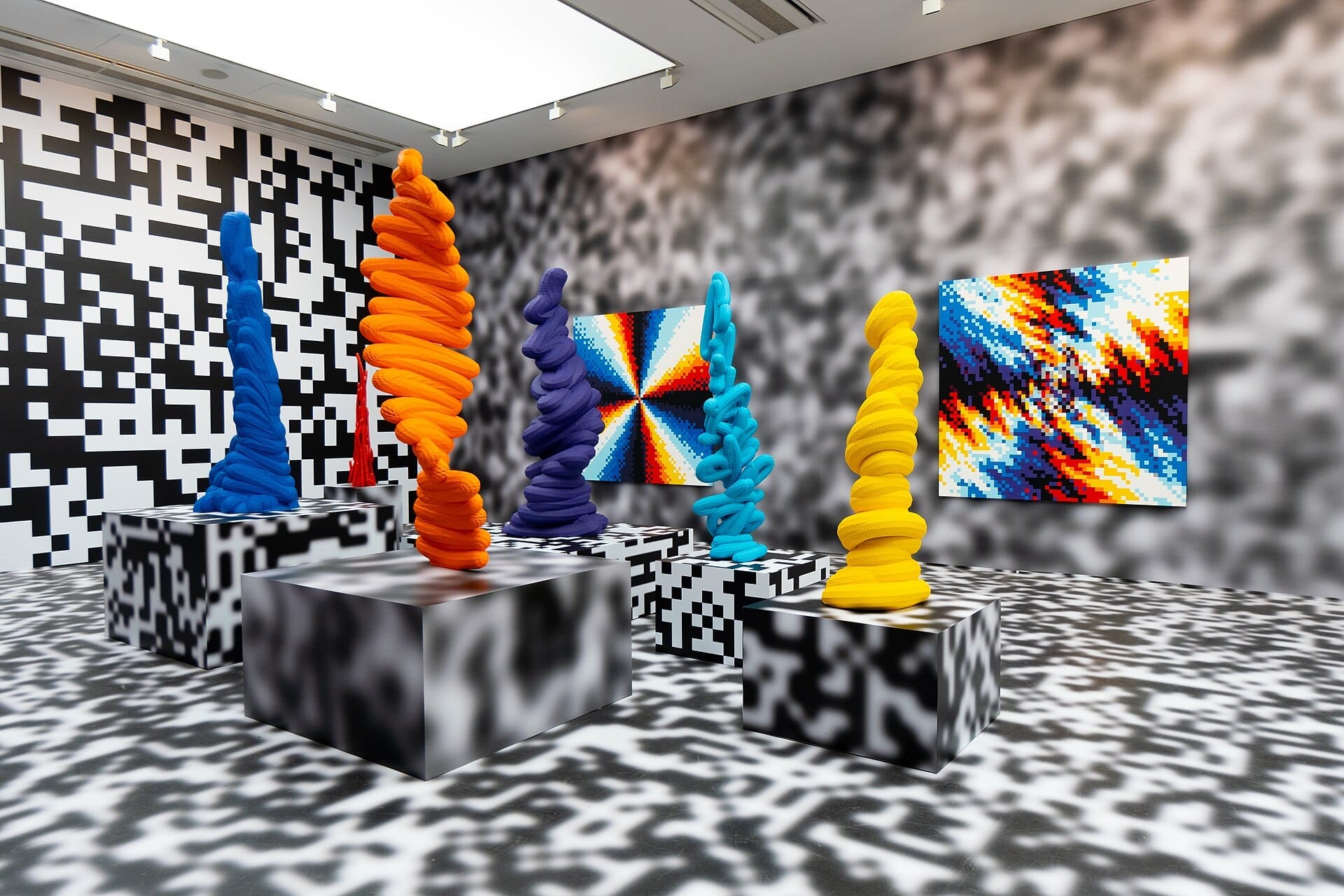
The Saatchi does not maintain a permanent collection on public display. This is a deliberate curatorial choice: the gallery rotates major exhibitions entirely, meaning that the experience changes significantly from visit to visit, and there is no single 'highlight' to tick off. What this also means is that the quality and subject matter vary considerably. Some shows are arresting; others divide opinion sharply. That is, largely, the point.
Major exhibitions here have spanned everything from large-scale retrospectives of international artists to curated group shows exploring digital identity, geopolitical conflict, or ecological anxiety. The gallery has a track record of giving significant platform to artists from outside the traditional Western art world, particularly from South and Southeast Asia, the Middle East, and Africa. Shows that generate controversy in the press tend to draw long queues.
For larger ticketed exhibitions, prices have run around £15–£16 (confirm current pricing on the official site before visiting). Many smaller or rotating shows remain free to enter, which makes the gallery worth checking even if you are on a tight budget. The programming calendar is updated regularly at saatchigallery.com.
If contemporary art is a priority on your London visit, the Saatchi pairs well with Tate Modern on the South Bank, which holds a permanent modern and contemporary collection, or the Serpentine Galleries in Hyde Park for a different curatorial sensibility.
Visiting by Time of Day
The gallery opens daily at 10:00 and closes at 18:00. Weekday mornings, particularly Tuesday to Thursday before noon, are the quietest times to visit. The large gallery spaces can feel properly contemplative then, with enough room to sit with a single work for several minutes without anyone crowding past. Weekend afternoons are the opposite: King's Road attracts shoppers and tourists throughout Saturday and Sunday, and the gallery absorbs that footfall. Queues for popular ticketed shows can form outside the King's Road entrance by mid-morning on weekends.
The ground-floor rooms typically get the most natural light during midday hours, while upper gallery spaces rely more on artificial lighting, which is generally well-calibrated for photographic work. If you are visiting primarily to photograph the art, note that flash is not permitted in most exhibitions, and some shows restrict photography entirely; check the specific exhibition rules at the door or on the gallery website.
⚠️ What to skip
On weekends during popular exhibitions, timed-entry tickets may sell out in advance. Book online before arriving to avoid disappointment, particularly for any major show listed on the gallery's ticketing page.
Getting There and Around
The most straightforward Tube route is from Sloane Square station, served by the District and Circle lines. From the station, it is a roughly 10-minute walk westward along King's Road. The address is Duke of York's HQ, King's Road, Chelsea, SW3 4RY. Buses along King's Road, including routes 11, 22, and 328, stop nearby, making it accessible from Chelsea Embankment, Victoria, or Fulham.
There is no dedicated parking at the gallery. King's Road has some on-street parking subject to restrictions, and nearby residential streets are largely permit-controlled. If you are travelling from central London, the Tube or bus is the significantly easier option. The gallery entrance is step-free, and the gallery has adapted its large spaces for wheelchair access; for specific accessibility requirements including lift access and assistance, the official visitor information page at saatchigallery.com maintains current details.
For a broader picture of navigating London's transport network, including the best ways to reach southwest and west London, the guide to getting around London covers routes, Oyster card tips, and day travel options in detail.
The Cafe, Shop, and Surrounding Area
The gallery has an onsite cafe and a bookshop focused on contemporary art publications, catalogues from past Saatchi shows, and design-forward gifts. The cafe is a reasonable option for a mid-visit break, and the courtyard seating, when weather allows, is a pleasant spot that feels removed from the King's Road bustle just outside the gates.
King's Road itself has changed considerably from its 1960s and 1970s heyday as London's fashion frontier, but it still offers good independent shops alongside the expected chains. The area immediately around the gallery, particularly the Duke of York Square development adjacent to the HQ, has a small farmers' and artisan market on Saturday mornings that is worth factoring into a weekend visit.
Chelsea and the broader Kensington neighbourhood contain some of London's most absorbing museums. The Victoria and Albert Museum and the Natural History Museum are both about a 20-minute walk or a short bus ride north, making them natural companions for a full day in this part of the city.
Worth Knowing: Is It Worth Your Time?
The Saatchi Gallery's value depends almost entirely on what is showing during your visit. Unlike institutions with permanent collections, there is no guaranteed anchor exhibit that justifies a trip regardless of timing. If the current show aligns with your interests, the gallery is among the most rewarding contemporary art experiences in London: the space is excellent, the scale is generous, and the programming tends to be ambitious.
That said, the gallery's curatorial track record has been uneven over the years, and the commercial dimension of Charles Saatchi's influence on the art world remains a subject of debate among critics. Visitors expecting a rigorous museum experience with extensive interpretive materials may find the wall text thinner than at publicly funded institutions. Those who prefer to encounter art without heavy curatorial framing tend to respond well to this.
Travellers with little interest in contemporary art, those bringing young children who need hands-on or interactive exhibits, or anyone working through a tight London itinerary focused on historical landmarks will find their time better spent elsewhere. The Saatchi is specific in what it offers and makes no apology for that.
Insider Tips
- Check the gallery's website for free exhibition periods before booking tickets. Many group shows and emerging-artist exhibitions carry no admission charge, and the quality can match or exceed ticketed shows.
- The Duke of York Square farmers' market operates on Saturday mornings directly adjacent to the gallery entrance. Arriving for the 10:00 opening on a Saturday means you can pick up food from the market, walk the gallery while it is still quiet, and be done before weekend crowds peak around noon.
- The gallery bookshop stocks exhibition catalogues from past Saatchi shows, some of which are now out of print and sell for significantly more elsewhere. If you are interested in any of the art you see, it is worth browsing the shelves before leaving.
- For photographing the building exterior, the best light falls on the King's Road facade in the morning. The symmetrical neoclassical frontage photographs cleanly without the harsh shadows that afternoon sun produces.
- If you are visiting London during a quieter period, the gallery sometimes runs evening or late-night events around exhibition openings. These are often free or low-cost and offer a more social, less formal way to engage with the work. Check the events calendar on the official site.
Who Is Saatchi Gallery For?
- Contemporary art enthusiasts who want a large, ambitious gallery outside the South Bank circuit
- Architecture admirers interested in how historic buildings are adapted for modern cultural use
- Travellers with a flexible itinerary who can time a visit around the current exhibition
- Visitors to Chelsea who want to balance a day of shopping and neighbourhood walking with a serious cultural stop
- Photographers and visual creatives drawn to large-scale installation and conceptual work
Nearby Attractions
Other things to see while in Kensington & Chelsea:
- Chelsea Physic Garden
Founded in 1673 by the Worshipful Society of Apothecaries, Chelsea Physic Garden is a four-acre walled enclosure in the heart of Chelsea containing over 4,500 medicinal, edible, and historically significant plants. It is the second-oldest botanic garden in Britain and one of the quietest places you will find in central London.
- The Design Museum
Housed in the dramatically restored former Commonwealth Institute building on Kensington High Street, the Design Museum is one of Europe's most respected institutions dedicated to design, architecture, fashion, and product innovation. Entry to the permanent collection is free, while rotating exhibitions draw on names from global creative culture.
- Harrods
Founded in 1849 and occupying over a million square feet in Knightsbridge, Harrods is as much a London spectacle as it is a shop. Whether you're browsing the Food Halls or shopping the designer floors, here's exactly what to expect.
- Hyde Park
Hyde Park is one of London's eight Royal Parks, covering 142 hectares in the heart of the city. Free to enter, open until midnight, and rich in history stretching back to a Tudor hunting ground, it rewards visitors who pace themselves and explore beyond the obvious.