Royal Park Rajapruek: Chiang Mai's Grand Botanical Garden
Sprawling across more than 200 acres at the foot of Doi Suthep mountain, Royal Park Rajapruek is a living monument to Thai botanical heritage and royal tradition. The park combines formal international gardens, a striking royal pavilion, and seasonal flower displays that shift with the calendar.
Quick Facts
- Location
- 334 Moo 3, Mae Hia Subdistrict, Mueang Chiang Mai District, Chiang Mai
- Getting There
- Songthaew or taxi from Nimman or Old City; no regular public city bus service directly into the park as of now. Roughly 20-30 min by road from central Chiang Mai.
- Time Needed
- 2.5 to 4 hours for a thorough visit; full day for garden enthusiasts
- Cost
- Approx. 200 THB foreign adults, 100 THB Thai adults; 150 THB foreign children, 70 THB Thai children (children under 1 m often free). Golf cart rental available inside for an additional fee.
- Best for
- Families, photography, botanical interest, cool-season outdoor walks
- Official website
- www.royalparkrajapruek.org
What Royal Park Rajapruek Actually Is
Royal Park Rajapruek was developed as the main site of the Royal Flora Ratchaphruek International Horticultural Exposition, held to honour King Bhumibol Adulyadej on the occasion of the 60th anniversary of his accession to the throne and his 80th birthday. After the exposition closed, the grounds were converted into a permanent public park, and it remains one of the most formally designed botanical spaces in northern Thailand.
The park is not a wild forest or a casual green space. It is a curated landscape: manicured lawn corridors, pavilions representing different Thai regions and roughly 30 foreign countries, a central royal hall, and dedicated themed gardens covering everything from ornamental cacti to native northern Thai orchids. The scale can be disorienting at first. A rough grid of paved paths connects the main zones, but the park is large enough that many first-time visitors underestimate how much walking is involved.
💡 Local tip
Pick up a physical map at the entrance gate. The signage inside the park is inconsistent in English, and the layout is not as intuitive as it appears on the overview boards.
The Royal Pavilion: The Park's Centrepiece
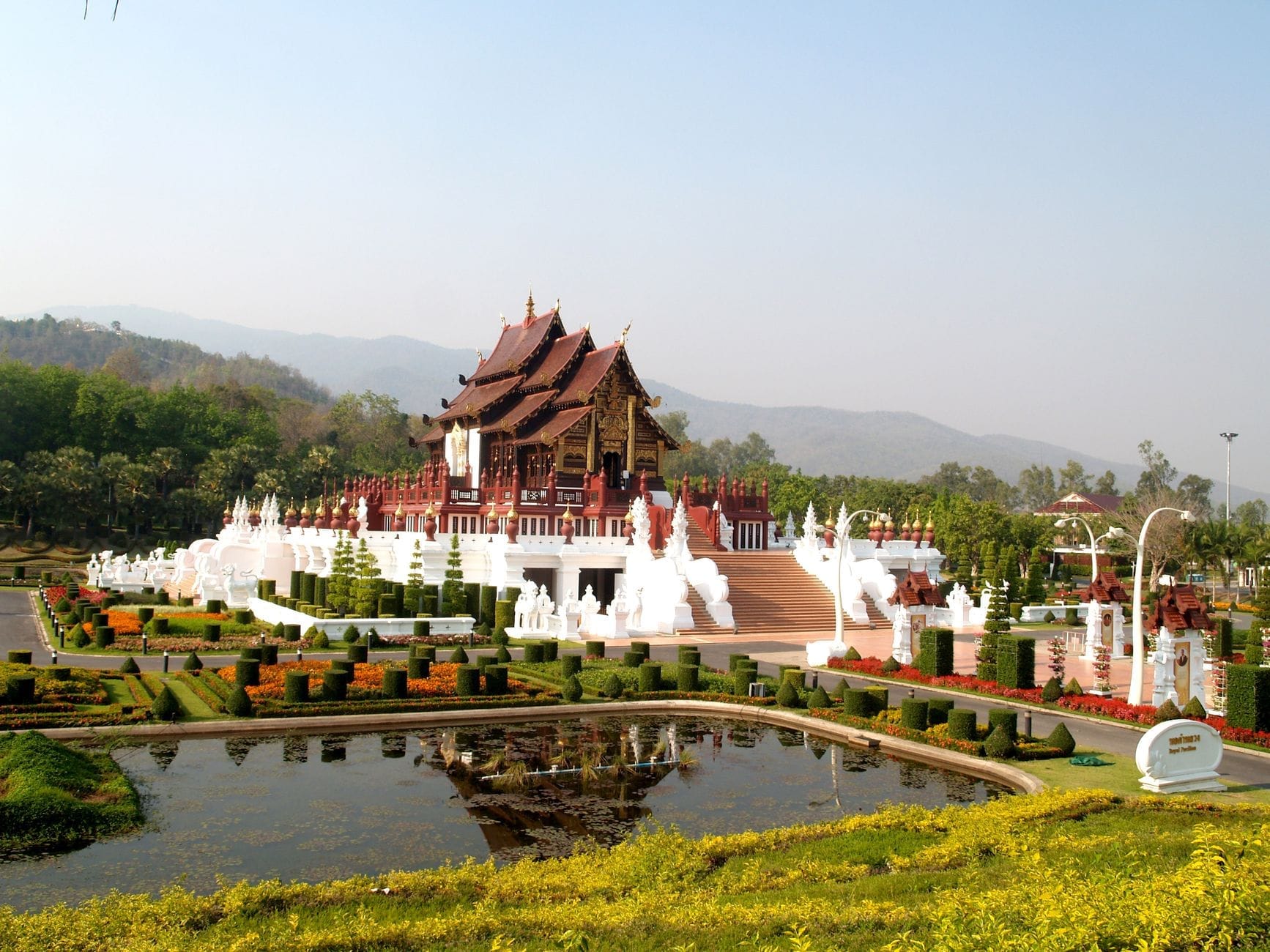
The Rajapruek Hall, the ornate pavilion at the heart of the park, is the structure most visitors photograph. Built in traditional Lanna style with gilded finials and multi-tiered rooflines, it sits elevated on a platform surrounded by a formal water garden. The reflection of the roof in the still water below makes for one of the more composed architectural photographs available anywhere in the Doi Suthep area.
Inside the hall, the exhibition covers the history of the site and the royal projects it commemorates. The air-conditioned interior is also a practical refuge on warmer days. Photography is permitted in most areas, though visitors are expected to dress respectfully: shoulders and knees covered, which is standard for royal sites in Thailand.
The pavilion area is best visited in the early morning, roughly 8:30 to 10:00, before tour groups arrive. Late afternoon light, particularly between 3:30 and 5:00, catches the gold detailing on the roof in a way that midday sun does not. If you are serious about photography in Chiang Mai, the Chiang Mai photography guide covers the best light windows for sites like this in detail.
Tickets & tours
Live prices and dates from our booking partner. If you book, we may earn a commission at no extra cost to you.
Doi Tung Royal Villa with sacred temple and gardens private transfer
From 172 €Instant confirmationFree cancellationDoi Inthanon National Park small group guided tour
From 34 €Instant confirmationFree cancellationHalf-day tour to admire elephants and enjoy Thai nature
From 48 €Instant confirmationFree cancellationChiang Mai - Chiang Dao Cave and 5 Hill Tribe villages
From 42 €Instant confirmationFree cancellation
The International Gardens and Themed Zones
One of the park's more unusual features is the ring of international garden pavilions contributed by participating countries during the original exposition. These range from a Dutch-style tulip garden to a Japanese garden with raked gravel and stone lanterns. Not all of the international sections are maintained to the same standard, and a few feel underused on quieter weekdays, but the contrast between a Moroccan-style courtyard and a patch of Thai hill-tribe plantings fifty metres away gives the park an oddly cosmopolitan atmosphere.
The Thai regional pavilions are generally more interesting for context. Each of Thailand's major regions has a dedicated structure showcasing local architectural styles, crafts, and plants associated with that area. The northern Thai section, predictably the strongest here given the location, features Lanna wooden architecture and plants native to the highlands, including several orchid varieties found at elevation on Doi Inthanon and Doi Suthep.
Botanically inclined visitors should not miss the cactus and succulent greenhouse near the park's southern section, or the herb and spice garden, which doubles as a quiet corner away from the main pavilion crowds. For those drawn to native Thai flora more broadly, the Queen Sirikit Botanic Garden on the slopes of Doi Suthep covers highland species in much greater depth, with conservatory greenhouses and a more scientific focus.
How the Park Changes Through the Day and Season
Royal Park Rajapruek opens at 08:00 and closes at 18:00 daily. The first hour after opening is by far the most peaceful. The air is cool, the light is soft, and the main paths hold almost no one. By 10:30 on weekends, the park fills with Thai families, school groups, and visitors arriving from hotels in the Nimman and Old City areas. Midday is the least pleasant time to be walking the open sections; the flat central gardens offer little shade and the temperature climbs noticeably.
The cool season, running roughly from mid-November through February, is when the park performs at its best. Flower displays are at their fullest, the air temperature is low enough to walk comfortably even in the middle of the day, and seasonal blooms are rotated through the formal beds with visible effort. The annual Winter Flower Festival, typically held in December and January, draws large crowds but also brings additional planting that makes the gardens look more spectacular than at any other time of year.
⚠️ What to skip
Visiting during the hot season (March to May) means intense midday heat with limited shade across the central sections. Bring water, sun protection, and consider renting a golf cart if you plan a full circuit.
The broader best time to visit Chiang Mai guide covers how each season affects outdoor attractions like this one, including the burning season smoke that can reduce air quality in March and April and reduce visibility across the mountain backdrop.
Getting There and Moving Around Inside
The park sits southwest of the city near the road toward Doi Suthep, roughly 10–12 kilometres from the Old City and about 7–8 kilometres from the Nimman area. There is no direct public bus. Most visitors arrive by red songthaew (shared taxi truck) negotiated at Nimman or Pratu Suan Dok, or by private taxi or Grab. Metered taxis and Grab rides from central Chiang Mai typically run 100 to 150 THB one way depending on traffic and starting point.
Inside the park, the distances add up quickly. The full perimeter circuit covers several kilometres, and the terrain is mostly flat but the paved paths get long in the sun. Golf carts seating four to six people can be rented at the main gate and at one or two interior stations, with a driver included. This is worth considering for families with young children or visitors with limited mobility. The cart routes cover the main zones but skip some of the smaller garden paths.
Wheelchairs are available for loan at the entrance, and the main paths are paved and accessible. The interior gardens vary in surface, with some gravel and grass sections, but the core circuit is manageable for most mobility levels.
Combining Royal Park Rajapruek with the Doi Suthep Area
The park's position on the Doi Suthep road makes it a natural stop on a half-day route that also takes in Wat Phra That Doi Suthep or the forest trail at Wat Pha Lat. The standard approach is to visit Royal Park Rajapruek in the morning, then continue up the mountain to Doi Suthep in the afternoon, using a rented songthaew for both stops.
For a full-day itinerary combining these sites with other northern highlights, the Chiang Mai 3-day itinerary outlines a practical routing that avoids doubling back.
ℹ️ Good to know
The park has a cafe and a small food court near the main entrance. The food is simple and fairly priced. There are no restaurants in the immediate surrounding area, so eat before you arrive or plan to use the on-site options.
Who Should Think Twice
Royal Park Rajapruek is not the right choice for visitors looking for a quick Chiang Mai tick. The park requires time, comfortable footwear, and some tolerance for open-air walking in variable weather. It is also primarily a landscape and architecture attraction: there is no wildlife, no dramatic viewpoint, and no cultural performance. Visitors expecting something on the scale of a Singapore-style botanic garden in terms of maintenance and signage may find some sections underwhelming.
Those on a tight schedule with only two or three days in Chiang Mai will likely find the time better spent at the temple circuit in the Old City or exploring the night markets and street food scene. But for visitors who have already seen the main landmarks and want to understand the quieter, more ceremonial side of northern Thai culture, the park makes a rewarding half-day.
Insider Tips
- Arrive at opening time (8:00) on a weekday. The park is at its most peaceful before 10:00, and the light across the water garden in front of the royal pavilion is at its best in the morning.
- The golf cart rental is worth it if you have children or want to do a full circuit without exhausting yourself. Ask the driver to stop at the less-visited international pavilion sections, which the carts often pass without comment.
- The cool season flower rotations mean the beds near the main axis change appearance every few weeks. If you visited once and the blooms looked sparse, a December or January return visit will look completely different.
- Bring more water than you think you need. The on-site cafe is near the entrance, not in the middle of the park, and refill points are sparse once you are in the outer garden sections.
- If you are combining this with Doi Suthep, negotiate your songthaew fare to cover both stops in one trip. Most drivers are accustomed to this route and will wait at the park for an agreed time.
Who Is Royal Park Rajapruek For?
- Families with children who need space to walk and explore without traffic
- Photography enthusiasts targeting Lanna royal architecture and formal garden compositions
- Visitors in the cool season (November to February) who want to see northern Thailand's flower culture at its peak
- Travellers who have covered the main temple circuit and want something quieter and less-visited
- Couples looking for a relaxed half-day in a green setting without committing to a full mountain hike
Nearby Attractions
Other things to see while in Doi Suthep & Mountain Area:
- Bhuphing Palace (Bhubing Palace)
Perched on the slopes of Doi Buak Ha in Doi Suthep-Pui National Park at around 1,000–1,200 metres elevation, Bhuphing Palace is the Thai royal family's official winter residence in the north. When the royals are not in residence, the palace grounds open to visitors who come for the manicured formal gardens, cool mountain air, and sweeping valley views across Chiang Mai.
- Chiang Mai Night Safari
Chiang Mai Night Safari is Thailand's largest night zoo, where open-air tram rides carry visitors through illuminated savannah and forest zones after dark. It's a family-oriented attraction with genuine nocturnal animal encounters, though the experience varies significantly depending on when you go and which zones you prioritize.
- Chiang Mai Zoo
Spread across forested hillside terrain at the base of Doi Suthep, Chiang Mai Zoo is one of northern Thailand's most visited family attractions. Home to giant pandas, big cats, reptiles, and hundreds of species, it offers a full day of wildlife encounters in a setting that feels closer to a nature park than a concrete enclosure.
- Doi Pui Hmong Village
Perched at over 1,200 meters on the slopes above Chiang Mai, Doi Pui Hmong Village offers a window into northern Thailand's Hmong hilltribe communities, complete with a small opium history museum, traditional textile vendors, and cool mountain air. It sits just beyond Wat Phra That Doi Suthep, making it a logical extension of any mountain day trip.
Planning a trip? Discover personalized activities with the Nomado app.