Queen Sirikit Botanic Garden: Chiang Mai's Finest Living Collection
Spread across roughly 2,600 acres of mountain terrain in Mae Rim, Queen Sirikit Botanic Garden is Thailand's national botanic garden and one of Southeast Asia's most significant plant conservation centres. From climate-controlled glasshouses to cloud forest trails and sweeping valley views, it rewards visitors who come with time to spare.
Quick Facts
- Location
- Mae Rim district, Chiang Mai Province, ~30 km northwest of the Old City
- Getting There
- Private car, taxi, or songthaew from central Chiang Mai; no direct public bus. Ride-hail apps (Grab) recommended
- Time Needed
- 3–5 hours for a thorough visit; half-day minimum recommended
- Cost
- Foreigners approx. 150 THB adults; reduced rates for children. Tram service available at additional cost
- Best for
- Nature lovers, plant enthusiasts, families, photographers, and anyone needing a break from city heat
- Official website
- www.qsbg.org
What Queen Sirikit Botanic Garden Actually Is
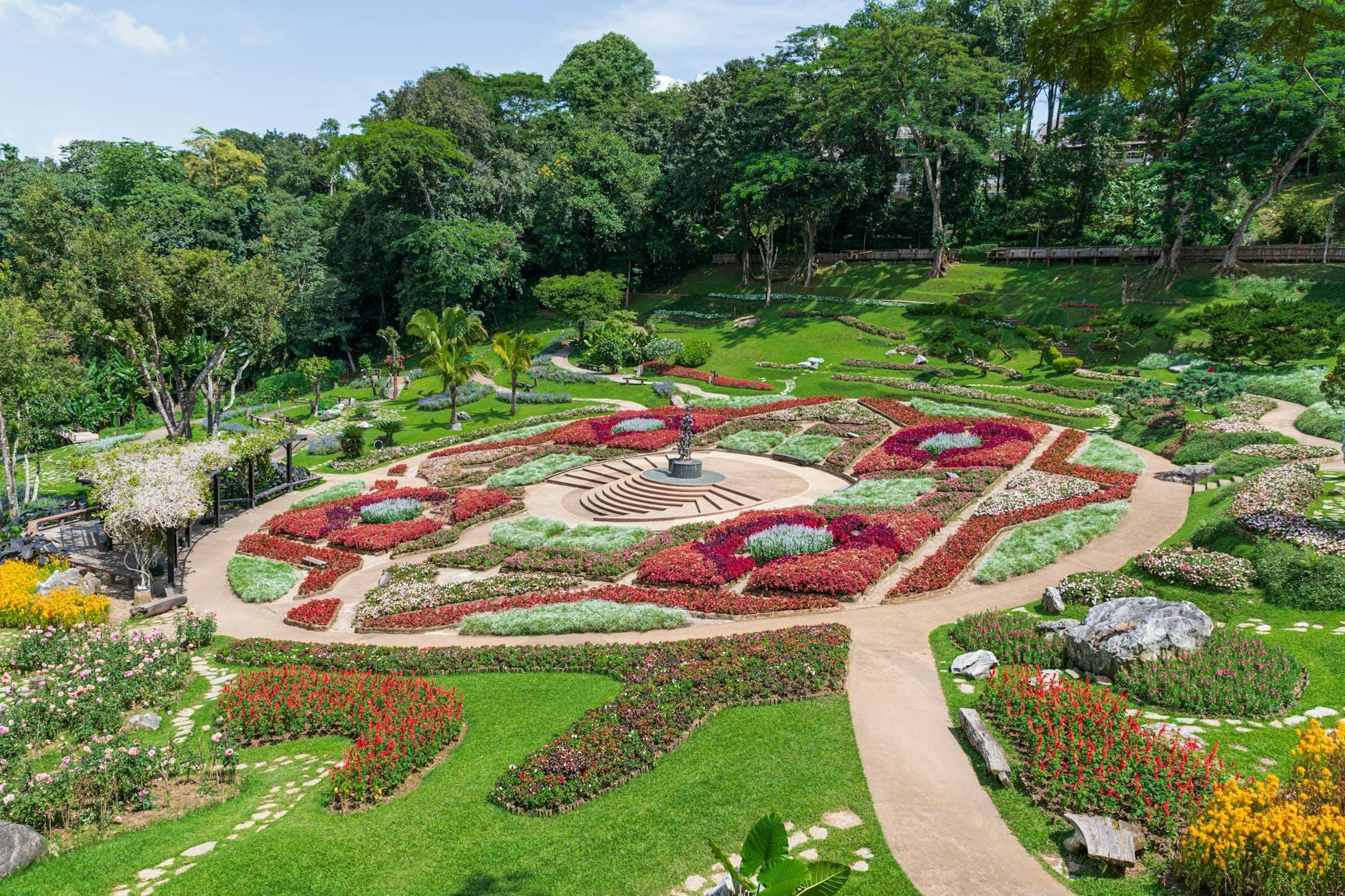
Queen Sirikit Botanic Garden is Thailand's national botanic garden, developed in the early 1990s and named in honour of Queen Sirikit on her 60th birthday. It sits in the Mae Rim valley, at the foot of Doi Suthep-Pui National Park, and occupies roughly 2,600 acres of protected mountain terrain. That scale matters: this is not a manicured city park with flowerbeds and benches. It is a working scientific institution that manages plant collections, runs seed banks, and conducts botanical research across a landscape that includes cloud forest, dry evergreen forest, and secondary growth.
For visitors, that dual identity as garden and research station means the experience is markedly different from, say, a European botanical garden. Some areas are immaculately landscaped; others feel genuinely wild. The trail network passes through dense forest where you hear insects and birds far more than other people. The glasshouses, meanwhile, bring together plants from across Thailand's ecological zones under one roof, including species that are threatened in the wild.
💡 Local tip
Arrive before 9:30 AM on weekdays. The morning light filters beautifully through the forest canopy, temperatures are cooler, and the glasshouses are quietest before group tours arrive around 10 AM.
The Glasshouses: Where the Detail Lives
The garden's indoor collection is split across several climate-controlled glasshouses, each dedicated to a different plant group or ecological zone. The Arid House holds succulents and cacti, including large specimen plants that take decades to reach their current size. The Fern House recreates a humid understorey environment, and the condensation on the glass, the smell of damp earth, and the layered texture of the fern fronds make it one of the more sensory spaces on the property.
The most impressive structure is the large display glasshouse, which stages rotating exhibitions of orchids, bromeliads, and rare tropical specimens. If you visit during an orchid event, the interior becomes extraordinarily dense with colour and scent. Outside those peak periods, the collection is still substantial, and the quieter atmosphere lets you spend time with individual plants without being jostled.
Photography inside the glasshouses is generally permitted for personal use. Natural light combined with the glass roof produces soft, diffused conditions that work well for close-up plant photography. A macro lens or the portrait mode on a smartphone will serve you well here.
Tickets & tours
Live prices and dates from our booking partner. If you book, we may earn a commission at no extra cost to you.
Private van with driver to Flower Gardens and Dantewada Waterfall Park
From 146 €Instant confirmationFree cancellationDoi Tung Royal Villa with sacred temple and gardens private transfer
From 172 €Instant confirmationFree cancellationDoi Inthanon National Park small group guided tour
From 34 €Instant confirmationFree cancellationHalf-day tour to admire elephants and enjoy Thai nature
From 48 €Instant confirmationFree cancellation
Trails, Forest, and the Canopy Walkway
The outdoor trail network is where the garden earns its half-day recommendation. Several signed routes wind through the mountain forest, ranging from short paved loops near the main buildings to longer unpaved tracks that climb into denser vegetation. Trail conditions vary by season: during the rainy season (roughly June to October), paths become slippery and some lower sections may flood briefly after heavy downpours. Waterproof shoes or trail sandals with grip are worth wearing year-round.
The canopy walkway is a steel suspension structure elevated above the forest floor. It sways gently underfoot and gives a perspective on the forest canopy that ground-level trails cannot offer. From up here, the Mae Rim valley opens out below you on clear days, and you can identify the layered structure of the forest: emergent trees pushing above the canopy, the mid-storey of smaller species, and the dense green floor below. Early morning visitors sometimes spot birds of prey circling the ridgeline.
⚠️ What to skip
The canopy walkway has a weight limit and may close during high winds or thunderstorms. Check at the main gate on arrival, especially between June and September.
For families with young children, the paved inner loop near the glasshouses and the open garden terraces are manageable and interesting without requiring long walks on uneven ground. The tram service, available for an additional fee, covers the main sites and suits visitors with limited mobility or those visiting on very hot afternoons when walking the full distance becomes tiring.
How the Experience Changes Through the Day
Morning visits, roughly 8:30 to 10:30 AM, offer the coolest air, the best light for photography, and the most active wildlife. The forest trails smell of dew and leaf litter. Birdsong is loudest in this window, and the glasshouses are empty enough that you can move at your own pace. Weekday mornings are the calmest time of the week.
By mid-morning, school groups and tour buses begin arriving, particularly on weekends and Thai public holidays. The glasshouses become crowded and the inner garden fills up. If you are visiting on a weekend, use the morning hours for the glasshouses and retreat to the forest trails after 11 AM, when most groups stay near the main buildings.
Afternoon visits are possible but the heat between noon and 3 PM makes extended walking uncomfortable, particularly between March and May. The garden closes at 5 PM, and the last entry is typically 4 PM, so an afternoon visit needs to be well-timed. Late afternoon, from around 3:30 PM onward, brings lower temperatures and golden light on the open terrace areas.
Historical and Scientific Context
The garden was developed as part of Thailand's broader conservation response to rapid deforestation and biodiversity loss in the northern highlands. The Royal Botanic Gardens, Kew in London provided technical guidance in the early development phase, and the garden maintains international partnerships for plant conservation research. Its seed bank stores genetic material from hundreds of Thai plant species, including those that no longer survive in viable wild populations.
The site's location within the catchment area of Doi Suthep-Pui National Park is not accidental. The garden functions as a buffer zone and ecological corridor, and the plant collections include species native to this specific mountain range. That connection to the surrounding landscape is something you feel on the longer trails, where the transition from managed garden to natural forest is gradual rather than abrupt.
For context on the broader northern Thailand landscape, the northern Thailand travel guide covers how the Mae Rim valley and Doi Suthep range fit into the region's ecology and travel circuit.
Getting There and Practical Logistics
The garden is located on Highway 1096, approximately 12–13 km from the Mae Rim junction on Route 107. There is no direct public bus from central Chiang Mai. The most practical options are a Grab car (approximately 200 to 300 THB one-way from the Old City), a hired songthaew negotiated in advance, or a private car rental. If you are combining the garden with other Mae Rim attractions, a full-day car rental makes the logistics considerably simpler.
Mae Rim is also home to several other outdoor attractions. The Mae Sa Waterfall is about 6 km further along the same road and can be combined into a half-day loop from Chiang Mai. If you are planning a full day out of the city, the day trips from Chiang Mai guide outlines how to structure routes into this area.
The main entrance is clearly signed. Parking is free and spacious. At the gate, foreign visitors pay a separate entrance fee from Thai nationals; the rate for adults has recently been around 150 THB, though this is subject to change and it is worth confirming on arrival. A tram circuit departs from near the visitor centre at intervals and covers the main sites; the fee is collected separately.
ℹ️ Good to know
There is a café and restaurant near the visitor centre serving Thai food and drinks. The menu is modest and the food is decent, though not exceptional. Bring water for the trails; refill stations are limited once you move away from the main buildings.
Photography Conditions and What to Expect
Queen Sirikit Botanic Garden is one of the more photogenic locations in the Chiang Mai area, though it rewards patience more than quick visits. The glasshouses, forest canopy, and mountain valley views each suit different times of day. The canopy walkway at golden hour, when the light cuts low through the trees, produces particularly strong images, though you need to plan your timing carefully since the garden closes at 5 PM.
Photographers looking to develop a systematic approach to Chiang Mai's natural and cultural sites will find the Chiang Mai photography guide useful for planning the sequence of locations across a multi-day trip.
During Thailand's burning season, typically February through April, smoke haze from agricultural burning in the valleys and across the border can significantly reduce visibility from elevated viewpoints within the garden. On clear days the valley view from the upper trails is genuinely impressive. On hazy days it is flat and featureless. Checking the AQI before you visit is practical advice, not overcaution.
Insider Tips
- The fern house smells strongly of damp earth and humidity; if you are sensitive to that, it is best visited briefly and early before the air becomes stale later in the day.
- The garden's plant labels are detailed and include Thai, English, and Latin names. If you are seriously interested in botany, bring a notebook; the labelling quality is well above average for the region.
- On weekday mornings between November and February, you may have entire trail sections to yourself. This is not a crowded attraction by default, but Thai school holidays and public holidays change that dramatically.
- The tram is worth taking on your first loop to orientate yourself; after that, walking the trails gives you far more access to the quieter forested sections the tram does not reach.
- If the burning season has pushed AQI above 150, skip the viewpoint trails and focus entirely on the glasshouses and indoor areas, where the air quality is controlled and the visit remains fully worthwhile.
Who Is Queen Sirikit Botanic Garden For?
- Plant and botany enthusiasts who want to see documented tropical and subtropical species in ecological context
- Families with older children (8+) who can handle light trail walking in a structured, safe outdoor environment
- Photographers targeting forest interiors, macro plant detail, and mountain valley landscapes
- Visitors who want a full half-day of nature outside the city without committing to a full mountain hike
- Travellers on longer Chiang Mai itineraries who have already covered the main temples and want something different
Nearby Attractions
Other things to see while in Mae Rim Valley:
- Elephant Nature Park
Elephant Nature Park in Mae Taeng is widely regarded as the gold standard for ethical elephant tourism in Thailand. Visitors walk alongside rescued elephants, observe natural herd behavior, and support a conservation model that has influenced sanctuaries across Southeast Asia.
- Flight of the Gibbon Zipline
Flight of the Gibbon is Chiang Mai's longest-running zipline operation, sending riders through the forest canopy above Mae Kampong in Mae On district on a network of platforms, cables, and sky bridges. It combines genuine treetop thrills with a conservation story centered on gibbon rescue and rehabilitation.
- Mae Kampong Village
Tucked into a forested valley about 50km east of Chiang Mai, Mae Kampong is a highland village famous for its miang fermented tea gardens, gushing waterfall, and stilted wooden guesthouses above a stream. It rewards visitors who linger past the lunch rush with cooler air, birdsong, and a glimpse of genuine Northern Thai community life.
- Mae Sa Waterfall
Mae Sa Waterfall, located in Mae Rim's lush valley about 25–30 km northwest of Chiang Mai, drops through 8–10 distinct tiers across a forested national park. It's one of the most rewarding natural escapes near the city, particularly after the rains fill the cascades to their full volume.
Planning a trip? Discover personalized activities with the Nomado app.