Mae Kampong Village: Chiang Mai's Best Mountain Escape
Tucked into a forested valley about 50km east of Chiang Mai, Mae Kampong is a highland village famous for its miang fermented tea gardens, gushing waterfall, and stilted wooden guesthouses above a stream. It rewards visitors who linger past the lunch rush with cooler air, birdsong, and a glimpse of genuine Northern Thai community life.
Quick Facts
- Location
- Mae On District, Chiang Mai Province, approx. 50km east of Chiang Mai city
- Getting There
- Private car or motorbike via Route 1317; no direct public bus. Songthaews from Chiang Mai's Muang Mai Market area can get you to Ban Mae On, then a further 14km up the mountain
- Time Needed
- 3–5 hours for a day trip; overnight stay recommended to fully appreciate the village
- Cost
- Free to enter the village; small fees for specific guesthouses or home-stays. Refreshments and miang tea tastings from around 50–100 THB
- Best for
- Nature lovers, photographers, couples, anyone wanting a cool mountain retreat from city heat
What Mae Kampong Actually Is
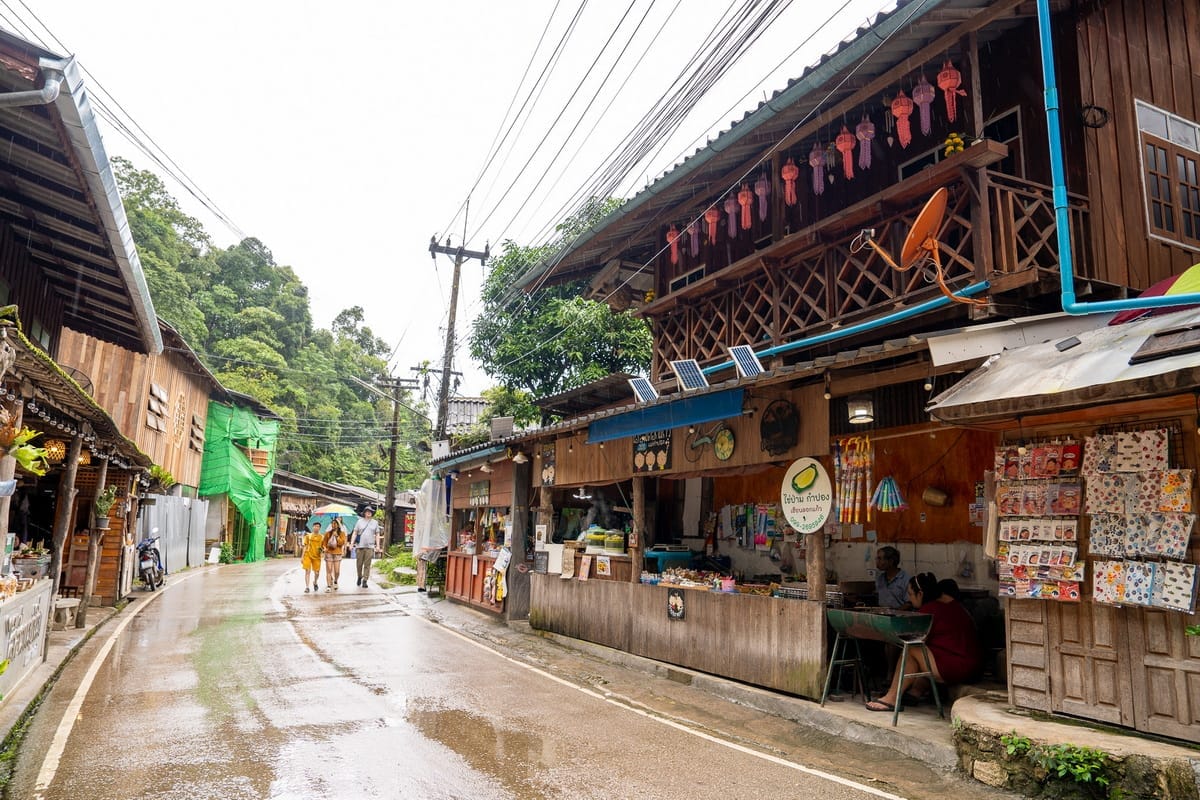
Mae Kampong Village is a small Northern Thai community sitting at roughly 1,300 metres elevation in the forested hills of Mae On District. The village is threaded along a fast-running stream, and most of its traditional wooden houses sit on stilts above the water. It became well-known to Thai travelers long before international tourists discovered it, largely because of its association with miang — fermented tea leaves that have been cultivated in the surrounding forests for generations.
Despite growing popularity, Mae Kampong has retained something real. The community runs its own homestay network, the miang gardens are still actively farmed, and chickens still cross the single paved lane that serves as the village's main street. It is not a theme park or a reconstructed 'cultural village.' What you get is a functioning hill community that has chosen to welcome visitors on its own terms.
ℹ️ Good to know
Mae Kampong sits about 50km from central Chiang Mai but the final 14km up Route 1317 is a winding mountain road. Budget at least 1.5 hours each way from the old city, and factor in that the road can be slippery after rain.
Getting There: Your Realistic Options
The most practical way to reach Mae Kampong is by rented motorbike or private car. From Chiang Mai, take the superhighway east, then follow signs toward Ban Mae On (Route 1317). The tarmac road climbs steadily through coffee and tea plantations before delivering you into the village. Parking is available at the trailhead near the waterfall and at a small area near the village entrance.
Hiring a red songthaew (shared taxi-truck) from Chiang Mai is possible but requires negotiation. Songthaews to Ban Mae On depart from near Warorot Market in the city, but the final 14km mountain stretch has no regular public transport. Most visitors continuing to the village from Ban Mae On either hitch a ride with locals or arrange a pickup in advance through their guesthouse.
For trip-planning context, the getting around Chiang Mai guide covers renting motorbikes and negotiating songthaew prices in detail, which is useful if this is your first time navigating the area independently.
⚠️ What to skip
The mountain road to Mae Kampong is narrow and has sharp curves. Inexperienced riders should think carefully before taking it by motorbike, especially after rain when the road becomes very slick. An automatic scooter is manageable for confident riders; a larger bike handles it more comfortably.
Tickets & tours
Live prices and dates from our booking partner. If you book, we may earn a commission at no extra cost to you.
Mae Kampong village full-day trip with private transfer
From 132 €Instant confirmationFree cancellationChiang Mai - Chiang Dao Cave and 5 Hill Tribe villages
From 42 €Instant confirmationFree cancellationHalf-day tour to Doi Suthep and White Hmong Hill Village
From 146 €Instant confirmationFree cancellationPrivate Mae Hong Son highlights car tour from Pai
From 175 €Instant confirmationFree cancellation
The Village on Foot: What You Will Actually See
Mae Kampong is compact. A walking loop from the car park to the waterfall, through the village core, and back takes around 45 minutes at a relaxed pace. The trail up to Mor Pha Waterfall (also spelled Mae Kampong Waterfall) begins near the village entrance and climbs through dense forest for about 10–15 minutes. The falls are multi-tiered, dropping into a clear pool shaded by old-growth trees. On weekday mornings, you may have them almost to yourself.
The village lane itself is lined with wooden shophouses selling miang tea packages, locally grown coffee, and basic snacks. Several homes double as small tea houses where you can sit on a deck above the stream and order a pot of miang tea, whose flavor sits somewhere between pickled greens and an earthy oolong. It is an acquired taste but the experience of drinking it while watching the water rush below the floorboards is reason enough to try it.
Small signboards around the village identify historic homes and community gardens. The homestay houses are mostly in the traditional Northern Thai style: dark teak-coloured wood, corrugated roofs, and long verandas facing the stream. Some look genuinely old; the creek noise is constant throughout the village, a low roar that gets louder after rain.
Timing Your Visit: Morning vs Afternoon vs Overnight
Mae Kampong sees its heaviest traffic on weekend afternoons, particularly between 11am and 2pm, when day-trippers from Chiang Mai arrive for lunch and a quick look at the waterfall. The village lane can feel crowded during this window, with cars squeezing past pedestrians and the small cafes filled beyond their natural capacity.
Arriving before 9am on a weekday gives you the village in its quieter state. The morning light through the forest canopy is striking, mist often lingers at the upper end of the valley, and the tea-house owners are just setting up. The walk to the waterfall is genuinely peaceful at this hour.
Staying overnight changes the experience entirely. By around 4pm, the day-trip crowd thins and the village settles back into its own rhythm. Evenings are cool even in the hot season, dropping to around 15–18°C in winter months. A few homestays serve dinner for guests and the sound of the stream at night, with no road traffic, is one of the better arguments for lingering.
💡 Local tip
Book any homestay well in advance for weekends and Thai public holidays. The village has a limited number of beds and fills up quickly for the cooler season from November through February.
The Miang Tea Culture: What It Means Here
Miang is not a tourist gimmick. Fermented tea leaf chewing has been practiced across Northern Thailand and parts of Myanmar and Laos for centuries, predating the popularity of brewed tea. In Mae Kampong, the old-growth Camellia sinensis trees that produce the leaves for miang are part of the forest itself rather than planted in rows. Villagers harvest the leaves by hand, ferment them wrapped in banana leaves, and sell the resulting product both locally and to buyers in Chiang Mai.
Several village households offer informal demonstrations of the miang-making process for visitors who ask or book in advance. Even if you have no interest in tasting fermented tea, the forest gardens where the trees grow are worth walking through. They are quieter than the main village path and have the feel of old forest rather than agricultural land.
Mae Kampong's tea culture connects to the broader craft and agricultural heritage of the surrounding hills. If you are interested in Northern Thai material culture more widely, the Lanna Folklife Museum in central Chiang Mai provides excellent historical context before or after a village visit.
Photography, Weather, and Practical Realities
Mae Kampong is one of the more photogenic places accessible from Chiang Mai. The combination of wooden architecture over running water, forest light on the hills, and the waterfall gives photographers a wide variety of subjects in a small area. Early morning and late afternoon light are both excellent. The waterfalls photograph best during or just after the rainy season (June through October) when flow is highest. In the dry season, particularly March and April, the flow can be noticeably reduced.
The burning season from late February through April affects air quality across the region and can reduce visibility in the hills. Haze sits in the valleys during this period and the mountain views become less clear. This is worth factoring in if photography is a primary motivation for your visit.
For a clear picture of how seasonal conditions affect driving and outdoor activities around Chiang Mai's hills, the Chiang Mai weather and rainy season guide covers the full year in detail.
Wear closed-toe shoes or trail-ready sandals. The path to the waterfall involves uneven stones and can be wet. A light jacket is worth packing year-round given the elevation; even in the hot season, overcast afternoons at 1,300 metres can feel distinctly cool. There are no ATMs in the village, so bring cash from Chiang Mai.
Who Should Skip Mae Kampong
Travelers who want highly polished infrastructure, reliable English menus, and easy accessibility by public transport will find Mae Kampong frustrating. The village's charm is inseparable from its informality and its slight awkwardness to reach. If you have only one full day in Chiang Mai and are weighing options, a more accessible experience is probably a better use of limited time.
Anyone who finds themselves drawn to a mountain escape but prefers clearer trails and better-defined facilities might find Mon Cham or the viewpoints near Doi Suthep a more straightforward choice. Mae Kampong rewards patience and some tolerance for ambiguity.
Insider Tips
- If you arrive by motorbike on a weekday morning, park near the waterfall trailhead rather than the village center. Walk down through the village after the falls rather than up, which gives you the stream views with the light at a better angle.
- Ask at any of the tea houses whether a miang garden walk is available that day. Some families offer an informal 30–40 minute walk into the forest gardens for a small fee, and it is genuinely different from the main village footpath.
- The stream that runs through the village is coldest and cleanest in the morning. Several wooden decks along the lane are low enough to dip your feet in, and on hot days this becomes its own small pleasure.
- For overnight stays, contact the Mae Kampong Homestay community network directly rather than booking through third-party apps. Rates are lower and the money goes more directly to the host families.
- If you are visiting during the cool season (November to February), a sleeping bag liner or thin blanket is worth packing even if your homestay provides bedding. Nights can drop below 10°C at this elevation.
Who Is Mae Kampong Village For?
- Photographers looking for mountain landscapes, wooden architecture over water, and waterfall shots outside the tourist rush
- Couples wanting a quiet overnight escape from Chiang Mai's heat and noise
- Travelers interested in Northern Thai hill community culture and traditional agriculture beyond temple-circuit sightseeing
- Cyclists and motorbike riders who enjoy the journey as part of the destination: the mountain road itself is a rewarding ride
- Anyone who wants a cooler, greener contrast to Chiang Mai's urban core without committing to a multi-day trek
Nearby Attractions
Other things to see while in Mae Rim Valley:
- Elephant Nature Park
Elephant Nature Park in Mae Taeng is widely regarded as the gold standard for ethical elephant tourism in Thailand. Visitors walk alongside rescued elephants, observe natural herd behavior, and support a conservation model that has influenced sanctuaries across Southeast Asia.
- Flight of the Gibbon Zipline
Flight of the Gibbon is Chiang Mai's longest-running zipline operation, sending riders through the forest canopy above Mae Kampong in Mae On district on a network of platforms, cables, and sky bridges. It combines genuine treetop thrills with a conservation story centered on gibbon rescue and rehabilitation.
- Mae Sa Waterfall
Mae Sa Waterfall, located in Mae Rim's lush valley about 25–30 km northwest of Chiang Mai, drops through 8–10 distinct tiers across a forested national park. It's one of the most rewarding natural escapes near the city, particularly after the rains fill the cascades to their full volume.
- Mon Cham (Mon Jam)
Perched at roughly 1,400 metres above sea level in the hills above Mae Rim, Mon Cham is a highland agricultural project offering sweeping valley panoramas, terraced strawberry and flower fields, and a genuine taste of northern Thailand's cooler uplands. It makes an excellent half-day trip from the city, especially between November and February.
Planning a trip? Discover personalized activities with the Nomado app.