Mae Sa Waterfall: Chiang Mai's Most Accessible Multi-Tier Cascade
Mae Sa Waterfall, located in Mae Rim's lush valley about 25–30 km northwest of Chiang Mai, drops through 8–10 distinct tiers across a forested national park. It's one of the most rewarding natural escapes near the city, particularly after the rains fill the cascades to their full volume.
Quick Facts
- Location
- Mae Sa Valley, Mae Rim District, Chiang Mai
- Getting There
- ~30 km northwest of Old City; easiest by rented motorbike, car, or private taxi via Route 1096
- Time Needed
- 1.5–3 hours for all tiers; 1 hour for lower tiers only
- Cost
- National park entry fee applies (rates vary; foreign visitors typically pay 100 THB, Thai nationals less)
- Best for
- Nature lovers, families with older children, photographers, anyone needing a cool escape from the city heat
What Mae Sa Waterfall Actually Is
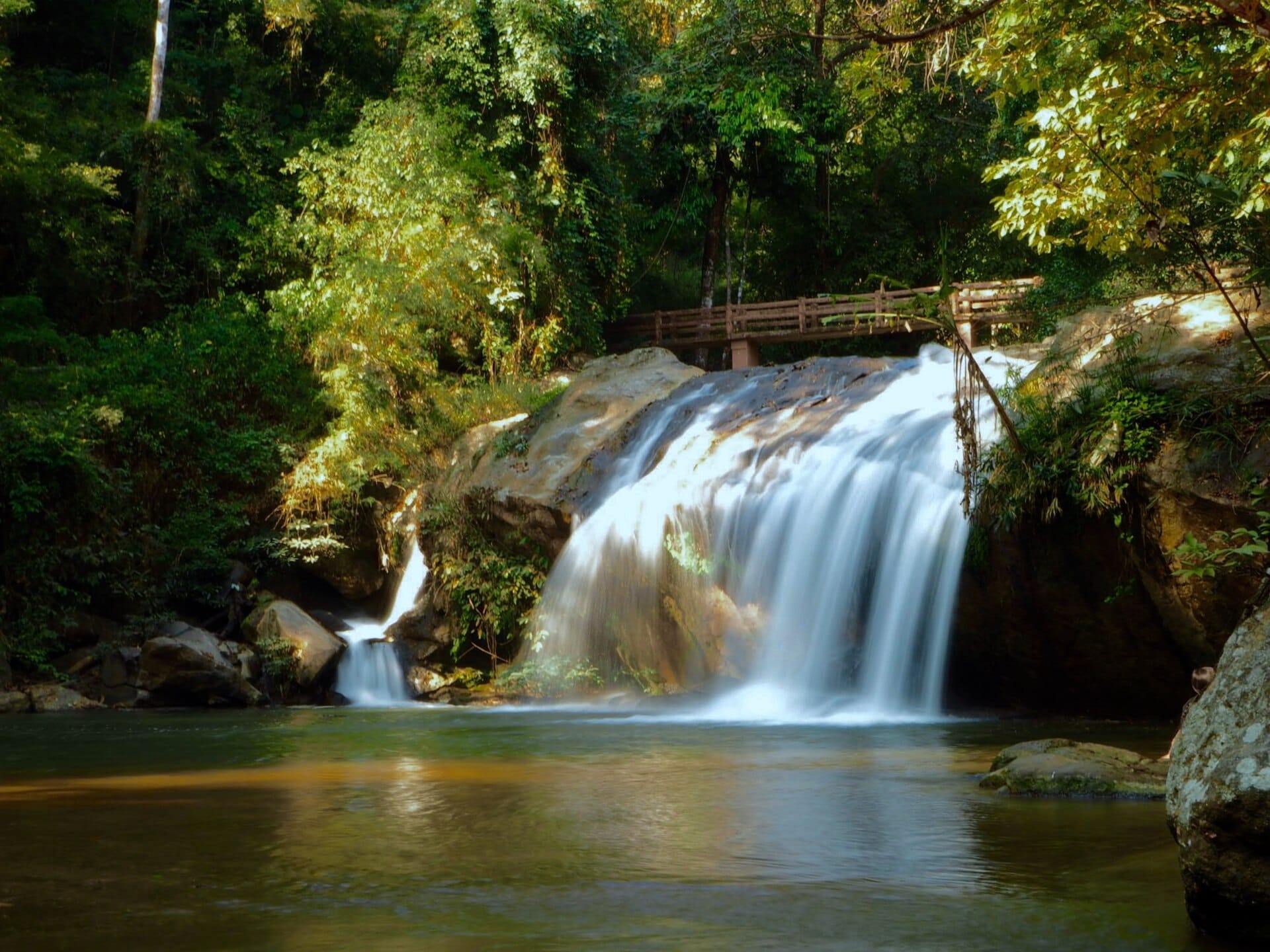
Mae Sa Waterfall is a series of 10 separate cascades spread along a single trail inside Doi Suthep-Pui National Park, in the Mae Sa area on the park’s northern side. Unlike the single dramatic drops you find at some other northern Thailand waterfalls, Mae Sa rewards you for walking the whole route. Each tier has its own character: some wide and shallow, others narrow channels dropping into deep green pools. The total elevation gain along the main path is gradual enough that most reasonably fit visitors can complete it without difficulty.
The waterfall is fed by the Mae Sa stream, which drains the slopes of Doi Suthep-Pui. The surrounding forest is dense secondary growth with bamboo, fig trees, and seasonal wildflowers that change the landscape dramatically depending on the month. Bird noise fills the canopy in the early morning, and the smell of wet earth and decomposing leaves is ever-present on the shaded sections of trail.
The Tiers: A Walk-Through of What to Expect
The lower tiers (1 through 3) are where most day-trippers stop. The path is paved or well-graded, picnic tables are scattered nearby, and the pools are wide enough for wading. Families with young children tend to cluster here, so expect company on weekends. The water temperature stays cool even in hot season, which makes these lower pools genuinely refreshing rather than just a backdrop for photos.
Tiers 4 through 7 require more attention underfoot. The trail becomes uneven stone steps and root-covered earth, and after rain some sections get slick. The crowds thin considerably by tier 5. This middle section is where the forest feels most enclosed, with the sound of falling water loud from multiple directions and shafts of light filtering through the canopy. These are often the most photogenic tiers precisely because they are less visited.
💡 Local tip
Wear closed-toe shoes with grip. Flip-flops work for the lower tiers but become a liability beyond tier 3, especially in wet season. Light hiking sandals with ankle straps are a reasonable compromise.
The upper tiers (8 through 10) are quieter still and require some scrambling on steeper sections. Tier 10 is the highest point accessible on the main trail and offers a feeling of genuine remoteness despite being only a few kilometers from the park entrance. The cascade here is narrower and more forceful in rainy season, sending mist across the surrounding rocks. In dry season it slows to a quieter trickle, still beautiful but clearly less dramatic. Budget an extra 30–40 minutes beyond tier 7 if you intend to reach the top.
Tickets & tours
Live prices and dates from our booking partner. If you book, we may earn a commission at no extra cost to you.
Chiang Mai private van day trip to Doi Suthep, Sticky Waterfall
From 146 €Instant confirmationFree cancellationPrivate van with driver to Flower Gardens and Dantewada Waterfall Park
From 146 €Instant confirmationFree cancellationHalf-day private tour with driver to Bua Thong Waterfall
From 101 €Instant confirmationFree cancellationChiang Mai private van tour with Wat Ban Den, Dantewada and Sticky Waterfall
From 132 €Instant confirmationFree cancellation
How the Experience Changes by Season and Time of Day
The best water volume appears between July and November, after the monsoon rains have filled the Mae Sa stream. During this window the falls are thunderous at the upper tiers and the lower pools can flood slightly, so pay attention to any warning signs posted at the entrance. The forest is impossibly green in this period, and the trail soil stays soft and fragrant.
December through February brings cooler, drier air. Water volume drops noticeably but the temperatures make hiking far more pleasant, and the morning light through leafless patches of forest creates different photographic conditions. March through May is the least rewarding season: water can slow to a trickle on upper tiers, and the smoke from agricultural burning occasionally drifts into the valley, reducing air quality and creating a haze.
⚠️ What to skip
If visiting between February and April, check air quality indexes before heading out. Mae Rim valley can trap smoke during Chiang Mai's burning season. On high-pollution days, the experience is significantly diminished and potentially unhealthy for sensitive individuals.
Arrive before 9:00 AM on any day if you want the lower tiers to yourself. By 10:30 AM on weekends, tour groups begin arriving and the lower pools become crowded. The light is also better in the morning, angling through the trees rather than falling flat from overhead. Weekdays see a fraction of the weekend crowds at any hour.
Getting to Mae Sa Waterfall
The waterfall sits at the end of Route 1096 (the Mae Sa Valley road), roughly 25–30 km from central Chiang Mai. The drive takes around 40–50 minutes from the Old City, longer in peak hour traffic. There is no reliable public bus service to the park entrance, so most visitors arrive by rented motorbike, private car, or arranged taxi. Renting a motorbike in Chiang Mai and riding the Mae Sa Valley road is a popular choice: the road is well-surfaced, the scenery en route is genuinely worthwhile, and it gives you the flexibility to stop at other Mae Rim attractions along the way.
Parking is available at the park entrance for both cars and motorbikes. The road approach from Chiang Mai takes you past elephant camps, orchid farms, and the Queen Sirikit Botanic Garden, all of which make logical add-ons to a Mae Sa day trip. If you are hiring a private driver for a day of Mae Rim exploration, confirm they will wait at the park, as mobile signal inside can be unreliable.
Mae Sa Waterfall pairs naturally with a broader day out in Mae Rim. Consider combining it with the Queen Sirikit Botanic Garden a few kilometers down the same road, or looping the drive to include Mon Cham for afternoon views over the valley. If you are planning a longer northern day trip, the day trips from Chiang Mai guide covers how to structure these routes efficiently.
Photography Conditions
Mae Sa photographs well throughout the year but demands different approaches by season. In wet season, use a fast shutter speed to freeze individual water threads, or slow it down to 1/4 second with a small tripod or rock-braced camera to get the silky flow effect. The shaded forest canopy creates flat, even light that is actually favorable for waterfall photography even at midday. For context shots of the whole scene, mornings offer the best side-lighting. The Chiang Mai photography guide covers gear considerations for the region's humid conditions, which are relevant here.
A polarizing filter makes a meaningful difference at the lower pool tiers, cutting surface glare and revealing the depth of the green water. The mist near the upper tiers in high season will reach your lens within minutes, so keep a lens cloth accessible. Smartphone cameras handle the middle tiers well in good light but struggle in the deeper shade of upper trail sections.
Practical Details and Accessibility
The national park entrance fee is collected at a ticket booth before the first tier. Rates for foreign visitors are typically around 100 THB, though national park fees in Thailand are subject to periodic revision. Keep small bills available, as change can be limited. The park is generally open daily from 8:00 AM to about 4:30 PM, with visitors expected to have begun their return descent well before closing time.
Facilities at the lower tier area include basic toilets, a small food and drink stall, and covered picnic areas. There are no food options further up the trail, so bring water and snacks if you plan to reach the upper tiers. The walk to tier 10 and back from the entrance takes approximately 2 to 3 hours at a comfortable pace with stops.
Accessibility is limited to the first two tiers for visitors with mobility constraints. The paved path ends early and the stepped trail is uneven. There are no wheelchair-accessible routes beyond the entrance area. Older children (roughly 7 and above) can typically manage the full trail with adult supervision, though the upper section requires some scrambling that younger children will find challenging.
ℹ️ Good to know
There is no entrance fee waiver for students or seniors at this national park site. Budget accordingly, especially if traveling as a family. The fee applies per person at entry.
Mae Sa is worth visiting even if waterfalls are not your primary focus in Chiang Mai. But if temples are equally important to your trip, the Chiang Mai temples guide helps prioritize the most meaningful sites without doubling back on the same roads. You might combine a Mae Rim morning with an afternoon at Wat Phra That Doi Suthep if you are returning to the city via Doi Suthep road rather than backtracking the same route.
Who Should Skip This Attraction
Mae Sa Waterfall is not the most dramatic or remote waterfall in northern Thailand. If you are specifically chasing powerful, towering single-drop falls, the Wachirathan Waterfall inside Doi Inthanon National Park is far more impressive in scale. Mae Sa's strength is accessibility and the multi-tier experience over distance, not raw spectacle. Visitors who find walking on uneven terrain difficult will also get limited value from the visit, since the most rewarding tiers are beyond the paved section. And if you are visiting in dry season and checking air quality reports showing PM2.5 above 100, rescheduling is genuinely worth considering.
Insider Tips
- The park entrance staff will sometimes direct you toward the main lower tier area, but the trail to tiers 4 through 10 continues uphill from the far end of the lower picnic area. Follow the concrete steps past the last stall and the trail becomes obvious.
- Bring a dry bag or waterproof case for your phone. The mist at the mid-tiers in July and August is enough to wet unprotected electronics within minutes of reaching the pools.
- If you want the lower pools to yourself for photos, arrive at park opening (8:00 AM) on a weekday. By 10:00 AM even on slow days, tour buses start arriving.
- The Mae Sa Valley road (Route 1096) continues past the waterfall and connects eventually to other highland areas. A slow drive of the whole road, stopping at viewpoints, is a satisfying half-day even for people who skip the waterfall hike.
- Leeches are present on the upper trail sections after heavy rain. Wearing long socks over the bottom of your trousers and applying insect repellent to boots and lower legs removes most of the risk.
Who Is Mae Sa Waterfall For?
- Families with children aged 7 and above who want a nature walk with swimming spots
- Photographers looking for waterfall conditions within easy reach of Chiang Mai
- Visitors spending a day exploring the Mae Rim valley who want a natural centerpiece for the route
- Travelers who want a cool, forested escape without committing to a full trekking day
- Anyone structuring a combined Mae Rim day trip with the Queen Sirikit Botanic Garden or Mon Cham
Nearby Attractions
Other things to see while in Mae Rim Valley:
- Elephant Nature Park
Elephant Nature Park in Mae Taeng is widely regarded as the gold standard for ethical elephant tourism in Thailand. Visitors walk alongside rescued elephants, observe natural herd behavior, and support a conservation model that has influenced sanctuaries across Southeast Asia.
- Flight of the Gibbon Zipline
Flight of the Gibbon is Chiang Mai's longest-running zipline operation, sending riders through the forest canopy above Mae Kampong in Mae On district on a network of platforms, cables, and sky bridges. It combines genuine treetop thrills with a conservation story centered on gibbon rescue and rehabilitation.
- Mae Kampong Village
Tucked into a forested valley about 50km east of Chiang Mai, Mae Kampong is a highland village famous for its miang fermented tea gardens, gushing waterfall, and stilted wooden guesthouses above a stream. It rewards visitors who linger past the lunch rush with cooler air, birdsong, and a glimpse of genuine Northern Thai community life.
- Mon Cham (Mon Jam)
Perched at roughly 1,400 metres above sea level in the hills above Mae Rim, Mon Cham is a highland agricultural project offering sweeping valley panoramas, terraced strawberry and flower fields, and a genuine taste of northern Thailand's cooler uplands. It makes an excellent half-day trip from the city, especially between November and February.
Planning a trip? Discover personalized activities with the Nomado app.