Flight of the Gibbon Zipline: Chiang Mai's Canopy Adventure near Mae Kampong
Flight of the Gibbon is Chiang Mai's longest-running zipline operation, sending riders through the forest canopy above Mae Kampong in Mae On district on a network of platforms, cables, and sky bridges. It combines genuine treetop thrills with a conservation story centered on gibbon rescue and rehabilitation.
Quick Facts
- Location
- Mae Kampong (Mae On district), approx. 50 km east of Chiang Mai city center
- Getting There
- No public transit; most visitors book transport through the operator or hire a songthaew/private car from the city
- Time Needed
- Half day, typically 3–4 hours on-site
- Cost
- Check official website for current pricing; packages often include hotel transfer and lunch
- Best for
- Adventure seekers, couples, families with older children, wildlife enthusiasts
- Official website
- www.treetopasia.com
What Flight of the Gibbon Actually Is
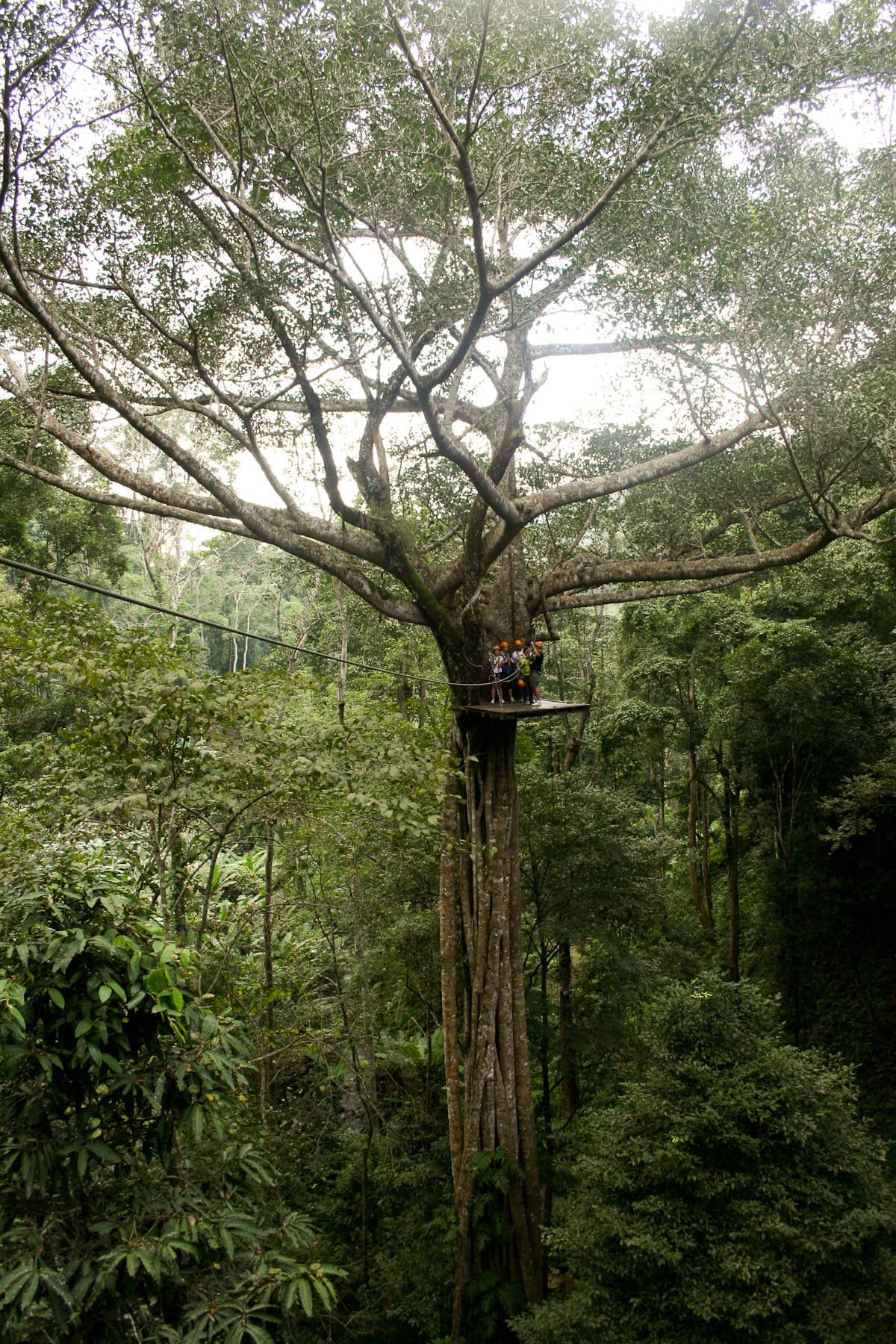
Flight of the Gibbon is a zipline and canopy tour operation set in the forested hills near Mae Kampong village in Mae On district, about 50 kilometers east of Chiang Mai. It launched in 2007 and has since become the most recognized name in aerial adventure activities in northern Thailand. The course runs through the upper canopy of a secondary montane forest, connecting a series of elevated platforms with cables, abseils, and sky bridges. At certain points you are well above the forest floor, looking down through layers of ferns, fig trees, and flowering canopy species.
The name comes from the operator's broader commitment to gibbon conservation. The company funds and supports gibbon rescue and rehabilitation work, which means a visit carries some genuine ecological purpose beyond the adrenaline. Gibbons are critically endangered in Thailand due to habitat loss and the illegal pet trade, and the awareness component is woven into the experience rather than tacked on as an afterthought.
ℹ️ Good to know
The gibbon conservation angle is real: Flight of the Gibbon is supportive of gibbon conservation initiatives in Thailand, and the Chiang Mai operation funds awareness and rescue work across northern Thailand. Ask your guide about it on the day.
The Course: Platforms, Cables, and Sky Bridges
The full course covers multiple zipline segments, rope bridges, and abseiling stations. Distances and heights vary across segments, with some cables stretching long enough that you genuinely pick up speed before the far platform comes into view. The platforms are wooden, purpose-built, and bolted to mature trees, which means the structures flex slightly in the wind, a sensation that takes a moment to get used to but is entirely normal.
Guides accompany every group and manage all the rigging. You do not clip yourself in or adjust your own harness between stations, which removes much of the user error risk associated with self-managed adventure courses. The harness system uses a redundant double-clip design, and helmets are provided. Weight and height restrictions apply, so check these before booking if you have any concerns.
The sky bridges, which are suspended rope-and-plank walkways between platforms, are often more nerve-testing for first-timers than the ziplines themselves. They sway under foot and require a more deliberate, slower movement than simply being clipped in and flying across a cable. That contrast between the passive speed of ziplining and the active balance challenge of the bridges makes the course feel varied rather than repetitive.
💡 Local tip
Wear closed-toe shoes with a firm sole. Sandals are not permitted on the course. Light, fitted clothing reduces the chance of loose fabric catching in equipment.
Tickets & tours
Live prices and dates from our booking partner. If you book, we may earn a commission at no extra cost to you.
Doi Inthanon National Park small group guided tour
From 34 €Instant confirmationFree cancellationHalf-day tour to admire elephants and enjoy Thai nature
From 48 €Instant confirmationFree cancellationChiang Mai - Chiang Dao Cave and 5 Hill Tribe villages
From 42 €Instant confirmationFree cancellationArt in Paradise Chiang Mai 3D Art Museum entrance tickets
From 8 €Instant confirmationFree cancellation
The Forest Setting: What You Are Moving Through
The forested slopes around Mae Kampong receive more rainfall than central Chiang Mai, which means the vegetation here is noticeably denser and more layered than the drier forest around Doi Suthep. In the wet season, from around June through October, the canopy is an almost unbroken ceiling of green, and the air smells of damp soil and crushed leaves. In the dry months, the forest thins slightly and you get cleaner sightlines across the valley toward the distant ridgelines.
Birdlife is active in the early morning, particularly hornbills and various bulbul species. Gibbon calls, a rising, swooping whoop that carries across the forest, are sometimes audible in the early hours, though actually spotting wild gibbons during the course is not something you can count on. What you are more likely to notice is the textural detail of the canopy itself: the silver undersides of certain leaves, the way moss colonizes the shaded upper surfaces of branches, the occasional burst of red or yellow from flowering epiphytes.
For those interested in exploring more of northern Thailand's natural landscape, the Mae On and Mae Kampong area also offers other outdoor experiences. The broader region is covered in the Chiang Mai activities guide, which includes options across different activity levels and budgets.
Timing Your Visit: Morning vs. Afternoon
Morning departure slots are the better choice on almost every metric. The forest is cooler, wildlife is more active, and you are less likely to encounter the heat and humidity that builds up through the Mae On valley from midday onward. Most packages include a hotel pickup from central Chiang Mai that departs early, typically arriving on-site around 8–9am depending on pickup time and traffic.
Afternoon slots are available but the heat between noon and 3pm can make the physical elements, particularly the bridges and abseiling, more taxing than they need to be. If afternoon is your only option, bring water and apply sunscreen before you arrive, as there is limited shade at some of the platform stations.
⚠️ What to skip
During Chiang Mai's burning season, roughly February through April, smoke haze can significantly reduce visibility across the valley. The course itself is unaffected, but the panoramic views will be limited. Check the AQI before you go and consider rescheduling if levels are high.
The burning season's impact on outdoor activities across the region is detailed in the Chiang Mai burning season guide, which explains what the smoke means for visibility, health, and whether to adjust your travel plans.
Practical Walkthrough: Arrival to Departure
Most visitors arrive via the included hotel transfer, which picks up from a central meeting point or directly from major hotels in the Old City and Nimman areas. On arrival, you complete a waiver form and undergo a brief safety and equipment check. Harnesses are fitted by staff, and a ground-level practice station lets you get familiar with the clip system before ascending to the first platform.
The course itself moves at the pace of your group, with guides managing sequencing so platforms do not become congested. Groups are deliberately kept small, which matters for both safety and atmosphere. A larger crowd on the platforms raises noise levels and reduces the sense of being in a forest rather than an outdoor attraction.
Lunch is included in most packages and is served on-site after the course concludes. The transfer back to Chiang Mai follows. Total time from city pickup to return is typically in the six-hour range. Factor this into your day when planning other activities.
💡 Local tip
Leave valuables at your hotel. There is storage available on-site for bags and phones during the course, but loose items like glasses and hats need to be secured before each zipline segment.
Honest Assessment: Worth It or Overhyped?
Flight of the Gibbon has been operating long enough to have refined its logistics and safety systems, which is genuinely reassuring compared to some of the newer zipline operations that have appeared in northern Thailand. The equipment is maintained, the guides are experienced, and the course is set in real forest rather than a cleared hillside with a cable stretched across it.
That said, seasoned adventure travelers who have done zipline courses in Costa Rica, Nepal, or other high-altitude venues may find the thrill factor here relatively modest. The course is well-suited to people doing a treetop zipline for the first time, families with older children, and anyone who wants an active outdoor experience without committing to a full-day trek.
People with vertigo, a strong fear of heights, or significant mobility limitations should consider carefully before booking. The rope bridges in particular require balance and confidence at height, and while guides are supportive, there is no way to easily exit the course mid-way. The activity is also not suitable for young children or those outside the stated weight parameters.
If you are building an itinerary around outdoor adventure near Mae Kampong, the region has several complementary options. The Queen Sirikit Botanic Garden is a short drive south and offers a very different but equally rewarding immersion in northern Thailand's plant life, with no altitude required.
Getting There and Booking
There is no public transit route to the Flight of the Gibbon site. The operator provides hotel transfers from central Chiang Mai as part of most packages, which is the most straightforward option. Alternatively, a private car hire or a negotiated songthaew (red truck taxi) from the city can drop you at the site, though you would need to arrange return transport independently.
Booking directly through the official website is recommended to ensure current pricing, availability, and confirmation of the transfer arrangement. Third-party booking platforms do sell slots, but pricing and inclusions can vary. Advance booking of at least a day or two is advisable, particularly in the high season from November through February when demand is higher.
For context on getting around the greater Chiang Mai area more broadly, the Chiang Mai transport guide covers all the main options including songthaews, ride-hailing apps, and car rentals.
Insider Tips
- Book the earliest available slot. The 8am–9am arrivals get cooler temperatures, more active wildlife, and smaller initial group sizes before the mid-morning influx.
- Wear a fitted base layer under your harness. The chest and leg straps press against bare skin during abseiling sections and can chafe on a warm day.
- Ask your guide specifically about the gibbon rehabilitation work before the tour begins. The more engaged guides will talk about it in detail, which adds real context to the conservation message.
- If you wear prescription glasses, bring a sports strap or goggles. Glasses can shift or come off on faster cable segments and there is no recovering them from the forest floor below.
- Combine the morning zipline with an afternoon visit to something slower-paced nearby. After three to four hours of adrenaline and heat, the botanical garden or a riverside lunch works as a natural counterbalance.
Who Is Flight of the Gibbon Zipline For?
- First-time zipliners wanting a structured, safety-focused introduction to aerial adventure
- Couples looking for a shared outdoor experience with a conservation dimension
- Families with children aged approximately 10 and above who meet the weight and height requirements
- Wildlife enthusiasts interested in gibbons and northern Thailand's forest ecology
- Travelers with a half-day window who want something active without committing to a full-day trek
Nearby Attractions
Other things to see while in Mae Rim Valley:
- Elephant Nature Park
Elephant Nature Park in Mae Taeng is widely regarded as the gold standard for ethical elephant tourism in Thailand. Visitors walk alongside rescued elephants, observe natural herd behavior, and support a conservation model that has influenced sanctuaries across Southeast Asia.
- Mae Kampong Village
Tucked into a forested valley about 50km east of Chiang Mai, Mae Kampong is a highland village famous for its miang fermented tea gardens, gushing waterfall, and stilted wooden guesthouses above a stream. It rewards visitors who linger past the lunch rush with cooler air, birdsong, and a glimpse of genuine Northern Thai community life.
- Mae Sa Waterfall
Mae Sa Waterfall, located in Mae Rim's lush valley about 25–30 km northwest of Chiang Mai, drops through 8–10 distinct tiers across a forested national park. It's one of the most rewarding natural escapes near the city, particularly after the rains fill the cascades to their full volume.
- Mon Cham (Mon Jam)
Perched at roughly 1,400 metres above sea level in the hills above Mae Rim, Mon Cham is a highland agricultural project offering sweeping valley panoramas, terraced strawberry and flower fields, and a genuine taste of northern Thailand's cooler uplands. It makes an excellent half-day trip from the city, especially between November and February.
Planning a trip? Discover personalized activities with the Nomado app.