Mon Cham (Mon Jam): Chiang Mai's Cool-Air Highland Escape Above Mae Rim
Perched at roughly 1,400 metres above sea level in the hills above Mae Rim, Mon Cham is a highland agricultural project offering sweeping valley panoramas, terraced strawberry and flower fields, and a genuine taste of northern Thailand's cooler uplands. It makes an excellent half-day trip from the city, especially between November and February.
Quick Facts
- Location
- Mon Cham, Mae Rim District, Chiang Mai (~35–40 km north of the Old City)
- Getting There
- Private car, motorbike, or songthaew from Mae Rim town; no direct public bus service to the summit
- Time Needed
- 2.5 to 4 hours for a comfortable visit including the viewpoints and a meal
- Cost
- There is no general entrance fee to the viewpoint area; some flower gardens, activities, and strawberry picking charge small separate fees
- Best for
- Cool-weather escapes, valley sunrise views, photographers, couples, families with older children
What Mon Cham Actually Is
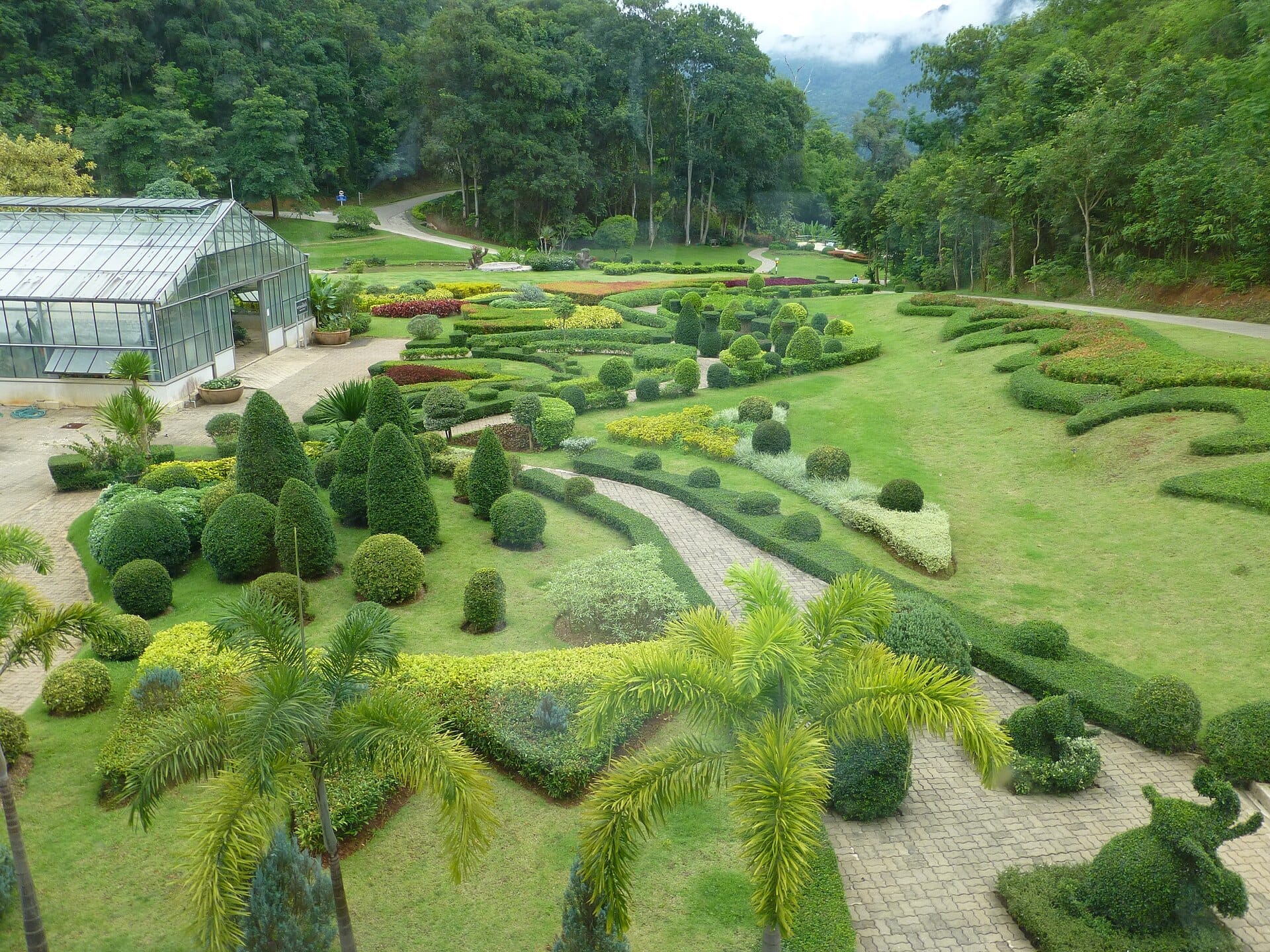
Mon Cham (also written Mon Jam) is closely associated with nearby royal highland development efforts and is often linked with the Nong Hoi Royal Project agricultural area to promote sustainable highland farming among local communities. The site sits on a ridge at approximately 1,400 metres elevation in the hills east of the Doi Suthep-Pui range, overlooking a wide valley of rice paddies and forested slopes. It is not a theme park or a polished resort destination. It is a working farm with viewing terraces, small restaurants, and walking paths built around the agricultural plots.
That distinction matters for setting expectations. The atmosphere here is unhurried and genuinely rural. Between November and February, the fields are planted with strawberries, pak choi, and ornamental flowers, and vendors sell fresh produce and locally grown coffee at roadside stalls. The air carries a noticeable chill in the mornings, sometimes dropping below 10°C in January, which is extraordinary for a city that sits at 300 metres and rarely feels cold at all.
ℹ️ Good to know
Mon Cham is part of the network of royal projects scattered across northern Thailand's highlands. Similar sites include Doi Ang Khang and the Nong Hoi Royal Project area below the ridge. Each has a slightly different focus, but all share the same philosophy of replacing opium cultivation with sustainable cash crops.
The Drive Up and First Impressions
The road to Mon Cham from Mae Rim town is a series of tight switchbacks climbing through mixed forest. On a motorbike the ascent takes around 40 minutes from Mae Rim, longer in a car if you meet trucks coming down. The road is paved but narrow, and visibility around some bends is limited. Driving at dawn during the cool season means riding through patches of ground mist that sit in the folds of the hills and catch the early light in a way that is genuinely photogenic even before you arrive.
The car park at the top opens onto a plateau of terraced plots. The main viewpoint is a short walk from the entrance, positioned on the ridge crest with an unobstructed view west and south across the valley. On clear days the view extends for 40 to 50 kilometres. During the burning season, typically March and April, haze settles heavily into the valley and the panorama is significantly reduced. This is the single biggest factor affecting visit quality and is worth understanding before you plan your trip.
If you are timing a Chiang Mai trip around outdoor viewpoints, the best time to visit Chiang Mai guide covers seasonal conditions in detail, including when the haze is at its worst and when highland roads are most accessible.
Tickets & tours
Live prices and dates from our booking partner. If you book, we may earn a commission at no extra cost to you.
Half-day tour to Doi Suthep and White Hmong Hill Village
From 146 €Instant confirmationFree cancellationHalf-day private van tour to Doi Suthep and Doi Pui Hmong Village from Chiang Mai
From 93 €Instant confirmationFree cancellationDoi Inthanon National Park small group guided tour
From 34 €Instant confirmationFree cancellationHalf-day tour to admire elephants and enjoy Thai nature
From 48 €Instant confirmationFree cancellation
What You See at Different Times of Day
Arriving at sunrise, between 6:00 and 7:30 AM from November through February, produces conditions that many photographers describe as the highlight of the entire Chiang Mai region. A sea of cloud fills the valley below the ridge, with the peaks of distant hills projecting through it like islands. The light is soft and directional. Temperatures at this hour can be cold enough that breath is visible and a down jacket is not excessive. The few vendors who open this early sell hot coffee and sticky rice, and the parking area is quiet.
By 9:00 AM the cloud usually burns off, the temperature rises to something more comfortable, and the landscape shifts from dramatic to pastoral. This is when the terraced fields are most accessible for walking through and when strawberry picking (a paid activity, priced per kilogram) is typically open. Thai families arrive throughout the morning, and by 10:30 the main viewpoint and the bamboo huts along the ridge become fairly crowded.
Midday is the least rewarding time to visit in terms of atmosphere, though the views remain wide and the restaurants are fully operational. The afternoon, particularly after 3:00 PM, sees the crowd thin again as day-trippers head back down. Late afternoon light on the terraces and the gradual cooling of the air make the final hours before closing worth staying for if you arrived early.
💡 Local tip
For sunrise cloud sea conditions, plan to leave Chiang Mai no later than 5:30 AM. The drive from the Old City to the summit typically takes about 60 minutes by car or motorbike in light traffic, accounting for the climb from Mae Rim.
The Agricultural Landscape and Local Food
The terraced fields are the core of the Mon Cham experience and what separates it from a simple hilltop viewpoint. In peak season (November through February) the plots are dense with strawberries at ankle height, rows of Chinese kale, and clusters of ornamental flowers including marigolds and zinnias. The scale is modest compared to the larger royal projects further north, but the setting directly against the valley backdrop makes even the simplest shot of a strawberry plant look composed.
Several small restaurants operate along the ridge, serving northern Thai dishes, particularly khao tom (rice congee), noodle soups, and grilled meats. The strawberry-based drinks, fresh strawberry juice and strawberry smoothies, are made with fruit grown on site and are noticeably better than the versions sold from plastic bags at city markets. A full meal here costs between 60 and 150 THB per dish at most stalls. Coffee grown in the surrounding highlands is served alongside.
Mon Cham sits within the broader Mae Rim district, which stretches along the valley below and contains several other attractions worth combining into a single day out from the city.
Photography and Practical Navigation on Site
The main viewpoint is a wide terrace with a low railing and clear sightlines. It is the obvious focal point and tends to concentrate visitors. However, the more interesting compositions are found by walking the ridge path north from the main terrace, where the terraced plots curve downhill and the interaction of agricultural geometry with the valley below creates layered frames. Bring a wide-angle lens for valley shots and a short telephoto for compressing the rows of crops against the distant hills.
Walking paths are mostly gravel or packed earth and are manageable in ordinary trainers during dry season. During and after heavy rain (July through September) some sections become slippery. The paths do not require trekking poles but proper footwear matters. There are no significant elevation changes once you are on the plateau; the terrain is gentle enough for most fitness levels.
If photography is a major motivation for your Chiang Mai visit, the Chiang Mai photography guide includes Mon Cham alongside other highland and urban shooting locations with seasonal timing advice.
⚠️ What to skip
Mobile signal is limited at the summit. Download offline maps before you leave the city and save the GPS coordinates of the parking area. The road has several unsigned forks where it is easy to take a wrong turn in the dark during an early morning drive.
Getting There: Routes and Logistics
There is no scheduled public transport to Mon Cham. The most practical options from Chiang Mai city are renting a motorbike (most reliable option for flexibility), hiring a private songthaew from Mae Rim town, or booking a private car or tour. The road is accessible to standard passenger cars but the switchback gradient means it is worth confirming road conditions after heavy rain. A tour combining Mon Cham with Mae Sa Waterfall and other Mae Rim-area stops is a common format and spreads the cost of transport.
For general navigation logistics across the region, the getting around Chiang Mai guide covers motorbike rental, songthaew negotiation, and private car hire in practical terms.
Fuel up before leaving Mae Rim. There are no petrol stations on the road to Mon Cham and the round-trip climb is fuel-intensive on a small-engine motorbike. A 125cc scooter on a full tank is adequate, but do not arrive at Mae Rim with less than half a tank.
Who Will Get the Most Out of Mon Cham (and Who Might Not)
Mon Cham delivers most clearly to visitors who are genuinely interested in the landscape, the cool air, and the slower pace of a highland morning. It suits photographers, couples looking for a scenic half-day out, and families with children old enough to enjoy strawberry picking and a relaxed walk. The combination of accessible roads, free entry, and good food options also makes it viable on a modest budget.
It is less rewarding for visitors who arrive expecting a curated experience with English-language signage, tour infrastructure, or active programming. The site is Thai-domestic-tourism-oriented; most signage is in Thai, and the stall vendors may have limited English. It is also not worth the drive during the March-to-April burning season, when the valley haze reduces the view to a grey wash and the air quality at altitude, while better than in the city, is still affected.
Visitors combining a highland itinerary with the nearby temple on the mountain should also consider Wat Phra That Doi Suthep for the morning and Mon Cham the following day, since doing both on the same day in proper conditions requires two separate early starts in opposite directions from the city.
Insider Tips
- Book accommodation in Mae Rim the night before a sunrise visit rather than driving from the city at 5:00 AM. Several guesthouses in Mae Rim valley cost 400 to 800 THB per night and put you 30 minutes from the summit.
- The bamboo viewpoint huts along the ridge can be reserved for a group meal. Arrive before 9:00 AM if you want one without waiting; by late morning they fill with Thai families on weekend outings.
- Strawberry season peaks in December and January. By late February the yield drops and picking access is often closed. If strawberry picking is your motivation, plan for the first two months of the year.
- The road between Mae Rim and Mon Cham passes through Hmong villages where fresh produce is sold roadside. Stop on the way back down when stalls are better stocked than on your ascent in the dark.
- Mon Cham and Mae Sa Waterfall are frequently combined by tour operators, but the two sites have opposite ideal timing. Mae Sa is better in the afternoon light. Do Mon Cham first at dawn, then descend to Mae Sa by late morning.
Who Is Mon Cham (Mon Jam) For?
- Photographers targeting the cool-season cloud sea at sunrise
- Couples seeking a scenic, low-key half-day escape from the city
- Families with older children interested in strawberry picking and highland scenery
- Visitors who want to experience a royal agricultural project in a working landscape context
- Budget travelers who want a highland experience without entrance fees or guided tours
Nearby Attractions
Other things to see while in Mae Rim Valley:
- Elephant Nature Park
Elephant Nature Park in Mae Taeng is widely regarded as the gold standard for ethical elephant tourism in Thailand. Visitors walk alongside rescued elephants, observe natural herd behavior, and support a conservation model that has influenced sanctuaries across Southeast Asia.
- Flight of the Gibbon Zipline
Flight of the Gibbon is Chiang Mai's longest-running zipline operation, sending riders through the forest canopy above Mae Kampong in Mae On district on a network of platforms, cables, and sky bridges. It combines genuine treetop thrills with a conservation story centered on gibbon rescue and rehabilitation.
- Mae Kampong Village
Tucked into a forested valley about 50km east of Chiang Mai, Mae Kampong is a highland village famous for its miang fermented tea gardens, gushing waterfall, and stilted wooden guesthouses above a stream. It rewards visitors who linger past the lunch rush with cooler air, birdsong, and a glimpse of genuine Northern Thai community life.
- Mae Sa Waterfall
Mae Sa Waterfall, located in Mae Rim's lush valley about 25–30 km northwest of Chiang Mai, drops through 8–10 distinct tiers across a forested national park. It's one of the most rewarding natural escapes near the city, particularly after the rains fill the cascades to their full volume.
Planning a trip? Discover personalized activities with the Nomado app.