Bhuphing Palace: Inside Chiang Mai's Royal Winter Residence
Perched on the slopes of Doi Buak Ha in Doi Suthep-Pui National Park at around 1,000–1,200 metres elevation, Bhuphing Palace is the Thai royal family's official winter residence in the north. When the royals are not in residence, the palace grounds open to visitors who come for the manicured formal gardens, cool mountain air, and sweeping valley views across Chiang Mai.
Quick Facts
- Location
- Doi Suthep-Pui National Park, approx. 4–6 km past Wat Phra That Doi Suthep, Chiang Mai
- Getting There
- Songthaew (red truck taxi) from Chiang Mai city centre or shared ride from Wat Phra That Doi Suthep; private car or scooter also common
- Time Needed
- 1.5 to 2.5 hours
- Cost
- 50 THB entry fee for foreign adult visitors (subject to change; palace closes to public when royals are in residence)
- Best for
- Garden lovers, photographers, those seeking cool mountain air away from the city heat
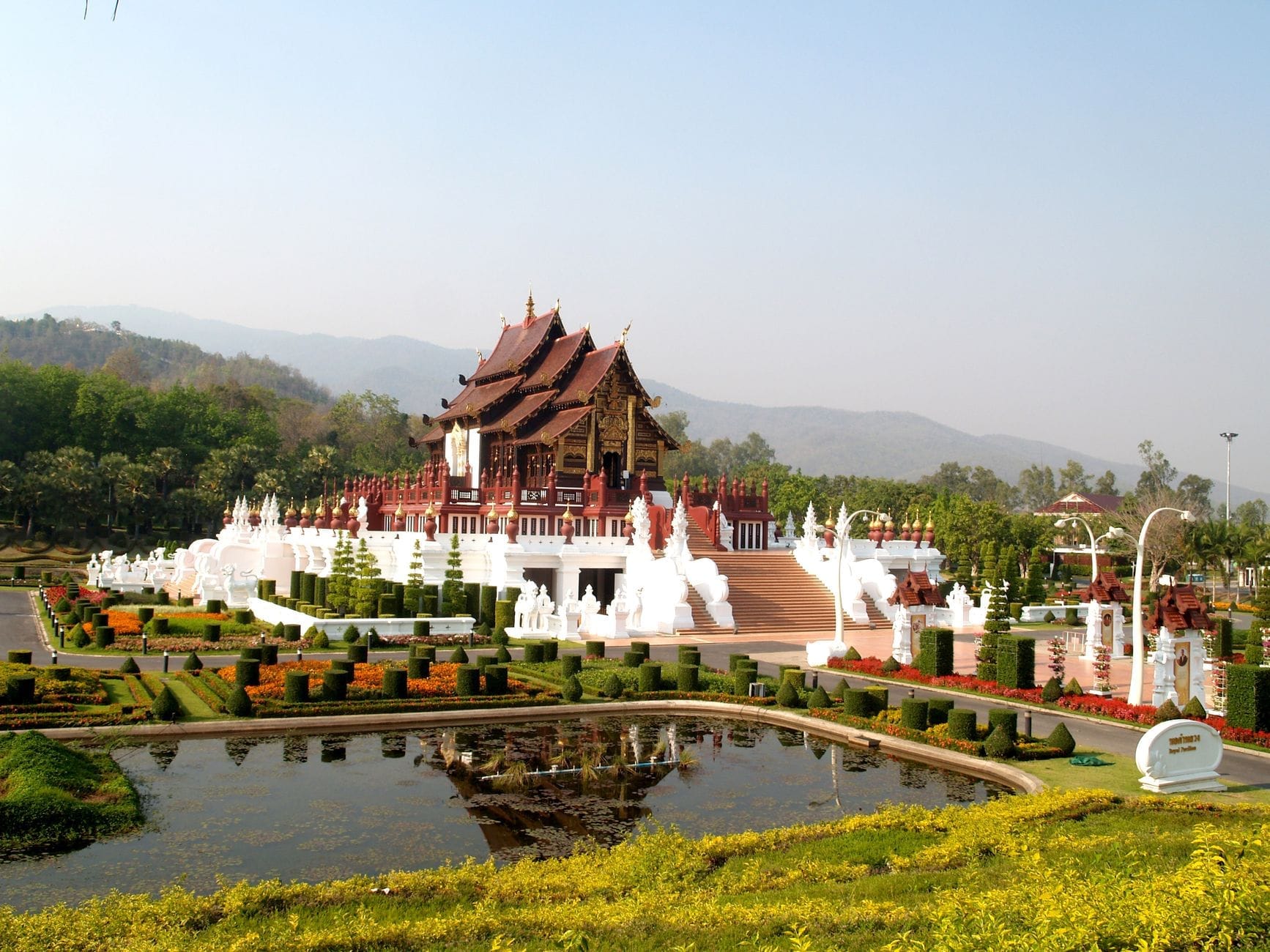
What Bhuphing Palace Actually Is
Bhuphing Palace is not a palace you walk through. That distinction matters before you make the trip up Doi Suthep. The main royal residence buildings are closed to the public at all times, and the attraction here is the surrounding formal gardens, several pavilions, and the mountain setting itself. Visitors who arrive expecting grand interior rooms tend to leave confused. Those who arrive understanding it as one of Thailand's finest public garden experiences come away very satisfied.
The palace was constructed in 1961 as an official royal winter residence in northern Thailand, giving the royal family a base for visiting hill tribe communities and agricultural development projects throughout the region. The grounds cover a substantial area and are maintained to a high standard by the Royal Household Bureau. The gardens draw from both Thai and European formal garden traditions, with carefully trimmed hedgerows, rose terraces, and flowering borders that feel genuinely cared for rather than neglected or touristy.
⚠️ What to skip
The palace grounds close entirely to the public whenever the Thai royal family is in residence, typically during the cool season from approximately January to March. Always check current status before making the trip, as there is no partial access on those days.
The Gardens: What You Will Actually See
The garden circuit at Bhuphing Palace follows a loose loop through several distinct planting zones. The rose gardens are the most photographed section, with dozens of varieties blooming in formal beds bordered by low hedges. At peak bloom, usually between November and February, the roses produce dense colour against the pine and eucalyptus backdrop. Outside that window, the beds are still tidy but the visual payoff is noticeably reduced.
Beyond the roses, the grounds include fern grottos built around natural rock formations, ornamental ponds with lotus and water lilies, and long shaded walkways beneath tall tropical pines. There are several open-sided sala pavilions where visitors can sit and look out over the valley. On a clear morning, those views stretch across the entire Chiang Mai basin, with the city visible as a pale grey grid far below. By midday haze often reduces visibility significantly.
One section of the grounds features a collection of cacti and succulents, which feels unexpected at this latitude but makes sense given the dry-season climate at altitude. The gardening itself is worth studying: the staff clearly invest serious effort in training plants against walls and along trellises in ways you rarely see in public Thai gardens.
💡 Local tip
The cool season morning light between 8:30am and 10:30am is ideal for photography. The low sun angles create strong shadows across the formal garden geometry, and the pine trees filter the light in a way that midday visits cannot replicate.
Tickets & tours
Live prices and dates from our booking partner. If you book, we may earn a commission at no extra cost to you.
Doi Inthanon National Park small group guided tour
From 34 €Instant confirmationFree cancellationHalf-day tour to admire elephants and enjoy Thai nature
From 48 €Instant confirmationFree cancellationChiang Mai - Chiang Dao Cave and 5 Hill Tribe villages
From 42 €Instant confirmationFree cancellationArt in Paradise Chiang Mai 3D Art Museum entrance tickets
From 8 €Instant confirmationFree cancellation
Getting Here: The Road Up Doi Suthep
Bhuphing Palace sits roughly 4 kilometres past Wat Phra That Doi Suthep on the same mountain road, at a higher elevation. Most visitors combine the two sites in a single half-day trip, stopping at the temple first and then continuing up to the palace. The road narrows significantly on the upper stretch, and motorbikes need to take the bends carefully. The drive itself through dense national park forest is part of the experience.
Songthaew red trucks depart from near the Chiang Mai Zoo on the lower slopes and can be chartered for a return trip that includes both sites. Negotiate the price before you depart. From the city centre, the full journey typically takes about 45–60 minutes. If you are planning a broader day out in the area, the Doi Inthanon day trip guide gives useful context for how mountain temple and nature sites in the Chiang Mai region tend to work logistically.
Parking is available for private vehicles near the entrance. Motorbikes are a popular option among independent travellers, but the upper road to the palace has sharp hairpin bends and can be slippery after rain. Confident riders only.
The Dress Code: Taken Seriously Here
The dress code at Bhuphing Palace is enforced more strictly than at most Thai temples. As a royal property, guards at the entrance will turn away visitors in shorts, sleeveless shirts, or clothing deemed too casual. Shoulders and knees must be covered for both men and women. Long trousers and a sleeved shirt are the safest combination. Sarongs and cover-up wraps are available for loan or rental at the entrance if you arrive underprepared, but the selection is limited and the waiting time during busy periods can be frustrating.
Footwear rules are less strict here than inside temples, as most of the visit is spent in open gardens rather than sacred interiors. Comfortable walking shoes are recommended over sandals given the uneven paths and occasional steps across the site.
ℹ️ Good to know
Dress code enforcement can vary by day and by which staff member is at the gate. The consistent rule is covered shoulders and knees. When in doubt, overdress rather than risk the trip for nothing.
Time of Day and Seasonal Considerations
Bhuphing Palace is open to the public daily from 8:30am to 4:30pm on days when the royal family is not in residence, although some sources list visiting hours only until 3:30pm, though these hours can shift and should be verified before visiting. The gardens are at their best in the cool season, roughly October through February, when temperatures at this mountain elevation can feel genuinely cold by Thai standards, sometimes dropping to 10 to 15 degrees Celsius on clear mornings. Bring a light jacket; the mountain air is a different world from the heat of the old city below.
During the hot season from March to May, the gardens lose some of their flowering intensity and the air quality across the region can be affected by agricultural burning. The burning season guide explains the smoke situation in detail and is worth reading if you are planning a visit between February and April. On bad smoke days, the valley views from the garden pavilions disappear entirely.
The rainy season from June to September brings the gardens back to full lush green, and the forest on the approach road is spectacular in this period. However, the rose gardens are less impressive and the mountain road can be slippery. Early morning visits on clear rainy-season days offer a different but worthwhile perspective, with mist drifting through the pines.
Photography and Etiquette
Photography of the garden areas is permitted and actively welcomed. The formal garden geometry, water features, and mountain light make this one of the better photography locations in the Doi Suthep area, separate from the more famous shots at the temple below. The Chiang Mai photography guide covers the broader landscape and architectural shooting opportunities across the city if you are building an itinerary around visual content.
Photography of the palace buildings themselves is restricted. Clear signage marks areas where cameras are not permitted, and these rules are enforced. Photographing staff or security personnel without permission is also discouraged. The garden areas, pavilions, and viewpoints are all fair game.
Noise levels here are generally lower than at the temple below, and visitors tend to be more contemplative. The atmosphere rewards slow walking rather than quick loops. Bring water, as there are limited refreshment options inside the grounds.
Combining Bhuphing Palace with Other Doi Suthep Attractions
The logical combination for most visitors is Wat Phra That Doi Suthep plus Bhuphing Palace in a single morning. Start at the temple when it opens, work through the religious site, and then continue up the road to the palace. This uses the cool morning hours effectively and gets you back to the city before the afternoon heat and traffic buildup.
A lesser-known option in the same area is Wat Pha Lat, a forest temple set on the pilgrim trail below Doi Suthep that receives far fewer visitors and offers a quieter, more meditative atmosphere. Doing all three sites in one day is ambitious but possible for early risers.
The broader Doi Suthep area also contains the Hmong village of Doi Pui a short distance further up the road, which some visitors add to the itinerary, though the village itself operates primarily as a tourist market.
Insider Tips
- Arrive right at opening time on a weekday. By 10am on weekends, the car park fills and the entrance queue slows noticeably. The first hour of opening is genuinely quiet.
- The staff at the entrance are not always consistent about cover-up rentals. Carry a light long-sleeve layer in your bag as backup rather than assuming rentals will be available.
- Check the palace's operational status before leaving your accommodation. The grounds close without much advance notice when royals are in residence, and there is no partial access or refund situation to navigate if you arrive to a closed gate.
- The highest viewpoint pavilion in the garden offers the clearest sightlines to the valley below. Walk past the first two pavilions you encounter and continue to the upper terrace for the best perspective.
- The pine forest smell on the approach road and inside the garden is one of the most distinctive sensory experiences in the Chiang Mai area. The cool air combined with the resin scent is unlike anywhere else in the city's orbit.
Who Is Bhuphing Palace (Bhubing Palace) For?
- Travellers visiting Chiang Mai in the cool season who want a garden and viewpoint experience beyond the temple circuit
- Photographers looking for formal garden compositions with strong natural light in the morning hours
- Couples or slow travellers who appreciate a quieter, more contemplative site compared to the crowds at Doi Suthep temple
- Anyone curious about Thai royal history and the monarchy's connection to northern Thailand's hill tribe development programmes
- Visitors who want a genuine break from city heat, with temperatures at this elevation running noticeably cooler than the valley floor
Nearby Attractions
Other things to see while in Doi Suthep & Mountain Area:
- Chiang Mai Night Safari
Chiang Mai Night Safari is Thailand's largest night zoo, where open-air tram rides carry visitors through illuminated savannah and forest zones after dark. It's a family-oriented attraction with genuine nocturnal animal encounters, though the experience varies significantly depending on when you go and which zones you prioritize.
- Chiang Mai Zoo
Spread across forested hillside terrain at the base of Doi Suthep, Chiang Mai Zoo is one of northern Thailand's most visited family attractions. Home to giant pandas, big cats, reptiles, and hundreds of species, it offers a full day of wildlife encounters in a setting that feels closer to a nature park than a concrete enclosure.
- Doi Pui Hmong Village
Perched at over 1,200 meters on the slopes above Chiang Mai, Doi Pui Hmong Village offers a window into northern Thailand's Hmong hilltribe communities, complete with a small opium history museum, traditional textile vendors, and cool mountain air. It sits just beyond Wat Phra That Doi Suthep, making it a logical extension of any mountain day trip.
- Grand Canyon Chiang Mai
A former clay quarry on the edge of the city, Chiang Mai's 'Grand Canyon' has become the go-to spot for cliff jumping, swimming, and a rare afternoon off from temple-hopping. Expect turquoise water, tiered platforms, and a crowd that skews young and loud on weekends.
Planning a trip? Discover personalized activities with the Nomado app.