Doi Pui Hmong Village: Hilltribe Culture at Chiang Mai's Mountain Edge
Perched at over 1,200 meters on the slopes above Chiang Mai, Doi Pui Hmong Village offers a window into northern Thailand's Hmong hilltribe communities, complete with a small opium history museum, traditional textile vendors, and cool mountain air. It sits just beyond Wat Phra That Doi Suthep, making it a logical extension of any mountain day trip.
Quick Facts
- Location
- Doi Suthep-Pui National Park, approx. 18 km northwest of Chiang Mai Old City
- Getting There
- Songthaew from Nimman Road or the Old City; accessible by rented motorbike or private vehicle. Road is paved but winding.
- Time Needed
- 1.5 to 2.5 hours, longer if you walk the surrounding trails
- Cost
- National Park entrance fee applies for the park and Wat Phra That Doi Suthep area; an additional small local village fee (around 10 THB per person) is collected near the entrance to Doi Pui, and there is a small charge for the opium museum
- Best for
- Cultural curiosity, mountain photography, cool-weather escapes, post-temple sightseeing
What Doi Pui Hmong Village Actually Is
Doi Pui Hmong Village sits at the end of the road that climbs past Wat Phra That Doi Suthep, deep inside Doi Suthep-Pui National Park. The village is a settlement of the White Hmong (Mong Khao) community, one of the several Hmong subgroups found across northern Thailand, Laos, and southern China. The residents here have lived on these slopes for generations, and the village has gradually adapted to receive visitors without entirely abandoning its function as a working community.
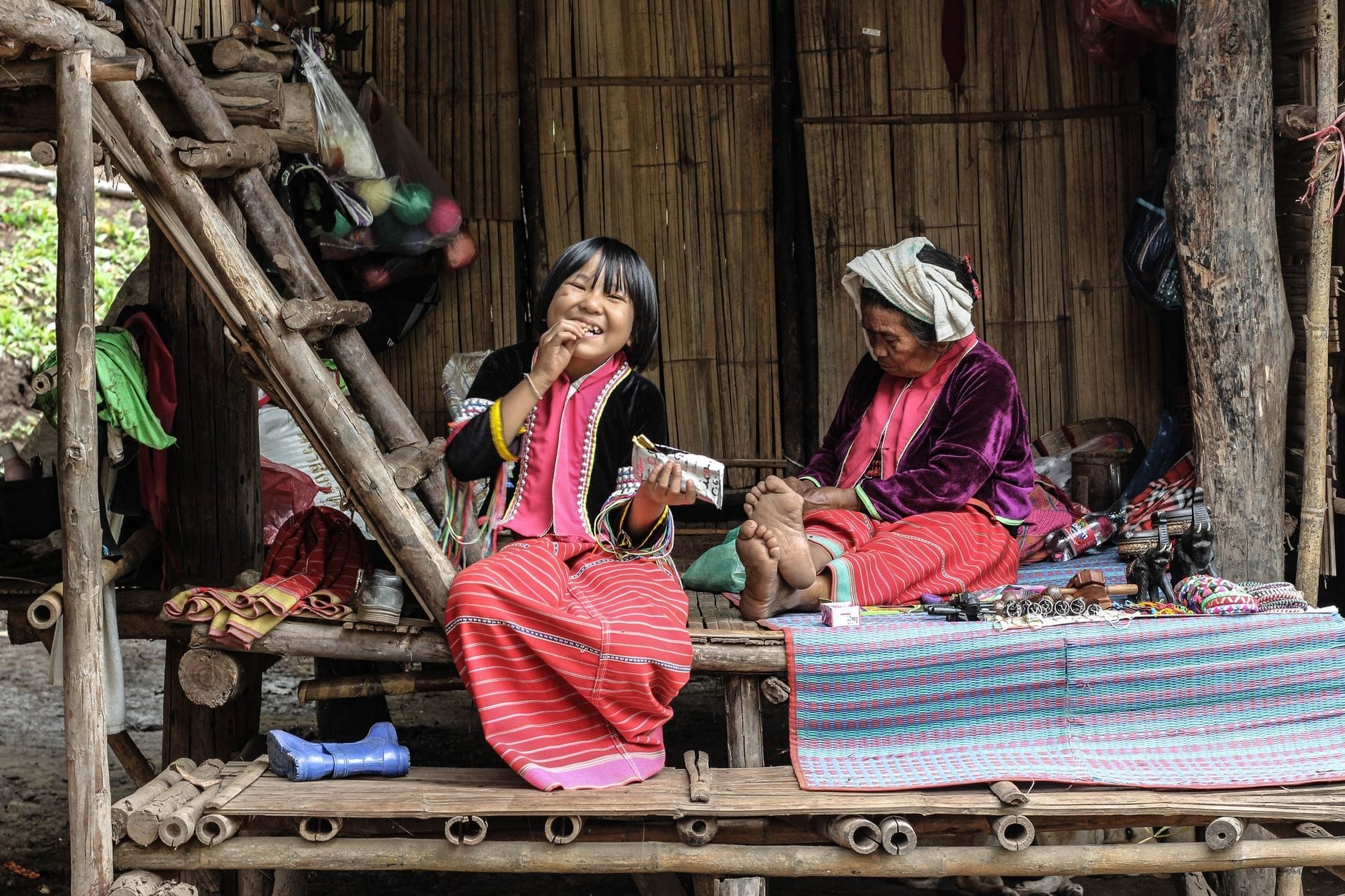
That dual reality is worth understanding before you arrive. Doi Pui is neither a heritage theme park nor a fully off-the-beaten-path discovery. Vendors line the main walking lane selling embroidered textiles, silver jewelry, and hill tribe crafts. But step off that commercial strip and you find real houses, children playing, and elderly women in full traditional indigo dress. The contrast is jarring in a way that is actually instructive: this is what happens when a mountain community integrates tourism into daily life on its own terms.
ℹ️ Good to know
Doi Pui is located inside Doi Suthep-Pui National Park. If you are already paying the park entrance fee to visit Doi Suthep temple, confirm whether your ticket covers access to the village as well, since park checkpoints occasionally apply additional fees for vehicles continuing beyond the temple.
The Journey Up: Road Conditions and First Impressions
The drive from the temple parking area to Doi Pui village takes roughly 20 to 30 minutes on a narrow paved road that winds through dense montane forest. If you are on a motorbike, the road requires focus: hairpin corners, occasional oncoming vehicles, and patches of damp surface after rain. In the morning, low cloud frequently drapes across the ridgeline, and the light filtering through the forest canopy has a soft, almost monochromatic quality.
Arriving by songthaew (the red shared trucks that serve as Chiang Mai's informal transit network) is perfectly feasible. Songthaews run from Nimman Road and from near the Chiang Mai Old City up to the temple; from the temple, you may need to arrange onward transport or join a shared vehicle heading further up. Confirm this with your driver before departure, as not all songthaews continue to the village.
Planning your full mountain day? The Wat Phra That Doi Suthep temple is the obvious first stop before continuing to the village. Allow at least an hour at the temple before heading further into the park.
⚠️ What to skip
During the burning season (roughly February to April), smoke haze from agricultural fires can reduce visibility on the mountain dramatically and make the air quality unpleasant. Check air quality indexes before planning your visit during these months.
Tickets & tours
Live prices and dates from our booking partner. If you book, we may earn a commission at no extra cost to you.
Half-day private van tour to Doi Suthep and Doi Pui Hmong Village from Chiang Mai
From 93 €Instant confirmationFree cancellationHalf-day tour to Doi Suthep and White Hmong Hill Village
From 146 €Instant confirmationFree cancellationDoi Inthanon National Park small group guided tour
From 34 €Instant confirmationFree cancellationChiang Mai - Chiang Dao Cave and 5 Hill Tribe villages
From 42 €Instant confirmationFree cancellation
Walking the Village: What You Will See
The main area of the village is compact enough to cover on foot in 30 to 45 minutes at a leisurely pace. The central lane is lined with stalls where Hmong women sell embroidered cloth, bags, and clothing. The silverwork available here is often genuinely handcrafted: look for the weight and texture of pieces rather than comparing prices alone. Mass-produced items from lowland factories do occasionally appear, so take a moment to distinguish machine-stitched from hand-stitched embroidery.
Beyond the vendor lane, the village opens into residential areas with traditional wooden and bamboo structures. Flower gardens are common near household plots: Hmong communities across northern Thailand have a well-documented tradition of ornamental horticulture, and Doi Pui is no exception. In the cooler months between November and February, certain garden plots produce strawberries that are sold fresh or as jam at the village.
There is also a small museum dedicated to the history of opium cultivation in the region. This is not a glamorous exhibit, but it is a genuinely informative one. Opium poppy cultivation was historically central to highland economies throughout the Golden Triangle, and the Royal Project initiative that gradually replaced poppy farming with alternative crops is explained here with reasonable clarity. The museum is housed in a modest structure and the presentation is simple, but for anyone interested in the region's modern history, it adds meaningful context.
For broader context on northern Thailand's highland cultures and the communities living in this landscape, the Chiang Mai trekking guide covers ethical approaches to visiting hill tribe villages across the region.
Time of Day and Seasonal Considerations
Arriving in the early to mid-morning, ideally before 10:00, gives you the best chance of cooler temperatures, manageable crowds, and better light for photography. By late morning, tour groups that combine the temple and village in a single circuit begin arriving, and the vendor lane becomes noticeably more congested. The atmosphere shifts from quiet exploration to something closer to a market day.
The village sits at an elevation that keeps it several degrees cooler than the city year-round. On clear cool-season days between November and February, temperatures can drop to 10 to 15 degrees Celsius by morning, so a light layer is worth packing even if you left Chiang Mai in 30-degree heat. In the rainy season (June to October), afternoon clouds build quickly and short, heavy downpours are common. The forest smells richest after rain: wet pine needles and damp earth are the dominant notes.
💡 Local tip
Bring cash. The village vendors do not accept card payment, and there are no ATMs on the mountain. Smaller denominations (20 and 50 THB notes) make transactions easier when buying from individual stall holders.
If you are planning your Chiang Mai trip around comfortable weather, the best time to visit Chiang Mai guide breaks down the tradeoffs by season in practical detail.
Photography and Practical Walkthrough
The visual material at Doi Pui is rich: embroidered textiles in deep reds, blues, and blacks displayed against wooden stall fronts; elderly women in traditional dress, some wearing intricate headdresses; and the surrounding forest framing the settlement. Wide-angle shots of the market lane work well in morning light when the sun is still low enough to avoid harsh shadows. For portraits, always ask permission and understand that many vendors expect a small purchase in exchange, which is a fair arrangement.
The trails extending into the national park forest around the village offer a different category of photography: moss-covered roots, canopy light, and occasional birdlife. The Doi Pui area sits within a zone known for montane bird species, and birders with binoculars will find the forest edges productive in the early morning hours. These trails are not well-signed for independent hikers, so stick to paths where other visitors are clearly active, or join an organized guided walk.
Photographers visiting Chiang Mai should also consider the dedicated advice in the Chiang Mai photography guide, which covers light conditions, timing, and ethical considerations for temple and community photography throughout the city and surroundings.
Who This Attraction Is and Is Not For
Doi Pui Hmong Village works best as part of a wider mountain day that includes Wat Phra That Doi Suthep and potentially Bhuphing Palace, rather than as a standalone destination. Visitors who travel specifically for deep cultural immersion may find the commercial nature of the main village lane slightly at odds with their expectations. The stalls are genuine in their product, but the setup is clearly optimized for tourism.
Travelers with limited mobility should note that the terrain is uneven in parts, with stone paths and some inclined sections. It is manageable at a slow pace, but not well-suited for wheelchairs or those with significant mobility challenges.
For families with children, the short walking distances, accessible market goods, and novelty of the mountain setting make this an easy and engaging stop. Young children tend to respond well to the market energy and the visual novelty of traditional dress. Families who enjoy a fuller mountain day are well served by pairing this with a picnic near the national park forest edge.
If you are organizing a family outing and want broader ideas, the Chiang Mai with kids guide covers child-friendly options across the city and its surrounding hills.
Insider Tips
- The strawberry season at Doi Pui runs roughly from December through February. Fresh strawberries sold near the village entrance are noticeably sweeter than what you will find at lowland markets, and vendors often let you sample before buying.
- If you want to avoid the main tour-group rush, aim to arrive before 9:30 AM. By 11:00 the temple and village circuit becomes significantly busier, especially on weekends.
- The opium museum is easy to overlook because it is not well-signposted from the main vendor lane. Ask a stall holder or village resident to point you toward it specifically.
- Walking the residential lanes rather than staying on the main market strip gives you a much quieter, more genuine sense of the village. Be respectful of private household spaces, but the side paths are generally open to visitors.
- Dress in layers. The temperature difference between Chiang Mai city and Doi Pui can be 8 to 12 degrees Celsius, and it is easy to underestimate the cold on overcast days at elevation.
Who Is Doi Pui Hmong Village For?
- Travelers who enjoy combining cultural history with mountain scenery on the same day
- Shoppers interested in handcrafted textiles and hilltribe silverwork with direct provenance
- Families looking for a short, accessible mountain outing with varied visual interest
- Photographers wanting traditional dress and market color in a natural mountain setting
- Anyone curious about the opium history of the Golden Triangle and the Royal Project's legacy
Nearby Attractions
Other things to see while in Doi Suthep & Mountain Area:
- Bhuphing Palace (Bhubing Palace)
Perched on the slopes of Doi Buak Ha in Doi Suthep-Pui National Park at around 1,000–1,200 metres elevation, Bhuphing Palace is the Thai royal family's official winter residence in the north. When the royals are not in residence, the palace grounds open to visitors who come for the manicured formal gardens, cool mountain air, and sweeping valley views across Chiang Mai.
- Chiang Mai Night Safari
Chiang Mai Night Safari is Thailand's largest night zoo, where open-air tram rides carry visitors through illuminated savannah and forest zones after dark. It's a family-oriented attraction with genuine nocturnal animal encounters, though the experience varies significantly depending on when you go and which zones you prioritize.
- Chiang Mai Zoo
Spread across forested hillside terrain at the base of Doi Suthep, Chiang Mai Zoo is one of northern Thailand's most visited family attractions. Home to giant pandas, big cats, reptiles, and hundreds of species, it offers a full day of wildlife encounters in a setting that feels closer to a nature park than a concrete enclosure.
- Grand Canyon Chiang Mai
A former clay quarry on the edge of the city, Chiang Mai's 'Grand Canyon' has become the go-to spot for cliff jumping, swimming, and a rare afternoon off from temple-hopping. Expect turquoise water, tiered platforms, and a crowd that skews young and loud on weekends.
Planning a trip? Discover personalized activities with the Nomado app.