Grand Canyon Chiang Mai: Cliff Jumping, Cool Water, and Zero Pretense
A former clay quarry on the edge of the city, Chiang Mai's 'Grand Canyon' has become the go-to spot for cliff jumping, swimming, and a rare afternoon off from temple-hopping. Expect turquoise water, tiered platforms, and a crowd that skews young and loud on weekends.
Quick Facts
- Location
- Nam Phrae, Hang Dong District, southwest of Chiang Mai city center, south of Doi Suthep National Park
- Getting There
- Red songthaew or grab from Nimman Road (approx. 25-40 min). No direct public bus. Motorbike rental recommended for flexibility.
- Time Needed
- 2 to 4 hours
- Cost
- Entry to the basic canyon swimming area is typically around 100 THB, while the adjacent Grand Canyon Water Park charges several hundred baht or more depending on ticket type. Locker and equipment rental available on-site at additional cost.
- Best for
- Swimming, cliff jumping, hot-day escape, casual social hangouts
What Grand Canyon Chiang Mai Actually Is
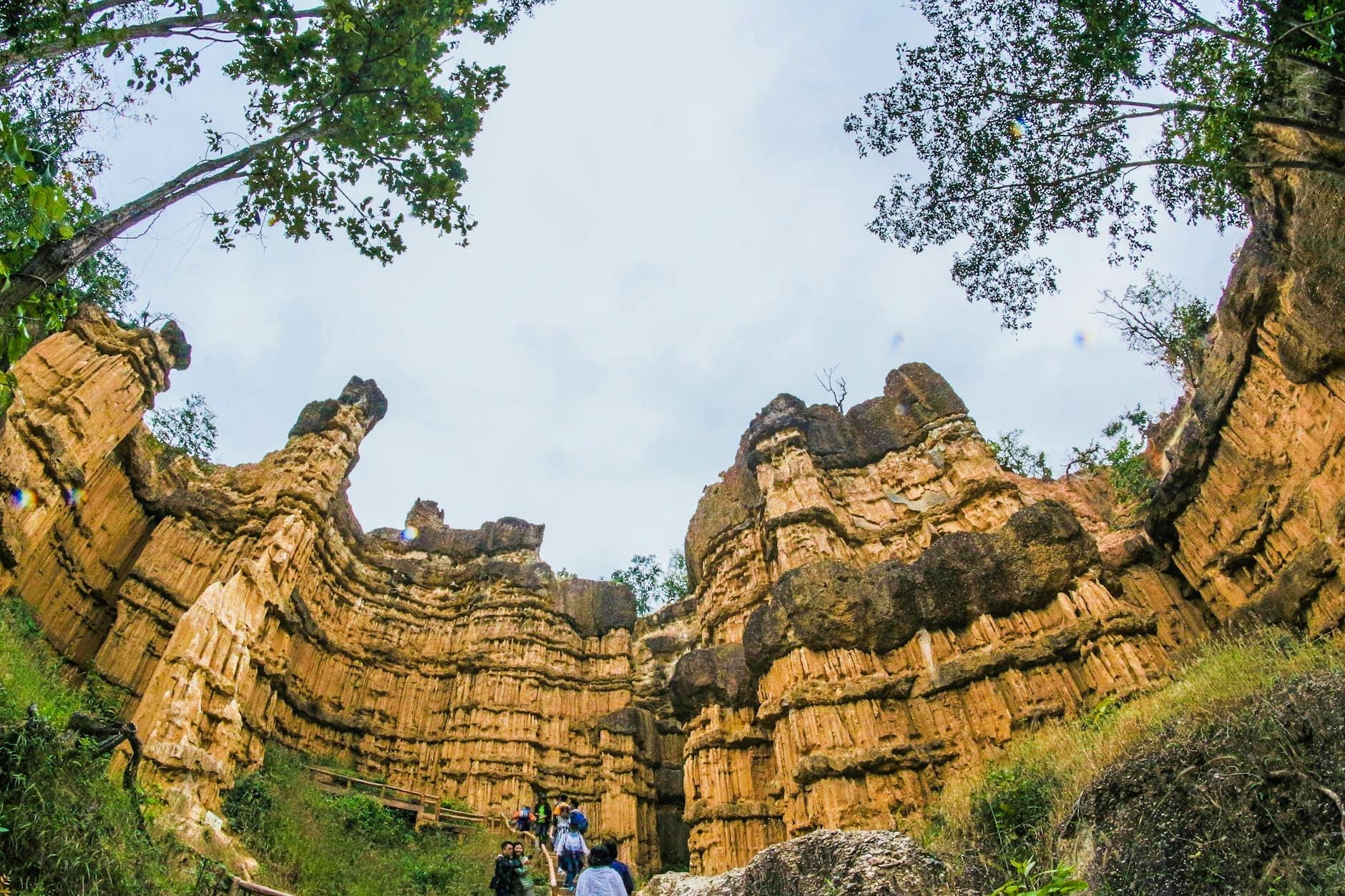
The name is pure local marketing, and it works. Grand Canyon Chiang Mai is not a geological wonder — it is a flooded clay quarry, excavated over decades until groundwater eventually filled the pit, creating a deep, irregular lake with sheer russet-colored walls. The water reads bright turquoise in direct sun, contrasting against the terracotta cliffs in a way that genuinely surprises first-time visitors. Around the main lake there are jump platforms, floating and shore-side areas for entering the water, and food and drink vendors selling cold beer, coconuts, and snacks.
The attraction is honest about what it is: a place to cool off, jump off things, and spend a few hours outside of the city's cultural circuit. If you have been moving through temples and markets for several days and the heat is starting to grind you down, this is a genuinely good antidote.
ℹ️ Good to know
Grand Canyon Chiang Mai is privately operated and entry fees and rules can change seasonally. Check recent traveler reports before going, especially if visiting outside peak tourist season (November to February).
The Water, the Cliffs, and the Jump
The quarry walls range from a gentle around three meters to jumps exceeding ten meters at the higher platforms. The platforms are tiered deliberately, so first-timers can work their way up incrementally rather than committing to a ten-meter drop immediately. The water is deep enough for safe jumping from all designated platforms, though the depth toward the shallower edges of the lake varies, and swimming outside marked zones is strongly discouraged.
The water temperature is noticeably cooler than the surface air for most of the year, which after walking through Chiang Mai's dry-season heat feels immediately restorative. The clarity is reasonable, not pristine. On busy weekend afternoons, with dozens of people in the water, visibility below the surface drops. The color you see from the edge is partly the light catching sediment and minerals in the clay-lined basin, a phenomenon that makes the water look more vivid from above than from inside it.
⚠️ What to skip
Do not jump from unmarked or unofficial spots along the rim. The quarry walls look climbable in places, but the ground is unstable and the water depth outside marked jump zones is not guaranteed. Several incidents have occurred at unsupervised natural swimming holes in Thailand. Follow the marked platforms only.
Tickets & tours
Live prices and dates from our booking partner. If you book, we may earn a commission at no extra cost to you.
Chiang Mai - Chiang Dao Cave and 5 Hill Tribe villages
From 42 €Instant confirmationFree cancellationArt in Paradise Chiang Mai 3D Art Museum entrance tickets
From 8 €Instant confirmationFree cancellationChiang Mai temples and night market tuk-tuk tour
From 23 €Instant confirmationFree cancellationGolden Triangle and White Temple guided tour from Chiang Mai
From 79 €Instant confirmationFree cancellation
How the Atmosphere Changes Through the Day
Mornings between 9am and 11am are genuinely calm. The light is angled low, the cliffs catch warm color, and the crowd is thin enough that you can hear frogs and birds in the scrubby vegetation around the perimeter. This is the best window for photography, particularly if you want shots of the cliffs reflected in still water without dozens of swimmers disrupting the surface.
By midday the energy shifts completely. Weekends from noon onward are loud, social, and dominated by groups of Thai university students and backpackers. Music comes from speakers near the vendor area. There is a queue for the higher platforms. The atmosphere is fun if you want company and chaotic if you do not. Weekday afternoons occupy a middle ground: busier than morning but less frenetic than weekend peak hours.
Late afternoon, roughly from 4pm until closing, is worth considering if you can time it right. The angle of the sun on the western-facing walls produces a deeper orange glow, the crowd thins as families with children head home, and the temperature on the surrounding rocks cools enough that sitting on the platform edges becomes comfortable.
Getting There from Chiang Mai
Grand Canyon Chiang Mai sits in Hang Dong District, roughly 17 to 20 kilometers southwest of the old city moat. It sits just south of Doi Suthep National Park and is sometimes combined with a visit to Wat Phra That Doi Suthep on the same half-day, though the two sites are not especially close to each other on the same road. Most visitors approach via Highway 108 (Chiang Mai–Hot Road) and Highway 121 (Canal Road), then local roads into Nam Phrae.
A Grab car or taxi from Nimman Road takes about 25 to 40 minutes depending on traffic and typically costs around 250 to 400 THB for a one‑way trip depending on demand and vehicle type. Red songthaews do not run a fixed route here, but shared songthaews can sometimes be negotiated from the city. Renting a motorbike from the Nimman area is the most flexible option and allows you to stop at other sites on the return leg. Parking is available at the site.
💡 Local tip
If you are renting a motorbike, the road to Grand Canyon passes through quiet suburban Hang Dong neighborhoods. It is a straightforward route but signage in English is inconsistent. Download an offline map before you leave.
What to Bring and What to Expect on Site
Wear your swimsuit under your clothes or change at the facilities on-site. Flip-flops or sandals you do not mind getting wet are appropriate, as the area around the water is muddy during and after the rainy season. A dry bag or waterproof phone case is strongly recommended if you plan to jump, as the platforms are slippery and there is no obvious place to leave your phone safely while in the water.
Lockers are available for rent. The fee is modest but not always the same across seasons, so carry small change. Food and drinks are available from vendors at the site and prices are reasonable. The food options are snack-level, not meal-level, so eat before you arrive if you plan a long session.
Shade is limited outside of the covered vendor and seating areas. Sun protection matters, especially between 11am and 3pm when the quarry walls reflect additional heat. Sunscreen will wash off in the water, so a rash guard or light shirt is worth considering for extended visits.
Photography and the Visual Reality
Grand Canyon Chiang Mai photographs better than many outdoor recreation sites because the color contrast between the reddish-brown quarry walls and the turquoise water is genuinely striking. If you are building a Chiang Mai photography itinerary, this site rewards early visits. Before the crowds arrive, the reflections on the water surface are clean, and the geometry of the terraced cliffs gives you multiple angles without needing to move far.
Action shots of cliff jumps are best captured from the lower platforms looking upward, using a fast shutter speed. A waterproof camera or housing pays off here if you have one. Phone cameras in standard cases should not be trusted near the jump zones where spray and accidental drops into the water are genuine risks.
Honest Assessment: Is It Worth It?
For travelers on a multi-day Chiang Mai itinerary, particularly those staying three or more days, Grand Canyon is a worthwhile half-afternoon break from the cultural sites. It requires low effort, costs very little, and delivers a physically engaging experience that contrasts well with temple visits and market evenings. If you are following a three-day Chiang Mai itinerary, slotting this in on your final afternoon before a night market rounds out the day well.
That said, if you are visiting Chiang Mai for nature and scenery rather than swimming, your time might be better spent at Huay Tung Tao Lake to the north, which offers a quieter, more scenic lakeside experience with better food options and mountain views. Grand Canyon's appeal is kinetic. If you are not planning to swim or jump, you are largely a spectator.
Travelers who dislike loud music, large groups of young adults, and muddy ground near water should temper expectations on weekend visits. Families with very young children can visit, but the jumping platforms are not the draw in that case: the shallower beach-style entry area is manageable, though this too can get congested at peak hours.
💡 Local tip
During the burning season (roughly February to April), air quality around Chiang Mai can deteriorate significantly. Outdoor water activities are still possible, but haze reduces visibility and the experience is less pleasant. Check AQI readings before planning an outdoor day trip during this period.
Insider Tips
- Arrive at 9am on a weekday. You will likely have the main jump platforms to yourself for the first 45 minutes, which is the only time the site feels genuinely peaceful.
- The higher jump platforms can cause unexpected hesitation once you are standing at the edge. Watch others go first and take your time. There is no social pressure to commit once you are up there, but the queue behind you can feel that way on busy days.
- Bring your own water bottle. The vendors sell cold drinks but at a premium, and hydration matters more than it seems when you are alternating between sun exposure and cool water.
- The quarry walls look climbable in several spots. They are not official jump points and the ground at the top is loose. Avoid the temptation entirely.
- If you are visiting during rainy season (June to October), the water level rises and the color of the water shifts toward a murkier green. The experience is different but not necessarily worse: crowds thin significantly and the surrounding vegetation is lush.
Who Is Grand Canyon Chiang Mai For?
- Backpackers and younger travelers wanting a physically active, low-cost afternoon
- Groups looking for a social outdoor activity that does not require advance booking
- Repeat visitors to Chiang Mai who have already covered the main cultural sites
- Hot-weather days when temple visits feel punishing
- Photography enthusiasts interested in unusual color contrasts and landscape textures
Nearby Attractions
Other things to see while in Doi Suthep & Mountain Area:
- Bhuphing Palace (Bhubing Palace)
Perched on the slopes of Doi Buak Ha in Doi Suthep-Pui National Park at around 1,000–1,200 metres elevation, Bhuphing Palace is the Thai royal family's official winter residence in the north. When the royals are not in residence, the palace grounds open to visitors who come for the manicured formal gardens, cool mountain air, and sweeping valley views across Chiang Mai.
- Chiang Mai Night Safari
Chiang Mai Night Safari is Thailand's largest night zoo, where open-air tram rides carry visitors through illuminated savannah and forest zones after dark. It's a family-oriented attraction with genuine nocturnal animal encounters, though the experience varies significantly depending on when you go and which zones you prioritize.
- Chiang Mai Zoo
Spread across forested hillside terrain at the base of Doi Suthep, Chiang Mai Zoo is one of northern Thailand's most visited family attractions. Home to giant pandas, big cats, reptiles, and hundreds of species, it offers a full day of wildlife encounters in a setting that feels closer to a nature park than a concrete enclosure.
- Doi Pui Hmong Village
Perched at over 1,200 meters on the slopes above Chiang Mai, Doi Pui Hmong Village offers a window into northern Thailand's Hmong hilltribe communities, complete with a small opium history museum, traditional textile vendors, and cool mountain air. It sits just beyond Wat Phra That Doi Suthep, making it a logical extension of any mountain day trip.
Planning a trip? Discover personalized activities with the Nomado app.