Chiang Mai Night Safari: After-Dark Wildlife at the Foot of Doi Suthep
Chiang Mai Night Safari is Thailand's largest night zoo, where open-air tram rides carry visitors through illuminated savannah and forest zones after dark. It's a family-oriented attraction with genuine nocturnal animal encounters, though the experience varies significantly depending on when you go and which zones you prioritize.
Quick Facts
- Location
- Mahidol Road (near Royal Flora Ratchaphruek), southwest of the Old City, about 10–12 km from central Chiang Mai
- Getting There
- Songthaew from Old City or Nimman (negotiate fare); tuk-tuk or ride-share app recommended for late-night return
- Time Needed
- 3 to 4 hours for a thorough visit; arrive by around 6:30–7:00 PM to comfortably catch all tram circuits and shows
- Cost
- Thai nationals typically pay lower rates set by the park; foreigners commonly pay around 800 THB for the full access night program including tram, with reduced rates for children
- Best for
- Families with children, wildlife enthusiasts, and travelers seeking an evening activity beyond the night markets
- Official website
- www.chiangmainightsafari.com
What Chiang Mai Night Safari Actually Is
Chiang Mai Night Safari is a government-operated open-zoo and wildlife park covering around 131–132 hectares on flat land southwest of Chiang Mai near Royal Flora Ratchaphruek, about 10–12 kilometers from the Old City. It officially opened on February 6, 2006 and remains the largest night zoo in Thailand, originally designed for after-dark wildlife observation but now also open for daytime visits. The park is organized into three zones: Savanna Safari, Predator Prowl, and a central Jaguar Trail walking area around a large lake. The tram circuits through the first two zones are the headline experience; everything else builds around them.
The park sits on Mahidol Road southwest of the city, near Royal Park Rajapruek — separate from the Doi Suthep temple corridor to the northwest and not part of Doi Suthep-Pui National Park. Allow 20–30 minutes by car from the Old City; do not confuse this site with Chiang Mai Zoo or Wat Phra That Doi Suthep on Huay Kaew Road.
ℹ️ Good to know
The night program typically runs from around 5:00–6:00 PM, with last admissions around 10:00 PM and trams operating into the late evening. Arriving before 8:00 PM gives you enough time to complete both tram circuits and walk the Jaguar Trail without rushing.
The Tram Circuits: Savanna Safari and Predator Prowl
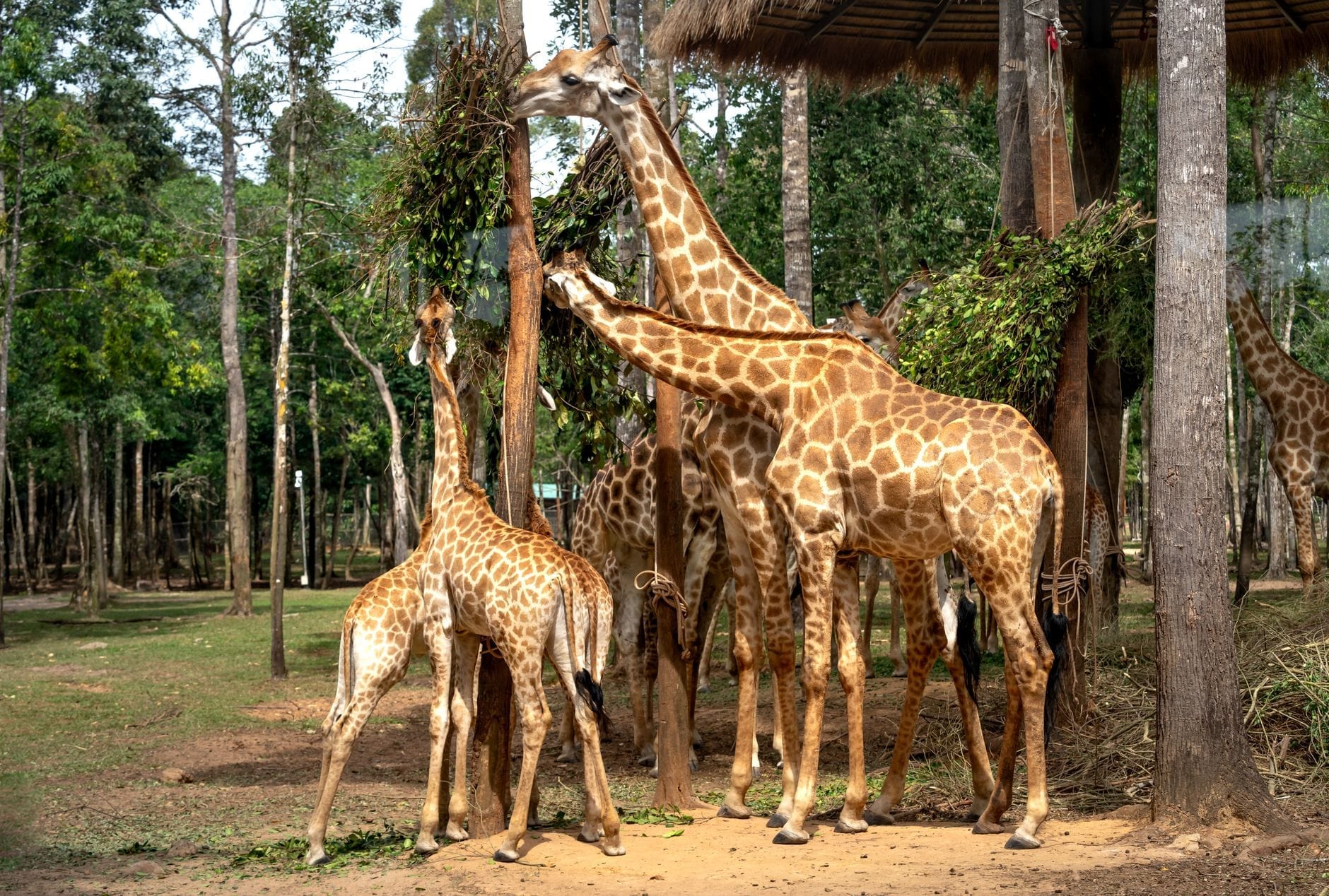
The two open-air tram rides are what most visitors come for, and they deliver something genuinely different from a standard zoo visit. The Savanna Safari tram moves slowly through a large open enclosure housing giraffe, zebra, white rhinoceros, and various deer species. Animals approach the tram freely, and the darkness creates an unusual intimacy — a giraffe lowering its neck toward the tram roof at eye level feels surprising in a way it simply wouldn't in daylight. Spotlights mounted on the tram illuminate animals without appearing to distress them, though the light quality does make photography challenging without a good low-light camera or fast lens.
The Predator Prowl circuit passes through separated enclosures housing lions, tigers, hyenas, and bears. The animals are behind barriers here, unlike the open Savanna zone, but the nocturnal energy is noticeably different: big cats pace and vocalize in ways they often don't during warmer daylight hours. The full tram experience for both circuits takes around 40 to 60 minutes combined, and queues can stretch to 20 or 30 minutes on weekends and Thai public holidays.
💡 Local tip
Sit on the outer seats of the tram for better animal sightlines and easier photography. The central rows lose much of the field of view behind other passengers.
Weeknight visits, particularly Tuesday through Thursday, have noticeably shorter queues and quieter trams. Weekends, especially those coinciding with Thai school holidays, draw large domestic tour groups that can significantly slow the pace. If your schedule is flexible, a weeknight in the earlier part of the week is the clearest path to a relaxed visit.
Tickets & tours
Live prices and dates from our booking partner. If you book, we may earn a commission at no extra cost to you.
Chiang Mai temples and night market tuk-tuk tour
From 23 €Instant confirmationFree cancellationChiang Mai street food experience tuk-tuk night tour
From 159 €Instant confirmationFree cancellationChiang Mai - Chiang Dao Cave and 5 Hill Tribe villages
From 42 €Instant confirmationFree cancellationArt in Paradise Chiang Mai 3D Art Museum entrance tickets
From 8 €Instant confirmationFree cancellation
The Jaguar Trail: Walking the Central Lake
Between and around the tram circuits, the Jaguar Trail loops around a central lake with walking paths, feeding stations, and smaller enclosures for macaques, otters, exotic birds, and smaller deer. The lakeside setting is genuinely pleasant in the evening; the water reflects the park lights, and food stalls and restaurants line part of the path. This is where families tend to slow down, kids feed animals at designated stations, and the pace becomes more relaxed than the tram experience.
The walking zone also hosts a pelican feeding show at set times in the evening, which draws crowds but is short enough not to become a time sink. Check the schedule board at the entrance when you arrive. The lake perimeter is flat, paved, and accessible for strollers and wheelchairs, making this section the most family-friendly and accessible part of the park.
How the Experience Changes Through the Evening
The first hour after opening, roughly 6:00 to 7:00 PM, is the transition period. It's not yet fully dark, temperatures are still dropping, and some nocturnal animals haven't fully activated. By 7:30 PM, the atmosphere shifts: the darkness is complete, the air cools noticeably (bringing temperatures close to the low 20s °C on cooler dry-season evenings), and animal behavior becomes more dynamic. This is the window most worth targeting for the tram rides.
After 9:00 PM, crowds thin out, the park quiets, and the experience becomes more contemplative. If you're willing to start with the Jaguar Trail walk, delay the trams until around 8:30 or 9:00 PM, and you'll often find shorter queues and animals that have been active for a few hours rather than just waking up. The tradeoff is that some food stalls begin closing before 10:00 PM.
⚠️ What to skip
Avoid visiting during the March to May burning season if you're sensitive to air quality. The surrounding hills can trap smoke, and the open-air tram experience becomes uncomfortable during heavy haze periods. Check the AQI before going.
Getting There and Back: The Practical Reality
The park is off Mahidol/Canal Road southwest of the city, while Huay Kaew Road with Chiang Mai Zoo lies on the opposite northwest side of town. Red songthaew trucks from the Old City or Nimman area can drop you near the entrance, but you'll need to negotiate a fare as this is beyond the standard city zone. A reasonable agreed price for a drop-off is around 60 to 100 THB per person depending on your starting point and bargaining. The bigger practical issue is the return journey. The park closes late (around 10:00–11:00 PM), and many songthaews stop running to outlying areas before closing time, and the road is not walkable after dark. Booking a ride-share app (Grab is reliable in Chiang Mai) or arranging a tuk-tuk in advance is strongly advised.
If you have a rented motorbike or car, the parking area is large and free. The road up to the park is well-lit and straightforward. For visitors staying in the Nimman area, the park is roughly a 20–30-minute drive and the most convenient option short of a hotel shuttle.
Pairing the Night Safari with an earlier afternoon visit to Chiang Mai Zoo — which is on the same road — is possible but will make for a long day. Most visitors find that one attraction per evening is sufficient.
Who Will Enjoy It Most — and Who Might Not
Families with children between roughly 4 and 14 years old tend to get the most from this park. The combination of tram rides, approachable animals, lakeside walking, and evening novelty holds attention well across that age range. The feeding zones and interactive elements add participation that a passive zoo visit doesn't offer.
Serious wildlife or nature travelers may find the experience interesting but ultimately unsatisfying. The animals are captive, the settings are constructed, and the educational programming is minimal compared to international wildlife parks. Visitors who have been to large African or South African game parks will find the safari metaphor a stretch. That said, for travelers whose primary Thailand experience has been cities and temples, the Night Safari offers genuine exposure to large mammals in an accessible format.
Travelers primarily interested in ethical wildlife experiences — particularly regarding elephant interaction — should note that this is a separate type of facility from sanctuaries like the Elephant Nature Park. The Night Safari is a zoo with conservation programs, not a rescue or rehabilitation operation.
Photography at the Night Safari
Night photography here is rewarding but technically demanding. The tram spotlights create high-contrast lit zones against deep shadow, which confuses auto-exposure systems on phone cameras. A phone with a dedicated night mode (Pixel, iPhone Pro, or recent Samsung flagships) will handle the Savanna zone reasonably well. For the Predator Prowl, where animals are further from the tram, a dedicated camera with a fast lens (f/2.8 or wider) and high ISO capability will produce far better results.
If photography is a priority, read through the Chiang Mai photography guide for broader context on night shooting in the region. At the Night Safari specifically, stabilize your camera against the tram railing when the vehicle is stopped rather than trying to shoot while moving.
Insider Tips
- Ask staff at the entrance which tram circuit is departing first when you arrive — sometimes one queue is significantly shorter than the other, and doing the less popular one first saves 15 to 20 minutes of waiting.
- Bring a light jacket or long-sleeved layer. Even in the dry season, the park sits at a slightly higher elevation than the city, and standing in the open tram after 8:30 PM can feel surprisingly cool.
- The restaurant by the central lake offers decent khao man gai and pad thai at reasonable prices. Eating dinner here rather than before you arrive means you can time your meal with the post-tram crowd thinning around 9:00 PM.
- If you're visiting with young children, do the tram rides first before exhaustion sets in. The Jaguar Trail walk is calmer and less stimulating and works better as a wind-down before heading home.
- The park occasionally hosts special seasonal events with additional lighting installations around Thai holidays. Checking the official website before your visit can reveal whether any enhanced programming overlaps with your dates.
Who Is Chiang Mai Night Safari For?
- Families with children looking for an engaging evening beyond the night markets
- Travelers who want wildlife encounters without a full-day nature excursion
- Visitors on a 3-to-4-day Chiang Mai itinerary seeking after-dark variety
- Couples wanting a low-key evening with good atmosphere and outdoor settings
- First-time visitors to Thailand curious about wildlife but without time for a full safari trip
Nearby Attractions
Other things to see while in Doi Suthep & Mountain Area:
- Bhuphing Palace (Bhubing Palace)
Perched on the slopes of Doi Buak Ha in Doi Suthep-Pui National Park at around 1,000–1,200 metres elevation, Bhuphing Palace is the Thai royal family's official winter residence in the north. When the royals are not in residence, the palace grounds open to visitors who come for the manicured formal gardens, cool mountain air, and sweeping valley views across Chiang Mai.
- Chiang Mai Zoo
Spread across forested hillside terrain at the base of Doi Suthep, Chiang Mai Zoo is one of northern Thailand's most visited family attractions. Home to giant pandas, big cats, reptiles, and hundreds of species, it offers a full day of wildlife encounters in a setting that feels closer to a nature park than a concrete enclosure.
- Doi Pui Hmong Village
Perched at over 1,200 meters on the slopes above Chiang Mai, Doi Pui Hmong Village offers a window into northern Thailand's Hmong hilltribe communities, complete with a small opium history museum, traditional textile vendors, and cool mountain air. It sits just beyond Wat Phra That Doi Suthep, making it a logical extension of any mountain day trip.
- Grand Canyon Chiang Mai
A former clay quarry on the edge of the city, Chiang Mai's 'Grand Canyon' has become the go-to spot for cliff jumping, swimming, and a rare afternoon off from temple-hopping. Expect turquoise water, tiered platforms, and a crowd that skews young and loud on weekends.
Planning a trip? Discover personalized activities with the Nomado app.