Huay Tung Tao Lake: Chiang Mai's Laid-Back Lakeside Escape
Huay Tung Tao Lake is a large reservoir on the northwestern edge of Chiang Mai, ringed by bamboo huts, food vendors, and views of Doi Suthep. It's where locals come to eat grilled fish, wade in shallow water, and spend a slow afternoon doing very little. Less polished than city parks and more relaxed than any resort, it offers a genuine slice of how Chiang Mai residents actually spend their weekends.
Quick Facts
- Location
- Don Kaeo Sub-district, Mae Rim District — roughly 12 km from the Old City
- Getting There
- Songthaew from the Old City or Nimman area (negotiate fare); easiest by scooter or car — no direct public bus
- Time Needed
- 2–4 hours for a relaxed visit; half-day if you're eating and swimming
- Cost
- Small entry fee per person (typically 50 THB for foreigners and 20 THB for Thai residents); hut rental fees vary by vendor; food and drink purchased at lakeside stalls
- Best for
- Families, couples, and digital nomads wanting a genuine local day out without tourist crowds
What Huay Tung Tao Lake Actually Is
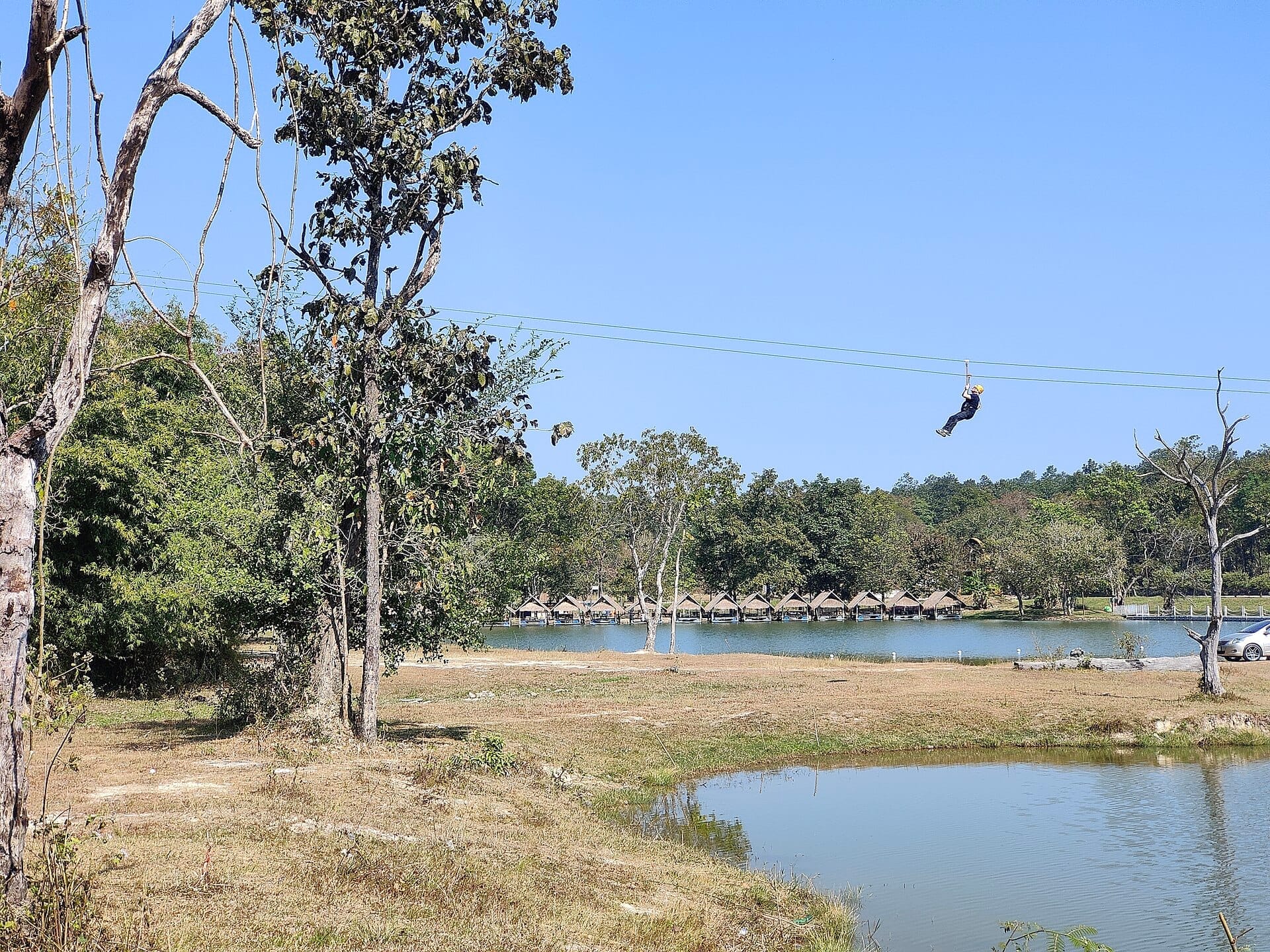
Huay Tung Tao Lake is a reservoir created by a dam built for agricultural irrigation, sitting at the foot of the Doi Suthep-Pui National Park mountain range. Over the years it became an informal recreation area, and today it functions as a loose collection of family-run food-and-hut operations strung along the lakeshore. There's no central ticket office, no uniformly branded experience, and no polished infrastructure. What you find instead is bamboo platform huts set over or beside the water, charcoal grills smoking with tilapia and pork skewers, vendors selling beer and coconuts, and groups of Thai families lounging on mats across entire afternoons.
The lake itself is wide and calm. On clear days, Doi Suthep's forested ridgeline rises in the background, and the reflected mountain in the water makes for a genuinely striking view. That visual backdrop is one of the main reasons photographers and couples are increasingly drawn here, but the atmosphere remains resolutely local rather than performative.
💡 Local tip
The lake is managed by the Royal Thai Army, which is why entry requires a small fee at the gate. Rules about swimming areas and alcohol consumption can vary, so follow posted signs and observe what Thai families around you are doing.
How the Experience Changes Through the Day
Morning arrivals, especially on weekdays, find the lake in its quietest state. Mist sometimes sits low over the water in the cool season (November through February), and the light at 7 or 8 am is soft and blue. A few fishermen cast lines from the bank. Food stalls are just starting their charcoal fires, and you can secure a hut right on the waterline without any competition. This is the best time to photograph the mountain reflection and to appreciate the scale of the reservoir without a crowd filling your frame.
By 10 am on weekends, groups begin arriving in numbers. Families claim huts and spread out with supplies from home supplemented by vendor orders. Children wade in the shallower margins of the lake. The smell of grilling fish becomes the dominant sensory note, carried on a light breeze. This is the atmosphere most visitors expect and enjoy: casual, sociable, unhurried. It's not loud or chaotic in the way a night market is. The pace is horizontal.
Late afternoon sees a gradual shift. The heat of midday fades, golden light hits the water from the west, and the mountain behind turns a deeper green. By 4 pm the huts are thinning out, vendors pack up grills, and the lake returns to near-silence. Arriving for the last hour or two before closing is unexpectedly peaceful, though food options will be limited.
⚠️ What to skip
The lake and its vendor stalls generally operate from early morning until around 6 pm, but individual vendors set their own hours. Come before noon on weekends if you want your pick of lakeside huts and a full food menu.
Tickets & tours
Live prices and dates from our booking partner. If you book, we may earn a commission at no extra cost to you.
Doi Tung Royal Villa with sacred temple and gardens private transfer
From 172 €Instant confirmationFree cancellationDoi Inthanon National Park small group guided tour
From 34 €Instant confirmationFree cancellationHalf-day tour to admire elephants and enjoy Thai nature
From 48 €Instant confirmationFree cancellationChiang Mai - Chiang Dao Cave and 5 Hill Tribe villages
From 42 €Instant confirmationFree cancellation
The Food: What to Order and How It Works
Eating at Huay Tung Tao is a central part of the experience, not an afterthought. Each hut is operated by a separate vendor, and when you rent a hut you typically order food and drink from that vendor. The signature dish is whole grilled tilapia (pla nil), scored and seasoned with lemongrass and herbs, cooked slowly over charcoal until the skin crisps. It arrives with sticky rice, green papaya salad (som tum), and a dipping sauce. The fish here is simple, consistently decent, and priced far below anything equivalent in the city.
Beyond fish, expect grilled pork skewers, fried chicken, morning glory stir-fry, and cold Chang or Leo beer. Some vendors offer fresh coconuts and seasonal fruit. Quality varies between stalls, so it's worth a short walk along the bank before committing to a hut. The vendors with the most charcoal smoke going and the most Thai customers eating are a reliable indicator of quality. Prices are low but not fixed — ask before ordering to avoid any confusion.
ℹ️ Good to know
Vegetarian options are limited. Most stalls center their menu around grilled meat and fish. If you don't eat either, bring supplementary snacks or check with vendors individually — some can prepare simple vegetable dishes on request.
Swimming, Walking, and What to Actually Do
Swimming is possible and common in the shallower areas near the shore. The water is warm for most of the year. That said, this is a reservoir used for irrigation, not a filtered pool. Water clarity varies by season — it tends to be clearest in the cool season and cloudier after heavy rains in September and October. Families with young children tend to wade rather than swim in open water, which gives you a reasonable gauge of conditions.
There's a loose path that runs along the perimeter of the lake, and walking the full circuit takes roughly 45 minutes at a gentle pace. It passes through patches of light forest, open grass, and gives multiple angles on the mountain view. This walk is flat and easy, making it appropriate for all fitness levels. Birdwatchers will notice kingfishers, egrets, and various waterbirds working the shallows, particularly in the early morning.
If you want to combine this visit with more nature in the area, the Ang Kaew Reservoir on the Chiang Mai University campus is another calm water-and-mountain spot worth knowing about, though it has a different character — quieter, less commercial, and better suited to a short stroll than a half-day stay.
Getting There: Your Realistic Options
Huay Tung Tao Lake sits northwest of the Old City, near the foot of the Doi Suthep mountains. The most practical way to get there is by rented scooter, which gives you full flexibility and takes about 20–30 minutes from the Old City or Nimman area via Canal Road. The road to the lake entrance is well-signed.
A red songthaew (shared taxi truck) from the Old City or Nimman is possible but requires negotiation, as this route isn't a fixed songthaew line. Expect to pay more than a typical shared-fare trip. Grab and other ride-hailing apps work from Chiang Mai, though driver acceptance of rides to this area can be inconsistent. Taxis are reliable but more expensive. If you're planning a full half-day, the scooter remains the most cost-effective and flexible option by a clear margin.
For full context on getting around the city, the getting around Chiang Mai guide covers all transport modes with current pricing.
When to Go and What to Expect by Season
The cool season (November through February) is the optimal window. Temperatures are comfortable for both outdoor sitting and lakeside walking, the sky above Doi Suthep is typically clear, and the mountain views are at their sharpest. This aligns with the peak tourist season in Chiang Mai, though Huay Tung Tao draws mostly Thai visitors year-round. For a broader overview of seasonal conditions, the best time to visit Chiang Mai guide has full detail.
The hot season (March through May) makes midday visits uncomfortable. If you come during this period, arrive before 9 am or after 4 pm. February through April also coincides with the burning season, when agricultural fires in the surrounding hills push haze and smoke into the Chiang Mai valley. On bad days, Doi Suthep disappears behind a grey curtain and the lake loses its visual appeal entirely. This is a meaningful trade-off worth factoring into your planning.
The rainy season (June through October) brings lush green surroundings and fewer crowds, but afternoon downpours are common. Huts offer shelter, and Thais are generally unfazed by rain. The lake level rises significantly, and the water turns murkier after heavy rains. September and October are the wettest months.
⚠️ What to skip
During the burning season (roughly February through April), air quality around Chiang Mai can drop sharply. Check the AQI before visiting — on high-pollution days, spending hours in open air at the lakeside is not recommended, especially for children or anyone with respiratory sensitivities.
Photography Tips and Practical Notes
The classic shot at Huay Tung Tao is the still lake surface with Doi Suthep's mountain ridge reflected in the foreground. This works best in the early morning before wind disturbs the water. A wide-angle lens captures both the mountain and the huts in context. Shooting from the far (western) bank gives you the best angle on the full ridge. Longer lenses can isolate the mountain summit above the treeline at the water's edge.
If mountain photography draws you to the Doi Suthep area more broadly, consider combining a visit here with Wat Phra That Doi Suthep on the same day. The temple is roughly 20 minutes by road from the lake. Morning at the lake, then the temple by late morning, is a logical and efficient pairing.
Bring sunscreen, a hat, and cash. There are no ATMs at or near the lake entrance. Mobile data works fine. The ground near the water's edge can be muddy after rain, so avoid wearing shoes you'd rather not clean. Basic toilet facilities exist at the lake but are rudimentary.
Who Should Skip Huay Tung Tao
Travelers with very limited time who are focused on cultural and temple sightseeing will find this lake competes awkwardly with the density of things to see in the Old City. It's a leisure spot, not a cultural landmark. If you have only two or three days in Chiang Mai, it may not be the priority — though even then, an early-morning two-hour visit has a strong calming effect after temple-heavy days.
Anyone who finds informal, vendor-by-vendor settings confusing or who expects clear menus, fixed prices, and polished service may feel out of their depth here. This is a place where you figure it out, point at things, and accept some ambiguity as part of the charm. It's also not a beach — the entry to the water is gradual and slightly muddy at the edge, and the water is a reservoir, not ocean or a mountain stream.
Insider Tips
- Walk the full bank before choosing a hut. The westernmost huts on the far side of the lake offer the best unobstructed view of Doi Suthep and are often the last to fill on weekend mornings.
- Bring your own snorkeling mat or inflatable if you plan to swim — vendors sell some equipment but stock is inconsistent and quality is variable.
- On weekdays, even during high season, you can often have a lakeside hut almost entirely to yourself until 10 am. This is the closest the lake gets to a private experience.
- The entry fee booth is usually staffed, but if arriving very early you may find it unstaffed — pay on the way out or when staff arrive. Being honest about this saves awkward moments.
- If you're visiting during a Thai public holiday, arrive by 8 am or expect a full car park and limited hut availability. The lake is a go-to destination for Thai families on long weekends.
Who Is Huay Tung Tao Lake For?
- Families with children who want a low-key outdoor day with easy swimming and food
- Couples looking for a relaxed local afternoon with a scenic backdrop rather than a tourist attraction
- Repeat visitors to Chiang Mai who already know the temples and want to see how locals actually spend their leisure time
- Photographers wanting the Doi Suthep mountain reflection shot with minimal effort
- Anyone needing a half-day reset from city sightseeing without going on a full day trip
Nearby Attractions
Other things to see while in Doi Suthep & Mountain Area:
- Bhuphing Palace (Bhubing Palace)
Perched on the slopes of Doi Buak Ha in Doi Suthep-Pui National Park at around 1,000–1,200 metres elevation, Bhuphing Palace is the Thai royal family's official winter residence in the north. When the royals are not in residence, the palace grounds open to visitors who come for the manicured formal gardens, cool mountain air, and sweeping valley views across Chiang Mai.
- Chiang Mai Night Safari
Chiang Mai Night Safari is Thailand's largest night zoo, where open-air tram rides carry visitors through illuminated savannah and forest zones after dark. It's a family-oriented attraction with genuine nocturnal animal encounters, though the experience varies significantly depending on when you go and which zones you prioritize.
- Chiang Mai Zoo
Spread across forested hillside terrain at the base of Doi Suthep, Chiang Mai Zoo is one of northern Thailand's most visited family attractions. Home to giant pandas, big cats, reptiles, and hundreds of species, it offers a full day of wildlife encounters in a setting that feels closer to a nature park than a concrete enclosure.
- Doi Pui Hmong Village
Perched at over 1,200 meters on the slopes above Chiang Mai, Doi Pui Hmong Village offers a window into northern Thailand's Hmong hilltribe communities, complete with a small opium history museum, traditional textile vendors, and cool mountain air. It sits just beyond Wat Phra That Doi Suthep, making it a logical extension of any mountain day trip.
Planning a trip? Discover personalized activities with the Nomado app.