Ang Kaew Reservoir (CMU Lake): Chiang Mai's Peaceful Campus Escape
Tucked inside Chiang Mai University's forested campus, Ang Kaew Reservoir is a serene lake framed by pine and eucalyptus trees with Doi Suthep rising directly behind it. It's the kind of place locals walk before work, students study beside on weekends, and visitors stumble upon while exploring the Nimman area.
Quick Facts
- Location
- Chiang Mai University campus, near Nimman Road, Chiang Mai
- Getting There
- Songthaew or grab to CMU campus; 15-min walk from Nimman Road
- Time Needed
- 45 minutes to 2 hours
- Cost
- Free entry
- Best for
- Morning walks, joggers, photography, peaceful breaks
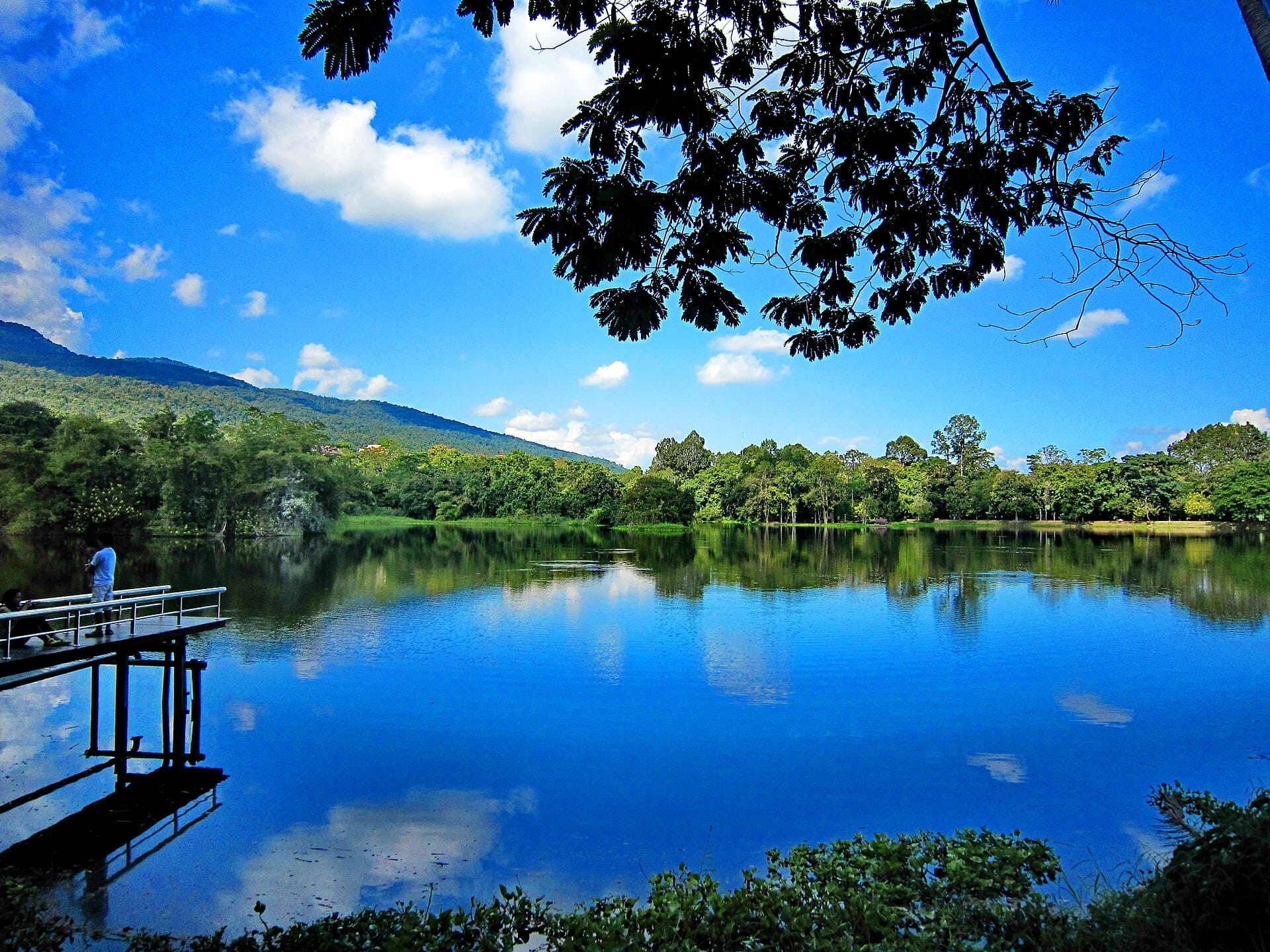
What Ang Kaew Reservoir Actually Is
Ang Kaew Reservoir, commonly called CMU Lake, sits at the heart of Chiang Mai University's sprawling campus on the western edge of the city. The lake was constructed as a functional water reserve for the university, but over the decades it has become one of the most tranquil outdoor spaces in Chiang Mai. The combination of still water, forested hills, and the constant visual presence of Doi Suthep mountain directly to the west creates a setting that feels far removed from any city.
The reservoir itself is not enormous. You can walk the full perimeter path in under an hour at an easy pace. What makes the experience is the context: pine trees crowd the upper slopes, there are sections of shaded trail where the canopy closes overhead, and the lake's surface reflects the mountain on clear mornings in a way that stops walkers mid-stride.
💡 Local tip
Arrive before 8am on weekdays for the quietest experience. By 9am, students and joggers fill the main path, and the peaceful mood shifts to something more social and lively.
The Walk Around the Lake
A paved and partially earthen path follows the reservoir's edge, passing through patches of forest and open viewpoints over the water. The trail is essentially flat along the lake shore, but the surrounding hills rise steeply, and short unpaved side paths lead up into the forest if you want elevation and shade. Most visitors stick to the main loop and find it more than enough.
The northern end of the lake offers the clearest views back toward Doi Suthep. On mornings after overnight rain, when the air is clean and the mountain is fully visible rather than lost in haze, this viewpoint is genuinely striking. The forested slopes of the university's protected land form a green frame, and the water is usually still at that hour before the wind picks up.
Bring water. There are no refreshment stalls along the lake path itself, though the CMU campus has canteens and convenience stores a short walk away. Sunscreen matters more than most visitors expect, since the open stretches along the bank offer no shade between roughly 10am and 4pm.
⚠️ What to skip
During Chiang Mai's burning season (roughly February to April), smoke haze can reduce visibility significantly, obscuring Doi Suthep and degrading air quality. Check the AQI before planning a morning walk here during those months.
Tickets & tours
Live prices and dates from our booking partner. If you book, we may earn a commission at no extra cost to you.
Chiang Mai - Chiang Dao Cave and 5 Hill Tribe villages
From 42 €Instant confirmationFree cancellationArt in Paradise Chiang Mai 3D Art Museum entrance tickets
From 8 €Instant confirmationFree cancellationChiang Mai temples and night market tuk-tuk tour
From 23 €Instant confirmationFree cancellationGolden Triangle and White Temple guided tour from Chiang Mai
From 79 €Instant confirmationFree cancellation
Time of Day: How the Atmosphere Shifts
Early morning is when Ang Kaew is at its best. From around 6am, joggers, dog walkers, and older residents doing tai chi or stretching exercises use the path in the relaxed, unhurried way that defines Thai morning culture. The light is soft, the temperature is manageable even in hot season, and the sounds are birds and footsteps rather than traffic. There's a specific quality of calm here in the early hours that is rare this close to a city center.
Midday brings heat and a drop in atmosphere. The lake is still pleasant to look at, but the lack of shade on the main path and the midday sun reflecting off the water make an extended walk uncomfortable from approximately March through June. Late afternoon revives the space: students arrive from class, photographers set up for golden hour light on the water, and the mountain backdrop picks up warm tones.
After sunset, the path around the reservoir becomes darker than casual visitors might expect. Some sections have minimal lighting. If you're visiting in the evening, bring a torch or use your phone's light on the earthen sections, and be aware the campus gates have specific closing times.
Getting Here from Nimman
Ang Kaew Reservoir is accessible from the Nimman area in about 15–25 minutes on foot, though the route through CMU campus is not always obvious on first approach. The main university entrance on Huay Kaew Road is the clearest way in. From Nimman Road, walk or take a short songthaew ride westward along Huay Kaew Road toward the university gate. Once on campus, follow the main road toward the rear of the grounds where the reservoir is signposted.
Grab (the Thai equivalent of Uber) can drop you at the campus entrance or, if the driver is familiar with the grounds, closer to the lake itself. Parking is available for those arriving by motorbike or car. The campus is generally open to the public with no admission fee for pedestrians, though access policies and gate controls can vary over time and around events.
Photography at Ang Kaew
The reservoir is popular with local photography enthusiasts, and it's easy to see why. The classic composition is the still water with Doi Suthep centered in the background, best captured from the northern bank in morning light. For context on broader Chiang Mai photography spots, the Chiang Mai photography guide covers a range of locations across the city.
Wide-angle lenses work well for the full mountain-and-water composition. The forested hillside sections of the path reward macro or close-up work: ferns, bark textures, and the occasional monitor lizard making its way to the water's edge. Birds are present throughout the day, and the open water attracts egrets and kingfishers during quieter morning hours.
Overcast days, which are common from June through October during the rainy season, produce flat but clean light and eliminate the harsh midday glare. The mountain may be partially hidden by cloud, but the lake's colour shifts to a deep grey-green that photographs well against the forest.
Context: Fitting It Into Your Chiang Mai Visit
Ang Kaew sits comfortably alongside the wider appeal of CMU's campus, which has its own relaxed, arts-forward culture. The university neighbourhood bleeds into Nimman, the area known for its design cafés, gallery spaces, and relatively calm pace compared to the Old City. If you're spending time in Nimman, Nimman Road and the reservoir together fill a pleasant half-day without requiring much planning.
For those interested in combining green spaces with cultural sites, the reservoir pairs naturally with a later visit to Wat Suan Dok, the large temple just east of CMU's campus, or with the uphill drive to Wat Phra That Doi Suthep for a full morning in the foothills.
Who will not enjoy this: visitors focused purely on temples, markets, or food will find little to hold them here. The reservoir is a landscape attraction, not a cultural one. Travelers with limited time in Chiang Mai who are trying to cover major historic sites should allocate their mornings elsewhere. Ang Kaew rewards those who want breathing room, not those working through a checklist.
ℹ️ Good to know
The reservoir is on an active university campus. During university exam periods or graduation ceremonies, parts of the campus may be restricted or unusually crowded. This generally applies to indoor facilities, not the lake path itself, but check local calendars if visiting in November or May.
Insider Tips
- The earthen path on the west side of the reservoir (away from the main paved loop) is less used and more forested. It takes slightly longer but offers bird sightings and shade that the main path doesn't.
- CMU's campus canteens serve cheap, authentic northern Thai food. The canteen nearest the Faculty of Fine Arts is popular with students and rarely mentioned in tourist resources. Combine a lake walk with breakfast or lunch there.
- If you arrive by motorbike, the parking area near the reservoir is free and usually has space even on weekends. Avoid arriving by car on weekday mornings during semester, when campus roads back up at the main gate.
- Doi Suthep reflects most clearly in the lake during dry season mornings (November to February) when overnight temperatures drop and the air is at its cleanest. This is the window for the best mirror-reflection photographs.
- The reservoir is connected by informal trails to the forested hillside above the campus, which eventually links to the Doi Suthep-Pui National Park boundary. These trails are unmarked and not maintained for casual visitors, but experienced hikers use them. Don't attempt them without a local guide.
Who Is Ang Kaew Reservoir (CMU Lake) For?
- Joggers and morning walkers wanting a traffic-free route with scenery
- Photographers chasing mountain reflections and bird life
- Digital nomads and long-stay visitors who need a mental reset from café culture
- Couples looking for a low-key, no-cost morning activity
- Visitors curious about everyday Thai university life and campus culture
Nearby Attractions
Other things to see while in Nimmanhaemin (Nimman):
- Baan Kang Wat (Artist Village)
Baan Kang Wat is a cluster of low-rise wooden studios and workshops located off Suthep Road, beside Wat Umong on the western side of Chiang Mai. On weekends it hosts a small artisan market; on weekdays it's one of the quietest, most atmospheric corners of the city.
- Jing Jai Farmers' Market
Jing Jai Farmers' Market is Chiang Mai's most beloved weekend market, drawing local farmers, organic producers, and artisan food vendors to a shaded outdoor space near the Nimman neighborhood. It runs Saturday and Sunday mornings and offers a window into how the city actually eats and shops, far removed from the tourist-oriented night markets.
- Lanna Traditional House Museum
The Lanna Traditional House Museum in Chiang Mai's Nimman district preserves a collection of historic northern Thai wooden houses transplanted from the countryside and reassembled on a shaded campus. The site offers one of the most grounded introductions to Lanna domestic life, craftsmanship, and spatial culture available in the city.
- Nimmanhaemin Road
Nimmanhaemin Road is Chiang Mai's most design-conscious street, lined with independent coffee shops, art galleries, concept boutiques, and some of the best casual restaurants in northern Thailand. It rewards both a quick stroll and a full afternoon of exploration.
Planning a trip? Discover personalized activities with the Nomado app.