Wat Suan Dok: Chiang Mai's Temple of the Flower Garden
Wat Suan Dok is one of Chiang Mai's oldest and most architecturally distinctive temples, combining a towering gilded chedi with a forest of white stupas holding royal Lanna remains. It is also home to the well-regarded Monk Chat program, making it one of the few temples in the city where cultural exchange is built into the visit.
Quick Facts
- Location
- Suthep Road, west of the Old City moat, Chiang Mai
- Getting There
- Songthaew west along Suthep Rd; approx 10-min ride from Tha Phae Gate. Also walkable from the Old City's western gate in about 20 minutes.
- Time Needed
- 45 minutes to 1.5 hours
- Cost
- Free entry to the grounds (some halls request a small donation, typically around 20 THB, from foreigners)
- Best for
- History seekers, photography, cultural conversation via Monk Chat
What Wat Suan Dok Actually Is
Wat Suan Dok translates loosely as 'Temple of the Flower Garden', a name rooted in its 14th-century origins as a royal garden belonging to King Keu Naone of the Lanna Kingdom. Around 1370–1371, the site was transformed into a temple to house a celebrated Buddha relic, part of which reportedly replicated itself miraculously and was later enshrined atop Doi Suthep. That origin story is not folklore decoration here; it is the reason this temple carries genuine religious weight in northern Thai Buddhism, and why the complex has been maintained and expanded over seven centuries.
The temple sits just outside the western edge of the Old City moat, on Suthep Road. Architecturally, it occupies an unusual middle ground: large enough to feel institutional, but unencumbered by the tour-bus crowds that overwhelm Wat Phra Singh or Wat Chedi Luang on a busy afternoon. That relative calm is one of its underappreciated qualities.
💡 Local tip
Dress code is strictly enforced. Shoulders and knees must be covered. Sarongs are sometimes available to borrow at the entrance, but bringing your own lightweight cover is more reliable, especially during the hot season when shorts are common attire.
The Two Structures That Define the Complex
The visual centerpiece of Wat Suan Dok is the large Lanna-style chedi, a broad-based, whitewashed structure capped with gold. It is among the larger chedis in Chiang Mai and dates in its current form to the 19th century, though the sacred relic within is attributed to the temple's founding. From the road, the chedi reads as massive and serene. Up close, the scale is more surprising than photographs suggest, particularly in the late afternoon when the gold cap catches the light before dusk.
Directly beside the chedi, and often photographed together with it, is a cluster of smaller white chedis arranged across a flat, open courtyard. These are the royal tombs, containing the ashes of Chiang Mai's Lanna royalty and members of the ruling lineage. The contrast between the lone gilded chedi and the group of chalk-white smaller ones is striking and intentional: the large chedi holds the sacred Buddha relic, while the white ones are funerary monuments for the dynasty's human dead. The distinction matters when you are standing among them.
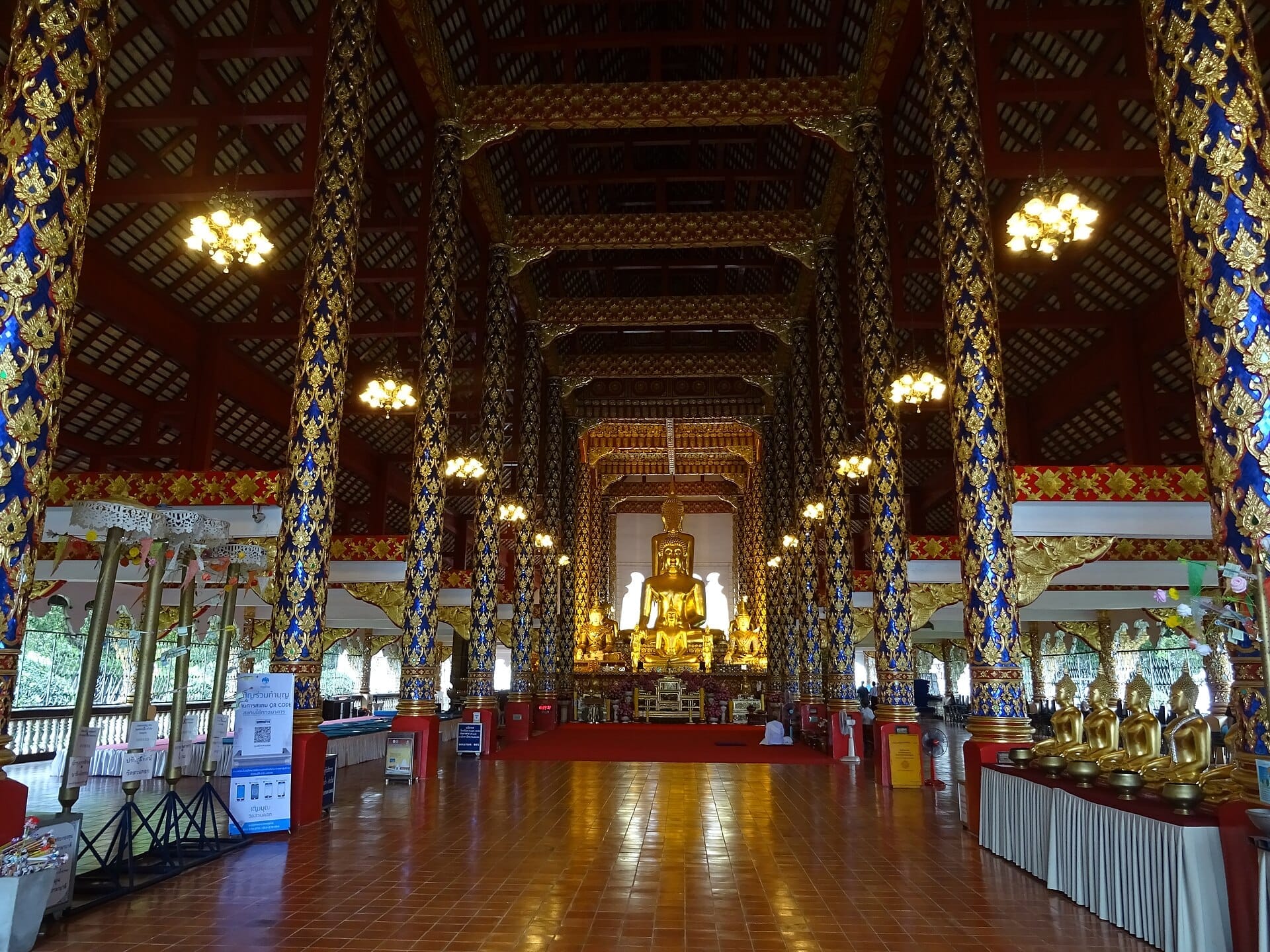
The main prayer hall, or wihan, contains a large Phra Chao Kao Tu bronze Buddha image of the Lanna school and is an active place of worship throughout the day. Monks and local devotees use this space regularly, so entering quietly and respectfully is not just etiquette but observation of a genuinely functioning religious site.
Tickets & tours
Live prices and dates from our booking partner. If you book, we may earn a commission at no extra cost to you.
Doi Inthanon National Park small group guided tour
From 34 €Instant confirmationFree cancellationHalf-day tour to admire elephants and enjoy Thai nature
From 48 €Instant confirmationFree cancellationChiang Mai - Chiang Dao Cave and 5 Hill Tribe villages
From 42 €Instant confirmationFree cancellationArt in Paradise Chiang Mai 3D Art Museum entrance tickets
From 8 €Instant confirmationFree cancellation
The Monk Chat Program
Wat Suan Dok hosts one of Chiang Mai's most established Monk Chat programs, typically held on weekdays, roughly from 5:00 PM to 7:00 PM, though hours can shift with temple schedules. The program allows visitors to sit with English-speaking novice monks and discuss Buddhism, Thai culture, monastic life, or simply practice conversational English with them. The exchange is genuinely bilateral: monks benefit from the English practice, and visitors get direct, unhurried access to questions that would otherwise go unasked.
The sessions take place in a dedicated hall near the rear of the complex. Tone is relaxed and informal. Unlike staged cultural shows, this is a relatively low-mediated encounter, and the quality of the conversation depends largely on who shows up on a given evening. Some visitors leave with a half-hour of genuine dialogue; others find the session brief. Arriving early gives you more time and access to monks who have not yet been occupied by other groups.
ℹ️ Good to know
Monk Chat sessions are not held every day and schedules can change around Buddhist holidays or exams. Check with the temple or verify current times through Chiang Mai tourism resources before planning your visit around this activity.
How the Temple Changes Through the Day
Mornings at Wat Suan Dok are quiet in a way that feels purposeful rather than empty. In the early morning, monks complete alms rounds and morning chants. The sound of chanting carries from the wihan into the courtyard. The air is cooler, and the white stupas reflect the flat, even light well for photography without harsh shadows. This is the best window for anyone who wants the complex largely to themselves.
Midday brings moderate visitor numbers, mostly independent travelers and students from nearby Chiang Mai University, which is located just west along Suthep Road. The university connection is not incidental: the campus is one of the largest in northern Thailand, and the temple serves as a spiritual anchor for that community. You will often see students stopping in during the day, which gives the temple a slightly different atmosphere than the strictly tourist-facing temples in the Old City center.
Late afternoon, particularly between 4:00 PM and 6:00 PM, is when the light on the gold chedi peaks, and when the Monk Chat sessions begin on program evenings. The combination makes this the most rewarding time for first-time visitors who want both the visual experience and the cultural one in a single visit.
Getting There and Navigating the Area
Wat Suan Dok sits on Suthep Road, about 1–2 kilometers west of the Old City moat. A red songthaew (shared pickup truck taxi) heading west along Suthep Road from the area near Tha Phae Gate or the moat road will pass the temple. The journey typically takes under 10 minutes and costs around 30–50 THB per person. Tuk-tuks and Grab are both available as well. If you are traveling from Nimman Road, Wat Suan Dok is an easy 10-minute walk east along Suthep Road, making it a natural addition to a Nimman afternoon.
Parking is available on the temple grounds for motorbikes and cars, which makes it accessible for visitors renting their own transport. The temple grounds are flat and paved, which is practical for those with mobility considerations, though some of the smaller paths between stupas are uneven. There is no elevator access to any elevated structures.
Photography at Wat Suan Dok
The royal chedis courtyard is one of the more photographically distinctive scenes in Chiang Mai, and it benefits from being relatively uncrowded. The white stupas against a blue sky or at golden hour produce strong, clean compositions. The large gilded chedi behind them provides scale. For anyone working on a Chiang Mai photography itinerary, this complex rewards a visit timed to late afternoon.
The main wihan interior is poorly lit and photography of the Buddha image requires sensitivity. Flash photography is inappropriate, and some monks will signal visitors to lower cameras. A wide-aperture lens or a camera that handles low light well is useful. The exterior of the wihan, with its carved wooden facade and tiered roof typical of Lanna architecture, is freely photographable and worth close inspection.
⚠️ What to skip
Do not photograph monks without permission, particularly during prayer or meditation. During Monk Chat sessions, ask before pointing a camera at participants. The exchange works because it is not performative; treating it like a photo opportunity tends to shut down genuine conversation.
Context: Where Wat Suan Dok Fits in Chiang Mai's Temple Landscape
Chiang Mai has hundreds of temples, and visitors with limited time often default to the three or four most promoted ones. Wat Suan Dok is rarely the first recommendation, which means it operates at a more honest pace. Compared to Wat Phra Singh or Wat Chedi Luang, it receives fewer organized tour groups and has a more functional daily-use quality that some travelers find more interesting than a highly polished heritage site.
If you are trying to understand Lanna temple architecture more broadly, pairing Wat Suan Dok with a structured temple circuit helps contextualize what you are seeing. The Lanna style is distinguishable by its multi-tiered roofs with downswept eaves, whitewashed chedis, and wooden carved details, all visible here in good condition.
Who might not get much from a visit here: travelers with no interest in religious architecture or history who are primarily looking for entertainment or markets. The temple does not have a shop district, a night market, or a performance element. It is a functioning religious site that happens to be open to respectful visitors, and its appeal is proportional to the interest you bring to it.
Insider Tips
- Arrive on a Monk Chat evening (weekdays, Mon–Fri) around 4:30 PM. Walk the chedis courtyard while the light is good, then transition into the Monk Chat session as it begins at 5:00 PM. Two very different experiences in one visit, without redundancy.
- The white royal chedis are most photogenic from the southwest corner of the courtyard, where you get the full cluster with the large gold chedi behind. This angle is often overlooked in favor of shooting straight-on from the entrance path.
- Chiang Mai University is directly across Suthep Road and has a pleasant campus to walk through. The university also has its own small art museum. If you have an extra hour, the combination makes for an unusual afternoon away from the Old City.
- Morning visits before 9:00 AM are consistently the least crowded. You may hear monks chanting in the wihan, which adds an atmospheric quality that midday visits lack entirely.
- The temple has a meditation center associated with it. If you are interested in extended Buddhist practice, this is worth inquiring about directly with staff or monks during your visit.
Who Is Wat Suan Dok For?
- Travelers interested in Lanna history and royal heritage who want more depth than a quick temple tick-box
- Anyone wanting a genuine, low-key cultural exchange through the Monk Chat program
- Photographers working in the late afternoon when the gold chedi and white stupas align well with the light
- Visitors pairing a temple visit with a walk or meal on nearby Nimman Road
- Repeat visitors to Chiang Mai who have already covered the more prominent Old City temples
Nearby Attractions
Other things to see while in Old City (Chiang Mai Old Town):
- Chang Phuak Night Market (North Gate Food Market)
Chang Phuak Night Market, known to locals as the North Gate Food Market, is a compact open-air street food gathering outside Chiang Mai's ancient city walls. Night after night, it draws a faithful crowd of students, office workers, and savvy travelers in search of authentic northern Thai cooking at prices that haven't caught up with the tourist economy.
- Chiang Mai City Arts and Cultural Centre
Housed in a beautifully restored colonial-era building on the edge of the Old City's Three Kings Monument plaza, the Chiang Mai City Arts and Cultural Centre offers one of the most accessible and well-curated introductions to Lanna history and northern Thai culture. It rewards both first-time visitors and those who want genuine context before exploring the city's temples and neighborhoods.
- Chiang Mai City Walls and Moat
The rectangular moat and surviving brick walls of Chiang Mai's Old City are the physical outline of a 700-year-old Lanna capital. Free to explore at any hour, they offer one of the most atmospheric walks in northern Thailand, framing temples, corner bastions, and four ceremonial gates.
- Chiang Mai National Museum
The Chiang Mai National Museum offers one of the clearest introductions to northern Thailand's Lanna Kingdom, covering 700 years of history through royal artifacts, Buddhist sculpture, ceramics, and ethnographic collections. It's calm, well-organized, and genuinely undervisited compared to the temples nearby.
Planning a trip? Discover personalized activities with the Nomado app.