Jing Jai Farmers' Market: Chiang Mai's Best Weekend Morning
Jing Jai Farmers' Market is Chiang Mai's most beloved weekend market, drawing local farmers, organic producers, and artisan food vendors to a shaded outdoor space near the Nimman neighborhood. It runs Saturday and Sunday mornings and offers a window into how the city actually eats and shops, far removed from the tourist-oriented night markets.
Quick Facts
- Location
- Jing Jai Market, on Atsadathon Road north of the Old City, a short drive from Nimman
- Getting There
- Grab or red songthaew from Nimman (~10–15 min). No direct public bus. Limited parking on-site.
- Time Needed
- 1.5 to 2.5 hours for a thorough visit
- Cost
- Free entry. Budget 100–300 THB for food and drink.
- Best for
- Food lovers, slow travelers, families, photography, and anyone curious about northern Thai produce
What Jing Jai Actually Is
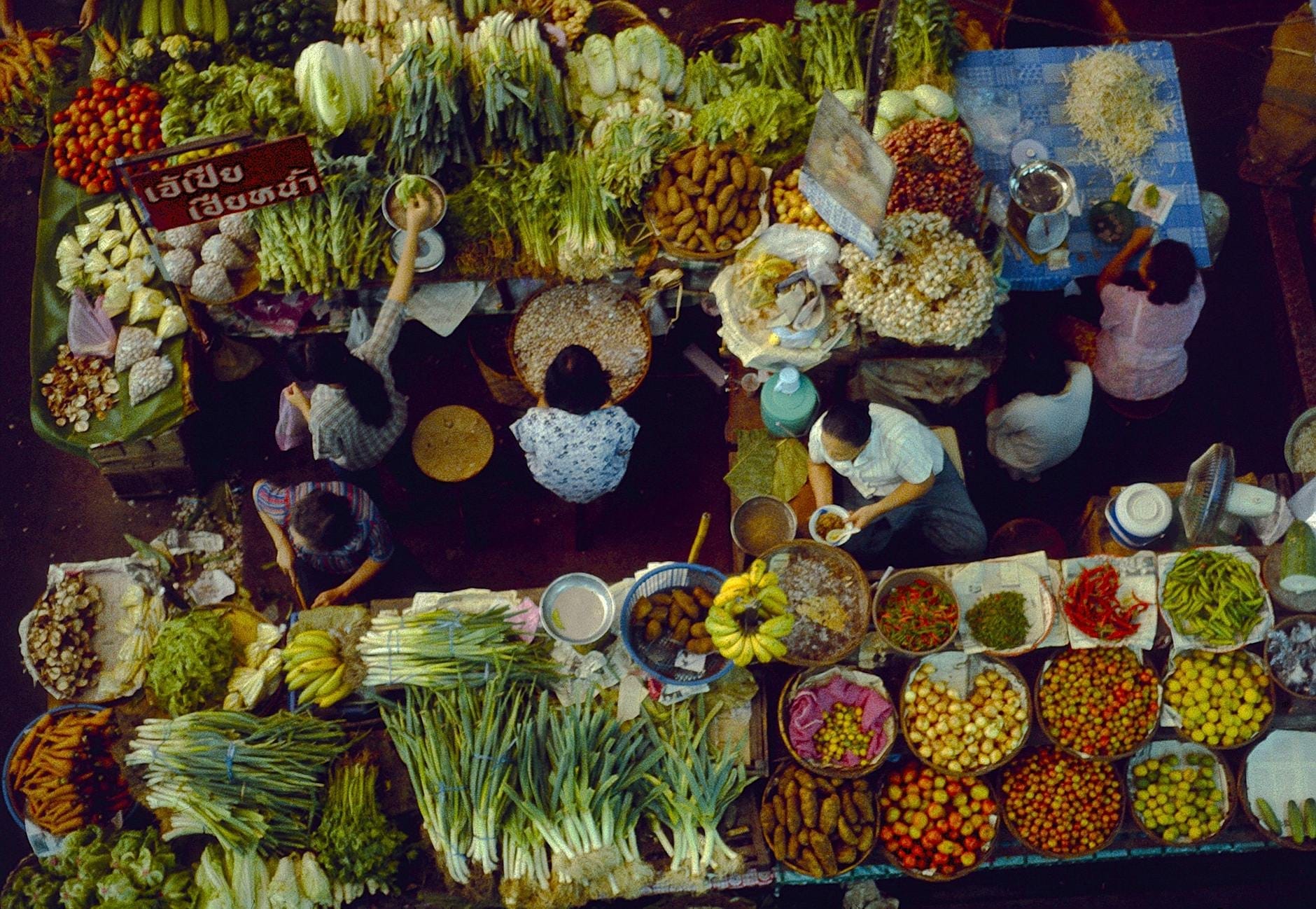
Jing Jai Farmers' Market is a weekend morning market held every Saturday and Sunday, typically from around 6:30 AM to early afternoon (the main market winds down by around 1–2 PM even though the wider complex stays open later). The name roughly translates to 'sincere heart' in Thai, and it sets the tone for the whole experience: this is a market built around genuine local producers rather than resellers. You'll find farmers who drove down from the highlands before sunrise, bakers who started their ovens at 4 AM, and small-batch coffee roasters who source directly from hill tribe growers in the mountains north of the city.
The market occupies a large, partially shaded compound that includes both open-air stalls and covered zones. It draws a noticeably mixed crowd: older Thai shoppers doing their weekly grocery run, expats hunting for imported cheese and sourdough, young Chiang Mai locals photographing their lattes, and a steady stream of travelers who have been tipped off that this is where the city shops when it's not performing for tourists.
💡 Local tip
Arrive before 8 AM if you want the best selection of produce, fresh-baked goods, and pastries. Popular stalls sell out fast. By 10 AM the crowds peak and the shade becomes more valuable than whatever's left on the tables.
The Layout and What You'll Find
The market is organized loosely into zones. The front section near the main entrance tends to host prepared food vendors: grilled corn, fresh-pressed sugarcane juice, northern Thai sausages, steamed dim sum, and open-faced sandwiches on thick sourdough slices. The smell here in the first hour of morning, when charcoal grills are still cold and the bread ovens are being unloaded, is one of the more honest food experiences in the city.
Moving deeper into the compound, stalls shift toward raw ingredients: organic vegetables from small farms around San Sai and Mae Rim, unusual heritage varietals of rice, foraged mushrooms, fresh herbs bundled by hand, and highland fruits that don't appear in supermarkets. Several vendors specialize in preserves, fermented goods, and naturally dyed products. There's also a rotating section of handcraft stalls, though the market's identity is firmly agricultural rather than artisan.
A dedicated coffee zone features some of Chiang Mai's most thoughtful roasters. If you're interested in the city's specialty coffee culture, this is one of the best introductions to it. For more context, the Chiang Mai coffee shop guide covers the broader scene that extends well beyond the market's boundaries.
ℹ️ Good to know
Most vendors accept cash only. Bring small bills — 20 and 50 THB notes are useful. There is an ATM near the entrance, but it can have queues on busy Sundays.
Tickets & tours
Live prices and dates from our booking partner. If you book, we may earn a commission at no extra cost to you.
Doi Inthanon National Park small group guided tour
From 34 €Instant confirmationFree cancellationHalf-day tour to admire elephants and enjoy Thai nature
From 48 €Instant confirmationFree cancellationChiang Mai - Chiang Dao Cave and 5 Hill Tribe villages
From 42 €Instant confirmationFree cancellationArt in Paradise Chiang Mai 3D Art Museum entrance tickets
From 8 €Instant confirmationFree cancellation
How the Market Changes Through the Morning
Early arrivals, between 6:30 and 7:30 AM, get the calmest version of the market. Light filters through the tree canopy and market fabric above the produce stalls. Vendors are still arranging their displays, and there's a functional, unhurried rhythm to the place. Regulars greet each other by name. The Thai conversation happening around you is almost entirely practical: price checks, recipe discussions, requests for extra chili.
By 8:30 AM the crowd has visibly shifted. Families arrive with reusable bags, the coffee queues form properly, and the prepared food section becomes a genuine scrum. This is the photogenic hour: good light, full stalls, and enough human energy to make the place feel alive without becoming overwhelming.
After 10 AM, the heat and the crowd combine in ways that reduce the experience significantly. Produce selection is thinner, the best bread is gone, and the shade runs out before the visitors do. If you're sensitive to heat or crowds, plan accordingly. Midday stragglers often find a hollowed-out version of what arrived early.
Eating Your Way Through the Market
This is not a market where you should plan a sit-down meal afterward. The eating happens as you walk. A typical sweep might start with a paper cup of natural-process coffee from a hill tribe cooperative, followed by a piece of grilled mochi with sesame, a small bowl of khao tom (rice porridge) from one of the Thai breakfast vendors, and a slice of sourdough with house-made cultured butter from the most popular bakery stall.
Northern Thai street food staples appear consistently: sai ua (herb-packed Chiang Mai sausage) grilled to order, khanom krok (coconut rice pancakes) made in cast-iron molds over charcoal, and sometimes lesser-known regional dishes like nam prik noom (green chili dip) sold with freshly steamed sticky rice. These aren't tourist-adjusted versions. The heat levels and flavors are calibrated for local palates.
If the market sparks an interest in northern Thai cuisine more broadly, Chiang Mai's food culture runs deep. The guide to what to eat in Chiang Mai is a useful companion for building out the rest of your eating itinerary.
Getting There and Practical Logistics
Jing Jai sits north of the Nimman area, roughly a 10–15-minute Grab ride from the Nimman intersection or the Old City moat. Red songthaews (shared pickup trucks) run along the major roads nearby, but the most reliable option for a first-time visitor is a booked ride. If you are cycling, the market has bike parking and the roads from Nimman are flat and manageable in the early morning cool.
The guide to getting around Chiang Mai covers transport options in detail, including how to negotiate songthaew fares and when Grab surge pricing typically kicks in on weekend mornings.
Wear light clothing and bring a small bag or a reusable tote if you plan to buy produce. The market floor is a mix of pavement and compacted earth, so sandals work fine, but open shoes can get dusty on dry mornings. During the rainy season (roughly June through October), some sections become muddy and vendors adjust their layouts accordingly.
⚠️ What to skip
During the February to April dry season and burning season, air quality in Chiang Mai can deteriorate significantly. Outdoor morning markets become uncomfortable for those sensitive to smoke. Check the AQI before going, and consider an N95 mask if the index is above 100.
Photography and Who Should Skip This
Jing Jai is genuinely photogenic in the early hours. The light through the shade canopy, the color contrast between produce displays and the dark wooden vendor carts, and the density of human activity all offer strong material. Wide-angle shots of the whole compound work best before 9 AM when the crowd hasn't yet compressed the visual space. Close-up food photography benefits from the natural diffused light under the awnings.
Always ask before photographing individual vendors or their faces. The market has a respectful, community-oriented atmosphere and most vendors are comfortable with photos of their produce, but direct eye-contact shots of people working should be approached with a brief gesture or verbal check. Most vendors will smile and nod if you hold up your camera and raise your eyebrows in a question.
For a deeper guide to capturing Chiang Mai's markets and temples, see the Chiang Mai photography guide.
Travelers looking for a souvenir shopping experience will find Jing Jai limited. The market is primarily agricultural and food-focused, not craft-oriented. Those who want textiles, lacquerware, or carved goods should look elsewhere. Similarly, visitors who prefer air-conditioned comfort and consistent vendor availability will find the early outdoor format demanding. This is a market for people who are curious about what Chiang Mai residents actually eat and grow, not for those looking for a curated tourist product.
The Wider Nimman Context
Jing Jai sits at the northern edge of the Nimman corridor, which is Chiang Mai's most design-forward and cafe-dense neighborhood. After the market, the natural continuation is a walk south into the Nimman area for coffee and brunch, or a browse through the independent shops on Nimman Road itself. The transition from the agricultural simplicity of Jing Jai to the polished minimalism of Nimman's coffee bars is a genuine contrast worth experiencing in the same morning.
The weekend also makes it easy to combine Jing Jai with Chiang Mai's other weekend street markets. The Sunday Walking Street along Wualai Road runs in the evening and covers a completely different category of experience, making it a logical second act on a Sunday.
Insider Tips
- The bakery stall with the longest queue is usually there for a reason. The sourdough loaves and cardamom buns sell out by 8:30 AM on Sundays. Identify it when you arrive and buy first, browse after.
- Several highland coffee farms sell directly at the market with no retail markup. Buying a bag here is often cheaper and fresher than buying from a roastery shop in the city. Ask the vendor when it was roasted.
- Bring a cooler bag or insulated tote if you plan to buy fresh meat, dairy, or frozen goods. The heat builds quickly and vendors may not have ice to offer.
- The market is a good place to stock up on dried herbs, chili pastes, and packaged nam prik for taking home. These are shelf-stable, authentic, and rarely found at this quality level in the tourist-facing shops near the Old City.
- If you're visiting during the cool season (November to February), arrive early to experience the pleasant temperature and the way the morning mist occasionally drifts through the open compound before the sun climbs.
Who Is Jing Jai Farmers' Market For?
- Food travelers who want to understand northern Thai produce and cooking beyond restaurant menus
- Slow travelers and expats who prioritize local rhythm over tourist itineraries
- Families with children comfortable in outdoor, moderately crowded morning markets
- Specialty coffee enthusiasts looking for direct-from-farm purchases
- Photographers working in natural light who want authentic market scenes
Nearby Attractions
Other things to see while in Nimmanhaemin (Nimman):
- Ang Kaew Reservoir (CMU Lake)
Tucked inside Chiang Mai University's forested campus, Ang Kaew Reservoir is a serene lake framed by pine and eucalyptus trees with Doi Suthep rising directly behind it. It's the kind of place locals walk before work, students study beside on weekends, and visitors stumble upon while exploring the Nimman area.
- Baan Kang Wat (Artist Village)
Baan Kang Wat is a cluster of low-rise wooden studios and workshops located off Suthep Road, beside Wat Umong on the western side of Chiang Mai. On weekends it hosts a small artisan market; on weekdays it's one of the quietest, most atmospheric corners of the city.
- Lanna Traditional House Museum
The Lanna Traditional House Museum in Chiang Mai's Nimman district preserves a collection of historic northern Thai wooden houses transplanted from the countryside and reassembled on a shaded campus. The site offers one of the most grounded introductions to Lanna domestic life, craftsmanship, and spatial culture available in the city.
- Nimmanhaemin Road
Nimmanhaemin Road is Chiang Mai's most design-conscious street, lined with independent coffee shops, art galleries, concept boutiques, and some of the best casual restaurants in northern Thailand. It rewards both a quick stroll and a full afternoon of exploration.
Planning a trip? Discover personalized activities with the Nomado app.