Baan Kang Wat: Chiang Mai's Most Thoughtfully Designed Artist Village
Baan Kang Wat is a cluster of low-rise wooden studios and workshops located off Suthep Road, beside Wat Umong on the western side of Chiang Mai. On weekends it hosts a small artisan market; on weekdays it's one of the quietest, most atmospheric corners of the city.
Quick Facts
- Location
- Soi Wat Umong 2 (off Suthep Road near Wat Umong), Chiang Mai
- Getting There
- about a 15–20 min walk or short ride from the Nimman area; short Grab/taxi from Old City (around 10–15 min depending on traffic)
- Time Needed
- 1–2 hours (longer on market days)
- Cost
- Free to enter; individual shops vary
- Best for
- Design lovers, photographers, slow travelers, souvenir hunters
What Baan Kang Wat Actually Is
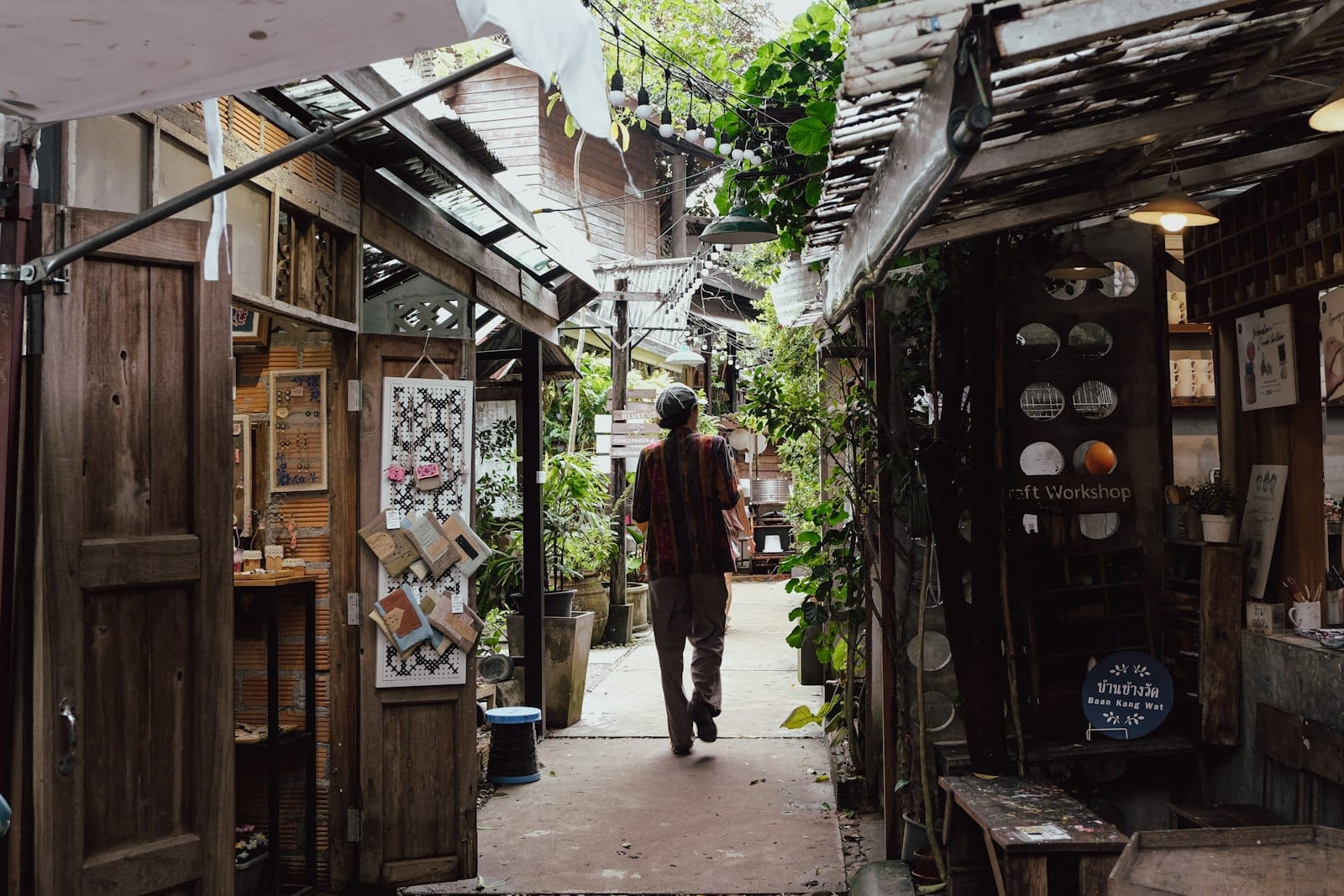
Baan Kang Wat translates roughly as 'houses near the temple,' and the name is literal. The complex sits beside Wat Umong Maha Thera Chan, with a path connecting directly into the temple grounds. Wat Ram Poeng, a separate meditation centre, is also nearby. A developer with a design sensibility rather than a commercial one converted the surrounding land into a series of small, interconnected wooden structures, each unit occupied by an independent artist, craftsperson, or small-batch food producer.
The layout is deliberately unhurried. Buildings are set back from a central courtyard, connected by covered wooden walkways and shaded paths. There are no flashing signs, no touts, and no recorded music playing to draw you into shops. It is one of the few commercial spaces in Chiang Mai that actually feels quiet, and that quality is its most defining characteristic.
💡 Local tip
Baan Kang Wat holds a weekend market most Saturdays and Sundays. The market draws significantly more vendors and visitors than weekday hours. If you prefer atmosphere over selection, a weekday morning visit is considerably more peaceful.
The Architecture and Setting
The structures at Baan Kang Wat are built in a contemporary interpretation of northern Thai vernacular style: teak-toned wood, shallow pitched roofs, open-air verandas, and generous use of natural light. Nothing is particularly grand in scale, and that restraint is intentional. The buildings are sized for the human body, not for spectacle.
Moss grows on the paths between buildings after the rainy season, and mature trees shade most of the complex. In the early morning, light filters through the canopy and falls across wooden storefronts in long horizontal bands. The smell of wood, soil, and occasionally incense from the adjacent temple is a consistent sensory note throughout the complex.
The nearby temple is only a short walk away along the same small lanes, which gives Baan Kang Wat a closer relationship with sacred space than most commercial districts, even though the sites are separate. If you plan to step into the temple itself, dress modestly — shoulders and knees covered. For more background on the temple's significance, see the full guide to Wat Umong, which is a short walk further west.
Tickets & tours
Live prices and dates from our booking partner. If you book, we may earn a commission at no extra cost to you.
Doi Inthanon National Park small group guided tour
From 34 €Instant confirmationFree cancellationHalf-day tour to admire elephants and enjoy Thai nature
From 48 €Instant confirmationFree cancellationChiang Mai - Chiang Dao Cave and 5 Hill Tribe villages
From 42 €Instant confirmationFree cancellationArt in Paradise Chiang Mai 3D Art Museum entrance tickets
From 8 €Instant confirmationFree cancellation
What You'll Find Inside: Studios, Shops, and Food
The tenants at Baan Kang Wat rotate over time, but the character of the collective has remained consistent since the complex opened. Expect ceramics studios selling hand-thrown stoneware, textile shops with naturally dyed fabrics, illustration and print studios, small jewellery makers, and plant or botanical goods. Most items are made on-site or by the seller directly, which distinguishes this from the factory-produced souvenir market found elsewhere in the city.
There are also several small cafes operating from the ground floors of the structures, typically serving filtered coffee and simple baked goods. The coffee quality is generally high, consistent with Nimman's reputation as Chiang Mai's most developed specialty coffee neighborhood. Seating is usually outdoors or on shaded decks, and the pace is slow by design.
On market days, additional vendors set up in the courtyard selling handmade goods, street food, and vintage items. The market is smaller and more curated than the large weekend walking streets in the Old City. If you want a comparison, the Saturday Walking Street on Wualai Road is larger and more commercial in character, while Baan Kang Wat skews toward design-conscious buyers.
How the Experience Changes by Time of Day
Weekday mornings, roughly 9am to 11am, are the best time to visit if you want the place to yourself. The cafes open early, the light is best for photography, and you can take your time examining work in each studio without crowds pressing behind you. Shopkeepers are often working on new pieces at this hour, and it is not unusual to see a potter at the wheel or a weaver at the loom through an open studio door.
By weekend afternoons, the dynamic shifts. The courtyard fills with Thai families, couples, and travelers, and the market stalls add noise and movement to what is otherwise a meditative space. Food vendors create their own small crowd at the entrance path. This version of Baan Kang Wat is livelier and more photogenic in a social sense, but it is a different experience from the weekday version.
After 4pm on market days, the light turns golden and drops through the trees at a low angle, which makes the wooden architecture and the textiles particularly photogenic. Many of the plant and flower vendors lower their prices in the final hour before closing. The cafes extend their hours on weekends.
ℹ️ Good to know
Most individual shops open around 10am and close by 6pm, though cafe hours may extend later on weekends. The weekend market typically runs from late morning through early evening. Confirm current hours directly with vendors, as they vary by season.
Practical Navigation and Getting There
Baan Kang Wat sits on Soi Wat Umong 2, a quiet residential lane that branches off Suthep Road toward the university district. The easiest approach is from Suthep Road near Wat Umong: follow the small lane (soi) to the wooden entrance markers. From the Nimman area it is walkable in around 15–20 minutes or a very short ride.
If you are coming from the Old City, a Grab or red songthaew to Nimman is the most practical option. The fare is typically around 30–40 baht per person by shared songthaew to the Suthep Road area, depending on negotiation and distance. For orientation around the broader neighborhood, the Nimman neighborhood guide covers transit options, nearby accommodation, and the cluster of coffee shops and restaurants that make this area worth spending half a day in.
Parking for motorcycles is available inside the complex. Car parking is limited; street parking on the soi is possible early in the day but fills quickly on weekends. Cycling here from Nimman or the Old City is straightforward on flat roads.
⚠️ What to skip
During Chiang Mai's smoke season (roughly February to April), the outdoor seating and open-air walkways can be affected by air quality. Check AQI levels before visiting and bring a mask if readings are above 100. The experience is significantly diminished when haze is heavy.
Who Will Enjoy This, and Who Might Not
Baan Kang Wat rewards people who move slowly and find satisfaction in well-made objects. If you appreciate craft, care about where things come from, or are looking for a souvenir that is not mass-produced, this is one of the better destinations in Chiang Mai for that purpose. The setting also makes it genuinely enjoyable to spend time in even without buying anything.
Travelers who prefer high-volume variety and bargaining will likely find the selection too small and the prices non-negotiable. This is not a market in the conventional Thai sense. For a more conventional shopping and browsing experience, Warorot Market in the Old City area offers a very different atmosphere with far more stalls and lower price points.
Families with young children will find the open grounds manageable, but the studios themselves are small and not child-proofed. Accessibility for wheelchairs is limited by the uneven wooden pathways between buildings. The complex is compact enough that most visitors cover it comfortably within ninety minutes, even with stops at multiple shops and a coffee break.
For photographers, Baan Kang Wat is one of the more consistently rewarding spots in this part of the city, particularly in the early morning or late afternoon. It pairs naturally with a visit to nearby Nimman Road and can easily be combined into a half-day route through the neighborhood. The Chiang Mai photography guide includes Baan Kang Wat as one of several recommended locations for architectural and lifestyle photography.
Insider Tips
- Visit on a weekday before 11am for the best light, the fewest people, and the best chance of seeing artists actually at work in their studios rather than minding a shop counter.
- The cafe closest to the temple boundary often has the most shade and the most interesting view. It tends to fill up last, so it's where you're most likely to find a seat on a busy weekend afternoon.
- Prices at Baan Kang Wat are generally fixed and reflect actual craft labor. Don't expect to bargain, and don't be surprised if a ceramic mug costs more than at a night market. You are paying for the person who made it.
- The path through the complex connects directly to Wat Umong Maha Thera Chan. Slip through and spend fifteen minutes in the temple grounds before or after your visit. Most tourists who visit Baan Kang Wat don't realize the temple is accessible from inside the complex.
- On market days, arrive before noon if you want first pick of the limited-edition prints and handmade textile goods. These often sell out by mid-afternoon.
Who Is Baan Kang Wat (Artist Village) For?
- Design-conscious shoppers looking for original, locally made crafts and ceramics
- Photographers seeking architectural texture and natural light in a quiet setting
- Slow travelers who want to understand Chiang Mai's contemporary creative scene
- Couples looking for a low-key, aesthetically considered afternoon away from tourist crowds
- Anyone combining a visit to Wat Umong with time in the Nimman neighborhood
Nearby Attractions
Other things to see while in Nimmanhaemin (Nimman):
- Ang Kaew Reservoir (CMU Lake)
Tucked inside Chiang Mai University's forested campus, Ang Kaew Reservoir is a serene lake framed by pine and eucalyptus trees with Doi Suthep rising directly behind it. It's the kind of place locals walk before work, students study beside on weekends, and visitors stumble upon while exploring the Nimman area.
- Jing Jai Farmers' Market
Jing Jai Farmers' Market is Chiang Mai's most beloved weekend market, drawing local farmers, organic producers, and artisan food vendors to a shaded outdoor space near the Nimman neighborhood. It runs Saturday and Sunday mornings and offers a window into how the city actually eats and shops, far removed from the tourist-oriented night markets.
- Lanna Traditional House Museum
The Lanna Traditional House Museum in Chiang Mai's Nimman district preserves a collection of historic northern Thai wooden houses transplanted from the countryside and reassembled on a shaded campus. The site offers one of the most grounded introductions to Lanna domestic life, craftsmanship, and spatial culture available in the city.
- Nimmanhaemin Road
Nimmanhaemin Road is Chiang Mai's most design-conscious street, lined with independent coffee shops, art galleries, concept boutiques, and some of the best casual restaurants in northern Thailand. It rewards both a quick stroll and a full afternoon of exploration.
Planning a trip? Discover personalized activities with the Nomado app.