Wat Umong: Chiang Mai's Ancient Forest Temple and Tunnel Labyrinth
Wat Umong is one of Chiang Mai's oldest and most atmospheric temples, built in the 14th century with a network of underground tunnels beneath a wooded hillside. Unlike the gold-and-glitter temples of the old city, this place rewards slow exploration: cool brick corridors, a lakeside stupa, roaming peacocks, and a forest hung with philosophical signs.
Quick Facts
- Location
- Suthep Road, west of the Old City moat, near Chiang Mai University
- Getting There
- Songthaew (red truck taxi) heading west along Suthep Rd; roughly 20-30 min from Tha Phae Gate. No direct city bus.
- Time Needed
- 1.5 to 2.5 hours for unhurried exploration
- Cost
- Free entry for Thais; foreigners typically pay a small entrance fee (around 20 THB, donations also welcome)
- Best for
- Travelers wanting calm, photography, Buddhist culture, and a break from tourist crowds
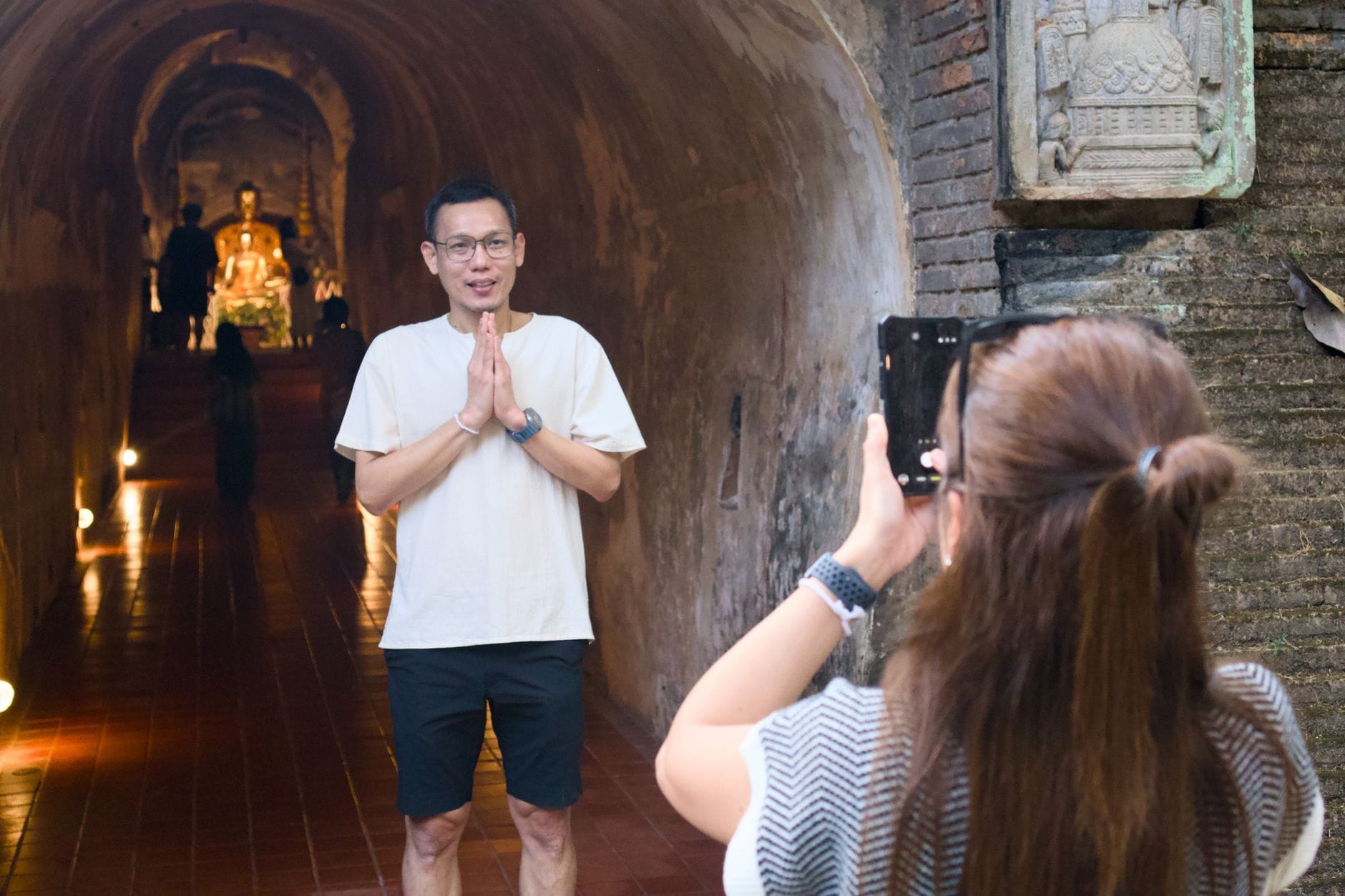
What Wat Umong Actually Is
Wat Umong is a working forest monastery likely dating to the late 14th century during the Lanna kingdom, making it one of the older temples in the Chiang Mai region. The name translates loosely to 'tunnel temple,' and the defining feature is exactly that: a set of brick-lined underground passageways built into a large earthen mound. The tunnels are often attributed in legend to the reign of King Mengrai and are believed to have been used by the revered monk Thera Jan (also called the Crazy Monk) as a place for deep meditation, away from distraction.
Unlike the elaborate gilded compounds inside the Old City moat, Wat Umong has the feeling of a place that was built for practice rather than spectacle. The grounds cover several hectares of genuine forest. Resident monks still live and study here. The atmosphere is closer to a woodland retreat than a tourist destination, which is exactly why it draws the kind of visitor who has already seen Wat Phra Singh and wants something fundamentally different.
ℹ️ Good to know
Wat Umong is a living monastery. Dress modestly (shoulders and knees covered), speak quietly near the residential areas, and switch your phone to silent before entering the tunnel complex.
The Tunnels: What You'll See Underground
The tunnel network runs beneath a large stupa mound at the heart of the complex. There are four main arched passageways connecting in a cross-like pattern, each roughly 30 to 40 meters long and tall enough to walk upright in without ducking. The ceilings are low vaulted brick, the walls darkened with age and the faint smoke of incense. Natural light enters only from the entrances and a few niches, so you transition from bright midday heat into sudden, cool dimness.
Inside the tunnels, shrines hold Buddha images in various states of repair. Some are ancient fragments; others are newer offerings placed by devotees. The most photogenic moment is standing at a tunnel intersection and looking toward the light of an entrance arch with a gilded Buddha silhouetted in the frame. Bring a small torch or use your phone's light if you want to see the details on the walls, though the ambient light from the openings is often enough for a slow look around.
On weekday mornings, the tunnels are often empty. Weekends bring more visitors, and you may hear the echo of other footsteps and low conversations, but the space rarely feels overcrowded. The temperature inside is noticeably cooler than outside, which becomes a genuine relief during Chiang Mai's hot season from March through May.
💡 Local tip
Photography tip: shoot from inside looking out toward the tunnel entrance for natural backlit compositions. A late-afternoon visit gives warmer golden light at the entrances. Avoid using flash on the old stucco Buddha images.
Tickets & tours
Live prices and dates from our booking partner. If you book, we may earn a commission at no extra cost to you.
Doi Inthanon National Park small group guided tour
From 34 €Instant confirmationFree cancellationHalf-day tour to admire elephants and enjoy Thai nature
From 48 €Instant confirmationFree cancellationChiang Mai - Chiang Dao Cave and 5 Hill Tribe villages
From 42 €Instant confirmationFree cancellationArt in Paradise Chiang Mai 3D Art Museum entrance tickets
From 8 €Instant confirmationFree cancellation
Above Ground: The Stupa, the Lake, and the Forest Grounds
Climb the external staircase to the top of the mound above the tunnels and you reach a large chedi (stupa) that gives you a canopy-level view over the forest. The chedi itself is partially ruined, which only adds to the atmosphere. Frangipani trees grow close to the base, and the smell of their flowers in the evening is strong enough to notice. Peacocks live on the grounds and wander freely, particularly around the lake area.
The lake occupies the southern portion of the compound. A small wooden platform extends over the water, and the reflection of the trees and a minor chedi on the far bank makes for one of the better quiet photographs in Chiang Mai. Turtles are visible in the water, particularly in the morning when they sun themselves along the bank. Feeding the fish is common among Thai visitors, and you can often buy small bags of feed near the lakeside.
The forest paths throughout the grounds are unpaved but well-trodden. Trees are labeled with their Thai and Latin names, a legacy of the monastery's long involvement with forest conservation education. Throughout the grounds, wooden boards hang from trees bearing Buddhist teachings and philosophical sayings in both Thai and English. Some are simple: 'If you do good, you will receive good.' Others are more cryptic. Monks have long used these signs as teaching tools, and reading them as you walk is part of the experience.
Historical and Cultural Context
Wat Umong sits within the broader tradition of Lanna Buddhism, the regional form of Theravada Buddhism that took root in northern Thailand after the founding of Chiang Mai in 1296. The Lanna kingdom maintained distinct artistic and architectural traditions for over 200 years before being absorbed into the Siamese state in the late 18th century, and traces of that heritage are visible throughout the temple complex in the form of the brick construction style and the particular proportions of the tunnel arches.
The story of Thera Jan gives the temple much of its character. The monk was known for unusual behavior and deep forest meditation, and local legend holds that King Mengrai built the tunnels to provide him with a suitable environment for practice. Whether entirely historical or partly legendary, the story reflects a real aspect of northern Thai Buddhist culture: the high regard for forest monks and solitary meditation practice. If you want broader context on Lanna temple architecture and history, the Lanna Folklife Museum near the Three Kings Monument is worth pairing with a visit here.
How the Experience Changes by Time of Day
Early morning is the best time to visit, roughly 7am to 9am. The light filters through the forest canopy in long shafts, monks are moving between buildings, and the grounds smell of damp soil and incense. The tunnels are cool, the crowds are minimal, and you have a genuine sense of the place as a functioning monastic community rather than a sightseeing stop.
Midday is the least rewarding time. The forest provides shade, but the heat is still significant from February through June. The quality of light for photography is flat and harsh outside the tunnels. Midday also coincides with tour groups, particularly around the main tunnel entrance.
Late afternoon, from around 3pm to 5pm, is the second-best window. The light turns soft and golden, the peacocks become more active, and the lake reflects the trees with better color saturation. If you time it right, you may catch the sound of monks chanting during evening prayers, which carries clearly through the forest.
⚠️ What to skip
The temple grounds officially close in the evening, around 8pm. Plan to arrive no later than 4:30pm if you want a full exploration before dusk. The tunnel mound area in particular loses its light quickly as the sun drops.
Getting There and Getting Around the Grounds
Wat Umong is located on Suthep Road, about 3 kilometers west of the Old City moat and roughly 1.5 kilometers south of Suthep Road near Chiang Mai University. It is not walkable from the Old City for most visitors. The most practical approach is a red songthaew (shared taxi truck) heading west along Suthep Road. Tell the driver 'Wat Umong' and they will know it. Negotiate the fare before boarding. A tuk-tuk from the Old City is another option and typically runs slightly higher.
Visitors with bicycles or scooters will find the route straightforward: follow Suthep Road west past Chiang Mai University, then look for the signed turnoff on the left. The road into the temple is shaded and quiet. If you're planning a broader afternoon that includes other western Chiang Mai sights, consider combining Wat Umong with a stop at Wat Phra That Doi Suthep on the mountain above, though that requires considerably more time and a separate trip up the hill.
The temple grounds are largely flat and accessible, though the unpaved forest paths and the staircase to the top of the stupa mound may present challenges for visitors with mobility limitations. There are no formal accessibility ramps at the tunnel entrances.
Who This Temple Is Not For
Visitors looking for a visually dramatic, Instagram-ready temple with golden spires and elaborate tile work will find Wat Umong underwhelming. The beauty here is quiet and earned through time spent walking the grounds, not immediately obvious at the entrance. If you have only half a day in Chiang Mai and want the most concentrated architectural impression, start with Wat Chedi Luang or Wat Phra Singh in the Old City and consider Wat Umong for a return visit.
Families with very young children may also find the long unpaved forest paths less practical, though older kids who are curious about the tunnels generally find the visit memorable. For a broader look at what Chiang Mai's temples offer, the Chiang Mai temples guide provides a ranked overview that helps you prioritize based on your available time.
Insider Tips
- The wooden teaching signs throughout the forest are a distinctive feature of Wat Umong. Take time to read them rather than walking past. Some contain surprisingly sharp observations, and they explain a great deal about the monastery's educational philosophy.
- There is a small vegetarian restaurant inside the complex, typically open during the day. It's simple, inexpensive, and almost entirely used by locals and monks rather than tourists. A meal here after exploring the grounds is a genuinely unhurried experience.
- If you visit on a Buddhist holy day (Wan Phra, which follows the lunar calendar), the atmosphere shifts noticeably. More local worshippers attend, monks are more visible, and the ritualistic elements of the temple become much more apparent than on a regular weekday.
- The turtles in the lake are easiest to spot between 7am and 9am when they sun themselves on exposed roots and rocks near the bank. By midday most have returned to the water.
- Wat Umong pairs well with a morning visit to Nimman Road afterward: the two are only about 10 minutes apart by songthaew or scooter, and the contrast between the quiet forest temple and the coffee-shop energy of Nimman is striking.
Who Is Wat Umong (Tunnel Temple) For?
- Travelers who have already visited the main Old City temples and want something calmer and more reflective
- Photography enthusiasts interested in low-light tunnel compositions and forest texture
- Anyone with a genuine interest in Buddhist practice and Lanna monastic tradition
- Visitors to Chiang Mai during the hot season who want a shaded, cool environment
- Slow travelers and digital nomads who want a morning of genuine stillness before settling into work
Nearby Attractions
Other things to see while in Old City (Chiang Mai Old Town):
- Chang Phuak Night Market (North Gate Food Market)
Chang Phuak Night Market, known to locals as the North Gate Food Market, is a compact open-air street food gathering outside Chiang Mai's ancient city walls. Night after night, it draws a faithful crowd of students, office workers, and savvy travelers in search of authentic northern Thai cooking at prices that haven't caught up with the tourist economy.
- Chiang Mai City Arts and Cultural Centre
Housed in a beautifully restored colonial-era building on the edge of the Old City's Three Kings Monument plaza, the Chiang Mai City Arts and Cultural Centre offers one of the most accessible and well-curated introductions to Lanna history and northern Thai culture. It rewards both first-time visitors and those who want genuine context before exploring the city's temples and neighborhoods.
- Chiang Mai City Walls and Moat
The rectangular moat and surviving brick walls of Chiang Mai's Old City are the physical outline of a 700-year-old Lanna capital. Free to explore at any hour, they offer one of the most atmospheric walks in northern Thailand, framing temples, corner bastions, and four ceremonial gates.
- Chiang Mai National Museum
The Chiang Mai National Museum offers one of the clearest introductions to northern Thailand's Lanna Kingdom, covering 700 years of history through royal artifacts, Buddhist sculpture, ceramics, and ethnographic collections. It's calm, well-organized, and genuinely undervisited compared to the temples nearby.
Planning a trip? Discover personalized activities with the Nomado app.