Nimmanhaemin Road: Chiang Mai's Creative Corridor
Nimmanhaemin Road is Chiang Mai's most design-conscious street, lined with independent coffee shops, art galleries, concept boutiques, and some of the best casual restaurants in northern Thailand. It rewards both a quick stroll and a full afternoon of exploration.
Quick Facts
- Location
- Nimmanhaemin Road, Nimman neighborhood, west of the Old City
- Getting There
- Red songthaew from Old City (~40 THB), Grab taxi, or 25-minute walk from Tha Phae Gate
- Time Needed
- 2–4 hours for a thorough exploration; 1 hour minimum for coffee and a browse
- Cost
- Free to walk; budget 150–500 THB for coffee and food, more for shopping
- Best for
- Coffee lovers, boutique shoppers, digital nomads, design-conscious travelers
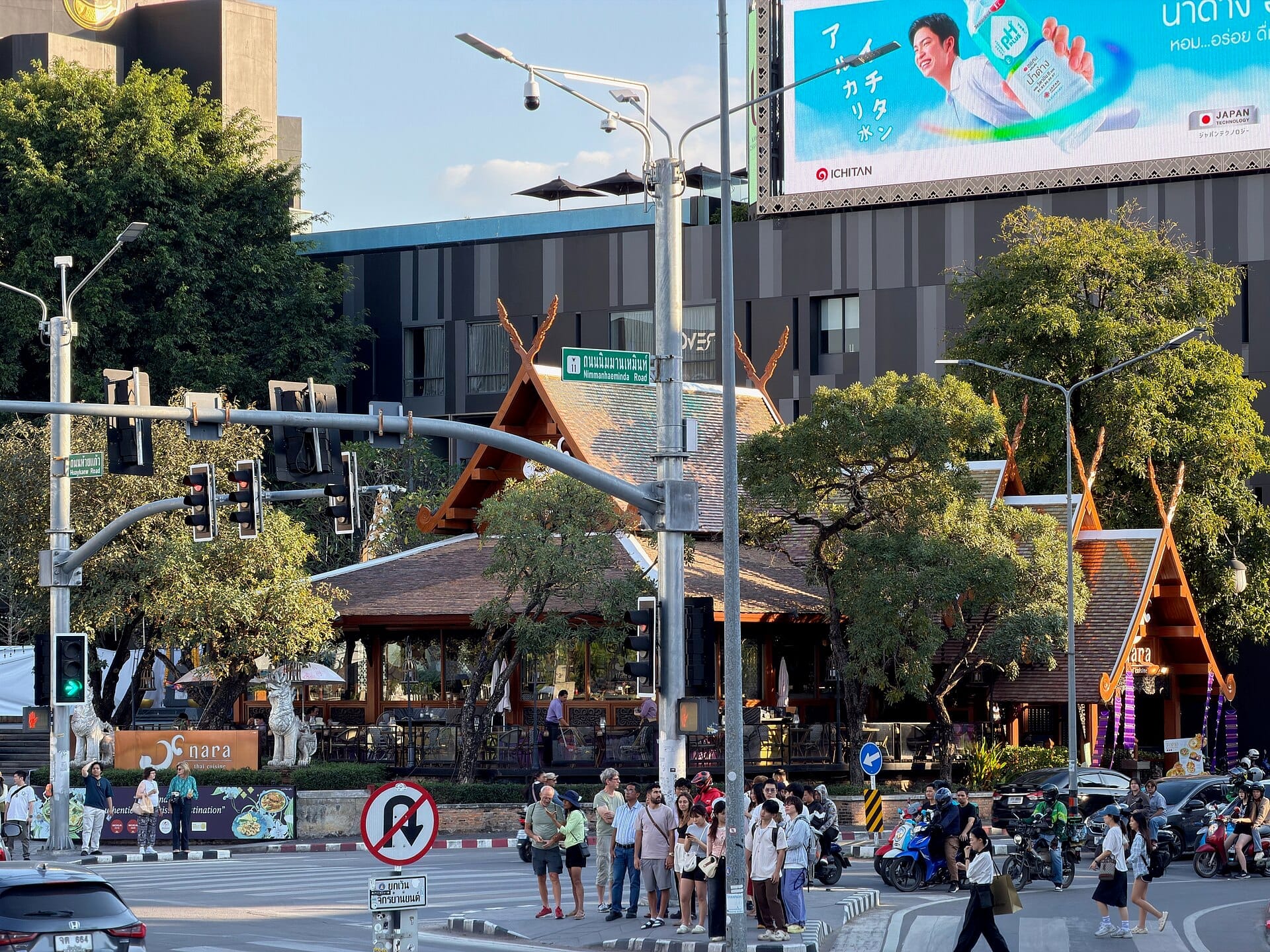
What Nimmanhaemin Road Actually Is
Nimmanhaemin Road, universally shortened to 'Nimman', is roughly a 1-kilometer stretch running north to south through one of Chiang Mai's most affluent and design-forward neighborhoods. It is flanked by a series of numbered side sois (lanes) that branch off to the east and west, each one worth a brief detour. The street has been the center of Chiang Mai's creative class for over two decades, drawing architects, designers, artists, and university lecturers from nearby Chiang Mai University.
Unlike the temple circuit of the Old City or the night markets along the river, Nimmanhaemin Road is not about a single landmark. It is a district experience: the accumulation of a dozen individually modest things that add up to something greater. A specialty coffee poured carefully by a barista who sources beans from Doi Chang. A silk scarf printed with traditional northern Thai motifs but designed with a contemporary sensibility. A gallery selling work by emerging Chiang Mai painters alongside printed tote bags. This is the texture of the street.
💡 Local tip
The sois (side lanes) off Nimman are often better than the main road itself. Soi 9 and Soi 17 are particularly rewarding for independent cafés and concept stores tucked behind greenery.
The Street Through the Day
Nimman operates on a different schedule depending on what you want from it. Mornings, from around 7am onward, belong to the coffee shops. The area has an extraordinary density of specialty cafés, and before 9am the street is quiet enough to walk comfortably, with the smell of fresh roasts drifting from doorways and staff setting out chairs on small terraces. This is when the neighborhood reveals its residential character: locals picking up breakfast, students cycling to campus, a few early-rising tourists still slightly dazed.
By midday the energy changes. The boutiques are open, the restaurants filling up for lunch. The heat between 11am and 2pm can be significant, particularly from March through May, and the shade coverage on the main road is inconsistent. This is when it pays to duck into the side sois, where trees are denser and the buildings closer together. The afternoon lull settles in around 2–3pm before picking up again around 5pm.
Evenings transform Nimman into its most sociable incarnation. Restaurants fill, the open-air bars and rooftop spots activate, and the One Nimman complex near the northern end of the road becomes a gathering point. The street is entirely walkable at night and generally safe, with enough foot traffic to feel energetic without the noise and compression of the Old City's Saturday Walking Street.
⚠️ What to skip
During the burning season (roughly February to April), air quality in Chiang Mai can drop sharply. Outdoor time on Nimman becomes less pleasant when AQI climbs above 150. Check IQAir or AirVisual before planning a long outdoor stroll during this period.
Tickets & tours
Live prices and dates from our booking partner. If you book, we may earn a commission at no extra cost to you.
Doi Inthanon National Park small group guided tour
From 34 €Instant confirmationFree cancellationHalf-day tour to admire elephants and enjoy Thai nature
From 48 €Instant confirmationFree cancellationChiang Mai - Chiang Dao Cave and 5 Hill Tribe villages
From 42 €Instant confirmationFree cancellationArt in Paradise Chiang Mai 3D Art Museum entrance tickets
From 8 €Instant confirmationFree cancellation
Coffee, Food, and the Reason Most People Come
The coffee culture on Nimmanhaemin Road is genuinely serious. Northern Thailand grows some of Southeast Asia's best arabica, particularly from the highlands around Doi Chang and Doi Inthanon, and Nimman's cafés are often the first place travelers encounter these beans properly prepared. Expect single-origin pour-overs, cold brews served in elaborate glassware, and baristas who can explain the processing method of what you're drinking. Prices run 80–160 THB for a specialty coffee, comparable to a mid-range European city.
The food scene on and around the road is equally strong. Japanese-Thai fusion, Northern Thai khao soi served at tables shaded by banana trees, Korean barbecue, wood-fired pizza, and smoothie bowls all exist within a few minutes' walk of each other. For a broader picture of what's worth eating in this part of the city, the where to eat in Chiang Mai guide covers neighborhood-by-neighborhood recommendations.
It is worth being honest about the tradeoffs: Nimmanhaemin Road is not where you come for the cheapest food in Chiang Mai. The restaurants are priced for the local middle class and for tourists, which means a meal costs roughly twice what the same quality food would cost in the Old City's side streets. That said, standards are generally higher and the atmosphere more relaxed.
Shopping: What's Actually Worth Buying
The shopping along Nimman leans heavily toward independent boutiques selling clothing, accessories, and home goods. Much of it is locally designed, drawing on northern Thai craft traditions but reworked into contemporary forms. You'll find silk and cotton garments that bear little resemblance to the tourist-facing handicraft market fare, alongside ceramics, woodwork, natural skincare products, and printed textiles.
The One Nimman complex at the northern end of the road concentrates a large number of these boutiques under one roof, along with food stalls and a small outdoor event area that hosts markets and pop-ups on weekends. It connects to the broader Nimman experience well, though it can feel more curated and less spontaneous than the individual shops scattered through the sois. Travelers interested in the deeper craft traditions behind what's sold here might also consider visiting Baan Tawai Woodcarving Village or Bo Sang Umbrella Village to see where these objects are made.
ℹ️ Good to know
Most boutiques on Nimman open between 10am and 11am and close around 9–10pm. Individual shops have variable hours. Sunday afternoons tend to see the highest foot traffic and the most active pop-up stalls.
Architecture and Urban Character
Nimmanhaemin Road developed significantly from the 1990s onward as Chiang Mai University graduates and young professionals began settling west of the Old City. The architecture is a mix: low-rise shophouses with tiled facades, glass-fronted modern cafés that have taken over former residences, a few newer condominium towers, and a few older low-rise buildings that predate the area's recent transformation.
The result is not architecturally pristine in any single style, but it has a layered quality that rewards looking. A converted wooden house turned gallery sits beside a sleek concrete café. Street art and hand-painted murals appear on walls throughout the sois. The proportions are human-scale throughout: nothing towers over the street, and the mix of mature trees along the footpaths provides real shade during the hotter months.
Nimman sits immediately west of Chiang Mai's Old City, and the contrast between the two is part of what makes each more interesting. After a morning walking the temple circuit, the switch to Nimman's coffee-and-design energy is a distinct gear change. For context on how the whole city fits together, the Chiang Mai overview guide maps out each neighborhood's character.
Practical Considerations
Getting There and Getting Around
Red songthaews (shared pickup trucks that function as informal buses) run regularly between the Old City and the Nimman area, typically costing 40 THB per person. A Grab ride from anywhere in the Old City takes under 10 minutes and costs 60–100 THB depending on time of day. The street itself is entirely walkable once you're there; the main road has decent footpaths, though some of the sois are narrower and less well-maintained after rain.
Weather and When to Visit
The best months to spend time outdoors on Nimman are November through February, when temperatures are mild (20–28°C), skies are clear, and the air quality is good. March through May brings heat, haze, and the annual burning season that can make outdoor café sitting uncomfortable. The rainy season (June through October) makes evenings pleasant again but afternoon downpours are common. For a full breakdown of seasonal conditions, see the best time to visit Chiang Mai guide.
Accessibility
The main road has footpaths throughout, though pavement quality is inconsistent in places. The sois vary considerably: some are smooth and flat, others have uneven surfaces or steps at entrances. Most cafés and restaurants on the ground floor are wheelchair-accessible, but many boutique spaces have small steps at the threshold. It is not the most challenging area for mobility in Chiang Mai, but it requires attention.
Who Might Not Enjoy It
Travelers looking for traditional Thai culture or temple experiences will not find that on Nimmanhaemin Road. The area is self-consciously contemporary and, in some respects, internationally flavored. Those on a strict budget may find the food and coffee prices more Western than they expected. If you dislike urban commercial areas in general, this is simply a well-curated version of that, not something fundamentally different.
Insider Tips
- Walk the numbered sois rather than staying on the main road. Soi 9 has some of the neighborhood's most established cafés, while Soi 17 at the southern end offers quieter spots that see fewer tourists.
- Sunday afternoon brings informal pop-up stalls and small markets to the One Nimman plaza area. Arrive by 4pm to browse before the crowds peak around 6pm.
- The best light for photography on the street is late afternoon, when the sun drops low enough to create long shadows through the tree canopy and the warm tones work well against the wooden shophouse facades.
- If you want to work from a café, avoid the most Instagram-popular spots on Friday and Saturday afternoons. The mid-week morning window, from 8am to noon, gives you quiet seats and reliable WiFi in most specialty coffee shops.
- Several of the boutiques on Nimman stock locally made goods at prices significantly lower than similar items at the airport or Old City tourist shops. If you're buying craft items as gifts, this is a better sourcing point than the night bazaar.
Who Is Nimmanhaemin Road For?
- Digital nomads and remote workers looking for quality coffee and reliable WiFi
- Design-conscious shoppers who want locally made goods over mass-produced souvenirs
- Couples looking for a relaxed evening with good restaurant options and walkable bars
- Travelers who want to understand the contemporary, non-temple side of Chiang Mai
- Food explorers sampling both northern Thai cuisine and the city's international dining scene
Nearby Attractions
Other things to see while in Nimmanhaemin (Nimman):
- Ang Kaew Reservoir (CMU Lake)
Tucked inside Chiang Mai University's forested campus, Ang Kaew Reservoir is a serene lake framed by pine and eucalyptus trees with Doi Suthep rising directly behind it. It's the kind of place locals walk before work, students study beside on weekends, and visitors stumble upon while exploring the Nimman area.
- Baan Kang Wat (Artist Village)
Baan Kang Wat is a cluster of low-rise wooden studios and workshops located off Suthep Road, beside Wat Umong on the western side of Chiang Mai. On weekends it hosts a small artisan market; on weekdays it's one of the quietest, most atmospheric corners of the city.
- Jing Jai Farmers' Market
Jing Jai Farmers' Market is Chiang Mai's most beloved weekend market, drawing local farmers, organic producers, and artisan food vendors to a shaded outdoor space near the Nimman neighborhood. It runs Saturday and Sunday mornings and offers a window into how the city actually eats and shops, far removed from the tourist-oriented night markets.
- Lanna Traditional House Museum
The Lanna Traditional House Museum in Chiang Mai's Nimman district preserves a collection of historic northern Thai wooden houses transplanted from the countryside and reassembled on a shaded campus. The site offers one of the most grounded introductions to Lanna domestic life, craftsmanship, and spatial culture available in the city.
Planning a trip? Discover personalized activities with the Nomado app.