Bo Sang Umbrella Village: Chiang Mai's Living Craft Tradition
Bo Sang is a working artisan village 9 kilometres east of Chiang Mai where families have been producing hand-painted parasols, fans, and lacquerware for generations. Visitors walk an open workshop street, watch painters at their benches, and buy directly from the makers — no factory floor, no tour-group script.
Quick Facts
- Location
- Bo Sang village, San Kamphaeng Road (Route 1006), ~10km east of Chiang Mai Old City
- Getting There
- White songthaew from Warorot Market heading east on Route 1006; expect about 30 min. Motorbike or taxi are also practical.
- Time Needed
- 1.5 to 2.5 hours for a relaxed visit; 3+ hours if buying and browsing thoroughly
- Cost
- Free to enter and walk the village; prices for umbrellas vary by size and material
- Best for
- Craft shoppers, cultural travellers, photographers, and anyone wanting to see a traditional Thai industry still fully alive
What Bo Sang Actually Is
Bo Sang Umbrella Village is not a museum recreation or a theme park demonstration. It is a functioning production village on San Kamphaeng Road where the main street doubles as a workshop corridor. The ground floors of family homes are open studios: lacquer pots sit on low tables, bundles of bamboo ribs dry against doorframes, and painters crouch over half-finished canopies at eye level as you walk past. The smell of lacquer and wood shavings is present but not overwhelming, and the sound of the village is mostly the scratch of brushes and the quiet conversation of workers rather than any kind of performance.
The craft centre of Bo Sang stretches along roughly 500 metres of the main road. Most of the serious production and the best variety of finished work is concentrated in the first few workshops you encounter coming from Chiang Mai, but it pays to walk the full length before buying — quality and pricing vary noticeably between shops.
💡 Local tip
Arrive before 10am on a weekday to catch the most active production work. By mid-afternoon, some painters have finished their quota for the day and workshops are quieter.
The History Behind the Parasols
Bo Sang's umbrella-making tradition dates back over 200 years, introduced by a monk named Phra Khru Thammarat who brought the techniques back to Chiang Mai. The village adopted the skill and developed its own northern Thai style: thin saa paper (made from mulberry bark) or silk stretched over split-bamboo frames, sealed with lacquer, and hand-painted with motifs drawn from nature — peacocks, lotus flowers, butterflies, and geometric borders influenced by Lanna temple art.
The industry here survived the industrialisation of Thai crafts in large part because the products require genuine hand skill at multiple stages. A single umbrella involves splitting bamboo ribs to consistent thinness, soaking and shaping them, stretching paper or silk without wrinkles, applying multiple lacquer coats, and painting in fine detail. None of those steps have been successfully mechanised for the quality level Bo Sang sells at.
Bo Sang sits on the same road as the San Kamphaeng hot springs and several other craft producers, which makes it a natural anchor for a half-day east of Chiang Mai. If you are planning a broader craft-focused day, the handicraft villages corridor along Route 1006 is worth understanding before you go.
Tickets & tours
Live prices and dates from our booking partner. If you book, we may earn a commission at no extra cost to you.
Chiang Mai - Chiang Dao Cave and 5 Hill Tribe villages
From 42 €Instant confirmationFree cancellationHalf-day tour to Doi Suthep and White Hmong Hill Village
From 146 €Instant confirmationFree cancellationHalf-day private van tour to Doi Suthep and Doi Pui Hmong Village from Chiang Mai
From 93 €Instant confirmationFree cancellationFull day van charter, Chiang Rai and Long Neck Village
From 184 €Instant confirmationFree cancellation
Walking the Village: What You Will See
The experience at Bo Sang is almost entirely street-level and informal. There are no entry barriers, no ticketed zones, and no scripted tours. You arrive, park or step off the songthaew, and start walking. The first thing most visitors notice is the scale of finished inventory hanging outside every shop: hundreds of open parasols, arranged by size and colour, catching the light and creating a genuinely striking visual corridor down the road.
Inside the open workshops, you can watch every step of the process if the timing is right. The bamboo prep area tends to be at the back; the painting benches are usually near the front, facing the street for light. Painters work quickly and with obvious muscle memory, but most are happy to pause and let a visitor photograph their work or watch for a minute. Asking a question through your phone's translation app usually produces a smile and a demonstration.
Beyond umbrellas, Bo Sang shops also carry painted silk scarves, lacquerware boxes, paper fans, and decorative items using the same techniques applied to different surfaces. Quality ranges from mass-produced tourist souvenirs to genuinely fine handwork. The distinction is usually visible in the brushstroke detail and the evenness of the lacquer finish.
ℹ️ Good to know
Bo Sang Umbrella Village is free to enter and explore. You are under no obligation to buy, and sales pressure from vendors is generally low by Thai market standards.
Time of Day and Seasonal Differences
Morning visits, roughly 8:30am to 11am, offer the best combination of active production work and manageable heat. The light is soft and flattering for photography, particularly on the coloured canopies hanging outside. Weekday mornings are significantly quieter than weekends, when domestic Thai tourists and occasional coach groups arrive from Chiang Mai.
Afternoons can be hot along the open road, particularly from February through May. The parasols themselves provide shade in front of the shops, but if you are sensitive to heat, bring water and plan to visit earlier. After about 3pm, the village can be noisier as traffic picks up, making the atmosphere less relaxed.
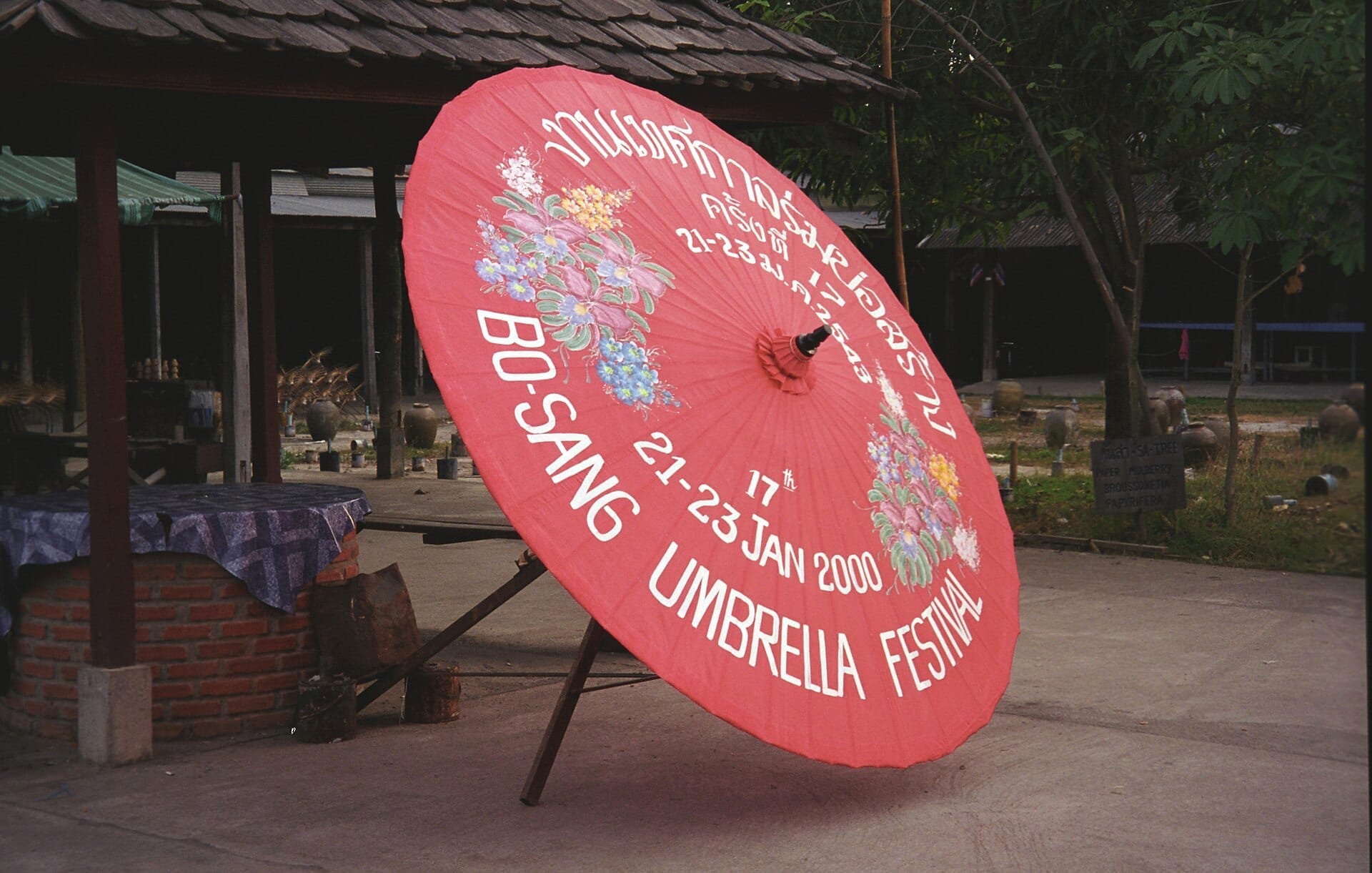
Bo Sang holds its annual Umbrella Festival every January, usually over three days. During the festival, the main street is closed to traffic, evening parades feature elaborately decorated floats and performers in traditional Lanna costume, and umbrella-painting competitions draw craftspeople from across the region. Crowds are large and accommodation in Chiang Mai books up, but the festival represents one of the more authentic craft celebrations in northern Thailand.
If you are planning your trip around the festival, check the best time to visit Chiang Mai to align your dates with the January programme and avoid the peak of dry-season haze.
Buying Here: What to Know Before You Spend
Bo Sang is one of the few places in Chiang Mai where buying directly from the producer is genuinely the norm rather than a marketing claim. The people selling you a parasol are frequently the same people who made it or are related to those who did. That said, not everything for sale is of the same quality, and the village has absorbed enough tourist traffic over the years that lower-grade items sit alongside the serious craft work.
When assessing an umbrella, look at the bamboo ribs from underneath: they should be consistent in thickness and evenly spaced. Check the lacquer on the handle for bubbling or peeling. On the painted surface, look for clean edges on the motifs and smooth colour gradients rather than blotchy fill. The best pieces in any given shop are usually displayed highest or kept behind the counter — asking to see 'the good ones' is a normal thing to do here.
Haggling is accepted and expected, but the margins at Bo Sang are not especially wide. A 10-15% reduction on a clearly priced item is reasonable. Pushing much harder than that on handmade goods is likely to damage the interaction without saving significant money. For bulk purchases of ten or more items, ask separately about a group price.
💡 Local tip
Parasols and fans pack better than you might expect. Large umbrellas can often be disassembled by the vendor and wrapped tightly in paper for airline carry-on. Always ask before assuming you need to check luggage.
Getting There and Practical Notes
Bo Sang sits about 10 kilometres east of Chiang Mai's Old City on Route 1006, also called San Kamphaeng Road. The easiest public option is a white songthaew (shared pick-up truck) from near Warorot Market or Warorot Market area — tell the driver 'Bo Sang' and confirm the price before boarding (expect about 20 THB per person). Journey time is about 30 minutes depending on traffic.
A rented motorbike from Nimman or the Old City takes about 20 minutes and offers the flexibility to stop at other workshops on Route 1006 on the way back. Parking at Bo Sang is informal but straightforward. Taxis and Grab cars are a reasonable option if you are combining Bo Sang with other stops further east.
For a fuller picture of movement around Chiang Mai and how to combine Bo Sang with other parts of the city, the getting around Chiang Mai guide covers songthaew routes, ride-sharing, and motorbike rental in detail.
Most of Bo Sang's main street is flat and accessible on foot, though the workshops themselves are street-level and often have a small step at the threshold. There is no dedicated accessibility infrastructure, but the open layout means wheelchair users and those with mobility challenges can access much of the village from the pavement.
Who This Attracts and Who Should Pass
Bo Sang works best for travellers with a genuine interest in craft process and production, those looking for meaningful rather than generic souvenirs, and photographers who want colour and human activity rather than just architecture. The January festival is also a strong draw for anyone interested in traditional Lanna ceremony and street performance.
If you have no interest in shopping or craft process, Bo Sang is short on other things to do. There are no major temples, no food market of note, and little natural scenery. The village is essentially one street of workshops and showrooms. Visitors expecting the scale and energy of Chiang Mai's night markets, or the historical depth of the Old City, will likely feel underwhelmed within 30 minutes. It is also not the right destination for young children unless they have particular patience for slow-moving, adult-focused activity.
Travellers who enjoy the craft focus at Bo Sang often also like the nearby Baan Tawai woodcarving village on the south side of Chiang Mai, which follows a similar working-village format for a different craft tradition.
Insider Tips
- The most detailed and highest-quality painted work in the village tends to be produced by the older generation of painters. Look for workshops where an elder is visibly at the bench rather than only younger workers — those pieces usually show more refined brushwork.
- If you want a custom design painted on an umbrella or fan, several workshops will take same-day commissions for simple motifs. Come with a reference image on your phone. For complex custom work, allow 24 hours and arrange collection or shipping.
- Route 1006 east of Bo Sang continues to San Kamphaeng town, which has a Saturday and Sunday street market with local food and fewer tourist markups than anything in central Chiang Mai. It is worth 30 extra minutes if you have a motorbike.
- The paper umbrellas are not waterproof. If you are caught in a shower with one, close it immediately and let it dry slowly in a flat position. Silk umbrellas with proper lacquer coating handle light rain better, but none of these are functional rain umbrellas.
- Bo Sang workshops are generally open daily from around 8:30am to 5pm, though hours are informal and some family shops close on Sundays or Thai public holidays. Visiting on a weekday guarantees the most complete experience.
Who Is Bo Sang Umbrella Village For?
- Craft and textile shoppers looking to buy directly from producers
- Photographers who want colour, texture, and human craft activity in natural light
- Cultural travellers interested in living Lanna craft traditions
- Anyone attending or planning around the January Bo Sang Umbrella Festival
- Travellers combining a half-day east of Chiang Mai with other Route 1006 stops
Nearby Attractions
Other things to see while in Handicraft Villages (San Kamphaeng Road):
- Baan Tawai Woodcarving Village
Baan Tawai, located about 15 kilometers south of Chiang Mai's Old City, is Thailand's most concentrated hub of traditional woodcarving craft. Dozens of workshops and export-grade showrooms line the main road, selling everything from intricate teak Buddha images to furniture-scale carvings. It rewards those who walk slowly and look closely.
- San Kamphaeng Hot Springs
Located about 34 kilometers east of Chiang Mai near the town of San Kamphaeng, these natural hot springs offer geysers reaching up to 3 meters, thermal foot baths, egg-boiling pools, and private spa facilities. It is one of the most accessible geothermal sites in northern Thailand and works well as a half-day trip combined with the nearby handicraft villages.
Planning a trip? Discover personalized activities with the Nomado app.