San Kamphaeng Hot Springs: Geysers, Thermal Pools, and a Surprisingly Good Day Out
Located about 34 kilometers east of Chiang Mai near the town of San Kamphaeng, these natural hot springs offer geysers reaching up to 3 meters, thermal foot baths, egg-boiling pools, and private spa facilities. It is one of the most accessible geothermal sites in northern Thailand and works well as a half-day trip combined with the nearby handicraft villages.
Quick Facts
- Location
- Mae On District, Chiang Mai Province, approx. 34 km east of the Old City
- Getting There
- Rent a scooter or hire a songthaew/taxi; public transport is limited; a yellow songthaew/bus from Chiang Mai’s Warorot Market area is available. Route 1006 east from San Kamphaeng town leads to the site
- Time Needed
- 1 to 2 hours for the springs alone; half a day if combined with nearby handicraft villages
- Cost
- Entry fee (about 100 THB for adults); private spa and mineral pool services cost extra
- Best for
- Families, couples, curious day-trippers, and anyone wanting a relaxed nature stop outside the city
What the San Kamphaeng Hot Springs Actually Are
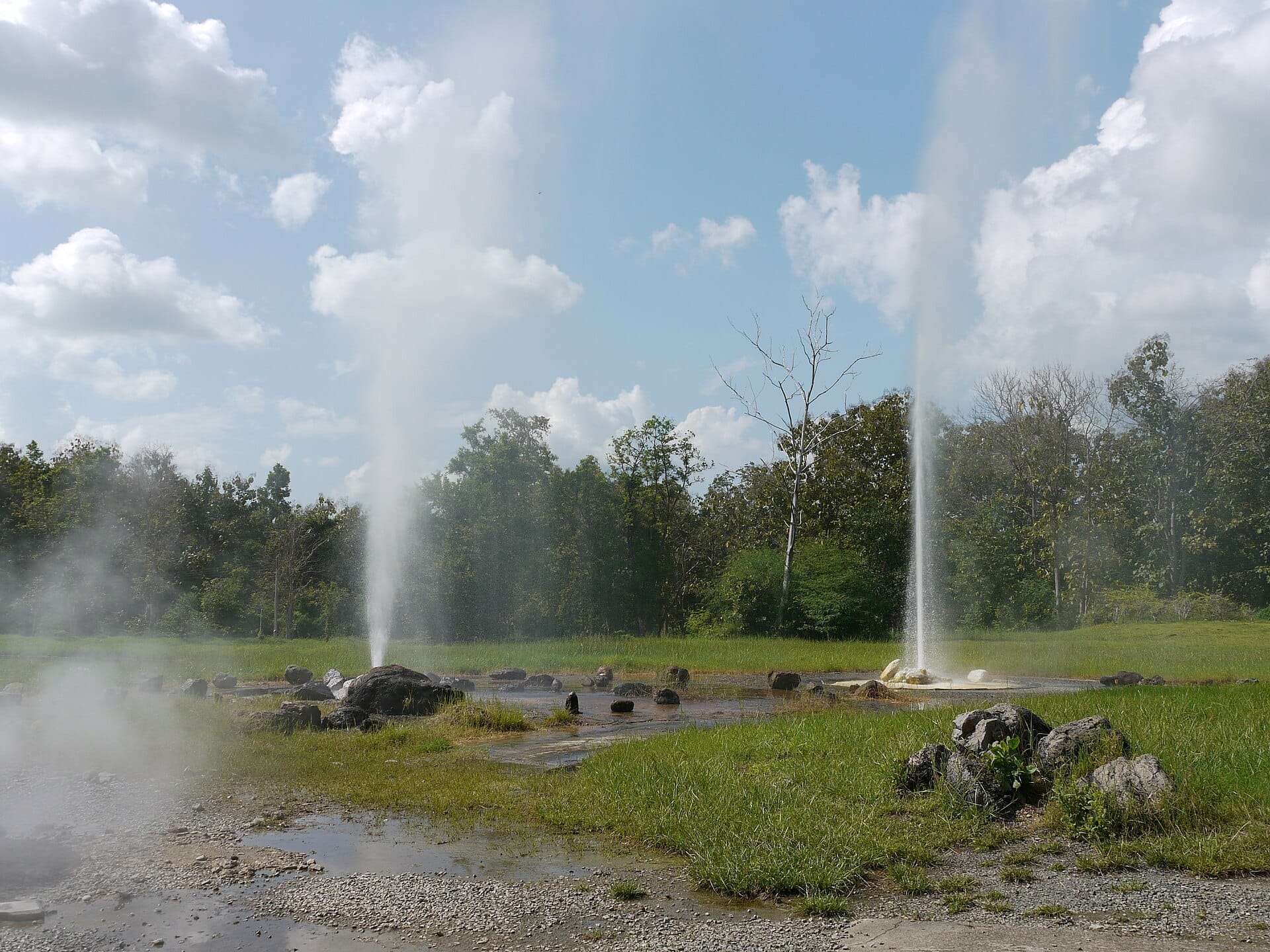
The San Kamphaeng Hot Springs sit within a landscaped geothermal park in the foothills east of Chiang Mai. The centerpiece is a cluster of active geysers that erupt continuously from the earth, shooting columns of steaming water up to 3 meters into the air. The ground around the vents is discolored with mineral deposits, yellow and rust-orange crusts that give the area a faintly otherworldly look. The air smells distinctly of sulfur, more noticeable near the main geyser field, and the steam hangs low on cooler mornings, thickening the atmosphere considerably.
Beyond the geysers, the park includes a system of channels where superheated water flows from the vents through concrete troughs. Visitors boil eggs in mesh baskets dropped directly into the near-boiling water, a simple ritual that has become the site's signature experience. There are also communal foot soak pools fed by the same thermal water, cooled to a bearable temperature, and a more developed spa section with private mineral baths available for rent by the hour.
ℹ️ Good to know
The water temperature at the main vents can reach 100°C. Do not touch the water near the geyser outlets or the main channels. The designated foot pools are temperature-regulated and safe for soaking.
How the Experience Changes Through the Day
Morning is the most rewarding time to visit. Before 9am, the site is lightly attended, the steam from the vents is dramatic against the cooler air, and the surrounding forested hills are still catching the early light. The smell of sulfur is present but not overwhelming, and the sounds are mostly natural: water bubbling through channels, birdsong from the trees at the park's edge, and the low hiss of the geysers. This is when photographers get their best material, and when the whole place feels genuinely impressive rather than like a tourist facility.
By late morning, tour groups begin arriving, typically organized day tours from Chiang Mai that combine the hot springs with stops at the handicraft village corridor along Route 1317. The egg-boiling stations get crowded, and the foot pools fill up. The atmosphere shifts from quiet nature stop to lively outing, which is perfectly enjoyable but a different experience. If you are traveling with children, this busier period can actually work in your favor since the energy is higher and there is more to watch.
Afternoons are quieter again as tour groups move on, though the light by mid-afternoon is flatter and the steam less photogenic. If you are arriving independently on a scooter and want a peaceful visit, aim for before 9am or after 2pm.
💡 Local tip
Bring a small towel and a change of socks if you plan to use the foot pools. The mineral water leaves a faint residue, and the pool surrounds can be slippery. Flip-flops are useful here.
Tickets & tours
Live prices and dates from our booking partner. If you book, we may earn a commission at no extra cost to you.
One-way private transfer from Chiang Mai City to Sukhothai
From 185 €Instant confirmationFree cancellationDoi Inthanon National Park small group guided tour
From 34 €Instant confirmationFree cancellationHalf-day tour to admire elephants and enjoy Thai nature
From 48 €Instant confirmationFree cancellationChiang Mai - Chiang Dao Cave and 5 Hill Tribe villages
From 42 €Instant confirmationFree cancellation
The Geothermal Context: Why These Springs Exist
The hot springs are fed by a fault system that runs through the mountains east of Chiang Mai. Northern Thailand has several geothermal areas, but San Kamphaeng is among the most active and the most accessible from a major city. The springs have been known locally for generations, used historically for their supposed therapeutic properties. The site was developed into a public park and has seen incremental upgrades over the years, adding the spa facilities, landscaping, and egg-boiling infrastructure that now define the visitor experience.
The mineral content of the water is primarily sulfurous, which accounts for the distinctive smell and the discoloration of surfaces around the vents. The thermal foot pools are marketed locally for their skin benefits, a claim common to sulfurous spring destinations across Asia. Whether or not you buy into the therapeutic angle, a 20-minute foot soak in warm mineral water after a morning of exploring is genuinely pleasant.
Combining the Hot Springs with the Handicraft Village Route
The road from Chiang Mai to the hot springs passes through one of the most concentrated stretches of traditional craft production in northern Thailand. The route east along Route 1317 and into San Kamphaeng town takes you past workshops and showrooms selling silk, lacquerware, silverwork, celadon ceramics, and handmade paper. Most of these operations are genuine working studios, not just retail shops, and many allow visitors to watch artisans at work.
The Baan Tawai woodcarving village is a short detour off the main road and worth a stop if you are interested in carved furniture, figurines, and decorative objects at considerably lower prices than you would find in Chiang Mai's city shops. Planning the hot springs as the endpoint of a morning driving this route makes the overall half-day feel structured and rewarding rather than just a long drive to see some steam.
For a broader look at how to plan this corridor and what else the area offers, the day trips from Chiang Mai guide covers the eastern route in detail alongside other half-day and full-day options from the city.
Practical Walkthrough: Navigating the Site
The park entrance is clearly marked and staffed. After paying the entry fee at the gate, the path leads directly toward the main geyser field, which is hard to miss given the steam columns. The geysers are fenced off at a safe distance with viewing platforms. From there, the egg-boiling stations are immediately adjacent, with eggs typically sold on-site for a small fee. A clockwise loop around the park takes roughly 30 to 40 minutes at a relaxed pace.
The foot soak pools are located toward the back of the park, set in a more sheltered area with shade and seating. The private spa facilities, which offer full mineral baths in enclosed rooms, are in a separate building and require advance booking or a short wait during busy periods. The facilities are basic but clean: tiled rooms, individual tubs, changing areas. Do not expect resort-level appointments.
There is a small food and snack area near the entrance where vendors sell drinks, corn, and the eggs for boiling. It is not a full restaurant, so eat before you arrive if you are visiting around lunchtime.
⚠️ What to skip
The path surfaces near the geyser vents can be slippery from condensation and mineral runoff. Wear closed shoes or shoes with grip. Sandals with thin soles are not ideal near the active geyser area.
Getting There: Your Realistic Options
There is a direct yellow songthaew/bus service from Chiang Mai’s Warorot Market area to the hot springs. The most practical options for independent travelers are renting a scooter, hiring a private driver or taxi for the day, or joining an organized tour. The drive from the Old City takes roughly 45 minutes to 1 hour depending on traffic through San Kamphaeng town. Scooter rental in Chiang Mai typically runs around 150 THB per day, making this a very affordable self-drive excursion if you are comfortable riding.
If you are unfamiliar with driving in Thailand, hiring a red songthaew for a private day rate is a reasonable alternative. The getting around Chiang Mai guide covers songthaew negotiation, scooter rental tips, and what to expect from Grab and taxi services in the area.
Who Should Probably Skip This
The San Kamphaeng Hot Springs are a pleasant, relaxed attraction, but they are not spectacular in the way that, say, a mountain summit or a significant historical site is spectacular. If your time in Chiang Mai is limited to two or three days and you have not yet visited the major temples, the Old City, or Doi Suthep, prioritize those first. The hot springs are better suited to visitors who have already done the headline attractions and are looking for something different.
Visitors who are sensitive to strong smells should also be aware that the sulfur odor is constant and can be intense near the geyser vents, which is unavoidable since that is the main attraction. And if you are coming specifically for a premium spa experience, you will find better facilities at dedicated thermal resort spas in the region. The Chiang Mai spa and massage guide covers higher-end options if that is your priority.
Photography Notes
The most photogenic element of the site is the interplay of steam, mineral-stained ground, and surrounding greenery. Morning light, particularly in the cooler months from November through February, produces dramatic steam columns that catch the low sun well. A wide lens captures the scale of the geyser field; a telephoto pulls in the texture of the mineral deposits and the arc of the water jets. Avoid shooting into the sun from the main viewing platform since the steam diffuses into flat haze.
For guidance on Chiang Mai's best photography locations and seasonal light conditions, the Chiang Mai photography guide is a useful reference before planning your itinerary.
Insider Tips
- Buy eggs at the site entrance rather than bringing your own. They are sold on-site and take about 10 minutes in the thermal channels. It is a small thing but the ritual of eating a hot spring-boiled egg on-site is genuinely enjoyable.
- If you are visiting in the cool season (November to February), the temperature contrast between the cold morning air and the rising steam is at its most dramatic. This is the single best period for both atmosphere and photography.
- The private mineral bath rooms can be busier on weekends and public holidays. If using the spa facilities is important to your visit, arrive before 10am or call ahead if possible.
- The drive back toward Chiang Mai on Route 1006 passes several silk and lacquerware showrooms that are far less crowded in the early afternoon than in the morning. Timing your return after noon means shorter lines and more attention from staff.
- Bring cash. The entry fee, egg sales, and spa facilities are all cash-only. The nearest ATM is back in San Kamphaeng town.
Who Is San Kamphaeng Hot Springs For?
- Families with children who enjoy interactive, hands-on experiences like boiling eggs in geysers
- Couples looking for a relaxed half-day outside the city with a foot soak and some scenery
- Photographers interested in geothermal landscapes, especially in the cool season
- Travelers who have already covered Chiang Mai's main attractions and want something offbeat
- Anyone self-driving the handicraft village route east of the city who wants a natural endpoint for the day
Nearby Attractions
Other things to see while in Handicraft Villages (San Kamphaeng Road):
- Baan Tawai Woodcarving Village
Baan Tawai, located about 15 kilometers south of Chiang Mai's Old City, is Thailand's most concentrated hub of traditional woodcarving craft. Dozens of workshops and export-grade showrooms line the main road, selling everything from intricate teak Buddha images to furniture-scale carvings. It rewards those who walk slowly and look closely.
- Bo Sang Umbrella Village
Bo Sang is a working artisan village 9 kilometres east of Chiang Mai where families have been producing hand-painted parasols, fans, and lacquerware for generations. Visitors walk an open workshop street, watch painters at their benches, and buy directly from the makers — no factory floor, no tour-group script.
Planning a trip? Discover personalized activities with the Nomado app.