Warorot Market (Kad Luang): One of Chiang Mai's Oldest Local Markets
Warorot Market, known locally as Kad Luang or 'the Great Market,' is one of Chiang Mai's oldest and most authentic markets. Spanning several floors and spilling across surrounding streets near the Ping River, it's where locals have shopped for fresh produce, dried goods, traditional snacks, and everyday essentials for over a century. It's not polished for tourists — and that's exactly what makes it worth visiting.
Quick Facts
- Location
- Wichayanon Road, Riverside district, Chiang Mai
- Getting There
- 10-min walk from Tha Phae Gate; songthaew (red truck) from Nimman or Old City; no direct BRT
- Time Needed
- 1–2 hours for a thorough visit; 30 min if browsing only
- Cost
- Free entry; budget 50–300 THB for food and snacks
- Best for
- Food lovers, budget travelers, photographers, Northern Thai culture
What Warorot Market Actually Is
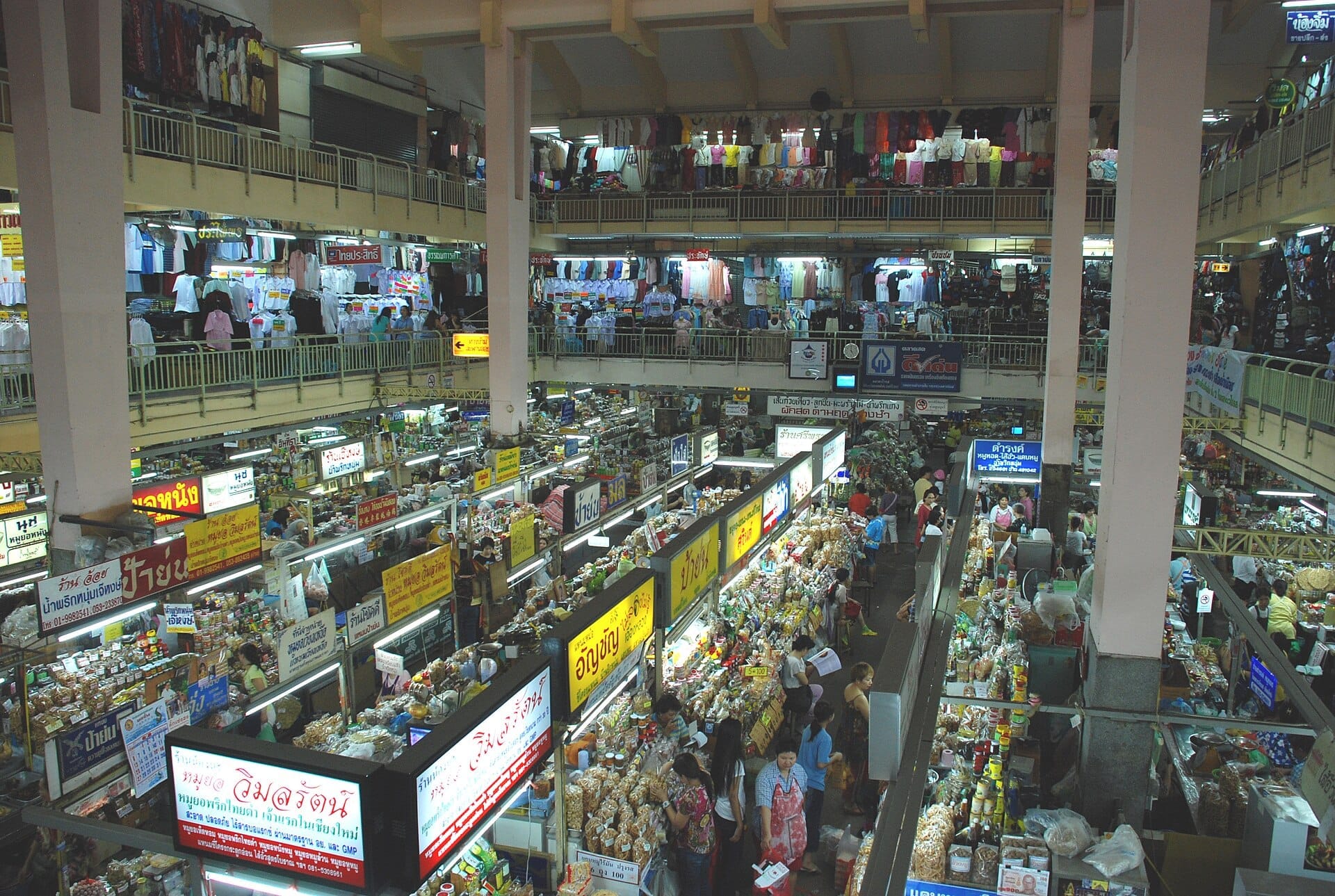
Warorot Market — officially the Warorot Public Market but almost always called Kad Luang by locals, which translates simply as 'the Great Market' — was built around 1910 and has anchored Chiang Mai's commercial life for more than a century. The main building is a multi-storey concrete structure on Wichayanon Road, a short walk from the Ping River, but the market sprawls well beyond its walls. Covered lanes, pavement vendors, and adjacent specialty stalls extend in every direction, making the exact boundaries of 'the market' genuinely hard to define.
This is not a tourist market. The stalls are stocked with things local households actually need: fresh vegetables from northern farms, dried chilies in bulk bags, pickled garlic, sai ua (Northern Thai sausage) vacuum-packed for travel, bolts of hill-tribe fabric, ceremonial flowers, and cleaning supplies sold by the kilo. Visitors are welcome and mostly ignored — in the best possible way.
💡 Local tip
Arrive before 9am for the freshest produce and the most active market atmosphere. The ground floor of the main building peaks in activity between 6am and 10am, then slows considerably by midday.
Navigating the Market: Floor by Floor
The main Warorot building has three functional levels, each with a distinct character. The ground floor is the most sensory-intense: wet market stalls selling raw meat, fresh fish, and vegetables occupy the inner sections, surrounded by cooked food vendors, flower sellers, and snack stalls near the entrances. The smell here is sharp and layered — lemongrass, fermented fish paste, fresh jasmine garlands, and charcoal smoke from a nearby grill all arrive simultaneously.
The upper floors shift toward dry goods, clothing, and fabrics. You'll find stalls selling phaa sin (traditional Northern Thai skirts), ready-made traditional blouses, hill-tribe embroidery, and costume accessories used in festivals and ceremonies. These floors tend to be cooler and less crowded, and the vendors are often more willing to engage with browsers. Prices here are noticeably lower than in the tourist-facing shops near Tha Phae Gate.
Outside the main building, the surrounding streets form a secondary market ecosystem. The lane running behind the building toward the river hosts vendors selling herbal medicines, amulets, and religious goods. The street parallel to Wichayanon Road is lined with packaged Northern Thai food products — the kind of thing you'd buy to take home — including curry pastes, dried mushrooms, roasted coffee from Doi Chaang, and an impressive variety of processed longan products.
Tickets & tours
Live prices and dates from our booking partner. If you book, we may earn a commission at no extra cost to you.
Doi Inthanon National Park small group guided tour
From 34 €Instant confirmationFree cancellationHalf-day tour to admire elephants and enjoy Thai nature
From 48 €Instant confirmationFree cancellationChiang Mai - Chiang Dao Cave and 5 Hill Tribe villages
From 42 €Instant confirmationFree cancellationArt in Paradise Chiang Mai 3D Art Museum entrance tickets
From 8 €Instant confirmationFree cancellation
The Food at Warorot: What to Eat and Where to Find It
Eating at Warorot is one of the most cost-effective food experiences in Chiang Mai. The ground floor has multiple cooked food vendors operating from early morning through early afternoon. Khao tom (rice porridge), joke (congee), and fried rice are the early-morning staples. By mid-morning, noodle vendors are active, offering kuay tiew (rice noodle soup) and boat noodles at prices that reflect a local clientele: expect to pay 40–60 THB for a full bowl.
The market is also one of the best places in the city to try Northern Thai sweets. Look for khanom (traditional Thai sweets) vendors selling khanom tom (coconut rice balls), thong yip (egg yolk sweets), and seasonal items during festivals. Stalls selling kanom krok (coconut pancake) operate near the main entrance, and the smell makes them easy to find.
For packaged goods to take home, the sai ua (Northern Thai herb sausage) sold at several stalls on the ground floor is widely considered among the best available anywhere in the city. Ask vendors if they offer vacuum packing if you're traveling onward — most do, for a small extra fee.
ℹ️ Good to know
Warorot Market is one of the best places in Chiang Mai to stock up on packaged Northern Thai food products, including curry pastes, dried herbs, roasted coffee, and tea from Doi Mae Salong — at significantly lower prices than souvenir shops near the Old City.
How the Market Changes Through the Day
The rhythm of Warorot is tied to the morning. The most active window is roughly 6am to 10am, when fresh produce is at its best and the full range of vendors is operating. This is when the market is loudest and most alive: vendors calling out prices, the clatter of metal scales, motorbikes weaving through pedestrian lanes, and the constant movement of trolleys loaded with wholesale goods.
By late morning, the produce quality starts to decline and some stalls begin packing up. The midday hours (noon to 3pm) are the quietest and least rewarding, especially in the hot season between March and May, when the upper floors in particular become uncomfortably warm. If you can only visit at midday, focus on the street-facing stalls and the adjacent Ton Lam Yai Market, which runs parallel to Warorot and stays active through the afternoon.
A second, smaller surge of activity happens in the late afternoon as vendors restock for the evening crowd. This is a reasonable time to browse dry goods and clothing without the morning crush. Some food stalls reopen for dinner service from around 5pm, selling grilled items and noodles to workers heading home.
Historical and Cultural Context
Warorot Market was established in the early 20th century on land that had been a cemetery of Chiang Mai’s rulers, and it has a documented connection to the Lanna royal lineage through Chao Dara Rasami, a royal consort of King Rama V. The name 'Warorot' itself derives from a royal designation meaning 'excellent boon.' This royal connection gives the market a particular status in Chiang Mai's civic identity — it's not just a place to shop, but a site with a defined historical and social lineage.
The market has historically served as a hub for Chiang Mai's Yunnanese Chinese community, who arrived in large numbers in the late 19th and early 20th centuries. This heritage is visible today in the dried goods and preserved foods sold throughout the market, and in some of the vendor families who have operated the same stalls for three or four generations. The Chinatown-adjacent block near Warorot (in the area around Chang Moi Road) reflects this layered commercial history.
Warorot sits at the northern edge of Chiang Mai's Riverside district, close to the Ping River and within easy walking distance of Nawarat Bridge. The surrounding area is one of the city's oldest commercial zones and rewards slow exploration — the architecture of the surrounding shophouses, while not spectacular, is a quiet record of decades of small-business life.
Practical Information: Getting There, Accessibility, and Photography
Warorot Market is on Wichayanon Road in the Riverside district, roughly 1 kilometer east-northeast of Tha Phae Gate. On foot from the Old City, the walk takes about 10 minutes along Tha Phae Road. Red songthaew taxis can drop you on Wichayanon Road directly — agree on the fare before boarding. From Nimman, expect to pay around 80–120 THB for a private songthaew. Ride-hailing apps (Grab) work reliably in this area.
Accessibility is limited. The main building has narrow aisles between stalls and steps between some sections. The upper floors are reachable by stairs only in most parts of the building. Wet floors in the produce section during morning hours are common and can be slippery. Visitors with mobility constraints may find the exterior street stalls more manageable than the interior building.
Photography is generally tolerated in non-food-preparation areas, but ask before photographing individual vendors closely — a gesture and a smile usually get you a nod. Morning light before 9am creates good conditions for photography inside the market, with shafts of light entering the building's upper windows and illuminating the produce stalls below. Avoid using flash near fish and meat vendors.
⚠️ What to skip
Warorot Market is significantly more crowded and harder to navigate during Chiang Mai's major festivals, including Songkran and Yi Peng. If visiting during these periods, expect limited movement near the main entrance and elevated prices on snack items.
If you're visiting Chiang Mai for the first time and want to understand what the city looks like beyond the temple circuit, Warorot is essential context. Pair it with a broader exploration of Chiang Mai Night Bazaar nearby in the evening, or read about what to eat in Chiang Mai before you go to get the most out of the food stalls.
Who Should Skip Warorot Market
Warorot is not for everyone. If you're visiting Chiang Mai primarily for temples, hill country scenery, or spa experiences, you may find the market's gritty interior and raw-food smells more disorienting than rewarding. The upper floors hold little of interest for travelers who aren't shopping for clothing or traditional goods. And if you've already visited large local markets elsewhere in Southeast Asia, Warorot won't feel revelatory — though it will feel authentic.
Travelers focused on curated shopping experiences should note that the Sunday Walking Street and Saturday Walking Street offer a more comfortable, tourist-friendly shopping format with handicrafts and street food in a more navigable setting. For those interested in a more relaxed market atmosphere, the Jing Jai Market in the Nimman area skews heavily toward organic produce and artisan goods, with English signage and a calmer pace.
Insider Tips
- The stalls selling vacuum-packed sai ua (Northern Thai sausage) on the ground floor near the main Wichayanon Road entrance are reliable for quality and price. Several vendors have been selling from the same spot for decades — look for the ones with the longest queues of local buyers.
- The flower vendors near the southern entrance of the main building sell jasmine garlands and lotus buds used for temple offerings. Buying a set (typically 20–40 THB) and visiting a nearby temple afterward is a small but meaningful way to engage with local practice.
- Ton Lam Yai Market, directly adjacent to Warorot, is technically a separate market but functions as an extension. It specializes in dried goods and is notably less crowded than the main Warorot building — useful if you want to browse without navigating morning foot traffic.
- If you're buying fabric or traditional clothing from the upper floors, prices are negotiable for multiple items. Vendors expect a small amount of bargaining but not aggressive haggling — a polite counter-offer of 10–15% below the asking price is usually accepted without friction.
- The market is open daily, but Sunday mornings have a slightly different feel: some regular produce vendors scale back, but the dry goods and snack sections remain fully active and the crowds are more mixed, with both locals and visitors.
Who Is Warorot Market (Kad Luang) For?
- Food travelers who want to eat and shop like Chiang Mai residents rather than tourists
- Budget travelers looking for cheap, high-quality local breakfast options between 6am and 10am
- Photographers interested in documentary-style market scenes with genuine local activity
- Visitors wanting to buy packaged Northern Thai food products — curry pastes, dried herbs, sausage — to take home
- Anyone seeking cultural context for Chiang Mai's Yunnanese Chinese heritage and Lanna commercial history
Nearby Attractions
Other things to see while in Riverside (Ping River Area):
- Art in Paradise Chiang Mai (3D Art Museum)
Art in Paradise Chiang Mai is a large-format interactive 3D art museum located near the Riverside district. Visitors pose inside trompe-l'oeil paintings to create optical illusion photographs. It suits families, couples, and anyone looking for a lighthearted few hours indoors.
- Chiang Mai Night Bazaar
The Chiang Mai Night Bazaar is a sprawling commercial market district along Chang Khlan Road, drawing both tourists and locals with stalls selling handicrafts, clothing, street food, and souvenirs. It's well-organized and easy to navigate, but knowing what to expect prevents disappointment.
- Mae Ping River Cruises
The Mae Ping River has shaped Chiang Mai since the city's founding in 1296, and a river cruise remains one of the few ways to see the city from a genuinely different angle. Longboat and converted rice-barge tours depart from piers near Nawarat Bridge, passing riverside temples, colonial-era trading houses, and fruit orchards that survive within the city limits.
- Nawarat Bridge
Nawarat Bridge is one of Chiang Mai's most significant bridges across the Ping River, connecting the Old City to the eastern riverfront. More than just infrastructure, it serves as a daily gathering point, a photography landmark, and a quiet window into how the city actually moves.
Planning a trip? Discover personalized activities with the Nomado app.