Chiang Mai Night Bazaar: The Complete Visitor's Guide
The Chiang Mai Night Bazaar is a sprawling commercial market district along Chang Khlan Road, drawing both tourists and locals with stalls selling handicrafts, clothing, street food, and souvenirs. It's well-organized and easy to navigate, but knowing what to expect prevents disappointment.
Quick Facts
- Location
- Chang Khlan Road, Chang Khlan area, east of the Old City, Chiang Mai
- Getting There
- 10-min walk from Tha Phae Gate; red songthaew from Old City costs around 40–60 THB
- Time Needed
- 1.5 to 3 hours depending on shopping goals
- Cost
- Free entry; budget 200–2,000 THB for shopping and food
- Best for
- First-time visitors, souvenir shopping, street food, evening strolls
What the Chiang Mai Night Bazaar Actually Is
The Chiang Mai Night Bazaar is not a single market but a dense cluster of connected commercial zones spread along Chang Khlan Road, running roughly between Loi Kroh Road and Sri Donchai Road. The district includes several distinct zones: the main outdoor stalls lining both sides of the street, the Galare Night Bazaar building a short walk from the Ping River, the Anusarn Market complex further south, and the Kalare Food Court in the middle. Each has a slightly different character, which matters when you are trying to decide where to spend time.
This market traces its commercial roots to the Burmese and Yunnan trading caravans that once passed through Chiang Mai, making Chang Khlan Road a historic transit point long before it became a tourist destination. By the mid-20th century, the area had formalized into a nightly market serving both locals and the early wave of foreign visitors. Today it operates primarily as a tourist-facing retail zone, and it's worth being clear-eyed about that: you won't find many bargains that locals use themselves. What you will find is a reliable, well-lit, and reasonably safe place to browse Northern Thai handicrafts, lacquerware, silks, and woodcarving.
ℹ️ Good to know
The Night Bazaar runs every evening from approximately 5:00 PM to midnight. The outdoor stalls set up earliest, while indoor sections stay open slightly later. No ticket or entry fee is required anywhere in the complex.
Walking the Market: Zone by Zone
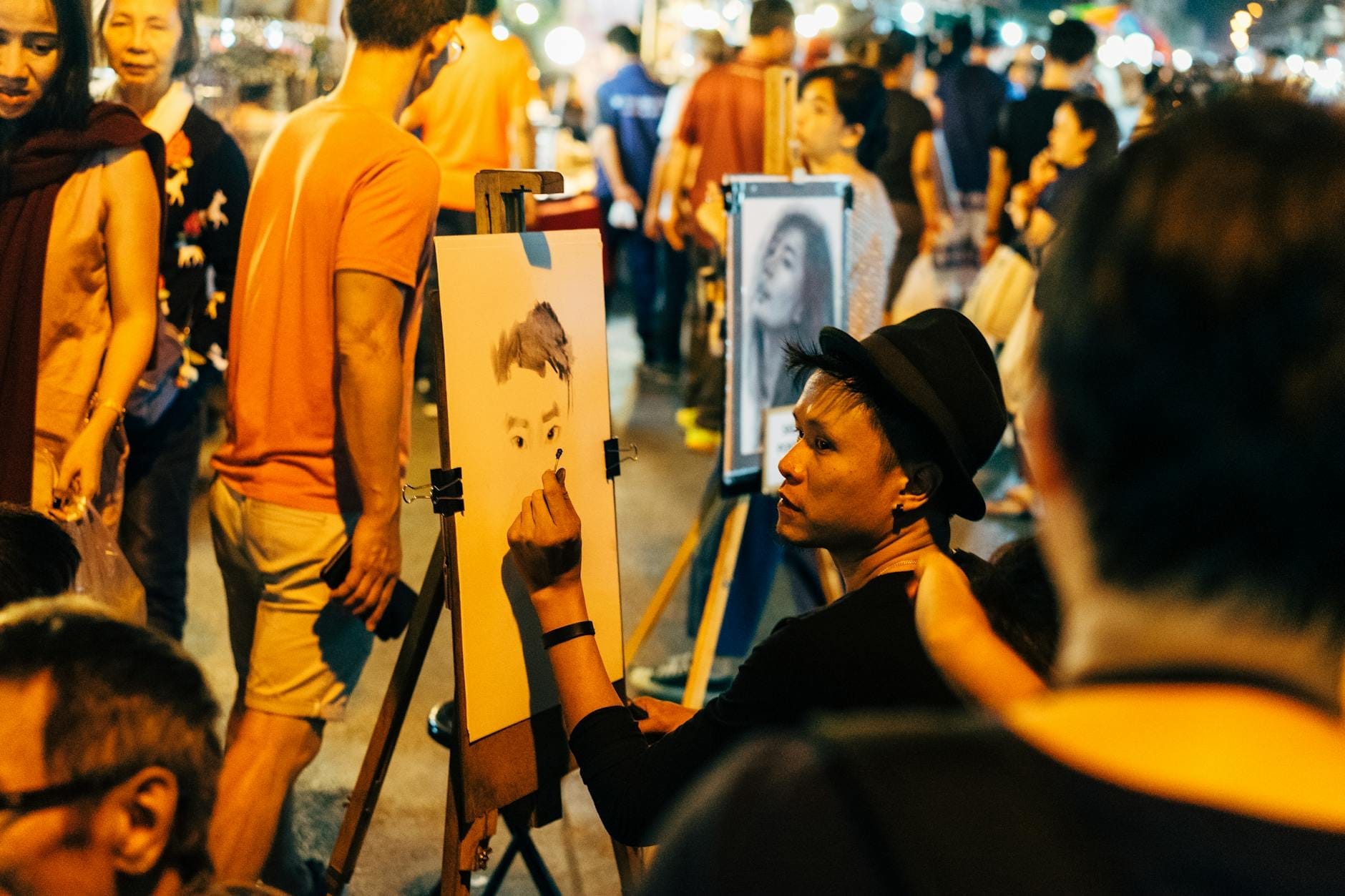
Entering from the northern end near Loi Kroh Road, the first stretch is the densest part of the outdoor bazaar. Stalls here press close on both sides of the pavement, selling screen-printed t-shirts, elephant-print fisherman pants, woven bags, and silver jewelry. The smell is a mix of incense burning at vendor shrines, cooking oil from nearby food carts, and occasional floral wafts from garland sellers at the edges. Crowds move slowly here, especially between 7:30 PM and 9:30 PM, which is peak browsing time.
About halfway down, the Kalare Food Court opens up on the right side. This is an open-air courtyard with fixed-price food stalls and plastic chairs facing a small stage where cultural performances, including classical Thai dance and hill tribe shows, run on most evenings. The food here is reliable, not exceptional, but it gives you an easy place to sit, rest, and watch the crowd. Dishes run 80–200 THB per plate.
The Galare Night Bazaar building near the river end offers a slightly more curated shopping experience. Vendors here tend to stock higher-quality lacquerware, silk products, and handmade jewelry. Prices are higher than the street stalls but quality is more consistent. The Anusarn complex to the south skews more toward evening dining and bars, with fewer dedicated shopping stalls.
💡 Local tip
If you are primarily interested in local crafts rather than mass-produced souvenirs, head directly to the Galare building rather than spending all your energy at the outdoor stalls, where a significant portion of goods are imported from factories in other provinces or countries.
Tickets & tours
Live prices and dates from our booking partner. If you book, we may earn a commission at no extra cost to you.
Chiang Mai temples and night market tuk-tuk tour
From 23 €Instant confirmationFree cancellationChiang Mai street food experience tuk-tuk night tour
From 159 €Instant confirmationFree cancellationChiang Mai - Chiang Dao Cave and 5 Hill Tribe villages
From 42 €Instant confirmationFree cancellationArt in Paradise Chiang Mai 3D Art Museum entrance tickets
From 8 €Instant confirmationFree cancellation
What to Buy and What to Skip
The Night Bazaar is a decent place to buy lacquerware boxes, carved teak items, silk scarves, ceramic celadon pieces, and handmade paper goods. These are either made locally in the Chiang Mai region or sourced from Northern Thai artisan communities. Hill tribe embroidery and woven textiles also appear here, though quality varies significantly between stalls. If you see identical items at multiple stalls, assume they are mass-produced.
What you should largely skip: electronics, branded goods, and anything claiming to be antique without a clear provenance. The Night Bazaar is also not the best place for fresh produce, local food ingredients, or everyday goods that Chiang Mai residents actually buy. For that kind of authentic market experience, Warorot Market or the Saturday and Sunday Walking Streets offer a more locally-grounded alternative.
Serious craft shoppers often do better at the dedicated artisan villages outside the city. Baan Tawai Woodcarving Village south of the city offers wholesale-quality woodwork direct from makers, and Bo Sang Umbrella Village specializes in handpainted parasols and paper goods at better prices than you'll find on Chang Khlan Road.
Bargaining: How It Actually Works Here
Bargaining is expected at outdoor stalls but not at shops with fixed price tags. The standard approach is to offer around 60–70% of the asking price and settle somewhere in the middle. Vendors at the Night Bazaar are experienced with tourists and will rarely accept offers below 50% of asking. If a price seems absurdly high to begin with, it usually is. Walking away genuinely often results in a better offer being called after you.
One important note: aggressive or theatrical bargaining is considered poor form in Thai culture. Keep the negotiation light, smile, and accept that sometimes the vendor simply won't go lower. It is not worth a confrontation over a 30-baht difference.
⚠️ What to skip
Avoid purchasing any items made from wildlife, coral, or endangered wood species. Items claiming to be made from ivory, turtle shell, or rosewood should be refused. Exporting these items can result in seizure and fines regardless of what a vendor tells you about legality.
When to Visit and What the Crowd Looks Like
The market opens around 5:00 PM but doesn't reach full activity until around 7:00 PM when the sky darkens and the overhead string lights give the street its most photogenic quality. Arriving between 6:00 and 7:00 PM means fewer crowds and more willing vendors. After 9:30 PM, some stalls begin packing down, particularly the smaller outdoor operators. The Anusarn and Galare buildings tend to stay active until closer to midnight.
Weekends are noticeably busier than weekdays, and the December to February high season transforms this street into a very slow-moving experience. If you are visiting during peak tourist months and crowds are not your thing, arrive right at opening time. During the March to May hot season, the lack of shade on the outdoor section makes extended browsing genuinely uncomfortable after 8:00 PM, when heat from cooking stalls accumulates on the street. Bring water.
The Night Bazaar is one element of a broader evening scene in this part of the city. For planning a full night out in the Riverside area, see the Chiang Mai night markets guide which compares all the major evening market options across the city.
Getting There, Getting Around, and Practical Notes
Chang Khlan Road is easy to reach from most parts of the city. From the Old City and Tha Phae Gate, it's a 10-minute walk east along Tha Phae Road. Red songthaews from Nimman Road or the Old City typically charge 40–60 THB per person and will drop you directly on Chang Khlan Road. Ride-hailing apps including Grab also work reliably to this area in the evening.
Parking is limited and traffic along Chang Khlan Road backs up significantly after 7:00 PM. Coming on foot or by songthaew is strongly recommended over self-driving. The market is flat and fully paved, making it accessible for wheelchairs and strollers, though the crowds can make navigation difficult during peak hours. ATMs are available inside the Galare building.
The Night Bazaar sits in the Riverside district, close to the Ping River. A short walk west from the southern end of the bazaar reaches Nawarat Bridge, which is worth seeing after your market visit for the riverside atmosphere in the evening.
Photography and Atmosphere
The Night Bazaar is photogenic in the early evening when the light is still partially natural and the overhead lights haven't washed everything out. The best shots tend to be detail-focused: piled silk bolts in oranges and purples, lacquerware stacked under yellow incandescent bulbs, the reflective sheen of celadon pottery. Full street shots work best from the upper level of the Galare building looking down.
Always ask before photographing vendors or cultural performers. The stage shows inside Kalare Food Court generally permit photography of performances, but pointing a camera directly at individual performers mid-show without acknowledgment is considered intrusive.
If photography is a central goal of your Chiang Mai trip, the Chiang Mai photography guide includes tips on timing and locations across the city that go well beyond the standard tourist spots.
Who Might Not Enjoy This
Repeat visitors to Chiang Mai often find the Night Bazaar repetitive after the first or second visit, since stall inventory doesn't change much and the same products appear in many booths. If you have already spent time at the Sunday Walking Street or Saturday Walking Street, much of the Night Bazaar will feel familiar.
Travelers looking for a genuine local experience rather than a tourist-facing market will likely find more satisfaction elsewhere. The Night Bazaar is frank about being a commercial district aimed at visitors, which is not a flaw exactly, just a reality to factor into your expectations. If you need quiet, air conditioning, or are sensitive to cigarette smoke from nearby vendors, the indoor sections are preferable to the outdoor stalls.
Insider Tips
- The best quality-to-price ratio for silk products is usually found in the Galare building's upper-floor stalls, not the street level. Vendors there tend to source from genuine Chiang Mai silk producers rather than reselling factory goods.
- The Kalare Food Court stage shows typically run at 7:30 PM and 9:00 PM. Arriving by 7:00 PM to eat means you get a seat before the performance crowd claims the best tables.
- If you want to compare prices before buying anything, do a full walk of the entire market first without purchasing. You'll see the same items at multiple stalls and get a feel for the real price floor.
- Tuk-tuk drivers who approach you near the Night Bazaar entrance and offer 'free' rides to gem stores or tailor shops are working on commission. Any ride that seems suspiciously cheap will involve a sales detour.
- For a quieter end to the evening, the riverside walkway behind the Galare building offers a calm contrast to the market noise, with views of the Ping River and a few low-key bars and cafes.
Who Is Chiang Mai Night Bazaar For?
- First-time visitors to Chiang Mai who want a single-stop introduction to Northern Thai crafts and souvenirs
- Travelers who enjoy browsing and comparing handcraft options across many vendors in one location
- Families with children who want an easy, low-stakes evening activity with food and cultural performances nearby
- Photography enthusiasts interested in market atmosphere, color, and light
- Couples looking for a relaxed evening stroll with food and shopping options in one district
Nearby Attractions
Other things to see while in Riverside (Ping River Area):
- Art in Paradise Chiang Mai (3D Art Museum)
Art in Paradise Chiang Mai is a large-format interactive 3D art museum located near the Riverside district. Visitors pose inside trompe-l'oeil paintings to create optical illusion photographs. It suits families, couples, and anyone looking for a lighthearted few hours indoors.
- Mae Ping River Cruises
The Mae Ping River has shaped Chiang Mai since the city's founding in 1296, and a river cruise remains one of the few ways to see the city from a genuinely different angle. Longboat and converted rice-barge tours depart from piers near Nawarat Bridge, passing riverside temples, colonial-era trading houses, and fruit orchards that survive within the city limits.
- Nawarat Bridge
Nawarat Bridge is one of Chiang Mai's most significant bridges across the Ping River, connecting the Old City to the eastern riverfront. More than just infrastructure, it serves as a daily gathering point, a photography landmark, and a quiet window into how the city actually moves.
- Saturday Walking Street (Wua Lai Road)
Every Saturday evening, Wua Lai Road transforms into one of Chiang Mai's most atmospheric night markets. Known historically as the city's silversmith district, the street fills with handcrafted goods, northern Thai street food, and the glow of temple lanterns — all with noticeably fewer tourists than its Sunday counterpart.
Planning a trip? Discover personalized activities with the Nomado app.